The Reaching Stride a Doberman Is Judged On
It’s truly something special to watch a Doberman move with purpose, isn't it? That sleek, powerful gait, the ground-covering stride – it’s part of what makes them so captivating. But for many owners, especially those new to the breed or just curious about what makes a Doberman a Doberman in terms of structure and motion, understanding the nuances of that "reaching stride" can feel a bit like decoding a secret language. This guide is here to demystify what an ideal Doberman gait looks like, not just in the show ring, but for the everyday health and joy of your magnificent companion.
The Art of Effortless Motion: What the Doberman Standard Demands
When you hear breeders or judges talk about "gait" in a Doberman, they're not just discussing how the dog walks. It’s a holistic assessment of balance, power, and efficiency in motion. The breed standard, which is essentially the Doberman's blueprint, places a significant emphasis on movement. It’s about more than just speed; it’s about how that speed and power are generated and utilized with minimal wasted energy. Imagine a finely tuned athlete – every muscle working in harmony, every step purposeful. That’s the ideal Doberman in motion.
The Elusive "Effortless" Quality
What does "effortless" actually look like in a dog as powerful and energetic as a Doberman? It’s not about laziness or a slow amble. Instead, it refers to a fluidity and grace that belies the dog's size and strength. A Doberman with an effortless gait appears to glide across the ground, rather than laboring or bouncing. There’s a certain economy of motion, where each stride covers maximum ground with minimum fuss. You don't see jerky movements, high-stepping antics, or stiff-legged trotting. It's a smooth, flowing motion, indicating that the dog's structure is perfectly suited for its job.
This effortless quality is a direct reflection of proper angulation and muscle development. If a Doberman's shoulders are too straight, or its rear is over-angulated, it has to work harder to move, expending more energy and putting unnecessary strain on its joints. When everything is in balance, the dog simply moves without apparent struggle, making sharp turns and quick accelerations seem natural and easy. This is a hallmark of a well-bred Doberman, capable of performing demanding tasks or simply enjoying a spirited run in the park.
Understanding Reach and Drive
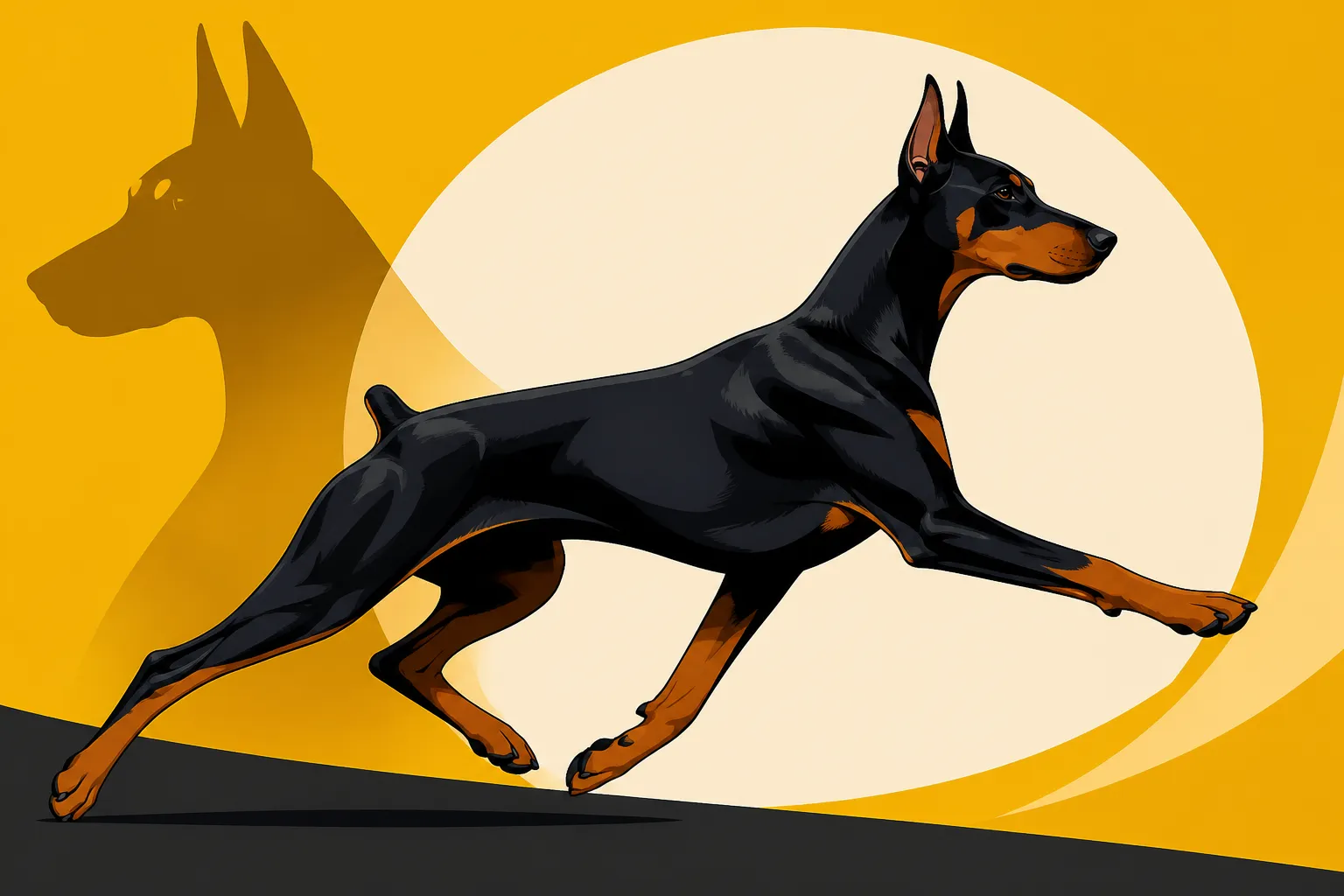
These are the two cornerstones of the Doberman's celebrated stride. "Reach" refers to the extension of the front legs, while "drive" describes the powerful propulsion from the rear. Picture a Doberman trotting directly towards you. The front legs should extend smoothly forward, with the feet landing just ahead of an imaginary vertical line drawn from the point of the shoulder. There should be no hackneying (high-stepping like a horse), no paddling (feet swinging outwards), and no weaving. The front legs should act like shock absorbers and lead the way.
Simultaneously, the "drive" from the rear is what gives the Doberman its incredible power. The hind legs should extend well back, pushing off the ground forcefully. This is where the engine of the Doberman truly lies. Good angulation in the rear allows for maximum spring and extension. If the rear legs are too straight, the drive will be weak, leading to a choppy, less efficient gait. Conversely, if they are overly angulated, it can cause the dog to appear to "crouch" or move with an exaggerated, less powerful push. Both reach and drive must be in perfect sync, meaning the front and rear movements should complement each other, with the front reach balancing the rear drive, preventing the dog from appearing front-heavy or rear-heavy. The result is a balanced, rhythmic stride that is a joy to behold. This harmony is what judges look for when they ask a Doberman to move around the ring.
Balance and Coordination in Motion
Beyond the mechanics of individual leg movements, the overall balance and coordination of a Doberman in motion are paramount. A well-structured Doberman should maintain a level topline – the line from the shoulders to the tail – with very little bounce or roll. This indicates strong musculature across the back and loin, which is crucial for carrying their substantial weight and absorbing the impact of movement. Imagine your Doberman running and turning quickly during a game of fetch. Its body should remain stable, not lurching or swaying excessively.
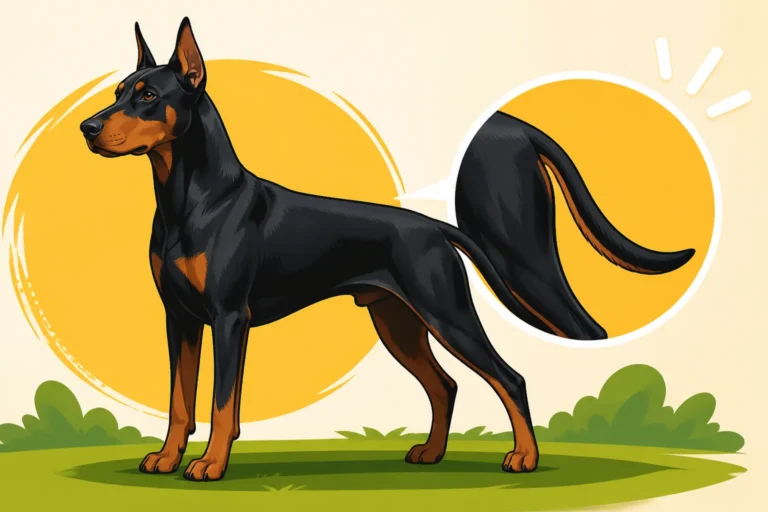
Coordination also extends to how the dog carries its head and tail. While the tail is typically docked in the American standard, and the ears are often cropped, a Doberman's natural expression, even in motion, should convey alertness and self-possession. The head should be carried proudly, neither tucked low nor held rigidly high. The entire package should present an impression of effortless power and agile precision. A Doberman with good balance and coordination can navigate varied terrains with ease, change direction swiftly, and maintain its composure, whether it's working in a sport like Agility With a Doberman's Long Frame or simply accompanying you on a trail walk. It's a testament to good breeding and a healthy, well-developed physique.
Deconstructing the Ideal Doberman Gait
To truly appreciate what a "reaching stride" entails, we need to get a little technical and examine the individual components that contribute to this stunning movement. It's like looking at the gears of a precision watch; each piece has a specific role, and they all have to work together perfectly. When you understand these elements, you can better observe your Doberman's movement and identify any potential areas for concern or improvement.
Front Assembly: The Shoulder and Foreleg
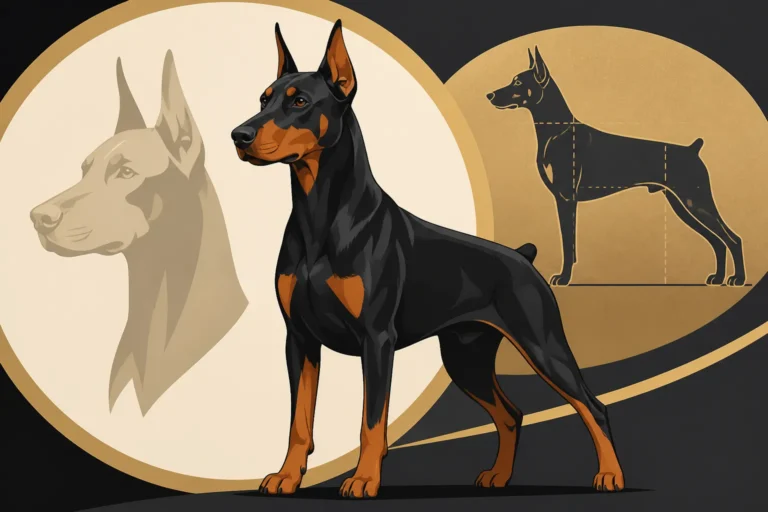
The front assembly of a Doberman is critical for defining its reach. The shoulder blade, or scapula, should lay back at an angle, allowing for a long, clean stride. Think about your own arm's range of motion – if your shoulder joint were pushed forward, your reach would be severely limited. It's the same for a Doberman. Proper layback of the shoulder provides the necessary leverage for the foreleg to extend forward smoothly, reaching out significantly before the foot lands. The upper arm bone (humerus) should be long enough and angled correctly to meet the scapula, forming an angle that allows for powerful forward movement and recoil.
When a Doberman moves, the forelegs should appear strong and straight, without any tendency to "fiddle" or cross over. From the front, you want to see the legs moving in parallel planes, converging slightly towards the center line beneath the body as speed increases. This converging track is a natural efficiency mechanism to maintain balance. Any deviation, like paddling (feet swing out) or tight elbows (feet swing in), suggests a structural flaw that will compromise the dog's ability to cover ground efficiently and effortlessly. This is a point of close scrutiny in the show ring, and it impacts everyday comfort for the dog.
Rear Assembly: The Powerful Propulsion
The rear assembly is the powerhouse of the Doberman, providing the explosive drive needed for its characteristic stride. This is where you see the deep angulation that allows for exceptional push-off. The pelvis, femur (thigh bone), tibia (shin bone), and fibula (lower leg bone) all need to be correctly angled to work like a powerful spring. The hock joint (equivalent to our ankle) should be strong and well-defined, allowing for flexibility and propulsion. When the Doberman pushes off, the hock should flex and then extend strongly, propelling the dog forward.
Just like the front, the rear legs should move parallel to each other when viewed from behind, converging towards the centerline as speed picks up. Any cow-hocked (hocks turned in, feet out) or bow-legged (hocks turned out, feet in) appearance when moving is a structural fault that hinders efficient drive and can put strain on joints. A Doberman with correct rear angulation will show a powerful, coordinated extension that matches the reach of its front legs. This symmetry is what defines a truly elegant and efficient gait, enabling the Doberman to maintain speed and endurance over distance. Without this powerful and correctly angled rear, the dog cannot sustain its famous forward motion.
The Converging Track: An Efficiency Masterclass
As a Doberman increases speed from a walk to a trot, its legs naturally begin to converge towards a central line beneath its body. This "single tracking" or "converging track" is not a fault but a highly efficient way for a quadrupedal animal to maintain balance and conserve energy, especially at faster gaits. Imagine trying to run with your feet wide apart – it’s far less efficient than placing them closer to your body's center. For a Doberman, this convergence allows its weight to be balanced over its moving limbs, making each stride more stable and less tiring.
At a fast trot, a well-built Doberman's footprints should almost fall in a single line. This indicates that the dog is using its body efficiently, bringing its limbs under itself for maximum propulsion and minimum sway. A dog that continues to move wide at the trot is wasting energy and potentially placing undue stress on its joints. This converging track is a testament to the Doberman's athletic build and the thoughtful design of its structure for endurance and speed. Observing this subtle shift in foot placement can tell you a lot about your Doberman’s structural integrity and how effortlessly it can maintain its pace. Many premium dog foods, available at places like Chewy, are formulated to support the muscular and skeletal health required for this kind of efficient movement, ensuring your dog gets the right nutrients for peak condition.
Why a Proper Stride Matters Beyond the Show Ring
While the "reaching stride" is a beautiful thing to behold in a show dog, its importance extends far beyond aesthetics and competitive judging. For pet owners, understanding and appreciating a proper gait is crucial for recognizing health, ensuring longevity, and maximizing their Doberman's quality of life. A dog that moves well is a dog that feels good and can enjoy life to its fullest.
Longevity and Joint Health
A Doberman with a structurally sound and efficient gait is naturally putting less stress and strain on its joints, muscles, and ligaments with every step it takes. Imagine a car with misaligned tires – it wears down unevenly and breaks faster. The same principle applies to a Doberman's body. When the bones and joints are properly aligned and move in their intended planes, the impact forces are distributed correctly, leading to less wear and tear over the dog’s lifetime. This can significantly contribute to the dog's overall longevity and delay the onset or severity of age-related joint issues.
Conversely, a Doberman with an incorrect gait, such as one that is short-striding, crabbing, or carrying its weight unevenly, is constantly subjecting its body to abnormal stresses. This can accelerate the degeneration of cartilage, lead to inflammation, and exacerbate conditions like Doberman Hip Dysplasia or elbow dysplasia, even if the dog doesn't have a genetic predisposition. Supporting your Doberman's structural health through proper nutrition, maintaining a healthy weight, and recognizing signs of discomfort in their movement can make a world of difference as they age. High-quality joint supplements, often found on platforms like Chewy, can also be beneficial in preserving joint health.
Performance in Working Sports
Dobermans were originally bred as working dogs, and their gait is inherently tied to their ability to perform demanding tasks. Whether it's the precision required for competitive obedience, the speed and agility for dock diving or Lure Coursing, or the power and endurance for protection sports like IPO (now known as IGP), a correct and efficient stride is non-negotiable. A Doberman that can move powerfully and with minimal effort will excel in these arenas, demonstrating the physical prowess the breed is known for.
In sports, every fraction of a second and every ounce of energy conserved matters. A dog with a restricted or unbalanced gait will tire more quickly, be less agile, and be more prone to injury. Think about an agility course: precise foot placement, tight turns, and explosive take-offs are all dependent on a dog's natural athletic ability and sound structure. A proper stride allows the Doberman to use its body effectively, making quick transitions and sustained efforts possible without undue fatigue. For those involved in working sports, observing and understanding their Doberman's gait is an ongoing process, often with input from experienced trainers who can spot subtle inefficiencies.
Everyday Comfort and Function
Most Dobermans are cherished family companions, and for them, a good stride simply translates to a more comfortable and enjoyable life. Imagine your Doberman bounding through the yard, enjoying a long walk with you, or playing enthusiastically with other dogs. If their movement is fluid and pain-free, these everyday activities are a joy. They can keep up on hikes, easily navigate stairs, and spring up to greet you without a second thought.
When a Doberman's gait is compromised, even simple tasks can become challenging or painful. A dog with stiffness or an awkward stride might hesitate to jump, climb, or even lie down comfortably. It might tire more quickly on walks or become reluctant to engage in play. Owners might notice Stiffness in a Doberman That Used to Sprint or a general reduction in their dog's enthusiasm for activities they once loved. These subtle changes in movement can be early indicators of underlying health issues that need attention. Regular observation of your Doberman's gait during daily activities is one of the best ways to monitor their well-being and catch potential problems early, ensuring they remain happy and active for as long as possible.
Common Issues Affecting a Doberman's Movement
Even with the best breeding, Dobermans can develop issues that impact their magnificent stride. Recognizing these common problems and understanding their potential causes is critical for responsible ownership. Sometimes, a change in gait is the very first sign that something is amiss, often before other symptoms become obvious.
Short Striding and Restricted Movement
A short stride means the dog isn't extending its legs fully, either in the front (lack of reach) or the rear (lack of drive), or both. Instead of that long, sweeping motion, the steps appear chopped or hesitant. Imagine watching someone try to run with weights on their ankles – that's the visual effect. This can manifest as a stiff, choppy trot where the dog seems to be "mincing" its steps rather than powering through them.
There are several reasons a Doberman might develop a short stride. It could be due to pain, such as arthritis in the hips or elbows, or muscle soreness from overexertion. Neurological issues, like Wobbler Syndrome in the Doberman, which affects the neck and spinal cord, commonly cause a short, uncoordinated gait, especially in the hind legs. Sometimes, it's a structural fault that wasn't apparent when the dog was younger, but becomes more noticeable as they mature or gain weight. Other times, a short stride can indicate the dog is trying to compensate for an injury or discomfort somewhere else in its body, altering its natural movement to avoid pain. Observing when your Doberman starts short-striding – after exercise, first thing in the morning, or consistently – can provide valuable clues for your veterinarian.
Crabbing or Pacing
These are two distinct but equally undesirable gaits that deviate from the efficient, converging trot.
- Crabbing (or Sidewinding): This is when a Doberman moves with its body at an angle to its direction of travel, often looking like it’s walking sideways or diagonally. Instead of its body being straight, its rear might be offset to one side while its front continues forward. Crabbing can be a compensatory mechanism for structural imbalances, where the dog is trying to find a comfortable way to move around a perceived discomfort or weakness. It can also be a learned habit, but often, it points to uneven muscle development, hip or spine issues, or unequal leg lengths. While some dogs might crab slightly when starting out, persistent crabbing at a regular trot is a sign of inefficiency and potential underlying problems.
- Pacing: In pacing, both legs on the same side of the body (e.g., front right and rear right) move forward simultaneously, followed by both legs on the other side. This creates a distinctive rocking or swaying motion, rather than the smooth, rhythmic trot where diagonal pairs of legs move together. Pacing is generally considered an inefficient gait for a Doberman, as it indicates a lack of coordination and can be quite tiring. While some dogs might pace occasionally, especially when moving slowly or when very tired, a Doberman that consistently paces often lacks the powerful, synchronized movement characteristic of the breed. It can sometimes be seen in dogs with a very long back or those trying to avoid pain, as it creates less torsion on the spine.
Health Concerns Impacting Gait
A Doberman's gait is a fantastic barometer of its overall health. Many breed-specific conditions can manifest through changes in how the dog moves.
- Cardiac Issues: Surprisingly, heart conditions like The Heart Disease That Reaches Most Dobermans (Dilated Cardiomyopathy, or DCM) can affect gait. As the heart weakens, the dog's endurance drops, and it may tire quickly, leading to a slower, less energetic, or even wobbly gait. You might notice A Doberman That Faints on a Walk or A Doberman That Tires Faster Than It Used To as the disease progresses, influencing their ability to move fluidly. Often, Why a Doberman Can Look Fine and Be Ill until later stages makes subtle gait changes important early warning signs.
- Neurological Conditions: Beyond Wobblers Syndrome, other neurological issues can disrupt coordination and movement. Degenerative myelopathy, though less common in Dobermans than some other breeds, can cause progressive weakness and ataxia (uncoordinated movement) in the hind legs. Any pressure on the spinal cord or nerves can directly impact a dog's ability to control its limbs, leading to stumbling, dragging feet, or a hesitant gait.
- Orthopedic Problems: Conditions such as hip or elbow dysplasia, luxating patellas (kneecap dislocation), or even simple sprains and strains can profoundly alter a Doberman's movement. A dog in pain will naturally try to shift its weight or shorten its stride to minimize discomfort. Even a slight limp or reluctance to bear weight fully can snowball into compensatory issues in other parts of the body if not addressed. Observing your Doberman's movement as they grow is essential, especially during The Doberman Years When Everything Shows Up between two and six years old.
Understanding these potential health impacts on gait underscores why paying attention to how your Doberman moves is so important. It's not just about looking good in the ring; it's about staying healthy and comfortable throughout their life.
Here's a quick comparison of ideal versus problematic Doberman gaits:
| Aspect | Ideal Doberman Gait | Problematic Doberman Gait |
|---|---|---|
| Overall Impression | Effortless, fluid, powerful, balanced | Choppy, stiff, labored, unbalanced, clumsy |
| Front Reach | Long, ground-covering, feet land ahead of shoulder | Short, high-stepping (hackney), paddling (feet swing out), weaving (feet cross over) |
| Rear Drive | Strong, powerful propulsion, good rear extension | Weak push-off, insufficient extension, appears to drag or crouch |
| Topline | Level, stable, minimal bounce or roll | Excessive bounce, swaying, roaching (arched), dipping (sunk) |
| Tracking (Speed) | Converges towards centerline (single tracking) | Wide tracking, crabbing (moving sideways), pacing (same-side legs move together) |
| Head & Tail Carry | Alert, proud head carriage, steady tail set | Head held low, rigid, or excessively high; frantic tail motion |
| Sound & Rhythm | Quiet, rhythmic, smooth paw placement | Heavy, clunky, uneven rhythm, scuffing of paws |
Disclaimer
This article is for general informational purposes only and does not constitute professional advice. Laws, prices and regulations vary by location and change over time. Consult a qualified professional for guidance on your specific situation.