Melanistic Dobermans and Missing Rust
It's easy to get fascinated by the subtle differences and unique presentations within the Doberman breed, and one intriguing topic that often sparks conversation among owners is the idea of a "melanistic Doberman" or seeing a Doberman with what appears to be "missing rust" markings. Many of us have glimpsed a Doberman that looks almost entirely black, making us wonder if it's a rare variant or just an optical illusion. This guide aims to clear up the confusion, exploring the true nature of Doberman coat colors, the genetics behind them, and what it really means when those iconic rust markings seem to disappear.
The Expected Doberman Coat Pattern: Black and Rust
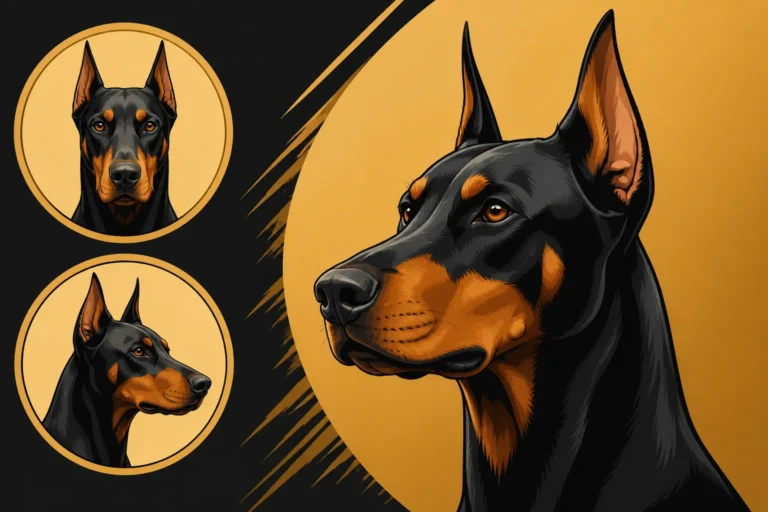
When you picture a Doberman, what often comes to mind is that sleek, powerful silhouette with deep black fur punctuated by striking reddish-brown "rust" markings. This classic black and rust presentation is not just iconic; it's the breed standard that most Doberman enthusiasts and judges look for. But what exactly are these rust markings, and why are they such a defining characteristic?
Anatomy of Doberman Rust Markings
The rust markings on a Doberman are incredibly specific in their placement and color, almost like a beautifully painted design. They aren't random splashes but rather strategically located points that highlight the dog's musculature and expression. You'll typically find these rich, distinct markings in several key areas:
- Above each eye: Giving them that famously intense, intelligent gaze.
- On the muzzle: Particularly around the lips and sometimes extending up the cheeks.
- On the throat and chest: Often forming a triangular patch on the chest.
- On all four legs: Above the paws, on the lower forelegs, and on the inner thighs.
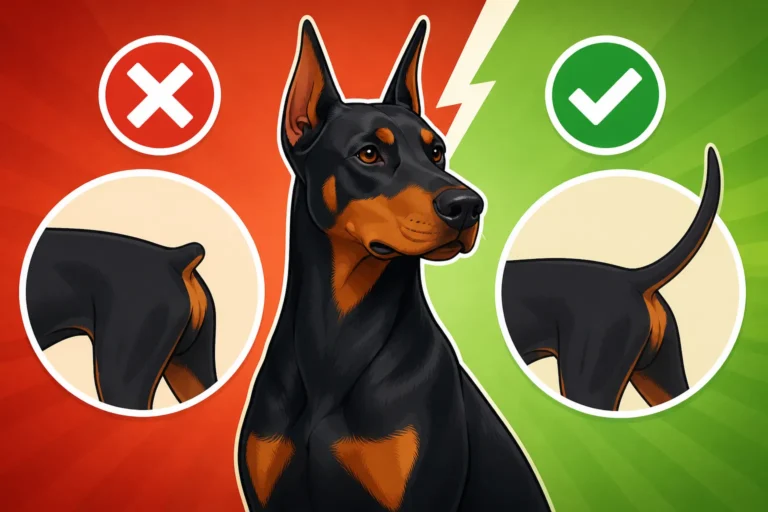
- Under the tail (vent area): A small but present marking.
- Sometimes on the inside of the hocks: The joint on the rear leg.
These rust points are meant to be a clear, deep reddish-brown, contrasting sharply with the primary coat color, which for many is a rich black. This bicolored pattern is what gives the Doberman its distinctive elegance and often contributes to its formidable, yet refined, appearance. Without these specific markings, a Doberman wouldn't quite look like the Doberman we know and love. In fact, if you want to understand the exact specifications, it's worth reading up on The Doberman the AKC Standard Describes.
The Genetic Blueprint for Bicolored Coats
The reason Dobermans should have these two distinct colors isn't just about aesthetics; it's written in their genes. Dogs have various genes that control coat color, and for bicolored breeds like the Doberman, the "agouti" series (specifically the 'at' allele, meaning tan points) plays a crucial role. Without getting too bogged down in complex genetics, essentially, a Doberman is genetically programmed to be a "black and tan" or "black and rust" dog. The 'at' allele ensures that while the main body is black, specific areas will express the lighter, tan (or rust) pigment.
This means that a Doberman is fundamentally not a solid-colored dog. Its genetic makeup dictates this two-tone presentation. The intensity and shade of the rust can vary, as can the overall richness of the black, but the pattern itself is a constant. This genetic predisposition is why phrases like "melanistic Doberman" or "missing rust" often lead to misconceptions. When considering Doberman Colors and the Two That Cause Trouble, it's important to remember that even blue and fawn Dobermans, which have diluted base coats, still exhibit the same bicolored pattern with rust markings.
Unpacking "Melanistic Dobermans" and "Missing Rust"
The term "melanistic" refers to an unusually high deposition of melanin, the dark pigment, resulting in an animal that appears entirely black. While true melanism exists in some species, applying it directly to Dobermans and the idea of "missing rust" can be misleading, as the genetic reality of the breed makes it highly unlikely in the way some people imagine.
True Melanism Versus Heavy Pigmentation
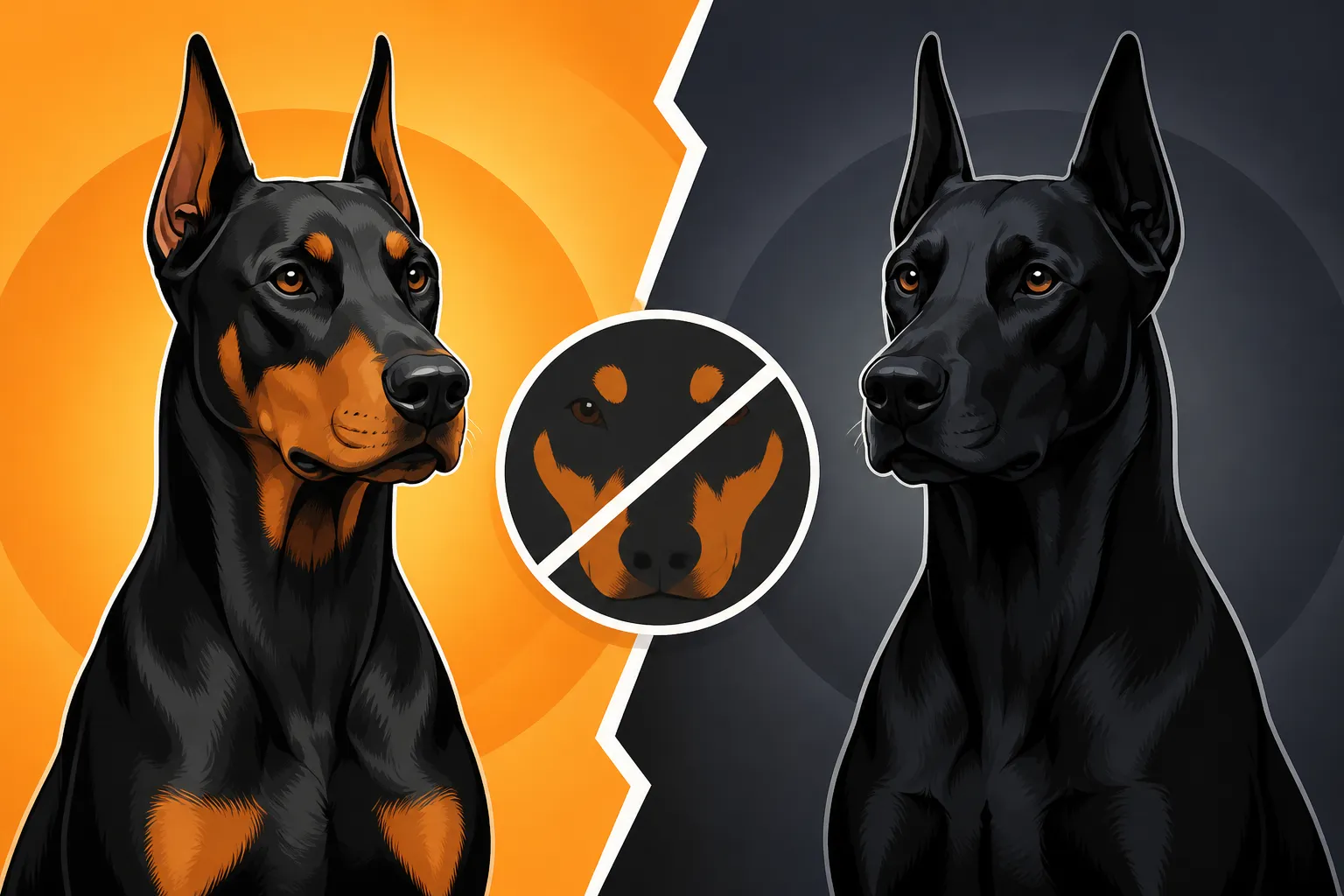
When people talk about a "melanistic Doberman," they're often envisioning a Doberman that is solid black, with absolutely no trace of rust markings anywhere on its body. Here's where we need to differentiate:
- True Melanism: In a breed that is typically bicolored due to the 'at' gene, true melanism would imply a genetic mutation that overrides this pattern, causing black pigment to cover all areas, including where rust markings should be. This kind of mutation is exceptionally rare in Dobermans and is generally not recognized within the breed's genetic scope. If it were to occur, it would be a significant deviation from the breed's established genetic blueprint.
- Heavily Pigmented Black and Rust: What most people are actually seeing when they refer to a "melanistic" Doberman is a Doberman with exceptionally dark, rich black pigmentation and rust markings that are either very dark, very faint, or minimal in their expression. These dogs still have the genetic 'at' allele for rust, but the visual effect can be striking enough to give the impression of a solid black coat. The rust might be a very deep mahogany, almost blending into the black, or the patches themselves might be smaller and less expansive than what's typically seen. Think of it like a photograph where the shadows are so deep, you almost can't make out the details in the darker areas.
It's crucial to understand that these "heavily pigmented" Dobermans are still genetically black and rust. They are not a separate color variant or a result of a different genetic mutation like albinism (as seen in The White Doberman and Where It Came From). They simply sit on the very dark end of the spectrum for rust color and distribution.
Why Rust Markings Can Appear Faint or Absent
There are several reasons why those classic rust markings might appear less prominent, giving the impression of "missing rust":
- Genetic Variation in Rust Intensity: Just like human hair color has a spectrum, the depth and richness of a Doberman's rust markings can vary from dog to dog. Some Dobermans naturally carry genes that result in lighter, brighter rust, while others have a darker, more muted mahogany. A dog with very dark mahogany markings might, in certain light, appear to have little to no rust at all. It's a spectrum, and sometimes we see dogs on the extreme dark end. For a clearer picture, check out The Black and Rust Doberman and Where Rust Markings Belong on a Doberman.
- Size and Extent of Markings: Not all rust markings are created equal. Some Dobermans might have smaller patches of rust, particularly on the chest or legs, which can make the overall appearance more black-dominated. A Doberman with genetically smaller rust markings will, by definition, look more "solid" than one with expansive, bold points.
- Lighting Conditions: This is a big one! What looks like solid black indoors or in dim light might reveal subtle dark rust markings when the dog steps out into bright sunlight. The angle of the light, the intensity, and even the type of light source can play tricks on our eyes, obscuring those less pronounced rust points.
- Coat Condition and Health: A Doberman with a dull, dry, or unhealthy coat might have rust markings that appear less vibrant and distinct. Poor nutrition, lack of proper grooming, or underlying health issues could all contribute to a less lustrous coat where the contrast between black and rust is diminished. Ensuring your Doberman gets a high-quality diet, perhaps from a trusted brand like Chewy, can help maintain coat health. Regular brushing and appropriate bathing, as discussed in Doberman Grooming on a Coat With No Undercoat, also contribute to bringing out the best in their coat.
- Age: Sometimes, in very young puppies, the rust markings might not be as fully developed or vibrant as they will become with age. Conversely, in very senior Dobermans, coat color can sometimes fade slightly, or perhaps the texture changes, affecting how light reflects off the rust areas.
The Genetics Behind the Shades of Rust
To truly grasp why "missing rust" is generally a visual phenomenon rather than a genetic anomaly, it's helpful to touch on the genetic factors that influence the shade and visibility of those classic rust markings.
The A Locus and Bicolor Expression
As mentioned earlier, the 'at' allele at the agouti locus is responsible for the tan/rust point pattern in Dobermans. This allele essentially tells the pigment-producing cells in specific areas (the "points") to express phaeomelanin (red/tan pigment) instead of eumelanin (black/brown pigment). All Dobermans are genetically 'at/at' at this locus if they are to have the traditional bicolored pattern.
The intensity and shade of the phaeomelanin (the rust color) are controlled by other genes, often referred to as modifier genes. These genes are what determine if the rust is a light fawn-like tan, a vibrant red, or a deep, dark mahogany.
Modifier Genes and Pigment Intensity
Several modifier genes can influence the richness and depth of both black and rust pigments. For example:
- Intense Pigmentation (I Locus): This gene affects the intensity of red/yellow pigment (phaeomelanin). Dobermans with two copies of the dominant 'I' allele will have bright, intense rust markings. If a Doberman has one or two copies of a less intense 'i' allele, their rust markings might appear paler or more diluted. However, even with paler rust, the markings are still present.
- Other Polygenic Modifiers: Coat color is often influenced by many different genes working together, known as polygenic inheritance. There isn't one single "dark rust" gene that we can point to. Instead, a combination of these genes can result in some Dobermans having rust that is so deep and rich it almost appears black, especially in certain lighting. This doesn't mean the rust is missing; it just means it's extremely dark.
Therefore, a Doberman that appears to have "missing rust" is usually just a Doberman that has a genetic combination leading to very dark, deep rust markings, or perhaps minimal rust expression. The genetic blueprint for bicoloration is still firmly in place.
| Aspect | Description |
|---|---|
| Genetic Basis | All Dobermans with rust markings are 'at/at' at the agouti locus. |
| "Melanistic" Dog | Genetically still 'at/at', but rust is extremely dark or minimal due to modifier genes. |
| True Melanism | A rare genetic mutation that would override the 'at/at' pattern, causing solid black. Highly unlikely in Dobermans. |
| Rust Intensity | Controlled by modifier genes, ranging from light tan to deep mahogany. |
| Visual Perception | Dark rust can blend with the black base coat, especially in low light. |
Implications for Owners and Enthusiasts
Understanding the difference between a truly solid black Doberman (which is essentially non-existent in the breed) and one with very dark or minimal rust markings is important for several reasons, from appreciating breed standards to making informed decisions as a potential owner.
Conformation to Breed Standard
The Doberman breed standard, whether from the AKC or other international clubs, explicitly calls for rust markings. A Doberman that truly lacked any visible rust markings would be considered a fault and would not be able to compete successfully in conformation shows. The phrase "melanistic Doberman" isn't recognized as a legitimate color variation within the breed standard because Dobermans are, by definition, a bicolored breed. While variations in rust shade are common, a complete absence would be problematic. This is a key part of The Doberman the AKC Standard Describes.
Health Considerations
Unlike some other Doberman color variations that do come with health implications, such as Color Dilution Alopecia in Blue and Fawn Dobermans or the various issues faced by albinos (see The White Doberman and Where It Came From), a Doberman with very dark or minimal rust markings does not typically suffer from any associated health problems. The variation in rust intensity is simply a natural part of the breed's genetic diversity, without any known links to disease or predisposition to specific ailments.
It’s important not to confuse a Doberman that appears "melanistic" with a Doberman carrying a specific health-related gene. Always ensure your Doberman comes from a reputable breeder who conducts comprehensive health testing, regardless of the precise shade of its rust markings. Asking to see Reading a Doberman Puppy's Test Certificates is crucial for any Doberman puppy.
Choosing a Doberman Puppy
If you're in the market for a Doberman puppy and you encounter a breeder describing a "melanistic Doberman," proceed with caution. A knowledgeable and ethical breeder will understand the genetics of the breed and explain that while rust markings can be very dark, a Doberman is never truly solid black. They should be transparent about the genetic make-up of their dogs and the expected appearance of their litters. What Breeders Ask for a Doberman Puppy often includes questions about what you're looking for, and a good breeder will educate you on what's standard versus what's a misconception.
When observing puppies, pay attention to the clarity and shade of the rust points, even if they're still developing. In a litter, you'll likely see a range of rust intensities. A reputable breeder will focus on health, temperament, and adherence to the breed standard, not on marketing "rare" or non-standard colors.
Everyday Care for a Dark-Coated Doberman
Whether your Doberman has vibrant rust or those deep, barely-there markings, their black coat needs consistent care to look its best. A healthy, shiny coat will actually make those subtle rust markings more apparent by providing better contrast and light reflection.
- Nutrition: A high-quality diet rich in omega fatty acids is essential for skin and coat health. Brands available on Chewy often offer formulas specifically designed for skin and coat support. A Doberman is a lean, athletic dog, so Feeding an Eighty-Pound Doberman Well is key to overall vitality, which includes a healthy coat.
- Grooming: Regular brushing helps distribute natural oils, remove loose hair, and stimulate circulation, all contributing to a healthy, shiny coat. While Dobermans have a short coat with no undercoat, they still shed and benefit from grooming. Doberman Grooming on a Coat With No Undercoat will give you more tips on keeping their short, sleek coat in top condition.
- Sun Protection: Dark coats can absorb a lot of heat, so be mindful of sun exposure on hot days. While a full black coat isn't a unique health concern, all Dobermans can be prone to sunburn on sensitive areas if exposed for too long.
Ultimately, while the idea of a "melanistic Doberman" might be captivating, it's more often a visual interpretation of a Doberman with exceptionally dark or minimal rust markings. The Doberman's genetic identity is firmly rooted in its bicolored nature, and appreciating these subtle variations makes us love this majestic breed even more.
Disclaimer
This article is for general informational purposes only and does not constitute professional advice. Laws, prices and regulations vary by location and change over time. Consult a qualified professional for guidance on your specific situation.