Dobermans in Search and Rescue
When you hear about search and rescue dogs, perhaps your mind immediately goes to a Golden Retriever or a German Shepherd, steadfastly tracking through rubble or dense forest. It's easy to overlook other breeds that possess incredible intelligence, drive, and athleticism, making them surprisingly adept at this demanding work. Many Doberman owners find themselves wondering if their powerful, devoted companion could lend their talents to finding lost individuals, and the answer, for the right Doberman and handler, is a resounding yes. This guide will delve into the unique attributes of Dobermans that make them suitable for search and rescue, the types of work they can excel in, and the dedication required to train these intelligent dogs for such vital roles.
The Doberman's Natural Aptitude for Search and Rescue
Dobermans are often misunderstood, seen only as formidable guard dogs. While their protective instincts are undeniable, beneath that sleek, powerful exterior lies a highly intelligent, intensely driven, and incredibly athletic animal. These traits, when properly channeled, are precisely what make a Doberman an excellent candidate for various search and rescue disciplines. It's not just about finding someone; it's about the mental and physical stamina, the problem-solving ability, and the unwavering focus required, all of which are hallmarks of the breed.
Intelligence and Trainability
One of the Doberman's most striking features is their sharp mind. They are ranked among the most intelligent dog breeds, capable of learning complex commands and problem-solving with remarkable speed. This high intelligence is a double-edged sword; while it means they can grasp advanced SAR concepts quickly, it also means they require consistent, engaging training to prevent boredom and destructive behaviors. A Doberman thrives on having a job, and search and rescue provides the ultimate mental and physical challenge. If you've ever tried Training a Doberman That Is Smarter Than You Expect, you'll know they pick things up fast, sometimes even before you've fully explained them. This quick learning curve can significantly shorten the initial training phases for SAR.
However, their intelligence also means they can "outsmart" an inexperienced handler if not managed properly. They need a handler who is equally smart, consistent, and creative in their training methods. Rewards need to be high value, whether it's a favorite squeaky toy or delicious training treats you might pick up from a place like Chewy, to keep them motivated through long, intricate search patterns.
Drive and Stamina
A successful SAR dog needs an incredible amount of drive—the innate desire to work, to please, and to persevere through challenging conditions. Dobermans typically possess a very high prey drive and a relentless work ethic. They are built for endurance, with a lean, muscular physique that allows them to cover ground quickly and efficiently, whether it's navigating rocky terrain or pushing through undergrowth. Their stamina is often underestimated; they're not just sprinters but can sustain effort over extended periods. This is a critical factor in SAR, where searches can last for hours, sometimes even days. Keeping a Doberman Mentally Tired is just as important as physical exercise, and SAR work provides an unparalleled outlet for both.
Furthermore, their natural protective instincts, while needing careful channeling, can translate into a deep sense of responsibility in a search situation. They aren't just looking for a "toy" at the end of the search; they understand the gravity of finding a missing person and often show an intense focus that goes beyond simple reward-seeking behavior.
Focus and Perseverance
When a Doberman locks onto a task, their focus can be absolute. This single-mindedness is invaluable in search and rescue, where distractions are abundant, and the "target" may be hidden, silent, or far away. They learn to ignore environmental stimuli that other dogs might find distracting, like strange noises, passing animals, or inclement weather, to concentrate on the scent picture. This focus, combined with their natural perseverance, means they won't easily give up on a scent trail, even when it's faint or broken.
This trait also means that when a Doberman is engaged in a task, they tend to ignore threats or discomforts that might deter other breeds. They are determined problem-solvers, often trying multiple approaches to get to a scent source rather than just giving up. This is essential for searches in complex environments, where the missing person might be in a difficult-to-reach location.
Specific Search and Rescue Disciplines for Dobermans
While Dobermans might not be the first breed you picture in every SAR scenario, their unique blend of speed, intelligence, and scenting ability makes them highly effective in several specialized disciplines. Matching the dog's natural strengths to the right type of work is key to building a successful SAR team.
Area Search and Wilderness Trailing
Dobermans can excel in wilderness area searches, covering large tracts of land efficiently to locate human scent. Their speed and agility allow them to navigate diverse terrains, from open fields to dense woodlands. In an area search, the dog works off-leash, systematically searching a designated area for any human scent, indicating the presence of a lost person. Their powerful stride and athletic build allow them to maintain a consistent pace, which is vital for covering large search grids. Many Doberman owners already understand that Whether a Doberman Needs More Exercise Than a Boxer, the answer often leans towards more, especially when their innate drive is considered. This capacity for sustained activity is perfectly suited for wilderness work.
For trailing, where the dog follows a specific individual's scent, often from a last-seen point or an article of clothing, the Doberman's keen nose and determination can be remarkable. They are driven to follow that unique scent, filtering out environmental smells to stay on track. This requires immense focus and an understanding from the dog that the scent they are following is the 'puzzle' to be solved.
Human Remains Detection (HRD)
A lesser-known but incredibly important facet of search and rescue is Human Remains Detection. This is a highly specialized skill where dogs are trained to locate the scent of human decomposition, whether on land or in water, above ground or buried. Dobermans, with their strong scent drive and intellectual capacity to discriminate subtle odors, can be trained for HRD. The work is mentally taxing for both dog and handler, requiring immense precision and a dog that can work methodically in often difficult or emotional circumstances.
The precision and methodical nature required for HRD means that dogs need to be incredibly consistent in their alerting behavior. A Doberman's natural inclination to focus and work through a problem can be a real asset here, allowing them to pinpoint the source of a scent with accuracy.
Live Find Urban Search and Rescue (USAR)
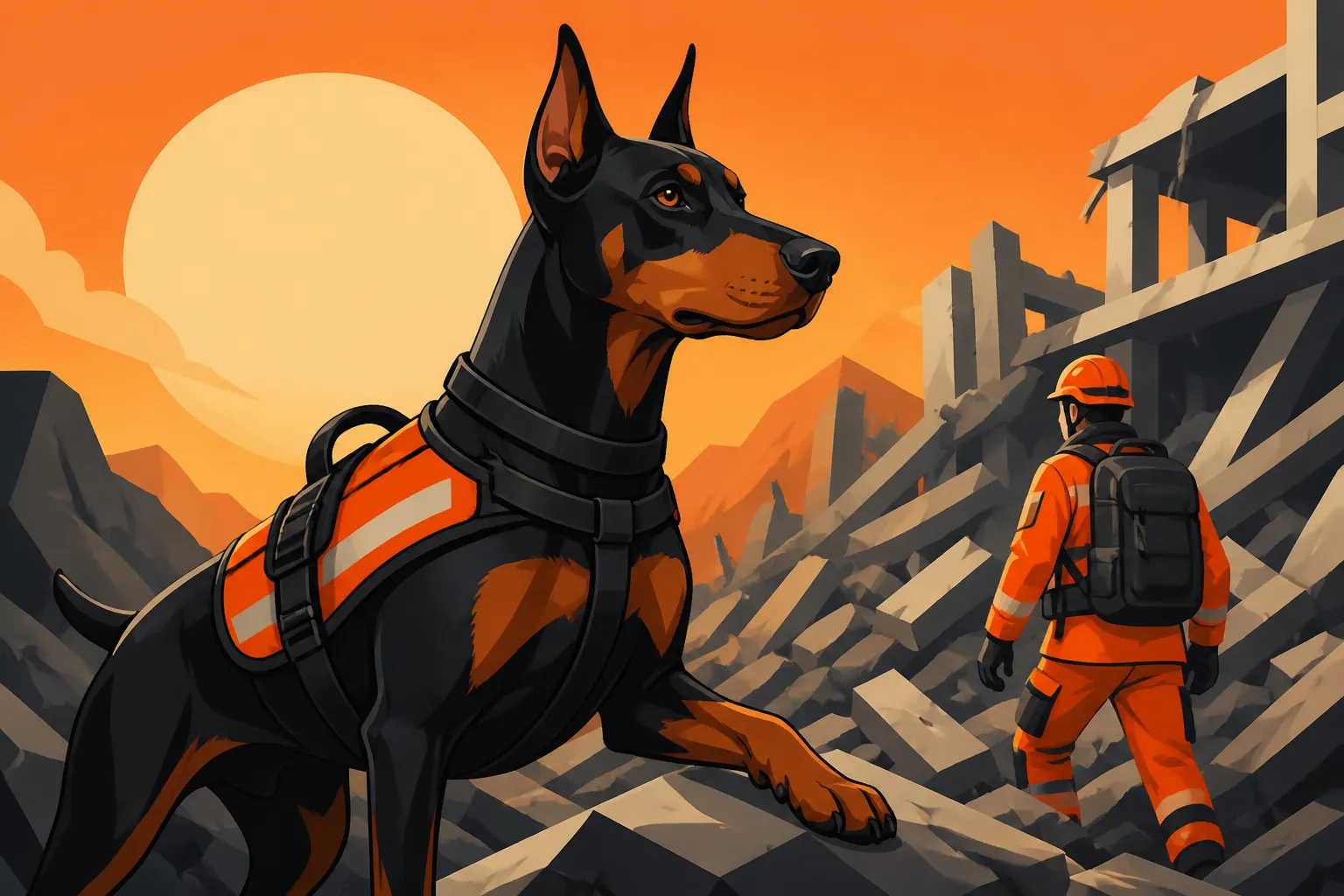
While Dobermans are not typically seen as the primary breed for heavy rubble USAR due to their leaner build compared to, say, a German Shepherd or Labrador, they can certainly contribute to live find operations in collapsed structures or urban environments. Their agility allows them to navigate precarious debris, and their lower body fat can sometimes make them able to squeeze into tighter spaces. The ability to climb and balance is crucial here, and a Doberman’s natural athleticism gives them a good starting point. The quick decision-making and problem-solving inherent in the breed also serve them well when encountering unstable or complex search areas.
Here's a quick comparison of Doberman traits against key SAR requirements:
| SAR Requirement | Doberman Trait | Relevance to SAR Success |
|---|---|---|
| Scenting Ability | Good natural scent drive, focused nose work | Locating lost individuals and remains |
| Stamina/Endurance | Lean, muscular, built for sustained activity | Covering large areas, long search operations |
| Intelligence | High, quick learners, excellent problem-solvers | Grasping complex search patterns, adapting to new scenarios, interpreting handler cues |
| Drive/Work Ethic | High prey drive, eager to work and please, persistent | Maintaining motivation through difficult conditions, overcoming fatigue |
| Agility/Athleticism | Athletic, agile, capable of navigating varied terrain and obstacles | Accessing difficult areas, maintaining speed and efficiency |
| Temperament | Confident, focused, resilient, can handle stress well (with proper socialization) | Working in high-stress situations, handling distractions, staying calm under pressure |
| Handler Focus | Naturally bonded, eager to work with handler (often called "Velcro dogs") | Strong team dynamic, reliable communication in challenging environments |
Training and Temperament Considerations
Embarking on a search and rescue journey with your Doberman is a significant commitment, demanding a specialized approach to training and a deep understanding of the breed's unique temperament. It's not just about teaching commands; it's about shaping a mindset and building an unbreakable bond.
Early Socialization and Confidence Building
For a Doberman to excel in SAR, they need to be incredibly confident and resilient. This starts with extensive early socialization. A SAR dog will encounter all sorts of strange sights, sounds, surfaces, and people, often in stressful situations. A Doberman puppy needs to be exposed to as much of the world as possible in a positive way, from meeting different types of people to experiencing various environments and noises. This foundational work helps to build a dog that is curious rather than fearful, and stable rather than reactive. If you're Building a Doberman Puppy That Is Confident, Not Sharp, you're laying the groundwork for a successful SAR career.
Beyond simple exposure, confidence-building exercises like navigating unstable surfaces, walking through tunnels, and climbing over obstacles are crucial. These experiences not only enhance their physical capabilities but also teach them to problem-solve independently and trust their own abilities, which is vital when a handler can't physically reach them.
Managing Doberman Temperament and Drive
The Doberman's natural Doberman Guarding Instinct and Where It Tips Over needs careful management in a SAR context. While their alertness is a positive, actual guarding behavior towards strangers or other dogs can be a serious liability. SAR dogs must be approachable, tolerant of strangers (including those they're searching for), and able to work cooperatively around other teams and emergency personnel. Training focuses on channeling their protective drive into focused search work, rather than general suspicion or aggression.
Their high drive also means they require consistent, structured training. A Doberman that learns your routine A Doberman That Learns Your Routine Too Well can be a great asset, as they thrive on predictability and clear expectations. However, trainers must also be flexible and innovative, as Dobermans can become bored with repetitive drills. Introducing variety, challenging scent puzzles, and working in new locations keeps them engaged and sharp. High-value food treats, durable tug toys, or even a favorite plushie from Chewy can be excellent motivators for their reward drive.
The Role of the Handler
Ultimately, the success of a Doberman in search and rescue depends as much on the handler as it does on the dog. A SAR handler is not just a trainer; they are a mentor, a partner, and a lifeline. They must understand canine behavior deeply, possess excellent navigation and survival skills, and be able to read their dog's subtle cues in often stressful environments. The demands are immense, and What a First Doberman Demands of Its Owner often extends far beyond basic obedience into advanced skills and a lifestyle commitment.
The handler-dog bond is paramount. Dobermans form incredibly strong attachments, and this bond is the foundation of effective SAR work. The dog needs to trust their handler implicitly, knowing that their handler will guide them, protect them, and provide the necessary support to do their job. This close working relationship is what transforms a powerful, intelligent dog into a life-saving team. Just like Dobermans served bravely in The Doberman's War Record, often working closely with their handlers in life-or-death situations, modern SAR Dobermans require that same level of teamwork and trust.
The Journey to Becoming a Search and Rescue Doberman
The path to becoming a certified search and rescue Doberman is long, challenging, and incredibly rewarding. It’s not a hobby for the faint of heart, but for those dedicated individuals and their Dobermans, it’s a profound way to contribute to their community and live out the breed’s incredible potential.
Finding the Right Puppy or Dog
Not every Doberman is suited for SAR. When looking for a potential SAR dog, whether a puppy or an adult rescue, you'll want to assess specific traits. Look for a dog with good environmental confidence, a strong play drive (especially for toys or tug), an innate curiosity, and good nerve. A dog that is overly shy, fearful, or reactive will struggle in the demanding and often unpredictable world of SAR. Reputable breeders who health test and focus on stable temperaments, or rescue organizations that thoroughly evaluate their dogs, are excellent places to start.
It's also essential to consider the dog's physical health. Dobermans are prone to certain health issues, such as The Heart Disease That Reaches Most Dobermans or Wobbler Syndrome in the Doberman, which could impact their ability to perform strenuous SAR tasks. Comprehensive health testing of parents is crucial when selecting a puppy.
The Stages of Training and Certification
Training for search and rescue typically involves several stages, building from basic obedience to advanced specialized skills. It often begins with foundational obedience and socialization, then moves into developing strong retrieve and play drives, followed by scent discrimination exercises. As the dog progresses, training scenarios become more realistic, involving different weather conditions, terrains, and distraction levels. Teams often train multiple times a week for years before achieving operational readiness.
Certification processes vary by organization but generally involve rigorous evaluations of the dog's ability to locate subjects, their handler's navigation and incident management skills, and the team's overall ability to work safely and effectively in a simulated search environment. Certification is not a one-time event; most teams are required to re-certify annually to maintain their operational status. This dedication mirrors the commitment seen in Dobermans as Police Dogs Then and Now, where continuous training and evaluation are standard.
Beyond the Search: The Daily Life of a SAR Doberman
Even when not actively deployed, a SAR Doberman's life is one of ongoing training and preparation. This isn't a dog that can just sit on the couch all week. Their physical conditioning needs to be maintained, requiring regular, rigorous exercise. Their mental sharpness is sustained through daily training sessions, puzzle toys, and engaging activities. This commitment aligns with the breed's need for mental stimulation, as seen in The Working Sports a Doberman Was Built For, where their intelligence and athleticism are paramount.
The bond between a SAR Doberman and their handler is truly special, forged through countless hours of training, shared challenges, and the profound responsibility of potentially saving a life. While the path is demanding, for the right Doberman and the right handler, search and rescue offers an unparalleled opportunity to harness the breed's incredible capabilities for the greater good.
Disclaimer
This article is for general informational purposes only and does not constitute professional advice. Laws, prices and regulations vary by location and change over time. Consult a qualified professional for guidance on your specific situation.