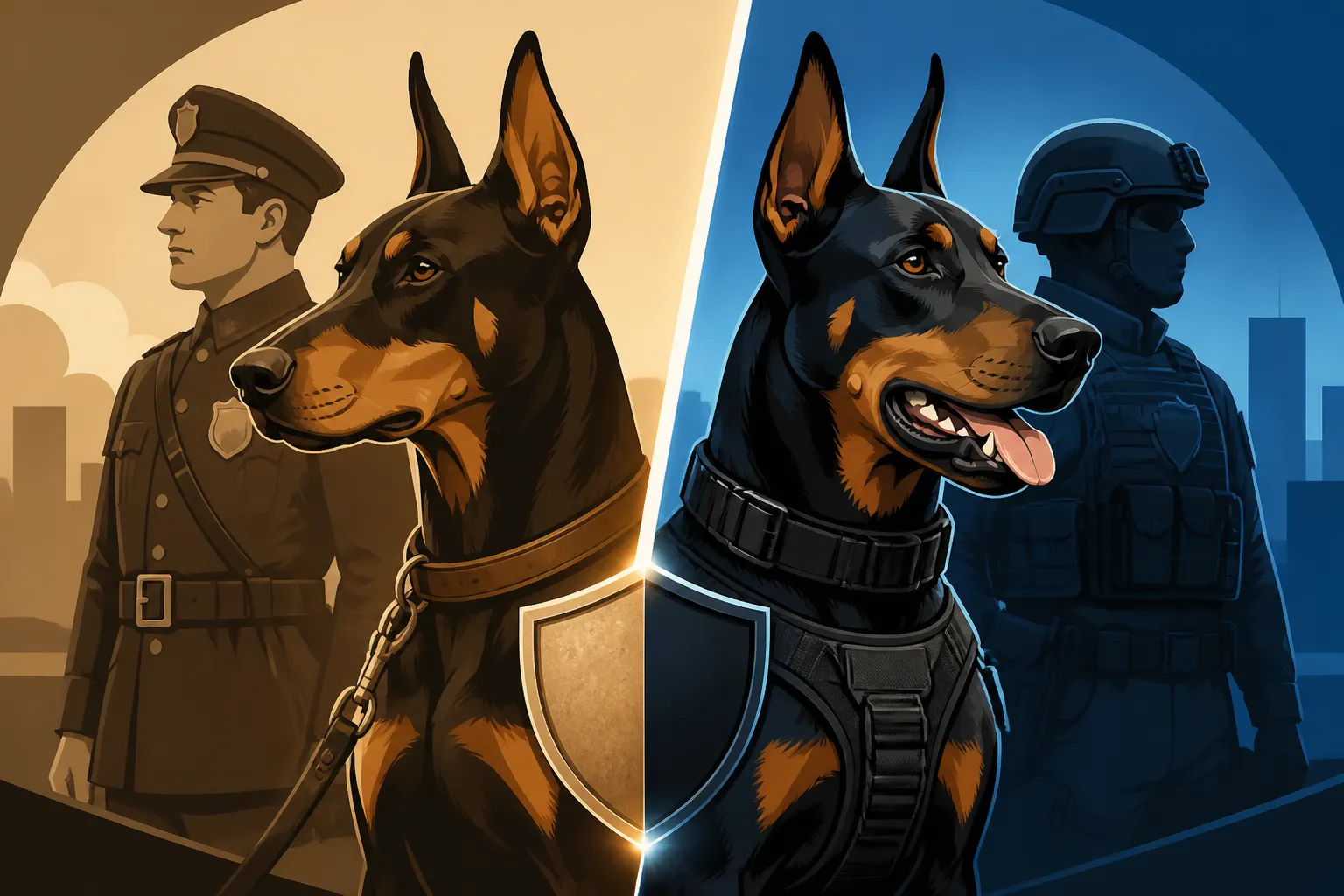
Dobermans as Police Dogs Then and Now
If you've ever watched old films or read historical accounts of police work, you might have pictured a sleek, formidable Doberman Pinscher at an officer's side. It's true that for a long time, Dobermans were considered the quintessential police dog, striking fear into the hearts of criminals with their imposing presence and sharp intelligence. But times change, and so do the demands of K9 units. This guide will explore the Doberman's proud history in law enforcement, examine why their role has shifted, and look at where this incredible breed continues to shine in working capacities today.
The Doberman's Early Days in Law Enforcement: A Fearless Reputation
The Doberman Pinscher breed wasn't just discovered by law enforcement; it was practically designed for it, albeit indirectly. Born from the vision of Karl Friedrich Louis Dobermann, a German tax collector and dog catcher in the late 19th century, this breed was engineered to be an ultimate protector. Dobermann himself needed a fearless companion to accompany him on his rounds, particularly when collecting taxes in less-than-friendly neighborhoods. He sought a dog that was intelligent, courageous, and possessed an unwavering loyalty, all wrapped up in an intimidating package.
Origin Story: From Tax Collector's Guard Dog to Police K9
It's fascinating to think about how a personal need evolved into a breed that would serve alongside police for decades. Karl Dobermann meticulously crossed various breeds, likely including Rottweilers, German Pinschers, and even Greyhounds, to achieve his ideal dog. The result was a dog with incredible speed, agility, and an almost instinctual guarding drive. The Tax Collector Who Invented the Doberman delves deeper into this captivating origin story. Early Dobermans quickly earned a reputation as powerful, agile, and fiercely protective animals. Their inherent suspicion of strangers, combined with their striking appearance, made them excellent deterrents and formidable partners in crime prevention.
Police forces, particularly in Germany, quickly recognized these invaluable traits. They needed dogs that could track suspects, guard prisoners, and accompany officers into dangerous situations without hesitation. The Doberman, with its innate courage and keen senses, fit the bill perfectly. Their high trainability, a hallmark of the breed, meant they could learn complex commands and integrate seamlessly into police operations, quickly becoming a symbol of authority and protection.
Specific Roles and How They Excelled
In their heyday, Dobermans were utilized across a broad spectrum of police duties, excelling in roles where their natural attributes shone brightest.
- Patrol and Apprehension: A Doberman on patrol was a sight to behold. Their speed and power made them incredibly effective at pursuing and apprehending suspects. They were often the first line of defense, capable of quickly closing distances and subduing individuals who posed a threat. Their presence alone was often enough to deter escalation.
- Tracking: With a keen sense of smell, Dobermans were also employed in tracking missing persons or fugitives. Their endurance allowed them to cover significant ground, following scents over varied terrain.
- Sentry and Guard Duty: The Doberman's natural guarding instinct, detailed further in Doberman Guarding Instinct and Where It Tips Over, made them exceptional sentry dogs. They could be relied upon to guard police facilities, secure crime scenes, or stand watch over valuable assets. Their alertness and suspicion of unfamiliar individuals meant they were constantly vigilant.
- Messenger Dogs: While not strictly a police role, their use as messenger dogs during wartime further cemented their reputation as intelligent, reliable working dogs capable of critical tasks under pressure. This versatility demonstrated their mental fortitude and unwavering focus on a task, qualities highly valued in any working capacity.
Their physical build, characterized by a lean, muscular frame, contributed significantly to their success. They possessed the speed to chase, the agility to navigate obstacles, and the strength to hold their ground. When combined with their sharp minds and eagerness to work, it's easy to see why they were once considered the ideal police K9.
The Evolution of Police K9 Programs: Shifting Needs and Breeds
Despite their impressive track record, the Doberman's prominence in general police work began to wane as the 20th century progressed. This wasn't a reflection of the breed becoming less capable, but rather a shift in policing strategies, public perception, and the emergence of other breeds whose specific traits better aligned with modern K9 demands.
The Rise of New Contenders: German Shepherds and Malinois
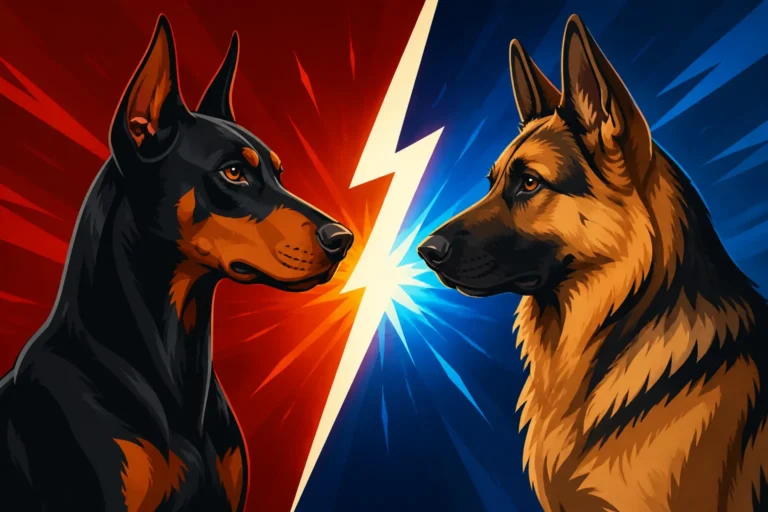
Around the mid-20th century, breeds like the German Shepherd Dog and later, the Belgian Malinois, started to gain favor in police and military circles, gradually eclipsing the Doberman for many general-purpose K9 roles. This shift wasn't arbitrary; it was based on several practical considerations.
- Temperament and Public Perception: German Shepherds and Malinois, while still powerful working dogs, often possess a temperament that is perceived as more neutral or "approachable" by the general public. While a Doberman's intense stare and commanding presence were once assets, modern policing increasingly emphasized community relations. Handling a Doberman in Public Without Alarming People highlights some of these challenges. The Doberman's sharp, often intimidating appearance, especially with cropped ears, could sometimes inadvertently create fear or misunderstanding among citizens, even when the dog was well-trained. Other breeds, with their more "dog-like" or less intensely focused demeanor, could blend more easily into public interactions without immediately triggering alarm.
- Versatility and Drives: German Shepherds and Malinois were often bred with a very specific, high-prey drive that made them incredibly adaptable to diverse K9 tasks, from patrol and apprehension to drug and bomb detection, and even search and rescue. Their "off-switch" could also be more pronounced, allowing them to transition quickly from high-arousal work to calm handler interaction. While Dobermans are intelligent, Training a Doberman That Is Smarter Than You Expect often touches on their independent thinking, which can sometimes be a double-edged sword in highly standardized K9 programs.
- Physical Durability and Coat Type: The Doberman's sleek, short coat offers little protection in extreme weather, whether scorching desert heat or bitter winter cold. This meant they were more susceptible to environmental factors and required more specialized gear like winter coats sized for a Doberman or cooling vests. In contrast, breeds like the German Shepherd often have a double coat offering better insulation. Their robust bone structure and gait could also withstand the rigorous physical demands of K9 work over a longer career.
Factors Influencing Breed Selection for Modern Police Work
Beyond the rise of specific breeds, several broader factors influenced the move away from Dobermans in many K9 units.
- Standardization of Training: Modern K9 programs are highly standardized, focusing on repeatable, predictable behaviors. Breeds that respond best to this systematic approach, often those with a strong desire to please and a clear understanding of task-oriented work, tend to be preferred. While Dobermans are highly intelligent, their independent nature can sometimes require a more nuanced training approach, as discussed in Why a Clever Doberman Is Harder to Train, which might not fit into every large-scale K9 unit's protocol.
- Health Considerations: Sadly, Dobermans are prone to certain serious health conditions, particularly Dilated Cardiomyopathy (DCM), which can lead to sudden death or a shortened working life. The Heart Disease That Reaches Most Dobermans explains this in detail. A working dog represents a significant investment in training and resources, and the potential for a Doberman to develop a debilitating or fatal condition prematurely became a concern for departments looking for a longer, more reliable service life from their K9s. Other breeds, while not without their own health challenges, might offer a better overall health prognosis for a demanding career. When police departments acquire K9s, they often invest in specialized nutrition and supplements; resources like Chewy offer a wide range of products tailored to the needs of working dogs, including joint support and high-protein diets.
- Versatility in Diverse Roles: Today's police K9s are often multi-talented. A single dog might be trained for patrol, bite work, and narcotics detection. While Dobermans can be trained for detection, the combined package of drive, durability, and a public-friendly image often leaned towards other breeds for these multi-faceted roles.
Where Dobermans Stand Today: Niche Roles and Individual Success Stories
While the Doberman's role in traditional, general-purpose police K9 units has diminished, it certainly doesn't mean the breed is no longer a formidable working dog. Instead, their talents are often channeled into more specialized applications, and many individuals still achieve incredible success in various protection and security fields.
Specialized Applications for the Modern Doberman
Even if you won't see as many Dobermans riding shotgun in a patrol car, their inherent abilities still make them ideal for certain demanding jobs.
- Specialized Tracking and Detection: Dobermans possess an excellent nose and intense focus when properly motivated. Some Dobermans are still trained and utilized for specialized scent detection work, such as tracking in specific environments or even certain types of detection (though less commonly narcotics or explosives for public K9 units). Their natural intensity can be a real asset here, allowing them to remain on task for extended periods.
- Private Security and Personal Protection: This is perhaps where the Doberman's lineage truly continues to shine. In the world of private security, executive protection, or personal protection, the Doberman's intimidating appearance, intelligence, and unwavering loyalty are highly sought after. Their ability to assess threats and act decisively, combined with deep bonding to their handler, makes them exceptional bodyguards. These dogs undergo rigorous training, often far beyond basic obedience, to ensure they are both effective and completely under control. When preparing for such demanding roles, owners often rely on reputable pet supply chains like Chewy for durable training equipment, advanced nutrition, and health supplements to keep these elite dogs in peak condition.
- Competitive Working Sports: For Doberman enthusiasts, competitive dog sports like Schutzhund (now officially known as IGP), French Ring, or PSA are thriving avenues where the breed's working capabilities are celebrated and honed. These sports test a dog's tracking, obedience, and protection skills to very high standards, providing an outlet for the Doberman's incredible drive and intelligence. What Protection Sport Involves for a Doberman gives a great overview of these demanding activities.
Dobermans in "Private" Security and Personal Protection
It's important to distinguish between public police work and private security. While police K9s serve the general public, private protection dogs are specifically trained to guard individuals, families, or property. This is a sphere where the Doberman truly excels and remains a top choice. Their imposing presence acts as a significant deterrent, and their inherent protective nature means they are always aware of their surroundings.
Training for a personal protection Doberman is an intense process, focusing on absolute control, precise obedience, and discriminating bite work. These dogs are taught when and how to protect, ensuring they are not indiscriminately aggressive but rather highly trained guardians. The bond between a protection Doberman and its handler is paramount, built on trust and mutual respect, allowing for seamless communication even in high-stress situations.
The Enduring Legacy and Future Outlook
The Doberman Pinscher's legacy in law enforcement is undeniably rich. They paved the way for many modern K9 programs and proved the invaluable role dogs could play in protecting communities and upholding the law. While the landscape of police K9 units has evolved, the Doberman's core traits – loyalty, courage, intelligence, and an innate guarding instinct – remain as strong as ever.
Today, while they might not be the most common sight in uniformed police patrols, the Doberman continues to be a revered working dog. For those who understand and can commit to their unique needs and intense drives, the Doberman remains an unparalleled partner, whether in the competitive ring, guarding a home, or in specialized security roles. Their future lies in the hands of dedicated breeders and trainers who continue to preserve their working heritage, ensuring that the incredible qualities that once made them a police legend continue to thrive. Investing in high-quality food, robust toys, and health supplies, often found at stores like Chewy, is crucial for supporting the demanding life of any working Doberman.
| Trait / Role | Early Doberman (Police K9) | Modern Doberman (Niche/Private Security) | German Shepherd/Malinois (Common Police K9) |
|---|---|---|---|
| Public Perception | Intimidating, formidable, symbol of authority | Intimidating, highly valued for personal/private security | More approachable, adaptable for diverse public interactions |
| Primary Roles | Patrol, apprehension, sentry, tracking | Personal protection, private security, competitive sport, specialized detection | General patrol, apprehension, detection (narcotics/explosives), tracking |
| Temperament | Highly intelligent, courageous, strong guarding instinct | Intelligent, discerning, intensely loyal, high drive | High drive, strong prey drive, handler-focused, versatile |
| Physicality | Lean, fast, agile, powerful bite | Agile, athletic, protective, requires good conditioning | Robust, enduring, powerful, agile |
| Coat/Durability | Short, minimal insulation; susceptible to extreme weather | Short, needs protection in cold/heat | Double coat (GSD), generally robust; adaptable to climates |
| Health Concerns | Prone to DCM, Wobbler's, vWD | Same breed-specific health concerns as any Doberman | Hip/elbow dysplasia (GSD), bloat; generally robust for work |
| Training Focus | Discipline, obedience, bite work, scent work | High-level obedience, precise protection work, control, discrimination | Standardization, versatile skill sets, consistent drives |
Disclaimer
This article is for general informational purposes only and does not constitute professional advice. Laws, prices and regulations vary by location and change over time. Consult a qualified professional for guidance on your specific situation.