What a Doberman Does When Someone Knocks
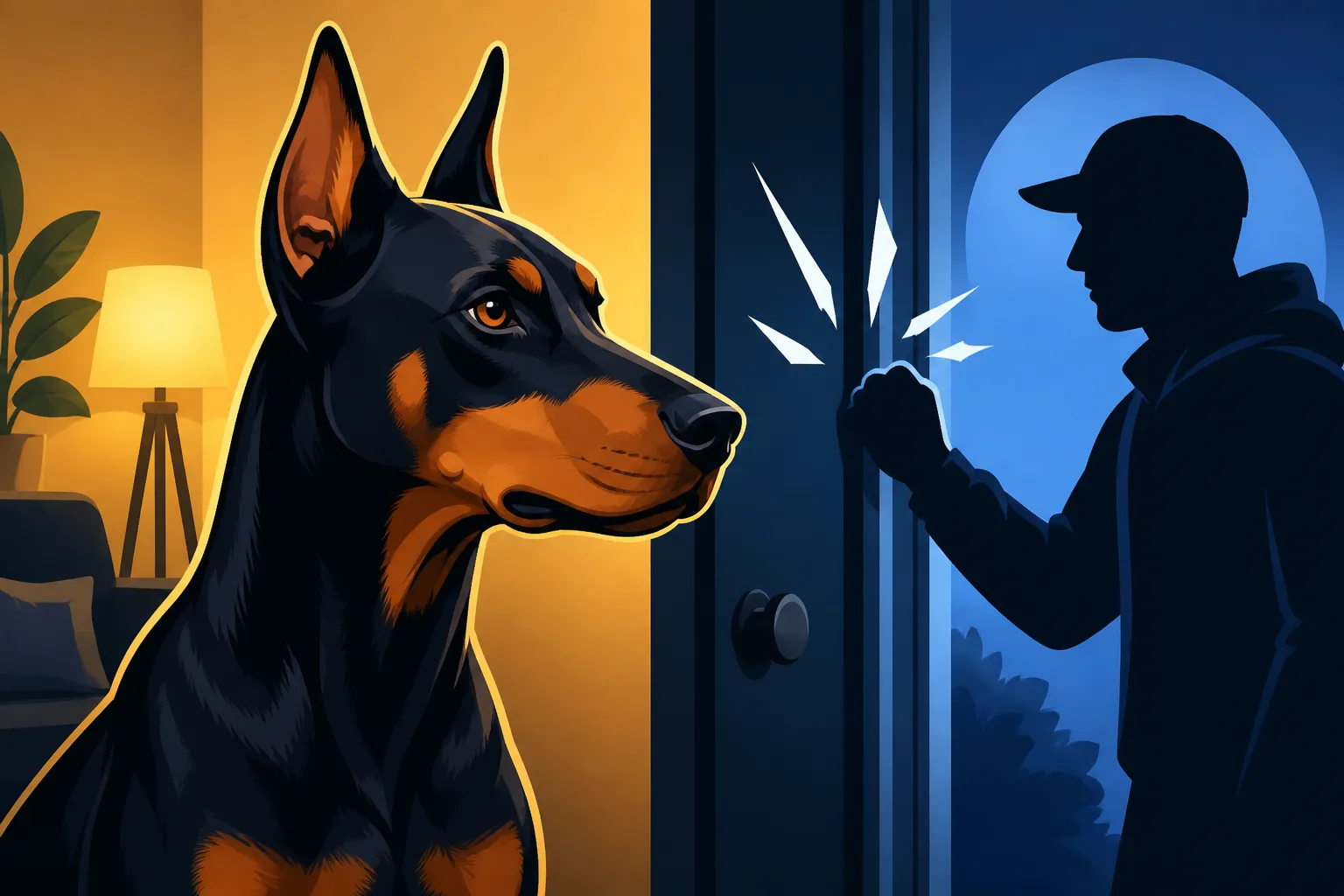
That startling, insistent knock on the door can transform even the calmest Doberman into a flurry of barks, lunges, and an unshakeable sentinel. It's a common frustration for Doberman owners, who often feel caught between wanting their dog to be a deterrent and needing them to be a polite member of society. This guide will delve into why your Doberman reacts the way they do to that dreaded knock, explore their common behaviors, and provide actionable strategies to manage and reshape these responses into something more manageable and less stressful for everyone involved.
The Doberman's Natural Alert System: Understanding the Instinct
Dobermans were quite literally bred to be guardians, companions, and protectors. This isn't just a charming personality trait; it's etched into their very genetic code. When someone knocks on your door, your Doberman isn't just being "bad" or disobedient; they're often operating on deeply ingrained instincts that tell them to assess, alert, and potentially defend their territory and their family. Understanding this fundamental aspect of their nature is the first step toward managing their reactions.
A History of Vigilance: Why Dobermans Were Bred to React
Imagine the late 19th century in Apolda, Germany. Karl Friedrich Louis Dobermann, a tax collector, needed a dog that could accompany him on his rounds, deterring potential threats and guarding his collected monies. He wasn't looking for a couch potato; he needed a fearless, intelligent, and highly alert protector. The breeds he meticulously crossed, including Rottweilers, German Pinschers, and possibly Greyhounds, contributed to the Doberman's formidable presence and quick reflexes. This heritage means that a Doberman's first instinct when sensing an intruder – which a knock often signals – is to go into "alert mode." It’s what they were literally designed to do, making it challenging, though not impossible, to temper. The Tax Collector Who Invented the Doberman offers a fascinating glimpse into this history.
They are inherently sensitive to changes in their environment, from the subtle shift in air pressure when someone approaches your porch to the distinct sound of a knuckle on wood. This hyper-awareness is a hallmark of the breed, a trait that makes them excellent guardians but can be quite intense in a modern home setting where delivery drivers and friendly neighbors are the most common "threats." Their reaction isn't personal; it's ancestral.
More Than Just a Bark: The Full Spectrum of Alarm Behavior
While barking is the most obvious sign, a Doberman's response to a knock encompasses a whole symphony of behaviors. You might see their hackles raise along their spine, a sure sign of heightened arousal or perceived threat. Their body might stiffen, their ears might swivel forward, and their eyes could narrow, locking onto the sound source. Some Dobermans might begin pacing frantically, while others might "post up" at the door, blocking access with their entire body.
It's crucial to observe these subtle cues because they tell you how your Doberman is feeling. Are they genuinely fearful? Are they excited? Or are they displaying a classic territorial display? A low, rumbling growl accompanied by a stiff posture and averted gaze is very different from an excited, high-pitched bark with a wagging tail. Spotting the Moment a Doberman Is Uncomfortable can help you interpret these nuanced signals.
The Double-Edged Sword of Loyalty and Protection
Dobermans are renowned for their unwavering loyalty and deep bond with their families. This intense devotion often translates into a powerful protective instinct. To your Doberman, you are their people, and your home is their territory. A knock on the door isn't just noise; it's a potential challenge to their pack and their space. This deeply ingrained sense of responsibility is what makes them such incredible guardians, but it can also be a source of stress and over-arousal when not properly channeled.
This protective drive can be incredibly comforting, knowing that your Doberman is always on watch. However, it can also lead to embarrassing or even problematic situations if not managed. A Doberman who perceives every visitor as a threat, even a welcome one, can make everyday life a challenge. It's about finding that delicate balance between allowing them to be your alert system and teaching them that you, the leader, will handle the introductions and decide who is friend or foe.
Common Doberman Reactions to a Knock at the Door: From Woofs to Worry
The way your Doberman reacts to a knock can vary wildly, even within the same household or from one day to the next. It’s not always a uniform "bark, bark, bark" response. Understanding these different manifestations is key to choosing the right management and training strategies.
The Enthusiastic Greeter vs. The Territorial Defender
Some Dobermans, especially those well-socialized and confident, might approach the door with an almost comical level of excitement. They're not necessarily guarding; they're convinced that every knock means a new friend or an exciting adventure. This might involve joyous, frantic barking, jumping, and potentially even bumping into guests in their eagerness to greet. It's more about over-excitement and lack of impulse control than aggression.
On the flip side, you have the territorial defender. This Doberman sees the knock as an intrusion. Their barks are deeper, more insistent, often accompanied by a rigid stance, hackles raised, and potentially even growling or lunging towards the door. This dog isn't looking for a playmate; they're sending a clear "stay away" message. This type of reaction is usually driven by a combination of protective instinct, territoriality, and sometimes underlying anxiety or lack of confidence in handling novel situations. Doberman Guarding Instinct and Where It Tips Over details how this can escalate.
Body Language Cues: What Your Doberman Is Really Saying
A Doberman's body language is a rich source of information, especially when their instincts are running high. When a knock comes, watch for these signs:
- Tail: Is it stiff and held high, perhaps giving small, rigid wags? Or is it tucked between the legs? A low, slow wag can indicate uncertainty, not necessarily happiness.
- Ears: Pricked forward, swiveling, or flattened back against the head? Forward-pricked ears indicate focus and alertness, while flattened ears can signal fear or submission, but also sometimes intense focus before a lunge.
- Posture: Are they leaning forward, tense, and ready to spring? Or are they cowering, trying to make themselves small? A confident, territorial Doberman will appear larger, while a fearful one might try to retreat.
- Eyes: Dilated pupils, hard stare, or darting eyes? A fixed, hard stare is often a warning sign.
- Mouth: Closed and tight, or open with teeth visible? A tightly closed mouth or lip curl shows tension.
These subtle signals are your Doberman's way of communicating their emotional state. Understanding them is vital, particularly when trying to introduce guests, as it helps you anticipate and de-escalate potential issues before they become full-blown confrontations. This is a critical skill for any Doberman owner, as What Cropped Ears Hide About a Doberman's Mood can attest to; you need to rely on the whole picture.
Escalation: When a Warning Bark Turns into a Lunge
What starts as a simple alert bark can quickly escalate if not managed. For some Dobermans, the initial bark is just the first volley. If the "intruder" doesn't retreat (i.e., the person on the other side of the door doesn't vanish), the Doberman might feel compelled to ramp up their efforts. This can manifest as increasingly frantic barking, growling, pushing against the door, scratching, or even jumping up to try and look through a window. In more extreme cases, an anxious or overly protective Doberman might lunge at the door, clawing at it, or even attempt to bite if the door is opened too quickly.
This escalation is often a sign of increasing stress or a feeling that their warnings aren't being heeded. It can also be a learned behavior: if the intense barking and lunging successfully make people leave (e.g., a delivery driver drops a package and runs), the Doberman learns that this behavior works. This is why intervention is so important; you don't want your Doberman to believe they must protect you from every visitor.
| Doberman Door Reaction | Common Behaviors | Underlying Motivation | Best Approach |
|---|---|---|---|
| Over-Excited Greeter | Frantic barking, jumping, tail wagging, bumping into people, trying to lick faces | Excitement, desire to play, lack of impulse control, learned attention-seeking | Teach "Place" or "Mat," reward calm, controlled greetings, manage energy levels. |
| Territorial Defender | Deep, insistent barking, growling, stiff posture, hackles raised, lunging at door | Protective instinct, perceived threat, territoriality, anxiety, lack of trust in owner's ability to handle | Desensitize to knock, counter-condition positive association, strong "Stay," calm leash control, professional help. |
| Fearful Reactor | Barking from a distance, retreating, shaking, submissive urination, growling if cornered | Fear, insecurity, past negative experiences, lack of socialization | Build confidence, positive exposure to new people, create safe retreat, avoid punishment, gentle desensitization. |
Why the "Velcro Dog" Becomes a Guard Dog at the Door
The Doberman is famously known as a "Velcro dog," sticking close to their human companions, often literally leaning on them. This intense attachment is part of their charm, but it's also a significant factor in their door-related behaviors. When that bond is so strong, and their protective instincts are high, the door becomes a flashpoint where their loyalty and their perceived duty collide. Living With a Doberman That Follows You Everywhere highlights just how deep this attachment runs.
Your Home, Their Castle: The Concept of Resource Guarding
For a Doberman, their home isn't just a place; it's a vital resource, much like their food, toys, or even their human family. This makes them prone to "resource guarding" not just objects, but also spaces. The front door is the literal gateway to this cherished resource. When someone knocks, your Doberman perceives a potential threat to their most valuable possessions: their family, their comfort, and their safety. They aren't being aggressive for aggression's sake; they are defending what they believe is theirs, and by extension, what is yours.
This guarding behavior is a natural instinct, but in domestic settings, it needs careful management. You want your Doberman to alert you to strangers, but you don't want them to feel like they must handle every situation themselves. Your goal is to convey to them that you are fully capable of evaluating and dealing with visitors, thereby alleviating their perceived burden of defense.
Anxiety and Uncertainty: When Protection Becomes Stress
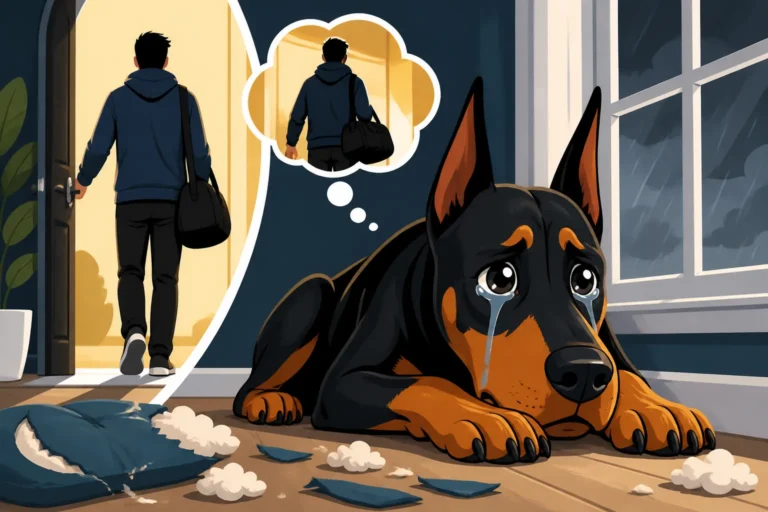
While some Dobermans are truly confident guardians, for many, the intense reaction to a knock can stem from anxiety or uncertainty. They might not be fully confident in how to react, or they might be overwhelmed by the sudden intrusion into their routine and space. This anxiety can manifest as frantic barking, panting, pacing, or even destructive behaviors if they feel truly panicked. The knock creates a feeling of unpredictability, and for a dog that thrives on routine and clear expectations, this can be incredibly stressful.
A Doberman who is uncertain about how to handle strangers, or who has had negative experiences with visitors in the past, may resort to an aggressive display as a defense mechanism. They're trying to make the "threat" go away because they don't know what else to do. This is a crucial distinction from a truly confident, assertive guard dog, and it requires a different training approach, one focused on building confidence and positive associations rather than just suppressing barking.
The Impact of Early Experiences on Door Behavior
A Doberman's early experiences, particularly during their critical socialization period (roughly 3-16 weeks), heavily influence how they will react to novel situations, including knocks on the door and new people. A puppy introduced to a wide variety of sounds, sights, and friendly people will likely develop into a more confident adult. Conversely, a Doberman puppy who lacked proper socialization, or had frightening encounters, might develop fear-based reactivity at the door. The Sixteen Weeks That Set a Doberman Up emphasizes the importance of this early period.
Even if a Doberman had good early socialization, a single negative experience can set them back. Perhaps a child startled them, or a delivery person acted threateningly. These isolated incidents can shape their perception of strangers at the door for years to come. Understanding any potential past trauma or lack of exposure is vital in developing a compassionate and effective training plan for your Doberman.
Strategies for Managing Door-Related Reactivity in Your Doberman
Managing a Doberman's intense reaction to a knock isn't about crushing their spirit or eliminating their natural instincts. It's about channeling those instincts into acceptable behaviors and teaching them an alternative, calmer way to react. This requires consistency, patience, and a clear understanding of what you want your Doberman to do instead of barking and lunging.
Foundation Training: "Place" and "Stay" are Your Best Friends
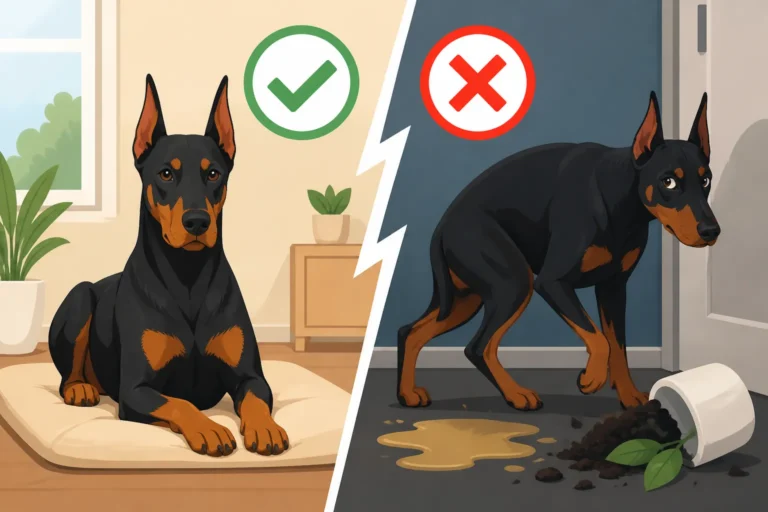
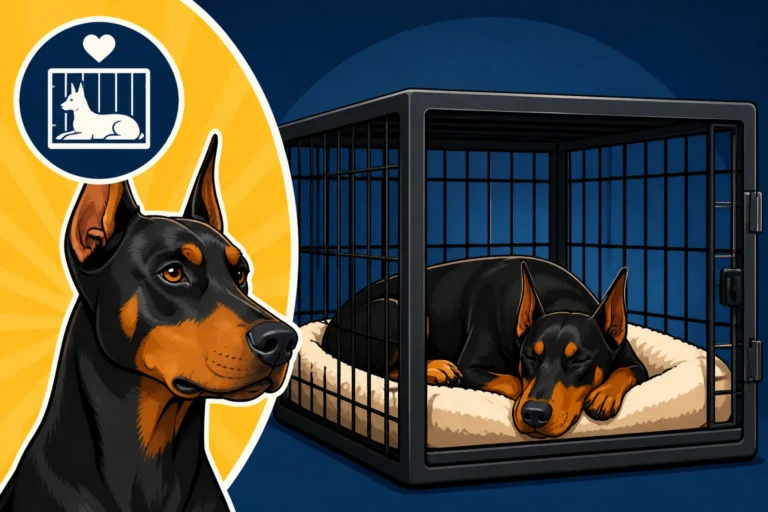
Before you can tackle the specific issue of the door knock, your Doberman needs a solid foundation in basic obedience, particularly "Place" (or "Go to your mat") and a rock-solid "Stay." The "Place" command teaches your Doberman to go to a designated spot—a dog bed, a mat, or even their crate—and remain there until released. This gives them a clear, acceptable alternative behavior when the doorbell rings or a knock occurs. It provides both structure and a sense of predictability, which can be calming for an anxious Doberman. Teaching a Doberman to Go to a Mat for Guests is an invaluable resource for this.
Start practicing "Place" in low-distraction environments, gradually increasing the duration and adding minor distractions. Reward heavily for staying on their spot. Once they're proficient, you can begin to introduce the sound of a knock or doorbell as a cue to go to their place. This isn't about punishment; it's about offering them a job that results in a reward. BAXTER & Bella, for example, offers comprehensive online puppy programs that cover these foundational skills, which are crucial for any Doberman, especially when dealing with door etiquette.
Desensitization and Counter-Conditioning: Changing the Association
This is where you change your Doberman's emotional response to the knock from negative (fear, territoriality, over-excitement) to positive (calm, anticipation of a reward).
- Start Small: Begin by having a friend or family member stand outside your door and simply touch the door, not knock. The moment they touch it, immediately give your Doberman a high-value treat. Repeat this many times. The goal is for your Doberman to associate the sound/presence at the door with good things.
- Gradual Increase: Slowly progress to a soft tap, then a slightly louder tap, then a gentle knock, and finally a regular knock. Each time, the moment the sound occurs, deliver a treat. The key is to deliver the treat before your Doberman has a chance to react negatively. If they bark, you've gone too fast. Step back to an easier level.
- Combine with "Place": Once your Doberman can hear a knock without immediate alarm, start asking them to go to their "Place" before the knock happens. Enlist a helper to knock while your dog is calmly on their mat. Reward heavily for remaining calm. Over time, the knock becomes a cue for them to settle, knowing a treat is coming.
This process takes time and consistency. You're literally reprogramming their brain, building new neural pathways that associate the knock with safety and rewards, not threat.
Management Tools and Environmental Control
While training is ongoing, management is crucial for preventing your Doberman from practicing undesirable behaviors. Every time your Doberman barks and lunges at the door, they are reinforcing that behavior.
- Doorbell Disable/Knock Policy: If possible, temporarily disable your doorbell and ask visitors to call or text upon arrival. This allows you to prepare your Doberman before the unexpected sound.
- Physical Barriers: Use baby gates to keep your Doberman away from the immediate vicinity of the front door. This creates a physical buffer, giving them less direct access to the "intruder" and giving you more control.
- Distraction: If you know someone is coming, have a high-value chew toy or a puzzle feeder ready. Give it to your Doberman in their "Place" or a separate room before the knock. This redirects their focus. Products available on Amazon, like durable Kong toys filled with frozen peanut butter or lick mats, can be excellent for this purpose, keeping them engrossed for several minutes.
- Leash Up: If you anticipate a visitor and your Doberman is prone to lunging, keep them on a leash when the visitor arrives. This gives you immediate physical control and prevents them from practicing unwanted behaviors.
Long-Term Training and Socialization for a Calmer Doberman
Managing the immediate reaction to a knock is one thing, but building a Doberman who is genuinely calm and confident in the face of visitors requires ongoing effort, socialization, and consistent training. This holistic approach ensures your Doberman isn't just suppressing a behavior, but truly feeling secure.
Gradual Exposure to Visitors: Controlled Introductions
Once your Doberman is comfortable with the sound of a knock and can reliably go to their "Place," you need to start introducing actual visitors in a controlled, positive way.
- Staged Arrivals: Arrange for a trusted friend or family member to come over. Before they arrive, put your Doberman on their "Place" (behind a gate, if necessary). When your friend knocks, give your Doberman a treat for staying calm.
- Controlled Entry: Open the door slowly. If your Doberman remains calm on their place, continue treating. Your friend should ignore your Doberman completely upon entry. This is key: no eye contact, no talking, no petting until your Doberman is settled.
- Gradual Interaction: Once your Doberman is relaxed, and only then, your friend can toss a treat towards their mat. Slowly, over several visits, your friend can progress to calmly walking past, then briefly petting your Doberman while they're on their mat, always rewarding calm behavior. The goal is to teach your Doberman that visitors are not a threat, and calm behavior leads to positive interactions. Teaching a Doberman to Accept Visitors delves deeper into these methods.
Remember, every interaction should be positive. Never force your Doberman to interact with a visitor if they are showing signs of fear or stress.
Continuing Obedience and Mental Stimulation
A well-exercised and mentally stimulated Doberman is a calmer Doberman. These dogs are highly intelligent and need an outlet for their brains and bodies. If they're bored or have pent-up energy, they are much more likely to react intensely to stimuli like a door knock. Regular walks, runs, and opportunities for vigorous play are essential. Beyond physical exercise, engage their minds with puzzle toys, scent work, or advanced obedience training. Training a Doberman That Is Smarter Than You Expect discusses their intelligence and how to channel it.
Continuing obedience classes, even for adult Dobermans, can be incredibly beneficial. It reinforces good behaviors, provides mental stimulation, and helps strengthen the bond and communication between you and your dog. A Doberman who understands and respects your commands is more likely to defer to your judgment when someone is at the door.
Seeking Professional Help for Persistent Issues
If you've tried consistent training and management strategies and your Doberman's door reactivity remains severe, or if you're concerned about aggression, it's absolutely okay—and often necessary—to seek professional help. A certified professional dog trainer or a veterinary behaviorist can assess your Doberman's specific situation, identify underlying causes (such as anxiety disorders), and develop a tailored training plan. They can provide hands-on guidance and help you navigate complex behavioral issues.
Look for a trainer who uses positive reinforcement methods and has experience with Dobermans or other strong-willed, protective breeds. Avoid trainers who advocate for harsh corrections or punitive tools, as these can exacerbate fear or aggression in a Doberman. Finding a Trainer Who Has Worked With Dobermans can guide you in choosing the right professional. Sometimes, medication in conjunction with behavior modification can be a valuable tool for Dobermans with severe anxiety, and a veterinary behaviorist can advise on this.
It’s a journey, not a sprint, when it comes to refining a Doberman’s natural guarding instincts into polite household manners. But with patience, understanding, and consistent effort, you and your Doberman can navigate the everyday sounds of your home life with greater peace.
Disclaimer
This article is for general informational purposes only and does not constitute professional advice. Laws, prices and regulations vary by location and change over time. Consult a qualified professional for guidance on your specific situation.