Why a Doberman Puppy Must Meet the World Early
Bringing a Doberman puppy into your home is an incredibly exciting time, but many new owners quickly realize that these intelligent, protective dogs aren't just going to magically become perfectly behaved companions. A common pitfall I see is underestimating the absolute necessity of early, varied, and positive socialization. If your Doberman puppy doesn't meet the world in a structured, thoughtful way from the get-go, you could be setting both of you up for a lifetime of fear, reactivity, and frustration. This guide is here to walk you through exactly why and how your Doberman puppy needs to explore the world early to become the confident, calm, and trustworthy dog you dream of.
The Critical Window: Why Early Matters So Much for Dobermans
The early weeks and months of a Doberman puppy's life are not just about cute antics and learning basic commands. They represent a pivotal developmental phase, a "make or break" period that will profoundly influence their temperament and behavior as adults. For a breed with strong guarding instincts like the Doberman, getting this right is paramount.
Understanding the Fear Imprint Period
Often referred to as the "critical socialization period," this crucial window typically runs from about three weeks to sixteen weeks of age. During this time, a puppy's brain is like a sponge, soaking up every experience and forming foundational associations that will shape their view of the world. For Dobermans, who possess a natural wariness and protective drive, this period is especially sensitive. Experiences during these weeks will either build a foundation of confidence and curiosity or, conversely, lay the groundwork for fear, anxiety, and reactivity.
Imagine a Doberman puppy who spends these formative weeks isolated in a quiet home, only interacting with its immediate family. When suddenly confronted with a bustling city street, the rumble of a garbage truck, or a child on a bicycle, these novel stimuli become terrifying rather than interesting. This lack of early, positive exposure can create a deep-seated fear imprint, making the puppy prone to reacting defensively or fearfully to anything new. These reactions can manifest as barking, lunging, cowering, or even aggression as they mature, as their instinct tells them "new things are scary" instead of "new things are interesting and safe."
Building Resilience Through Positive Exposure
The goal of early socialization isn't just to expose your Doberman puppy to everything; it's about providing positive exposure. We want to teach them that the world is a generally safe and interesting place, full of things to explore without fear. This means making every new experience a good one. Did a loud truck just pass by? Great! That means a high-value treat appears, and praise flows. Did a stranger approach respectfully? Wonderful! More treats and gentle encouragement.
Think of it like building a mental "resilience bank." Each positive interaction deposits confidence and positive associations. If your Doberman puppy encounters someone wearing a big hat, someone using a cane, or even hears the unfamiliar whir of a blender, and these experiences are consistently paired with delicious snacks and your calm reassurance, they learn to process these events without fear. Conversely, a single traumatic event during this period – like being cornered by an aggressive dog, or a frightening experience with a loud, rambunctious child – can withdraw a huge amount of confidence, potentially leaving a lasting negative impression that is incredibly difficult to overcome later. It’s about building a robust, positive emotional response to the world, one experience at a time.
What "Meeting the World" Actually Entails for a Doberman Puppy
When we talk about Doberman puppies "meeting the world," we’re talking about a diverse and intentional program of exposure. It’s not simply taking them for a walk around the block. It’s a deliberate effort to introduce them to a wide array of stimuli in a controlled, positive, and non-overwhelming manner.
People, People, and More People
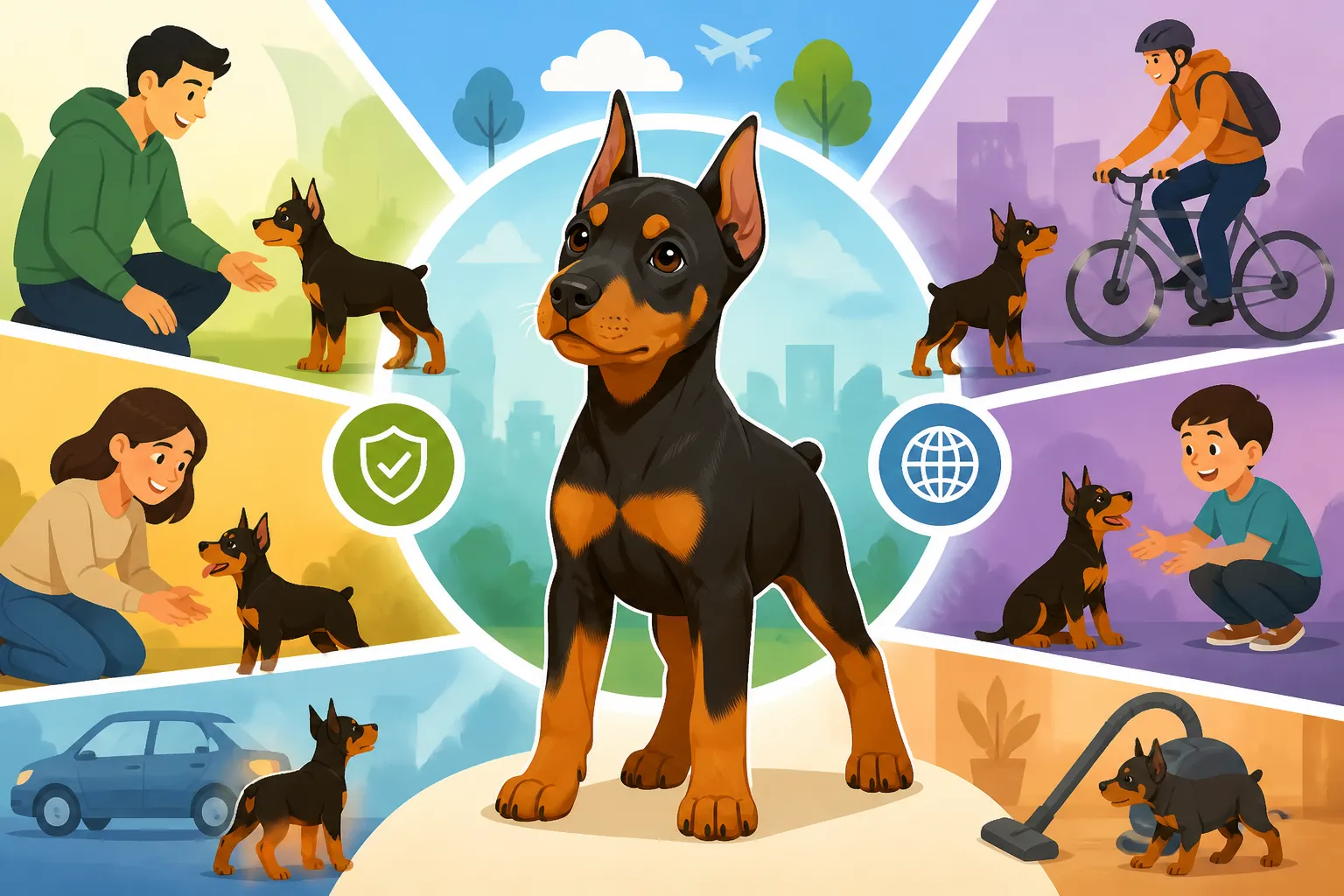
Dobermans are inherently people-oriented but also possess a strong instinct to protect their family. This means they need to meet all kinds of people, not just your immediate friends and family. This includes men, women, children of varying ages, people wearing hats, glasses, uniforms, or using mobility aids. The more diverse their early human interactions are, the less likely they are to develop an unwarranted suspicion or fear of specific types of individuals later on.
Imagine a scenario where your Doberman puppy only ever sees young, fit people. When an elderly person with a shuffling gait or a person in a wheelchair approaches, the Doberman might react with apprehension simply because it's an unfamiliar sight. By gently introducing your puppy to a wide spectrum of human beings, always ensuring these interactions are positive and rewarding (think tiny pieces of cooked chicken for meeting new faces), you're teaching them that humans, in all their variations, are generally benign and even offer good things. Teaching polite greetings, such as sitting for a pet rather than jumping up, should also begin early. This controlled interaction, where the puppy learns to associate new people with pleasant experiences, helps to prevent the development of guardedness or territorial behaviors around visitors later in life. For more on this, you might find Exposing a Doberman Puppy to Strangers a helpful read.
Sounds, Sights, and Surfaces
Beyond people, the world is a symphony of sounds, a kaleidoscope of sights, and a tapestry of textures. Your Doberman puppy needs to experience as many of these as possible. This includes common household sounds like vacuum cleaners, blenders, doorbells, and washing machines, as well as outdoor sounds such as traffic, sirens, construction noise, children playing, and barking dogs. Play recordings of these sounds at a low volume and gradually increase it, always pairing them with treats or playtime.
Take your puppy to different environments: a quiet park, a bustling city sidewalk (carried at first if they aren't fully vaccinated), a pet-friendly store (again, carried), the vet's office for happy visits (no pokes, just treats!), and even a friend's house. Each new place offers unique sights and smells. Crucially, allow them to walk on various surfaces – grass, pavement, gravel, wooden decks, tiles, carpet, and even gentle inclines or declines. These experiences build proprioception and confidence in their footing. Remember, the key is calm and controlled introduction. A short, positive exposure to a new sound or surface is far more beneficial than an overwhelming, frightening experience. The entire The Sixteen Weeks That Set a Doberman Up article delves deeper into this vital initial period.
The Dangers of Isolation and Insufficient Socialization
It’s easy to think that keeping your Doberman puppy safe at home, away from potential germs or perceived dangers, is the best approach. However, for a breed like the Doberman, this can have profoundly negative consequences, leading to a lifetime of struggle for both dog and owner.
The Road to Reactivity and Fear Aggression
When a Doberman puppy is deprived of early, diverse socialization, their natural wariness can easily morph into fear-based reactivity. Imagine a dog that has never seen another dog outside its immediate family until it's six months old. When it finally encounters a strange dog on a leash, its instinct for self-preservation, coupled with a lack of positive experience, kicks in. This can manifest as barking, lunging, growling, or even attempting to bite out of fear. This isn't necessarily aggression born of malice, but rather a desperate attempt to create distance from something unknown and therefore perceived as threatening.
I've seen countless Dobermans come into rescue with severe reactivity issues that stem directly from insufficient early socialization. These dogs often struggle on walks, become defensive around visitors, or are terrified of everyday objects and sounds. While behavior modification can certainly help, it is a long, arduous, and often expensive process that could have been largely mitigated with proper early exposure. Trying to train an adult Doberman out of deeply ingrained fears, especially when those fears manifest in behaviors like lunging and barking at other dogs, is a massive undertaking. For those struggling, A Doberman That Lunges at Passing Dogs offers insights into managing this challenge.
Hindered Trainability and Handler Stress
A fearful or anxious Doberman is a Doberman whose ability to learn and respond to training is severely compromised. When a dog is in a state of fear or high arousal, its cognitive functions are largely shut down; it simply cannot process commands or cues effectively. This means that even if you're dedicated to training, a poorly socialized Doberman will struggle to generalize behaviors to different environments, making basic obedience in public a constant battle.
Beyond the dog's well-being, this also places immense stress on the handler. Daily walks become a source of dread. Vet visits turn into a wrestling match. Having guests over requires elaborate management strategies. The financial implications can also be substantial, as specialized trainers, behaviorists, and potentially even veterinary behavioral medications become necessary. This can quickly overshadow the joy of Doberman ownership, turning what should be a rewarding partnership into a source of constant anxiety and effort. The ideal Doberman is confident, calm, and adaptable, and that starts with proper socialization from day one.
Practical Steps for Effective Doberman Puppy Socialization
Knowing that early socialization is crucial is one thing; actually doing it effectively and safely is another. It requires a proactive and thoughtful approach, focusing on quality over quantity and positive reinforcement.
Structuring Safe and Positive Experiences
One of the best resources for Doberman puppy socialization is a well-run puppy class. These classes offer a controlled environment where puppies can interact with other vaccinated puppies, learn bite inhibition through play, and experience various sights, sounds, and people under the guidance of experienced trainers. It's a fantastic way to check many socialization boxes in one go. You can learn more about the benefits in Whether Puppy Class Is Enough for a Doberman.
Beyond classes, focus on short, frequent outings. Instead of one overwhelming trip to a busy market, aim for several five-minute "observation" sessions where your puppy can simply watch the world go by from a safe distance, ideally in your arms or in a sling if not fully vaccinated. Always bring high-value treats (think boiled chicken, cheese, or specialized training treats from brands you trust, like those easily found on Amazon). Every new, neutral, or slightly startling experience should be immediately followed by a tasty treat and calm praise. This creates a positive association: "Oh, that loud truck sound means delicious food!" Always end your socialization sessions on a positive note, before your puppy becomes overtired or overwhelmed. This leaves them with a good feeling about the experience and eagerness for the next time.
Leveraging Online Resources and Professional Guidance
In today's world, there are incredible online resources that can supplement in-person experiences. Programs like BAXTER & Bella offer structured online puppy training and socialization courses that can guide you through various exposure exercises, often providing checklists and video examples. These can be particularly helpful for new owners who might not know what to prioritize or how to introduce new stimuli safely.
It’s also crucial to consult with your Doberman's reputable breeder and a qualified positive reinforcement trainer who has experience with the breed. A good breeder will have already started socialization with the puppies before they come home, giving you a head start. They can offer advice specific to their lines and temperaments. A trainer can provide personalized guidance, help you assess your puppy's comfort levels, and troubleshoot any emerging anxieties. When seeking a professional, always look for someone who understands Doberman temperament and uses humane, fear-free methods. Finding a trainer who has worked with Dobermans specifically can be invaluable, as discussed in Finding a Trainer Who Has Worked With Dobermans. Avoid dog parks with very young puppies; the risk of negative experiences with unknown adult dogs outweighs the socialization benefits for an unconfident or not-yet-fully-vaccinated pup.
Here's a quick look at effective versus ineffective socialization approaches:
| Aspect | Effective Socialization | Ineffective/Harmful Socialization |
|---|---|---|
| Exposure Type | Diverse, positive, calm, short bursts | Overwhelming, forced, infrequent, negative, or isolating |
| People | Gentle greetings with varied individuals, all ages/looks | Only family, no strangers, rough handling, forced interactions |
| Sounds | Paired with treats/play, gradual volume increase | Sudden, loud, startling sounds without positive reinforcement |
| Environments | Carried or observed calmly, varied locations | Overstimulating busy places, left alone in strange environments |
| Other Dogs | Controlled puppy classes, known calm adult dogs | Unsupervised dog park play with unknown dogs, too early or too rough |
| Owner Role | Calm, reassuring, advocate for puppy, uses high-value rewards | Anxious, pushes puppy past limits, uses punishment, ignores stress |
Vaccination and Socialization: Striking the Right Balance
This is perhaps the most common dilemma new Doberman owners face: how do you safely socialize your puppy when they aren't fully vaccinated and are susceptible to diseases like canine parvovirus or distemper? It's a valid concern, and navigating it requires a balance of caution and common sense.
Weighing Health Risks vs. Behavioral Imperatives
Many veterinarians correctly advise owners to keep puppies isolated until their full series of vaccinations is complete, typically around 16 weeks of age. However, as we've discussed, this 3-16 week window is the most critical for behavioral development. Delaying all socialization until 16 weeks can mean missing this crucial period entirely, potentially leading to lifelong behavioral problems that are far more prevalent and difficult to treat than vaccine-preventable diseases.
The key is controlled exposure. Discuss a safe socialization plan with your veterinarian. They can advise you on the disease prevalence in your local area and suggest low-risk activities. For example, well-run puppy classes often require proof of initial vaccinations, creating a safer environment. Carrying your Doberman puppy in a sling or backpack through a pet-friendly store or a busy park allows them to observe the world without touching potentially contaminated ground. Brief, supervised visits with known, fully vaccinated, and friendly adult dogs are also usually safe. The goal is to provide a rich variety of positive experiences without putting your puppy at undue health risk. It’s about being smart and selective, not isolating.
Continued Socialization Beyond Puppyhood
Socialization isn't a "one-and-done" task that you complete by 16 weeks. It's an ongoing process that continues throughout your Doberman's life. Think of it as maintenance. Just like you wouldn't expect your Doberman to stay perfectly trained if you stopped practicing, you shouldn't expect them to remain perfectly socialized without continued exposure.
As your Doberman matures, continue to expose them to new sights, sounds, people, and places. Take them on car rides to different towns, visit new dog-friendly establishments, or simply introduce them to novel objects around the house. Even adult Dobermans benefit from these experiences, which help keep their minds sharp, maintain their confidence, and reinforce their adaptability. A Doberman who only experiences the same routine and the same small circle of people can still become wary of new things as they age. This continued enrichment is vital for their overall well-being, especially as they enter The Doberman Years When Everything Shows Up. Regular, positive exposure ensures your Doberman remains a confident, well-adjusted companion throughout its entire life.
The Long-Term Rewards of a Well-Socialized Doberman
The effort you put into early and ongoing socialization for your Doberman puppy pays dividends for years to come. It's an investment in their happiness, your peace of mind, and the strength of your bond.
A Confident, Adaptable Companion
A Doberman that has been properly socialized from a young age is a joy to live with. They approach new situations with curiosity rather than fear. They can calmly navigate bustling environments, greet strangers politely, and remain relaxed in novel settings. This confidence means less stress for both of you. You can take your Doberman almost anywhere – a hike in a new park, a visit to a pet-friendly cafe, or even to a friend's barbecue – without worrying about how they'll react.
This adaptability also translates directly into better trainability. A confident Doberman is a dog whose brain is open to learning, even amidst distractions. They trust your guidance and are less likely to be overwhelmed by the world around them. This creates a much more responsive and engaged partner, making all your training efforts more effective and enjoyable. The goal is always to have a Doberman that is confident, not sharp, as highlighted in Building a Doberman Puppy That Is Confident, Not Sharp.
Strengthening the Bond and Enhancing Quality of Life
Beyond just good behavior, proper socialization deepens the connection you share with your Doberman. Every positive, shared experience you navigate together – a new trail explored, a friendly stranger greeted, a busy street calmly walked – builds trust and understanding between you. Your Doberman learns to rely on you as their guide and protector, confident that you will keep them safe and make the world a fun place to be.
This enhanced quality of life extends to everything. Your Doberman will be less prone to anxiety-related behaviors, will enjoy outings more, and will simply be a happier, more resilient individual. They will thrive in various environments and situations, making them truly versatile companions. The small amount of effort you invest in those early weeks of socialization will repay you tenfold in a lifetime of joyful companionship. In retrospect, many Doberman owners realize What Doberman Owners Wish They Had Started Earlier often revolves around early, consistent socialization. It's truly one of the greatest gifts you can give your Doberman.
Disclaimer
This article is for general informational purposes only and does not constitute professional advice. Laws, prices and regulations vary by location and change over time. Consult a qualified professional for guidance on your specific situation.