Teaching a Doberman Puppy to Ask to Go Out
One of the most immediate and often frustrating challenges new Doberman puppy owners face is the constant battle against indoor accidents. You bring home this intelligent, adorable creature, and suddenly your floors become a canvas for puddles and piles, leaving you wondering if they'll ever "get it." This comprehensive guide is designed to walk you through every step of teaching your Doberman puppy not just to go outside, but to ask to go out, transforming those frantic clean-ups into calm, communicative potty breaks.
Understanding the Doberman Puppy Mindset for Potty Training
Potty training a Doberman puppy isn't just about showing them where to go; it's about understanding how they learn, what motivates them, and working with their inherent traits. Dobermans are famously intelligent, but that can be a double-edged sword when it comes to house-training. They pick up routines quickly, but if those routines aren't precisely what you want, they can be equally quick to establish less desirable habits.
Why Consistency is King for a Clever Doberman
Dobermans thrive on routine and clear expectations. Their sharp minds are constantly analyzing patterns and consequences. If one day you take them out every hour, and the next you wait three hours, they’ll struggle to understand the "rules" of the game. This inconsistency creates confusion, leading to accidents and a slower learning curve. Think of it like teaching a child a new language; if you only speak it sometimes, they won't become fluent. For a Doberman, a clear, predictable schedule, paired with consistent responses from you, builds trust and understanding. They need to know that every single time they go outside, it's a positive, rewarding experience, and every single time they have an accident inside, it's a neutral or slightly undesirable one (never punishment, which we’ll discuss later). This unwavering consistency is the foundation upon which all successful Doberman training, including potty training, is built. Your Doberman is always learning, whether you're actively teaching or not, so every interaction is a lesson. This is where the challenge of having such a smart dog comes in; they learn everything, good and bad, very quickly. You might find that your Doberman puppy is already starting to learn A Doberman That Learns Your Routine Too Well, so harness that for good habits!
The Natural Instincts You're Working With and Against
Dobermans, like most dogs, have an innate desire to keep their den clean. This means they generally prefer not to soil their sleeping area. This natural instinct is your biggest ally in potty training, especially when utilizing crate training. However, puppies, regardless of breed, have small bladders and limited control. They simply can't hold it for long periods, and expecting them to is unrealistic and unfair. What you're working against is their immature physiology and the lack of a clear communication system. They might give subtle cues – a sniff, a circle, a sudden stop in play – that are easy for us humans to miss. Our job is to bridge that communication gap, understanding their signals while simultaneously teaching them a more explicit way to ask. It's also important to remember that Dobermans are often very attuned to their people, sometimes to an almost clingy degree (the "Velcro Doberman" nickname isn't for nothing!). This attachment can be used to your advantage, as they're often eager to please and respond well to positive reinforcement from their beloved human.
Setting Up for Potty Training Success from Day One
The first few days and weeks with your Doberman puppy are crucial for establishing good habits. It's like laying the foundation for a house – if it's strong and well-planned, the rest of the structure will stand tall. Starting right sets you up for much smoother sailing down the line and prevents a lot of headaches later.
Crate Training as Your Best Friend for a Doberman Puppy
A properly introduced crate is an invaluable tool for potty training a Doberman. As mentioned, dogs naturally don't want to soil their sleeping area. The crate leverages this instinct by providing a safe, comfortable "den" that's just big enough for them to stand up, turn around, and lie down. If the crate is too large, they might use one end as a bed and the other as a bathroom, defeating the purpose. For a Doberman, who will grow quickly, consider a crate with a divider that can expand as they do. Companies like Midwest Homes for Pets offer excellent options that are robust enough for a growing Doberman. When your puppy is in the crate, they're much less likely to have an accident, making supervised "free time" in the house more meaningful. This means you can focus on playing and bonding, rather than constantly monitoring for potty cues. Remember, the crate should never be used for punishment; it should be their happy place, a quiet retreat. Make it inviting with soft bedding and maybe a safe chew toy. This early association with the crate is also important for Building a Doberman's Alone Time From Minutes later on. For more insights, you might want to check out Choosing a Crate for a Doberman.
Establishing a Reliable Potty Schedule and Routine
This is where the rubber meets the road. A consistent schedule is the single most important factor in potty training. Doberman puppies, especially young ones, need to go out frequently. Think of taking them out:
- Immediately upon waking up in the morning.
- After every nap.
- After every meal or drink.
- After every play session.
- Before bedtime.
- At least once during the night for very young puppies (under 12-14 weeks).
For a young puppy, this could mean going out every 30-60 minutes initially. Keep a log if it helps – jot down when they ate, drank, and successfully pottied. This helps you predict their needs. When you take them out, always go to the same designated potty spot (more on that next). Use a consistent potty cue word like "Go Potty" or "Hurry Up." As soon as they finish, praise them enthusiastically and offer a high-value treat. Don't linger and play until after they've done their business; otherwise, they might learn to delay going potty to prolong playtime outside. As your Doberman gets older, their bladder control will improve, and you can gradually extend the time between potty breaks, but always err on the side of caution. If you are unsure, take them out. This strict adherence to a schedule will help you achieve Toilet Training a Doberman Puppy in Two Weeks, which is often achievable with consistent effort.
Choosing the Right Potty Spot for Your Doberman
Designating a specific outdoor potty spot helps your Doberman understand exactly what's expected when they're taken outside. Pick an area in your yard that's easily accessible, away from high-traffic zones, and ideally, one that you don't mind getting a little messy. Consistently taking them to this same spot creates a strong association: "When I'm here, it's time to potty." The scent markers from previous successful potty breaks will also encourage them to go in that area again. When you arrive at the spot, keep distractions minimal. No playing, no greeting other dogs or people until after they've done their business. Once they perform, then the party starts! Lots of praise, a special treat, and then you can either bring them back inside or, if it's playtime, move to a different area of the yard for fun. This clear distinction helps them understand the purpose of being in that specific spot.
The Art of Teaching Your Doberman to "Ask"
Getting your Doberman to simply "go outside" is one thing, but empowering them to tell you when they need to go is the ultimate goal. This shifts the responsibility, giving your Doberman agency and dramatically reducing the chance of accidents. It’s about building a clear line of communication.
Recognizing Your Doberman's Potty Cues Before They Speak
Before your Doberman can "ask," you need to become a master at reading their subtle signals. Even the most stoic Doberman will give away clues when nature calls, especially as a puppy. These cues might be:
- Restlessness: Pacing, circling, unable to settle.
- Sniffing: Intense sniffing of the floor, especially in areas they’ve previously had accidents.
- Whining or Barking: A soft whine or a short, insistent bark directed at you or the door.
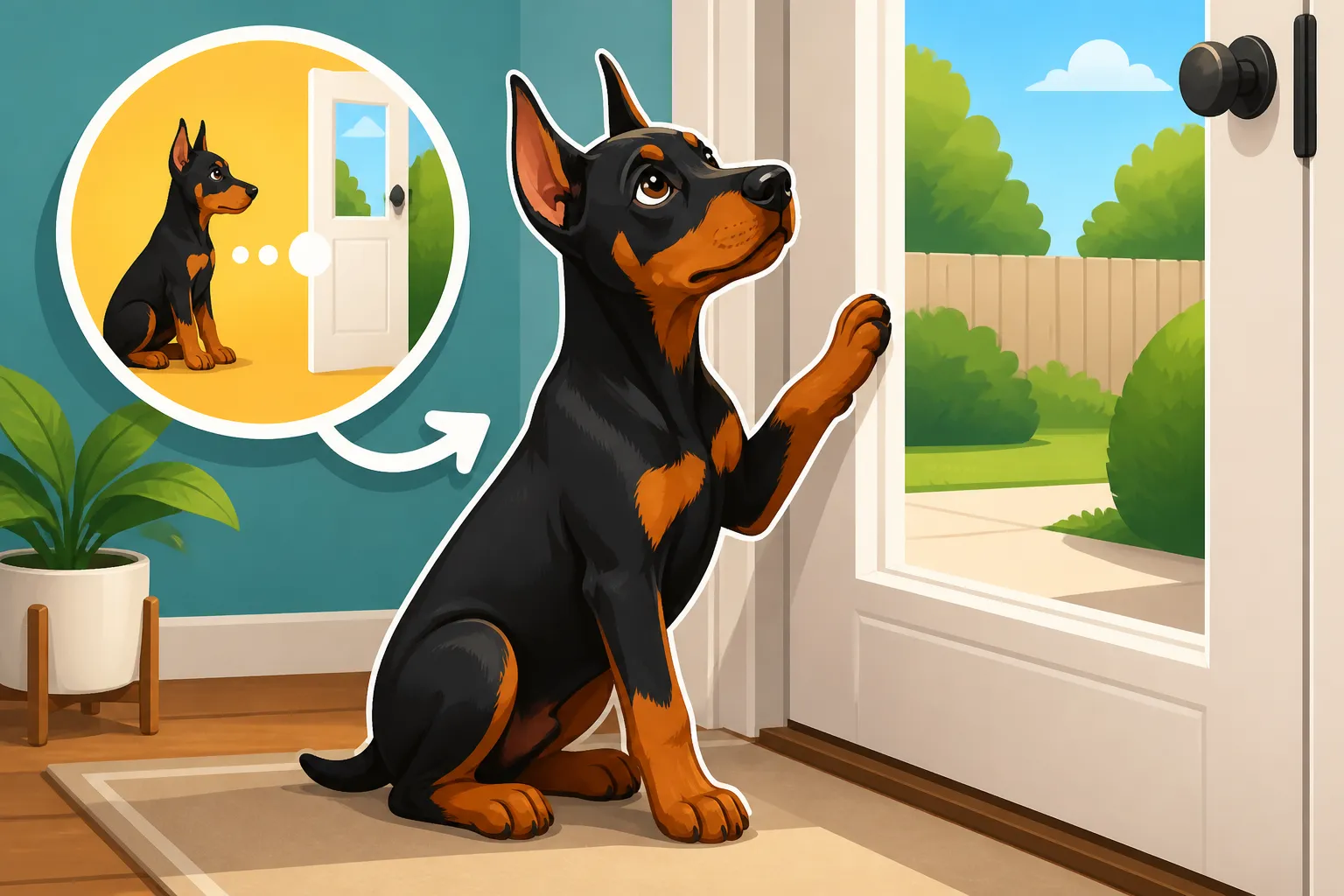
- Going to the Door: Standing by the door, pawing at it, or looking back and forth between you and the door.
- Suddenly Stopping Play: Interrupting an exciting game to focus on something else (often sniffing).
- Squatting/Lifting a Leg: The obvious one, which you want to interrupt before it happens indoors.
The key is to observe your puppy like a hawk during their unsupervised time. The moment you see any of these cues, calmly but quickly scoop them up (if small enough) or leash them, say your potty cue word, and rush them to their designated outdoor spot. Even if they don't go, it was the right instinct to take them out. Every time you successfully get them out before an accident, you’re reinforcing the idea that "these feelings mean I go outside." This is also where understanding What Cropped Ears Hide About a Doberman's Mood can be tricky, as some of their more subtle signals might be harder to read if you're not used to watching their whole body language.
Introducing a Potty Signal: Bells, Buttons, or Barks
Now that you're an expert at reading their cues, it's time to give them a way to "speak" to you. There are several popular methods:
- Potty Bells: This is a classic for a reason. Hang a set of large, easy-to-jingle bells by the door your Doberman uses to go outside. Every single time you take your puppy out for a potty break, gently take their paw and tap the bells, then immediately open the door and go outside. As soon as they potty, praise and treat. They'll quickly associate the sound of the bells with going outside. Eventually, they’ll start swatting the bells themselves to signal their need. You can find simple potty bells on Amazon for a few dollars.
- Talking Buttons: For a Doberman's intelligence, talking buttons can be a fantastic, albeit slightly more advanced, option. These are large, recordable buttons that you can program with words like "outside" or "potty." Similar to bells, every time you take your Doberman out, press the "outside" button and say the word, then open the door. Over time, your Doberman may learn to press the button themselves. This method leverages their smarts and vocalization potential.
- "Speak" Command (for Potty): If your Doberman already has a good "speak" or "bark" on command, you can adapt this. When you take them to the door and they show cues, prompt them to "speak" or "bark." The moment they do, open the door and go out. Reward heavily for going outside. This might be trickier if they already bark a lot, as you'll want to differentiate the "potty bark" from other barks.
The key with any method is consistency and repetition. Do it every single time you go out, even if they didn't ask. They learn by association, and the more times they link the signal to the action (going outside), the faster they'll pick it up.
Here's a quick comparison of popular "asking" methods:
| Method | Pros | Cons | Best Suited For |
|---|---|---|---|
| Potty Bells | Simple, clear, audible cue; easy for puppies to learn. | Can be annoying if rung excessively; may be ignored by some dogs. | Owners seeking a straightforward, reliable "ask" method. |
| Talking Buttons | Utilizes Doberman intelligence; specific commands; less ambient noise. | More complex setup; dog needs to understand cause-and-effect; buttons can be expensive. | Owners who enjoy advanced training; highly intelligent, motivated Dobermans. |
| "Speak" Command | No equipment needed; leverages existing vocalizations. | Can be confused with other barks; not all Dobermans are naturally vocal on command. | Dobermans who already bark on cue; owners with strong verbal communication skills. |
Reinforcing the "Ask" with High-Value Rewards
Once your Doberman puppy starts making the connection and tries to use their chosen signal (whether it's nudging a bell or giving a soft whine at the door), your reaction is paramount. This is their first attempt at communicating, and you want to make it the most rewarding experience possible.
- Immediate Response: The second they offer the signal, respond! Drop what you're doing, get excited, and immediately take them out. Delaying your response even for a minute can break the chain of association.
- Enthusiastic Praise: Use a happy, high-pitched voice: "Good potty bells! Let's go outside!" Your excitement will convey that they've done something wonderful.
- High-Value Treats: When they successfully potty outside after using their signal, give them a truly special treat. Not just their regular kibble, but something they absolutely adore – a tiny piece of cooked chicken, cheese, or a freeze-dried liver treat. This super-charges the positive association.
- Short Playtime (Optional): After the potty and treat, a quick game of fetch or a short walk can be an added reward, but make sure the pottying itself is the primary source of the big reward.
Remember, you're not just rewarding the act of going potty outside; you're rewarding the communication. Every successful "ask" followed by an immediate, highly rewarding trip outside solidifies the behavior. This also applies to any successful training, whether for Training a Doberman That Is Smarter Than You Expect or simpler cues. As a general rule, Rewards a Doberman Will Work For will be different for every dog, so experiment to find what truly motivates your Doberman.
Troubleshooting Common Doberman Potty Training Hurdles
Let’s be realistic: potty training a Doberman, or any puppy for that matter, is rarely a perfectly smooth journey. There will be bumps, puddles, and moments of frustration. The key is understanding why these hurdles occur and how to address them without losing your cool.
When Accidents Still Happen: What Went Wrong?
Even with the best intentions and a solid plan, accidents happen. When they do, it's easy to get frustrated, but it's crucial to remember that it's rarely your Doberman's fault. An accident indoors almost always means a breakdown in our training plan or supervision.
- You Waited Too Long: The most common culprit. Puppies, especially young Dobermans, have small bladders. You might have underestimated how long it had been since their last break, or they simply couldn't hold it until you finished that email.
- Missed a Cue: Your puppy might have given a subtle sniff or a glance at the door that you simply didn't catch in time. We can't be perfect observers 24/7, but it's a reminder to stay vigilant.
- Too Much Freedom, Too Soon: Giving a puppy free run of the house before they are reliably potty trained is a recipe for accidents. They need to earn that freedom slowly.
- Inconsistent Schedule: If your potty schedule varies wildly day by day, your Doberman won't be able to predict when they're supposed to go out, leading to confusion.
- Not Enough Reinforcement: If going outside for potty isn't consistently the most exciting thing, they might not be motivated to hold it or ask.
When an accident happens, do not punish your Doberman. Yelling, rubbing their nose in it, or physical correction will only teach them to fear you and to hide their pottying, making it harder to catch them in the act and interrupt. Calmly interrupt them if you catch them in the act (a clap or "Nope!"), immediately take them outside, and if they finish there, praise and reward. If you find an accident after the fact, simply clean it up thoroughly with an enzymatic cleaner (like Nature's Miracle, readily available on Amazon) to eliminate odors that might attract them back to the same spot. Then, resolve to be more vigilant with your supervision and schedule. Remember, Why Yelling Shuts a Doberman Down applies to all training, including potty training.
Dealing with Regression in Adolescent Dobermans
Just when you think you’ve got this potty training thing nailed, your Doberman hits adolescence (roughly 6-18 months), and suddenly, they're having accidents again! This is a very common, albeit frustrating, phase. Adolescent Dobermans are like teenagers – they test boundaries, forget rules they once knew, and sometimes act like they’ve never heard of potty training before.
- Hormonal Changes: As hormones kick in, they might become more interested in marking territory, even indoors, or simply have a temporary lapse in focus.
- Testing Boundaries: They're seeing what they can get away with. "Do I really need to ask? What if I just go here?"
- Increased Distraction: Adolescent Dobermans are more aware of the world around them, and outside, everything is more exciting than peeing. They might forget to go when they're out, then come inside and relieve themselves.
The best way to tackle regression is to go back to basics. Reimplement the strict puppy schedule, increase supervision, and reduce freedom temporarily. If you were fading out crate use, go back to more consistent crating. Reinforce their "asking" signal with even higher enthusiasm and better treats. Don't assume they've forgotten; assume they're testing or momentarily overwhelmed. Patience is key here. Just like with human teenagers, toughing it out with consistent expectations will get you through this phase.
The Stubborn Doberman Who Refuses to Ask
Some Dobermans, despite all your efforts, seem to be perfectly happy just going about their business without ever bothering to signal. This can be infuriating!
- Not Enough Motivation: Is your praise genuinely enthusiastic? Are your treats truly high-value? Sometimes, we get complacent. Re-evaluate your reward system.
- The Signal Isn't Clear: Maybe the bells are too high, or the talking button isn't easily accessible. Ensure the "ask" mechanism is easy for your Doberman to use and unmistakable to you.
- You're Still Taking Them Out Before They Need To Ask: If you’re so good at predicting their needs that they never have to ask, they won't learn to initiate the signal. You need to allow a tiny bit of "pre-potty" discomfort to encourage the "ask." This means occasionally waiting just a minute or two longer when you're actively supervising them and watching for those subtle cues to appear, then immediately rewarding when they use their signal.
- Fear of the Outdoors: Very rarely, a Doberman might be hesitant to go outside due to fear of noises, bad weather, or an unpleasant experience. If this is the case, work on positive associations with the outdoors first, even if it means short, frequent trips with lots of treats and praise that don't always involve pottying.
If you're truly struggling, don't hesitate to reach out to a professional dog trainer, especially one experienced with Dobermans. Sometimes an objective eye can spot something you're missing. Online training platforms like BAXTER & Bella offer comprehensive puppy training programs that often include extensive potty training guidance, which can be invaluable for persistent issues.
Advanced Potty Training and Long-Term Strategies
Once your Doberman puppy has mastered the art of asking to go out, you’re not entirely done, but you're certainly over the biggest hump! The next steps involve gradually giving them more freedom and ensuring these excellent habits stick for life.
Fading Out Constant Supervision and Crate Dependence
The goal of potty training isn't for your Doberman to live in a crate or be constantly leashed to your hip forever. It's about building reliable habits and communication. Once your Doberman is consistently asking to go out and has had no accidents for several weeks (think a month or more), you can start to gradually increase their freedom.
- Expanding "Free Roam" Areas: Instead of just one room, let them have access to two, always ensuring they’re within sight or earshot. Slowly expand this.
- Longer Periods Between Checks: Instead of checking on them every few minutes, try 10 minutes, then 15, then 20. If they have an accident, you've moved too fast; go back a step.
- Gradual Crate Reduction: While the crate will likely remain a safe haven, you can start leaving them out of the crate for supervised periods when you leave the house for short errands, always ensuring they've just pottied beforehand. This slowly builds their confidence and trustworthiness. Remember, it's about Building a Doberman's Alone Time From Minutes progressively, not all at once. For some Dobermans, especially those who struggle with separation anxiety, the crate might be needed for longer periods. It's important to consider Whether a Doberman Should Be Crated at Work Hours and whether this fits into your lifestyle.
This process is about trust and observation. If they prove themselves trustworthy, they earn more freedom. If they regress, you scale back. It's a dance, not a race.
Maintaining Excellent Potty Habits for Life
Even a perfectly house-trained adult Doberman can have an accident if their routine is suddenly disrupted or if they're experiencing a health issue.
- Continue with a Routine: While not as rigid as puppyhood, maintaining a general routine for potty breaks (e.g., first thing in the morning, before you leave, after work, before bed) helps reinforce good habits.
- Monitor for Changes: Any sudden increase in accidents, excessive drinking, or changes in urinary habits (straining, small frequent pees) should warrant a vet visit. These can be signs of urinary tract infections, kidney issues, or other health problems.
- Reinforce the "Ask": Even if they’re adults, when they ring the bells or whine at the door, always respond promptly and positively. You want to keep that communication channel wide open.
- Travel and New Environments: When traveling or visiting new places, revert to a slightly more structured schedule and supervision, just like you would for a puppy, until they adjust to the new environment. Accidents can happen due to stress, confusion, or simply not knowing where their designated spot is.
By staying proactive and attentive, you can ensure your Doberman's potty habits remain stellar throughout their lifespan.
Potty Training in Multi-Dog Households
Introducing a new Doberman puppy into a home with existing dogs adds another layer to potty training, but it can also be an advantage.
- The "Role Model" Effect: Often, an older, well-house-trained dog can serve as an excellent role model. Puppies are great imitators! Take the puppy and the older dog out together, and praise the older dog for pottying, associating that positive reinforcement with the act.
- Separate Supervision: Initially, you'll still need to closely supervise the puppy independently. Don't rely solely on the older dog's example.
- Dedicated Potty Times: Ensure the puppy gets their specific, frequent potty breaks, even if the older dog doesn't need to go as often.
- Prevent Marking: In multi-dog households, especially with intact males, marking can be a concern. Ensure the new puppy knows their designated potty spot outside to prevent them from feeling the need to "claim" indoor territory.
It's a balance of letting the puppy learn from their canine companions while still providing individual, consistent training from you. Patience and attention to individual needs will be your greatest assets.
Disclaimer
This article is for general informational purposes only and does not constitute professional advice. Laws, prices and regulations vary by location and change over time. Consult a qualified professional for guidance on your specific situation.