Whether a Doberman Bonds to One Person
It's a common worry for many prospective Doberman owners: will this incredibly loyal, intelligent dog only bond with one person in the household, leaving everyone else feeling like a stranger? The idea of a "one-person dog" is deeply ingrained in the Doberman mystique, and it can create a lot of anxiety for families hoping to welcome one of these magnificent dogs into their lives. This guide is here to cut through the myths and explore the truth about Doberman bonding, helping you understand how these dogs connect with their human families and how you can foster a loving, inclusive relationship with everyone under your roof.
Unpacking the "One-Person Dog" Myth in Dobermans
The perception of Dobermans as staunch "one-person dogs" isn't entirely unfounded, but it's often misunderstood. These are dogs with a profound capacity for loyalty and protection, traits that, when observed from a distance or misinterpreted, can certainly give the impression that they dedicate themselves solely to one individual.
The Root of the Reputation
To truly understand this aspect of Doberman behavior, we need to glance back at their origins. The Doberman Pinscher was purposefully bred in the late 19th century by Karl Friedrich Louis Dobermann, a tax collector, night watchman, and dog catcher from Apolda, Germany. His goal was to create a fiercely protective companion, a dog that would act as a personal bodyguard during his rounds. He needed a dog that was fearless, intelligent, and, above all, loyal to him.
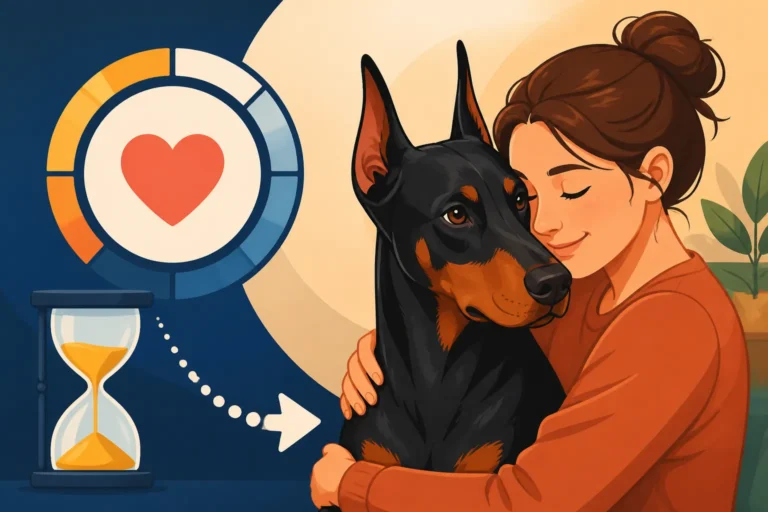
This selective breeding for personal protection ingrained a strong sense of devotion and guardianship into the breed's very essence. When a Doberman forms a bond, it's often deep, intense, and incredibly focused. They are known for being "Velcro dogs," shadowing their chosen person from room to room, often resting a head on a foot or leaning against a leg. This historical context of being a personal protector for a single individual has undoubtedly cemented the "one-person dog" label in the public consciousness. They do form incredibly strong bonds, sometimes seemingly impenetrable ones, with those they consider their own.
Distinguishing Loyalty from Exclusivity
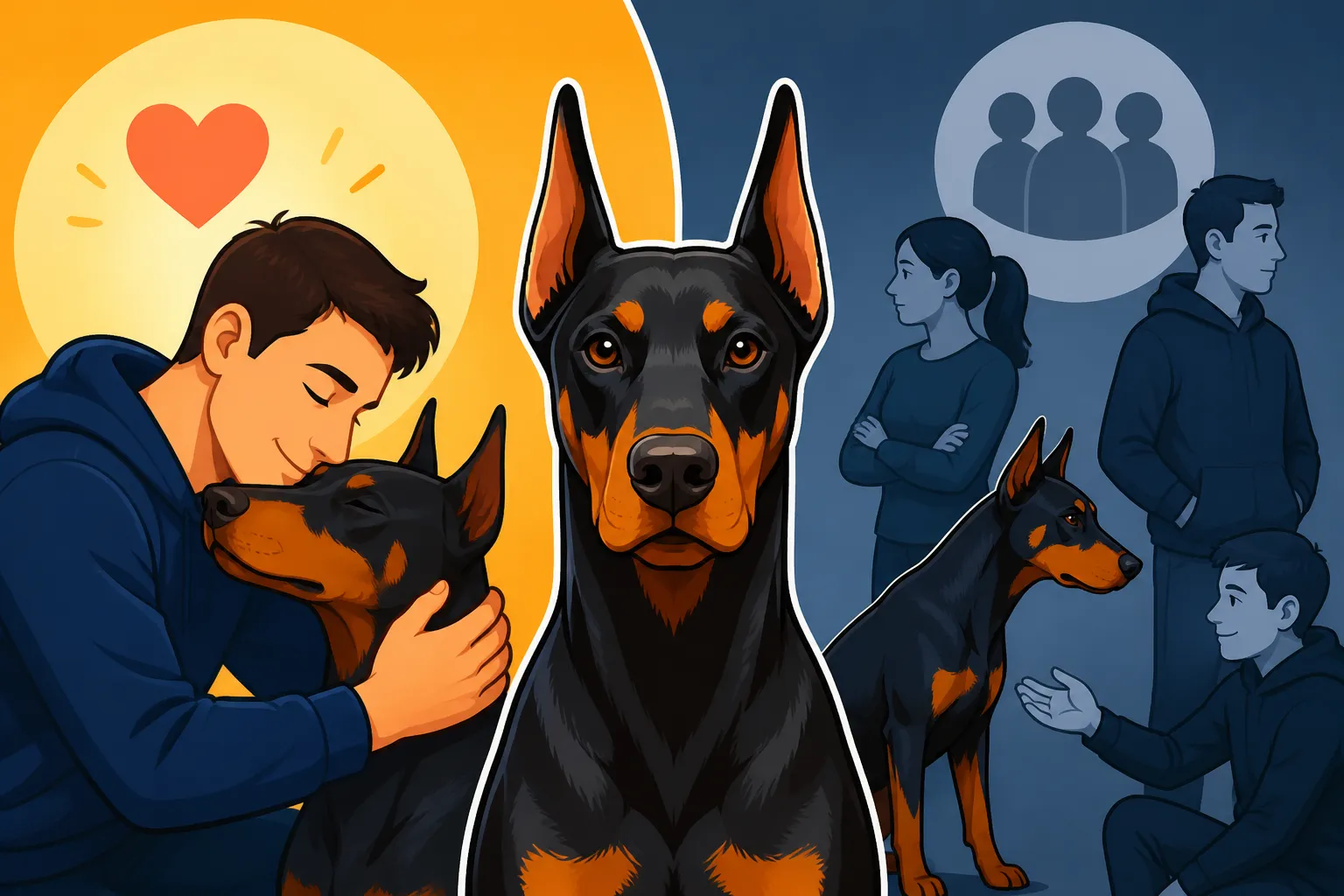
Here's where the crucial distinction lies: intense loyalty does not automatically equate to exclusivity or an outright rejection of other family members. A Doberman's protective instincts are often generalized to the entire family unit and the home they share. They might have a favorite person, often the one who provides the most consistent care, training, and affection, but this doesn't mean they don't love, trust, and respond to others.
Think of it like this: a Doberman's devotion is like a powerful current. It might flow strongest towards one individual, but many smaller streams can branch off and nourish the rest of the family. The guarding behavior, which some interpret as only protecting "their" person, is typically extended to everyone in the household. If a Doberman sees a perceived threat, they're likely to defend anyone in their inner circle. The challenge comes when this protective drive is not properly channeled through early socialization and consistent training, which can lead to a dog that is wary or even reactive towards strangers or visitors, further reinforcing the misconception of exclusive bonding. It's about channeling that incredible loyalty to encompass everyone who belongs.
Factors Influencing a Doberman's Bonding Patterns
The idea that a Doberman must be a one-person dog ignores the immense influence of environment, training, and individual temperament. While their genetic blueprint predisposes them to strong loyalty, how that loyalty manifests is largely shaped by their experiences, particularly during their formative years.
Early Socialization and Exposure
This is perhaps the single most critical factor in determining how broadly a Doberman will bond. The period between 8 and 16 weeks of age is a crucial window for socialization. During this time, a Doberman puppy needs to be exposed to a wide variety of positive experiences: different types of people (men, women, children, people in hats, people with canes), sounds, sights, and environments. A puppy that only interacts with one person during this critical phase is far more likely to develop a narrow focus and potentially be fearful or anxious around anyone else.
Think about it: if a puppy's entire world revolves around one human, that human becomes their sole source of comfort, security, and information. Anyone new is an unknown, and for a breed with inherent protective instincts, the unknown can easily become a perceived threat. Engaging in structured puppy classes, having regular, supervised visits from friends and family, and taking your puppy to various dog-friendly places (once fully vaccinated, of course) can create a confident, well-adjusted Doberman that views a wider circle of people as safe and friendly. This broad exposure is paramount to prevent them from becoming overly reliant on, or exclusively bonded to, just one individual. Many find resources like BAXTER & Bella, which offers online training programs, helpful for ensuring consistent socialization exercises are incorporated into daily routines, even for multiple family members. For more on this crucial period, check out The Sixteen Weeks That Set a Doberman Up.
Consistency in Care and Training
Who feeds your Doberman? Who takes them for walks? Who is primarily responsible for their training sessions? The person (or people) consistently performing these vital roles will naturally forge the strongest bonds with the dog. If only one person handles all aspects of care and training, the Doberman will logically see that individual as their primary provider, leader, and source of comfort.
However, if all family members are involved in these daily rituals, the Doberman learns to trust and respect each of them. For example, one person might handle morning feeding, another evening walks, and a third plays training games. Consistency here doesn't mean only one person does it, but rather that each person is consistent in their interactions and expectations. Positive reinforcement, clear communication, and engaging in fun activities like puzzle toys (many excellent options can be found on Amazon) or training exercises together will solidify bonds with everyone. A Doberman is highly intelligent and will quickly learn who provides good things and who they can rely on.
Temperament and Genetics
While socialization and training are hugely influential, we can't completely ignore the individual temperament of each Doberman and the genetics they inherited. Just like people, Dobermans have unique personalities. Some might be naturally more outgoing and eager to greet everyone, while others might be more reserved or watchful. A confident, stable Doberman from a reputable breeder is more likely to be a well-rounded companion than one bred without care for temperament or health.
Responsible breeders prioritize not only physical health but also sound temperament, aiming for dogs that are confident, stable, and resilient, not overly shy or aggressive. A Doberman with a solid genetic foundation for temperament is better equipped to handle new experiences and people without becoming overwhelmed or exclusive in their affections. It's why doing your homework on a breeder is so vital, and insisting on transparency regarding their breeding practices and the temperaments of the parent dogs is key. A good breeder will be open about The Health Testing a Doberman Breeder Must Show, including aspects that hint at temperament and stability. While a shy Doberman can be built up with careful work, as discussed in Whether a Shy Doberman Can Be Built Up, starting with a dog predisposed to stability makes the journey much smoother for family integration.
The Reality of Doberman Family Dynamics
So, if Dobermans aren't necessarily confined to a single human attachment, what does a typical Doberman's family dynamic look like? The truth is, most Dobermans, especially those raised with thoughtful socialization and consistent care, are deeply devoted family dogs capable of forming strong, meaningful bonds with every member of their household.
Forming Bonds with Multiple Family Members
It’s truly a joy to witness a Doberman’s affection spread throughout a family. While one person might be their "person," the Doberman will still greet everyone with enthusiasm, seek attention from different individuals, and offer comfort across the board. For example, a Doberman might follow Dad around the house, curling up at his feet while he works, yet enthusiastically bring a toy to the kids for playtime and settle calmly beside Mom on the couch in the evenings.
They often develop unique "relationships" with each family member based on the interactions they share. With children, they might be patient playmates, keenly aware of their smaller size, though supervision is always paramount, especially with younger kids. For more on this, check out Raising Children Alongside a Doberman. With other pets, they can be surprisingly gentle and form their own canine or even feline friendships. The Doberman's protective instincts don't just kick in for their favorite person; they extend to anyone they consider part of their pack and home. They learn the rhythm of the household and adjust their interactions accordingly, displaying different forms of affection and responsiveness to each family member.
The Role of the Primary Caregiver
Despite their capacity to love broadly, it's very common for a Doberman to designate one person as their absolute favorite. This individual is typically the primary caregiver – the person who provides the most food, leads the most training sessions, takes them on the longest walks, and is generally the most consistent presence in their daily lives. This person is often the one A Doberman That Shadows One Family Member, following them to every room, even the bathroom!
This "primary bond" isn't about exclusivity; it's about hierarchy and security. The Doberman sees this person as the ultimate provider and protector, the one who sets the rules and ensures their well-being. They might be more tuned into this person's moods, respond more quickly to their commands, or seek them out first for comfort. However, this doesn't mean other family members are ignored or treated as lesser. It simply means there's a strong, central pillar in their human world. The Doberman will still cuddle with, play with, and respond to the others, but perhaps with a slightly less intense focus than they reserve for their main human. It's a testament to the breed's deep loyalty that they can have such a profound connection while still loving everyone else.
Cultivating a Well-Rounded, Family-Oriented Doberman
The good news is that you have significant influence over how your Doberman bonds within your family. By being intentional and consistent in your approach, you can raise a Doberman that is deeply loyal to everyone in your household, fostering a sense of belonging and affection across the board, rather than fostering an exclusive attachment.
Shared Responsibilities for Care
This is where the rubber meets the road. If you want your Doberman to bond with multiple people, those multiple people need to be involved in their daily care. Don't let one person become the sole source of food, walks, or affection.
Here are some practical tips:
- Rotate Feeding Duties: Have different family members feed the Doberman at different times, or even alternate days. This teaches the dog that good things come from everyone.
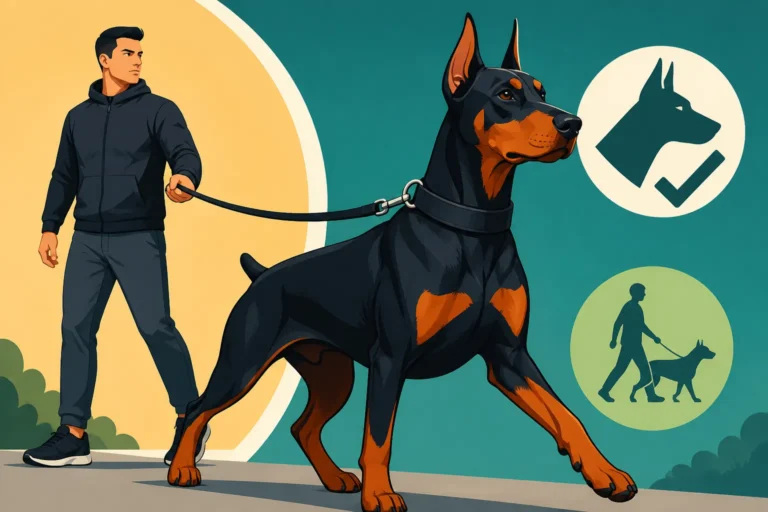
- Share Walking Responsibilities: Even if one person does the majority of the long walks, other family members can take the Doberman for shorter potty breaks or quick strolls around the block. This helps the Doberman see everyone as capable leaders.
- Divide Training Sessions: This is especially important. While one person might be the primary trainer for complex commands, everyone should practice basic cues like "sit," "stay," and "come" with the Doberman. This not only reinforces the dog's learning but also strengthens the bond with each individual. Many online training platforms, such as BAXTER & Bella, are designed to be family-friendly, providing structured lessons that everyone can follow, ensuring consistency in methods regardless of who is holding the leash.
- Play Time: Encourage different family members to engage in play with the Doberman using appropriate toys. Whether it's a game of fetch with a durable ball or a structured tug session, play builds positive associations.
By sharing these responsibilities, you prevent the Doberman from viewing any single person as the only source of good things, thereby broadening their affection and respect to the entire family unit.
Exposure to a Variety of People
Beyond just the family, a well-socialized Doberman needs to be comfortable with a wide range of people outside the home. This doesn't mean they'll be jumping all over every stranger they meet, but rather that they'll be neutral, confident, and not perceive every new person as a threat.
- Host Supervised Visitors: Regularly invite friends and family over. Ensure these interactions are positive and controlled. Have guests offer treats (with your permission) or engage in calm petting. This teaches your Doberman that visitors are often a source of good things.
- Public Outings: Once your Doberman is old enough and has basic manners, take them to dog-friendly parks, outdoor cafes, or hardware stores. These environments provide exposure to various sights, sounds, and people. Always keep interactions positive and reward calm behavior. This helps in Exposing a Doberman Puppy to Strangers in a safe, controlled manner.
- Encounter Diverse Demographics: Make an effort to expose your Doberman to people of different ages, genders, ethnicities, and even those with unique appearances (e.g., people wearing hats, using mobility aids). This reduces the likelihood of them developing fear or suspicion towards specific groups.
The goal isn't to make your Doberman a social butterfly with everyone, but to build their confidence and neutrality, allowing them to assess new situations calmly rather than react defensively.
Training for Sociability, Not Exclusivity
Training plays a huge role in shaping how your Doberman interacts with the world and with people. Focus on commands and exercises that promote calm, appropriate behavior around others, rather than encouraging an exclusive focus.
- "Place" Command: This is invaluable. Teach your Doberman to go to a specific mat or bed and stay there, especially when guests arrive. This provides a safe, comfortable spot for them and prevents jumping or over-excitement. It's a great way to help them settle when people come over, as detailed in Teaching a Doberman to Go to a Mat for Guests. You can find excellent, durable mats and beds on Amazon that can withstand a Doberman's chewing tendencies.
- "Leave It" and "Watch Me": These commands are crucial for redirecting your Doberman's attention away from distractions or perceived threats, allowing you to manage their focus around new people or situations.
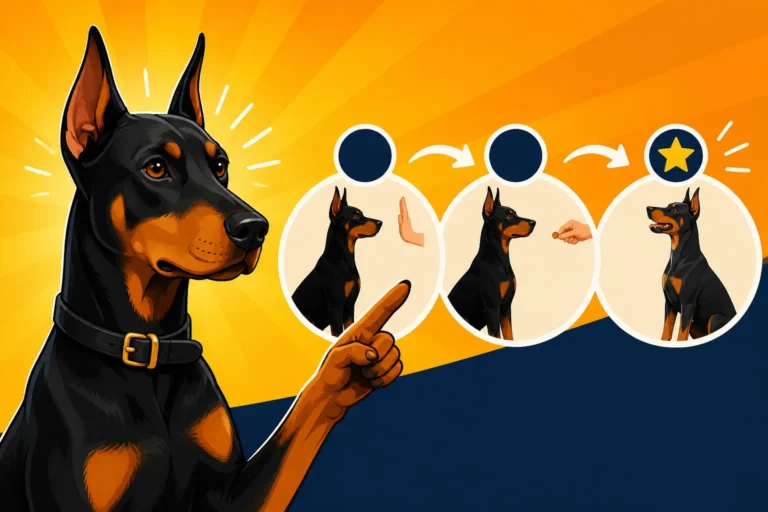
- Positive Reinforcement: Always reward calm, polite interactions. If your Doberman offers a gentle sniff to a new person, or settles quietly while guests are present, lavish them with praise and treats. Never punish them for being wary; instead, redirect and reward appropriate behavior.
- Encourage Independent Play: While Dobermans love interaction, encourage them to entertain themselves with toys sometimes. This helps build a sense of independence and reduces the intensity of their "Velcro" tendencies, making them less prone to extreme distress if their favorite person isn't constantly present. For mentally tiring activities, consider interactive puzzle toys or robust chew items, many of which can be found by browsing reputable brands on Amazon.
By consciously implementing these strategies, you're not trying to diminish your Doberman's love for one person, but rather to expand their capacity for trust and affection to everyone who deserves it within your loving home.
| Trait | Healthy Loyalty (Ideal) | Over-Attachment/Exclusivity (Problematic) |
|---|---|---|
| Greeting Others | Greets all family members warmly, might have a favorite for initial excitement. | Ignores or is wary of all but one designated person. |
| Protective Instincts | Protects the entire family and home, assesses threats before reacting. | Aggressive or overly suspicious of anyone approaching the favored person. |
| Separation | Can cope when favorite person leaves, seeks comfort from others. | Exhibits severe anxiety (pacing, barking, destructive behavior) when "their" person is absent. |
| Attention Seeking | Seeks attention from all family members, but might prefer one for specific activities. | Exclusively focuses attention on one person, ignores bids for interaction from others. |
| Training Response | Responds well to commands from all consistent family members. | Primarily responds to commands from the favored person, struggles with others. |
| Interaction with Guests | Tolerates or calmly greets respectful guests after an initial assessment. | Guards the favored person intensely, growls or lunges at guests. |
When a Doberman Bonds Too Exclusively
While a strong bond is a wonderful thing, there are instances where a Doberman's attachment can tip into problematic exclusivity, creating stress for the dog and challenges for the family. It's important to recognize the signs and take proactive steps if this occurs.
Identifying Over-Attachment Issues
True over-attachment, distinct from deep loyalty, often manifests in ways that are detrimental to the dog's well-being and the family's harmony. These aren't just signs of a "Velcro dog" that wants to be near you, but behaviors indicating an unhealthy reliance on one individual to the exclusion of others.
Here are some red flags:
- Severe Separation Anxiety: While Dobermans can be prone to separation distress, an over-attached dog will exhibit extreme anxiety specifically when their favored person leaves, often ignoring or rejecting comfort from other family members. This can include incessant barking, destructive chewing, or even self-harm. A Doberman That Screams the Moment the Door Shuts is often a sign of this.
- Aggression or Reactivity Towards Others: This is a serious concern. If your Doberman growls, snaps, or lunges at other family members or guests simply for approaching their "person," or for trying to engage with them, it's a clear sign of over-guarding and exclusive bonding.
- Resource Guarding of the Person: The Doberman might "resource guard" their chosen individual, positioning themselves between that person and others, or becoming agitated if someone tries to sit next to or interact with their person. This is often an extension of the behavior seen in A Doberman That Shadows One Family Member, but intensified and aggressive.
- Refusal to Engage with Others: The dog might actively avoid or ignore other family members, refusing to play, take treats, or respond to commands unless their favored person is the one giving them.
These behaviors indicate that the Doberman has not generalized trust and affection to the entire household, and intervention is necessary to broaden their comfort zone and reduce their stress.
Strategies for Broadening Their Circle
If you recognize signs of excessive exclusivity, it's time to implement a structured plan to help your Doberman form stronger, more independent relationships with other family members.
- Shift Primary Care Duties Gradually: The "favored person" needs to strategically step back from some daily care tasks. Other family members should take over feeding, significant portions of walks, and most training sessions. This needs to be done gradually and positively, never as a punishment.
- Structured Alone Time with Others: Arrange specific, positive "alone time" for the Doberman with each other family member. This could involve a short walk, a dedicated play session, or a quiet cuddle on the couch. The favored person should not be present during these times.
- No Reinforcement for Over-Attachment: The favored person should avoid inadvertently reinforcing over-attachment. This means not constantly responding to the dog's demands for attention, especially if it means ignoring other family members. Instead, they can gently redirect the Doberman to another family member for attention or engage in a calm activity that doesn't involve constant clinging.
- Enrichment and Independence: Provide plenty of mental and physical enrichment that the Doberman can engage with independently or with various family members. Puzzle toys, chew items from Amazon, or scent work games can keep them engaged without needing constant attention from one person.
- Professional Guidance: For severe cases of over-attachment or any instance involving aggression, seeking help from a certified professional dog trainer or veterinary behaviorist is crucial. They can assess the specific dynamics, help rule out underlying medical issues, and develop a tailored behavior modification plan. It's essential to find a trainer who has extensive experience with Dobermans and understands their unique temperament, as detailed in Finding a Trainer Who Has Worked With Dobermans.
Preventing a Rehomed Doberman From Becoming a "One-Person" Dog
Adopting a Doberman from a rescue or shelter is a truly wonderful act, but these dogs may come with pre-existing bonding patterns or anxieties. It's often assumed a rescue Doberman will latch onto one person for security, and while this can happen, it's manageable with the right approach.
- Patience is Key: A rehomed Doberman needs time to decompress and adjust. Don't rush bonding, and understand that their initial intense attachment to one person might be a coping mechanism for their new environment. For more insights on this, read How Long a Rehomed Doberman Takes to Attach.
- Structured Integration: From day one, involve all family members in positive, low-pressure interactions. Have everyone offer treats, engage in calm petting, and be present during daily routines without demanding intense interaction initially.
- Shared Leadership: Establish a clear, consistent structure where all adult family members are seen as benevolent leaders. This means everyone enforces rules, provides resources, and engages in training. Consistency helps the Doberman understand the new "pack" dynamics. Learning to read the Doberman's body language is also crucial, as discussed in What Cropped Ears Hide About a Doberman's Mood.
- Confidence Building: Work on building the Doberman's overall confidence through positive reinforcement training, engaging activities, and controlled exposure to new things. A confident dog is less likely to cling exclusively to one person out of insecurity. Retraining an Adult Doberman From Rescue often involves a lot of confidence-building exercises.
By understanding the Doberman's inherent loyalty and proactively shaping their environment, you can foster a dog that is deeply devoted to every member of your family, bringing joy and companionship to all.
Dobermans, with their intense loyalty and profound capacity for connection, often get tagged as the quintessential "one-person dog." While it's true they form incredibly deep bonds, often singling out a primary caregiver, this doesn't mean they're incapable of loving an entire family. With thoughtful early socialization, consistent shared care, and deliberate efforts to include everyone in their world, a Doberman can and will extend their devoted heart to the whole household. The key is to understand their protective nature, channel it positively, and avoid inadvertently fostering an exclusive attachment. Embrace the journey of raising a Doberman, and you'll discover a loyal, loving companion whose affection enriches every member of your family.
Disclaimer
This article is for general informational purposes only and does not constitute professional advice. Laws, prices and regulations vary by location and change over time. Consult a qualified professional for guidance on your specific situation.