Same-Sex Doberman Households
Bringing a second Doberman into your home is often a dream for many enthusiasts, but the reality of living with two dogs of the same sex, especially Dobermans, can be far more complex than anticipated. It’s not uncommon for owners to face unexpected challenges ranging from subtle tensions to outright aggression, even when both dogs have wonderful temperaments individually. This guide aims to shed light on the unique dynamics of same-sex Doberman households and provide practical strategies for fostering a harmonious environment, helping you navigate the pitfalls and build a successful multi-Doberman family.
Understanding the Dynamics of Same-Sex Doberman Pairings
When you imagine bringing a second Doberman home, you probably picture twice the cuddles, twice the joy, and twice the loyalty. And while that can absolutely be the case, it’s crucial to understand that adding another Doberman, particularly of the same sex, introduces a whole new layer of social complexity. These aren't just any dogs; Dobermans are intelligent, assertive, and profoundly bonded to their people and territory, traits that can either be wonderful assets or significant liabilities in a multi-dog household.
The Breed's Innate Predispositions
Dobermans, as a breed, were originally developed with guarding and protection in mind. This history has imbued them with a strong sense of self-importance, a quick assessment of their environment, and a natural tendency to be somewhat reserved with strangers. While we, as owners, work hard to socialize them into well-adjusted companions, that inherent genetic blueprint never truly vanishes. When two Dobermans of the same sex live together, these traits can sometimes translate into a subtle, or not so subtle, competition for resources, status, and even your affection. They are often opinionated dogs, and they aren’t shy about expressing those opinions, sometimes through body language and sometimes through more direct confrontations. Understanding Doberman Guarding Instinct and Where It Tips Over is paramount here, as it can often play a role in same-sex aggression.
This isn't to say every Doberman will challenge another; far from it. Many live peacefully in multi-dog homes. However, their intelligence and drive mean they're constantly evaluating the hierarchy, the rules, and their place within the family structure. This constant evaluation can become a source of friction, especially when another dog is perceived as a rival. Imagine two highly capable individuals in a competitive professional environment; while they might respect each other, there's always an underlying dynamic of who is in charge, who gets the best assignments, or who receives the most recognition. Dobermans, in their own canine way, operate similarly.
Intact vs. Spayed/Neutered Dobermans
The reproductive status of your Dobermans is arguably one of the most critical factors influencing same-sex dynamics. For male Dobermans, intact status brings with it a powerful cocktail of hormones that drive territoriality, dominance displays, and a strong urge to assert their status. Two intact males in one home can be a recipe for disaster, with fights often escalating quickly and becoming incredibly dangerous. These aren't just squabbles; they can be serious, injury-inflicting confrontations. Even if they appear to get along for a while, the underlying hormonal drive can lead to unpredictable outbursts, especially as they mature and their testosterone levels peak.
Similarly, while often less discussed, intact female Dobermans can exhibit fierce and uncompromising aggression towards other females. This can be particularly pronounced when one or both are cycling, or if there's a perceived threat to resources, territory, or even their human's affection. The hormonal shifts can intensify any existing tensions, making a previously manageable dynamic suddenly volatile. Spaying or neutering, while not a guaranteed fix for all behavioral issues, can significantly reduce the hormonal influences that fuel same-sex aggression. It removes a major biological driver for many territorial and dominance-related conflicts, allowing for a potentially more stable social structure. It’s a foundational step many experienced Doberman owners and breeders take to mitigate risk in multi-dog homes, recognizing that even then, careful management is essential.
Common Challenges in Same-Sex Doberman Households
Even with the best intentions and careful introductions, same-sex Doberman households can present unique challenges. It’s easy to romanticize the idea of two Dobermans playing together, but the reality can sometimes involve navigating subtle cues of discomfort or outright disagreements. Recognizing these potential flashpoints is the first step in proactive management and prevention.
Female-Female Aggression: The Hidden Danger
Many people are surprised to learn that female-female aggression in dogs, particularly in certain breeds like Dobermans, can often be more intense and dangerous than male-male aggression. It tends to be less about posturing and more about serious, no-holds-barred fighting where one dog often aims to eliminate the other from the social group. These fights can be incredibly difficult to break up and can result in severe injuries to both dogs and potentially the owner trying to intervene. The aggression often stems from a complex mix of social hierarchy, resource competition, and sometimes an underlying lack of confidence that manifests as proactive aggression. It's not always loud or dramatic; sometimes, it's a slow burn, with subtle glares, body blocks, and escalating tension before an explosion.
One scenario I've heard too often involves a long-established older female who suddenly turns on a younger female as she matures, often around 1.5 to 3 years old. The older female might have tolerated the puppy phase, but once the younger Doberman reaches social maturity, she's perceived as a genuine threat to the existing order. Owners often describe these attacks as "out of the blue," but in reality, there are usually subtle signals missed or misinterpreted leading up to the incident. Because Dobermans are so intelligent, they learn quickly, and if one female "wins" a confrontation, she’ll be more likely to engage again.
Male-Male Rivalry: Status and Resources
Male-male rivalry in Dobermans often revolves around status, access to resources, and claiming the owner’s attention. While it can also be dangerous, it sometimes involves more posturing and displays before physical altercations. However, once a fight breaks out, Dobermans are powerful animals, and the damage can be substantial. Triggers can be as simple as vying for the prime sleeping spot on the sofa, wanting the same toy, or both wanting to be the first one to greet you at the door after you've been out. They are dogs with immense drive, and sometimes that drive can be channeled into competing with each other.
Imagine coming home, and both male Dobermans rush to greet you. If one repeatedly pushes the other out of the way to get your first pat, that can build resentment. Over time, these small acts of competition can simmer, leading to growling, snapping, and eventually a full-blown fight. Even something as seemingly innocuous as a walk can become a trigger if one male feels the need to constantly be in front or pull harder on the leash, asserting his leadership over the other. Owners often struggle because these dogs are so bonded to them, making shared affection a hot commodity.
Resource Guarding Escalation
Resource guarding is a natural canine behavior, but in a same-sex Doberman household, it can escalate dramatically. This isn't just about food bowls, though that’s a common one. It can extend to toys, beds, chew bones, specific resting spots (like under your desk), your attention, or even access to a certain doorway or person. What starts as a mild warning growl from one Doberman over a chew can become a full-blown fight if the other Doberman, fueled by their own assertiveness, decides to challenge it.
For example, a common scenario might involve leaving a high-value chew on the floor. If one Doberman approaches it while the other is already enjoying it, a tense standoff can ensue. Without proper management and training, this can quickly turn violent. Owners often inadvertently contribute to this by trying to "fairly" distribute resources, but this can actually increase the perceived value and competition. Instead of always making them share, it's often safer to provide entirely separate, non-overlapping spaces and times for high-value items, especially for breeds with strong guarding instincts. Understanding Doberman Guarding Instinct and Where It Tips Over will help recognize these situations before they become dangerous.
| Potential Trigger | Male-Male Aggression (Typical) | Female-Female Aggression (Typical) |
|---|---|---|
| Primary Motivation | Status, territory, access to females (if intact), owner attention. | Social hierarchy, resource control, perceived threats, owner attention. |
| Common Flashpoints | Prime sleeping spots, greeting owner, intact females nearby, new dogs. | Toys, food bowls, specific resting spots, owner affection, maturity of younger female. |
| Nature of Fights | Often involves posturing, growling, pushing, but can escalate to severe bites. | Tends to be more intense, silent, and determined; aims to inflict serious harm, difficult to interrupt. |
| Escalation Pattern | Can be sudden, but often preceded by stiff body language, stare-downs. | Often a slow burn of subtle tension, glares, body blocks, then a sudden, explosive attack. |
| Impact of Intact Status | Significantly increases likelihood and severity due to hormones. | Highly increases likelihood and severity, especially during heat cycles. |
Strategies for Successful Same-Sex Doberman Coexistence
Living with two same-sex Dobermans requires a proactive, consistent approach. It’s not just about managing conflict, but about creating an environment where conflict is less likely to arise in the first place. This means thoughtful introductions, meticulous daily management, and a strong foundation of training.
Introducing a Second Doberman Carefully
Bringing a new Doberman into a household with an existing one, especially a same-sex dog, is a critical period that sets the tone for future interactions. This isn't something to rush. Start with neutral territory – a local park or an empty field – for their first meeting. Keep both dogs on leash, but held loosely to avoid tension. Observe their body language carefully: are tails wagging loosely, or are they stiff and high? Are their ears relaxed, or pinned back/forward? A few short, positive interactions are better than one long, stressful one. Consider a "parallel walk" where they walk side-by-side but not directly interacting, allowing them to get used to each other's presence.
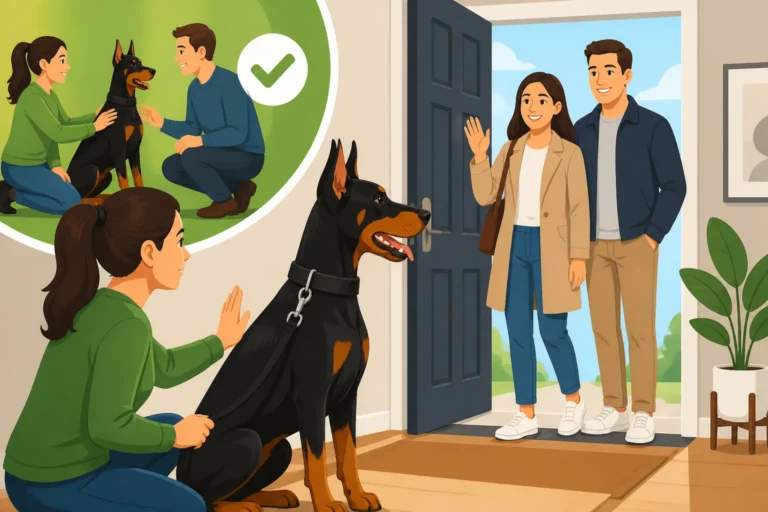
Once they've had a few successful neutral meetings, bring them home, but keep the initial indoor interactions supervised and brief. Use baby gates or crates to create separate spaces where they can decompress. Feed them in separate rooms, give them separate high-value toys, and provide separate resting areas. Never leave them unsupervised until you are absolutely certain of their compatibility, and even then, supervision for new or high-value resources is always a good idea. For a deeper dive into this initial phase, checking out Adding a Doberman to a House That Has a Dog might offer additional insights specific to integration. Patience and careful observation during this phase are key. Remember, Dobermans are intelligent and observant, and they will pick up on your stress or anxiety, which can unfortunately translate to their own interactions.
Management Techniques to Prevent Conflict
Even after a successful introduction, ongoing management is crucial for maintaining peace. The goal is to minimize opportunities for conflict. This means careful supervision, especially during "high-value" situations like mealtimes, treat dispensing, or when guests arrive. Feed dogs in separate, secure areas – either in their crates, separate rooms, or with solid barriers between them. Do the same for chew bones or long-lasting treats. You can find sturdy crates and gates on Amazon that can help create these safe, separate zones within your home.
Rotate toys to keep them novel, and ensure there are always more toys than dogs to reduce competition. When you give attention, try to distribute it equally, or give it to each dog individually in separate sessions. Avoid situations where they have to compete directly for your affection. If you notice tension, redirect one or both dogs to a different activity or separate them gently. This might mean leashing one dog while you interact with the other, or sending one to their "place" with a positive reward. Understanding how to manage their environment can literally prevent fights from ever starting. For instance, if both Dobermans love sitting at your feet, try teaching one to lie on a dog bed a few feet away, rewarding them heavily for staying there while you pet the other. It's about clear boundaries and managing expectations for each dog.
Training and Socialization Imperatives
Robust training and ongoing socialization are non-negotiable for same-sex Doberman households. Both dogs need to be exceptionally well-trained, understanding cues like "stay," "place," "leave it," and a reliable recall. These commands become essential tools for diffusing tension before it escalates. Positive reinforcement methods work wonderfully for Dobermans, who are Training a Doberman That Is Smarter Than You Expect. A program like BAXTER & Bella, for example, offers online resources that can help build a strong training foundation from puppyhood through adulthood, focusing on positive, consistent methods. Consistency is key; every family member must adhere to the same rules and expectations for both dogs.
Beyond basic obedience, controlled socialization is vital. This doesn't mean taking them to dog parks, which can be overwhelming and often counterproductive for dogs prone to same-sex issues. Instead, arrange controlled "playdates" with known, stable, opposite-sex dogs in neutral environments. This helps maintain their social skills without the added pressure of same-sex dynamics. Regularly exercising them both, but sometimes separately, can also reduce pent-up energy that might otherwise be directed at their housemate. A tired Doberman is often a happy, less reactive Doberman. If you feel you're struggling, don't hesitate to seek out Finding a Trainer Who Has Worked With Dobermans. Their expertise can be invaluable in establishing peace.
When Professional Help is Necessary
Even with the most diligent efforts, some same-sex Doberman pairings will inevitably face challenges that require more than just owner-led management. It's crucial to understand when to call in the professionals and how to navigate those difficult decisions. Ignoring escalating tension is not only irresponsible but can lead to serious injury or a tragic outcome.
Recognizing Warning Signs of Escalating Tension
Dobermans are masters of subtle communication. While we often look for the big, obvious signs of aggression like growling or snapping, the real indicators often appear much earlier. These can include stiff body language, a hard stare, direct eye contact that holds too long, raised hackles, a sudden freezing of movement, lip curling, excessive yawning (a stress signal), whale eye (where the whites of the eyes are visible), or one dog consistently blocking the other from access to you or a resource. One dog might begin to avoid the other, always taking a wide berth, or showing submissive urination around them. These aren't just minor disagreements; they're signals that the social dynamic is under immense strain.
It's also important to watch for changes in routine. If one dog starts refusing to eat when the other is present, or becomes hesitant to enter certain rooms, these are red flags. The tension can be exhausting for the dogs, leading to chronic stress which can manifest in behavioral issues or even impact their physical health. If you notice a pattern of these subtle cues, even if they haven't yet escalated to a full-blown fight, it's a clear indication that you need to intervene and reassess your strategy before things get out of hand. Sometimes, the quieter dog is the one suffering the most stress.
Finding a Qualified Trainer or Behaviorist
If you're seeing escalating tension, consistent resource guarding, or actual skirmishes, it's time to bring in professional help. But not just any trainer will do. You need someone who is experienced with Dobermans, understands breed-specific behaviors, and has a proven track record of working with same-sex aggression. Look for a certified professional dog trainer (CPDT-KA), a certified behavior consultant (CBCC-KA), or a veterinary behaviorist (DACVB). These professionals have the education and experience to accurately assess the underlying causes of the aggression, whether it's fear, status-seeking, resource guarding, or a combination of factors.
A good behaviorist will conduct a thorough assessment, observing your dogs in their environment, asking detailed questions about their history and your daily routine, and identifying triggers. They will then help you implement a behavior modification plan tailored to your specific situation. This plan might include strict management protocols, counter-conditioning exercises, desensitization, and advanced obedience training. They should be focused on safety, positive reinforcement, and helping you understand the canine communication you might be missing. Avoid trainers who advocate for harsh punishment or methods that might further damage the relationship between your dogs or erode their trust in you, as Correcting a Doberman Without Breaking It is crucial for this sensitive breed.
Considering the Difficult Decision of Rehoming
Sometimes, despite every effort, professional intervention, and diligent management, a same-sex Doberman pairing simply doesn't work. This is a heartbreaking reality for many owners. It’s important to understand that some dogs, due to their individual personalities, genetics, or past experiences, are simply not compatible with same-sex housemates, especially within a strong-willed breed like the Doberman. Continuing to force the situation can lead to chronic stress for all involved, constant fear of aggression, and a reduced quality of life for your dogs and your family.
The decision to rehome one of your Dobermans is incredibly difficult and often comes with immense guilt. However, it can also be the kindest and safest choice for everyone. A dog living in a constant state of anxiety or conflict is not a happy dog. Rehoming allows that dog the chance to thrive in an environment where they don't have to constantly compete or fear for their safety. Explore all options, including reputable Doberman rescues or breed-specific placement programs, who understand the nuances of the breed and can find a suitable home where your Doberman can be a cherished, only dog, or live harmoniously with an opposite-sex companion. This difficult decision, though painful, prioritizes the well-being and safety of all involved.
Living Harmoniously: Long-Term Considerations
Successfully managing a same-sex Doberman household is a marathon, not a sprint. It requires ongoing commitment, flexibility, and a deep understanding of your dogs' individual needs and the breed's characteristics. The goal isn't just to prevent fights, but to foster an environment where both Dobermans can feel secure, loved, and valued members of your family.
Environmental Enrichment and Space Management
Creating an environment that reduces stress and competition is fundamental to long-term harmony. This goes beyond just separate feeding areas. Think about designated "safe spaces" for each Doberman, such as crates in different rooms, or dog beds positioned far apart. These are places where they know they won't be bothered by the other dog. Ensure easy access to exits and entrances in rooms to avoid bottleneck situations that can trigger anxiety or guarding. Providing elevated beds or multiple resting spots can also give dogs choices and reduce perceived pressure.
Environmental enrichment is also key. Boredom can exacerbate underlying tensions. Provide plenty of puzzle toys, chew items, and opportunities for mental stimulation. Rotate these items regularly to keep them interesting. Taking individual walks or training sessions, even if short, can also help reduce overall stress and give each Doberman a chance to decompress from their housemate. For instance, a snuffle mat for one dog while the other enjoys a stuffed Kong can provide mental engagement without direct competition for attention or resources. Toys ordered from Amazon can be a great way to keep a variety of enrichment items on hand.
Individual Attention and Bonding
Dobermans are often called "Velcro dogs" because of their intense bond with their human family. In a multi-dog household, it’s easy for one dog to feel overshadowed or for the bond to become diluted. It’s absolutely essential that both Dobermans receive dedicated, individual attention every single day. This could be 15 minutes of one-on-one training, a solo walk, a quiet cuddle session, or a game of fetch in the yard just with you. This dedicated time reinforces their individual bond with you, helps build their confidence, and reduces the need to compete with their housemate for your affection.
When you offer this individual attention, make sure the other dog is safely and comfortably separated – perhaps in their crate with a chew, or in another room. This prevents jealousy and allows each Doberman to fully soak up your attention without worrying about the other. Think of it as dating your children individually; each needs to feel special and uniquely loved. This also allows you to reinforce specific training with each dog without the distraction or competitive presence of the other. Building a strong, individual relationship with each Doberman ultimately strengthens the foundation of your entire household.
Understanding Breed-Specific Nuances
Ultimately, living successfully with same-sex Dobermans comes down to a deep understanding and respect for the breed's unique characteristics. Dobermans are intelligent, powerful, and deeply sensitive dogs. They thrive on clear structure, consistent leadership, and strong bonds with their human family. They are not a breed to be left to their own devices to "figure things out" among themselves, especially when it comes to social dynamics. Their innate assertiveness, combined with their loyalty and protective instincts, means that conflict between same-sex individuals can be particularly intense.
It means being proactive, always thinking a step ahead, and never becoming complacent. It means recognizing that what works for one breed might not work for a Doberman. Their keen intelligence, which makes Why a Clever Doberman Is Harder to Train sometimes, also means they learn quickly – both good and bad behaviors. By understanding their needs for exercise, mental stimulation, clear rules, and strong, positive human guidance, you can navigate the complexities of a same-sex Doberman household and cultivate a peaceful, loving environment where both your beautiful Dobermans can truly flourish. After all, The Owner a Doberman Actually Needs is one who is committed to understanding and addressing their specific breed traits.
Disclaimer
This article is for general informational purposes only and does not constitute professional advice. Laws, prices and regulations vary by location and change over time. Consult a qualified professional for guidance on your specific situation.