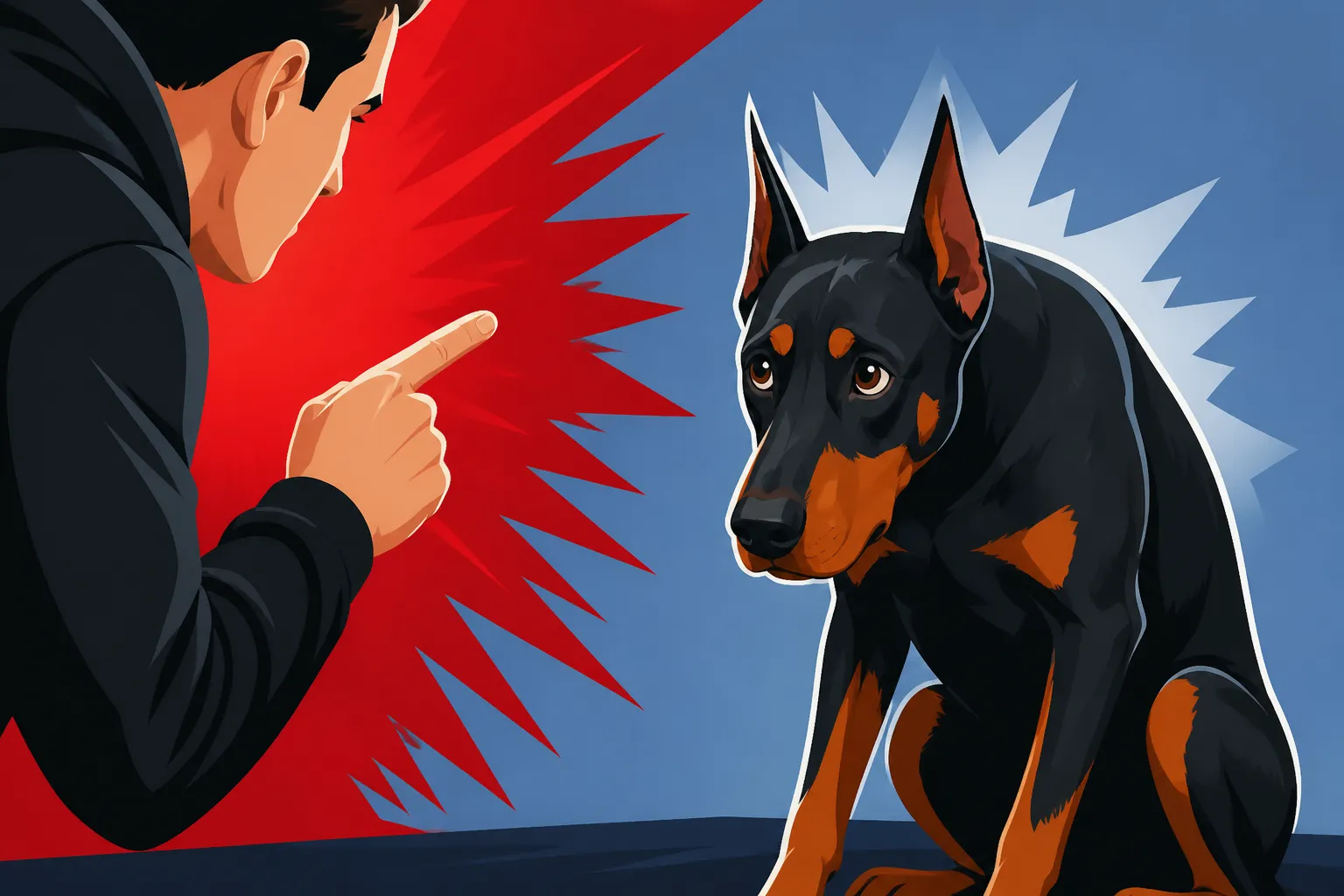
A Doberman That Freezes When Corrected
It can be incredibly disheartening when you're trying to communicate with your Doberman, perhaps correcting a behavior you don't want, and instead of responding, they just… freeze. That blank stare, the sudden stillness, the way they seem to shut down can leave you feeling like you've completely broken their spirit, and it certainly doesn't feel like effective training. This guide aims to unpack why Dobermans sometimes react this way, how to recognize the signs, and most importantly, how to adjust your approach to foster a confident, responsive companion instead of one that retreats internally when faced with correction.
The Doberman Psyche: Why They Freeze When Corrected
Dobermans are exceptionally intelligent, sensitive, and deeply bonded dogs. They thrive on clear communication and consistency, and they genuinely want to please their people. When they freeze in response to a correction, it's often not an act of defiance, but rather a sign of overwhelm, confusion, or a protective coping mechanism. Understanding their innate characteristics helps us see why this happens.
Doberman Sensitivity and Intelligence
Think about it: Dobermans are highly attuned to their environment and to your emotional state. They pick up on subtle cues that many other breeds might miss. This intense sensitivity, combined with their sharp intelligence, means they process information, including your disapproval, very deeply. A harsh tone, a sudden movement, or even just an intense stare from you can be perceived as much more significant by a Doberman than by a less sensitive dog. When they freeze, it's often because their brain is overloaded; they're trying to decipher what went wrong, how to fix it, and how to avoid further displeasure, all at once. It's like asking a child a complex math problem under immense pressure – they might just shut down. This isn't a sign of stubbornness; it's a sign they're struggling to cope with the communication style. Why a Clever Doberman Is Harder to Train is a topic many Doberman owners can relate to, as their intelligence can sometimes make training more nuanced.
The Impact of Past Experiences
Just like humans, Dobermans remember past interactions. If previous corrections have been overly harsh, inconsistent, or have led to a perceived negative outcome (even if you didn't intend it), your Doberman might develop an anticipatory fear response. They learn that correction equals discomfort or confusion, and freezing becomes their go-to strategy to avoid further perceived punishment. This can be especially true for Dobermans adopted from shelters or rescues, whose histories might include inconsistent or punitive training methods. A dog that has been "corrected" in a way that instilled fear, rather than guidance, will often resort to shutting down as a defense mechanism. It's their way of saying, "I don't know what to do, so I'll do nothing to avoid making it worse." This is why Rebuilding Trust With a Harshly Handled Doberman often requires a complete overhaul of training methods.
The Difference Between Suppression and Learning
When a Doberman freezes, they are not actively learning. They are suppressing behavior. Imagine you're told off for something, but you're not given a clear alternative or an understanding of why your action was wrong. You might stop doing it out of fear of repercussion, but you haven't actually learned the correct behavior. With Dobermans, this suppression can manifest as a general reluctance to try new things, a lack of initiative, or even an overall anxious demeanor. You might see a decrease in unwanted behavior in the short term, but you're not building a dog that understands and chooses the right path. Instead, you're building a dog that fears making a mistake. This stifles their natural desire to engage and can lead to a less vibrant, less confident companion. Why Yelling Shuts a Doberman Down touches on this exact point – fear-based methods often suppress rather than educate.
Is It a Freeze or True Understanding? Reading Your Doberman's Body Language
Distinguishing between a Doberman who is truly thinking and complying, and one who is simply shutting down, is crucial for effective training. Their body language provides a wealth of information, if you know how to interpret it.
Subtle Cues of a Shut-Down Dog
A Doberman that is freezing will exhibit specific body language signals. They might become rigid, their tail might be tucked low or held completely still, and their ears might be flattened or pulled back. Their eyes are often a dead giveaway: they might avert their gaze, blink excessively, or show "whale eye" – where the whites of their eyes are visible at the corners. They might also engage in displacement behaviors like lip-licking, yawning (when not tired), or scratching themselves. A Doberman might also stand perfectly still, almost like a statue, refusing to move or engage further. They might also slow their breathing or hold their breath. This isn't thoughtful compliance; it's a clear signal of discomfort and a desire to disengage from the interaction. Understanding What Cropped Ears Hide About a Doberman's Mood or Whether a Doberman Whale Eye Means Trouble can give you vital clues.
Signs of Healthy Engagement and Problem-Solving
Conversely, a Doberman that is actively engaged and learning, even when being corrected, will show very different signs. Their body will remain soft and fluid. Their ears might be forward or relaxed, and their tail might offer a soft, low wag, or simply be relaxed. Their eyes will be soft, looking at you for guidance, perhaps with a slight head tilt as they process your communication. They might try different behaviors to figure out what you want, offering a sit, a down, or looking at the object of their transgression with a contemplative expression. This is a dog that is thinking, trying to understand, and actively participating in the training process. They might make a mistake, but they're not afraid to try again. They're resilient.
Here's a quick comparison to help you differentiate:
| Behavior | Signs of Freezing/Shutdown | Signs of Thoughtful Compliance/Engagement |
|---|---|---|
| Eyes | Averted gaze, wide eyes, whale eye, excessive blinking, dull expression | Soft, focused on handler, slight head tilt, blinking normally |
| Body Posture | Rigid, low to the ground, crouched, still, hunched, tail tucked or still | Relaxed, fluid, engaged, seeking guidance, natural tail carriage |
| Ears | Pinned back, flattened, constantly shifting nervously | Relaxed, forward, attentive to handler's voice |
| Mouth/Face | Tense, closed tightly, lip licking, yawning (displacement) | Relaxed, sometimes open slightly, soft expression |
| Movement | Complete stillness, slow/hesitant movement, refusal to move | Willingness to move, attempts to offer desired behaviors |
| Overall Demeanor | Anxious, withdrawn, fearful, appears "guilty" | Curious, eager, confident, responsive, collaborative |
Crafting Corrections That Build Confidence, Not Fear
The goal of any correction should be to redirect, clarify, and guide your Doberman toward the desired behavior, not to make them fear you or the training process. This requires a shift in mindset from punishment to proactive, positive reinforcement-based strategies.
Shifting from Punishment to Guidance
Instead of waiting for your Doberman to make a mistake and then punishing it, focus on preventing the mistake in the first place, or redirecting them before the unwanted behavior escalates. For example, if your Doberman is about to jump on a guest, don't wait for them to jump and then yell "No!" or push them off. Instead, anticipate the jump, say "Off!" or "Sit!", and lure them into the correct behavior, rewarding them immediately. Think of it as guiding them with a gentle hand rather than scolding them after they've tripped. This approach minimizes the need for harsh corrections and keeps your Doberman engaged and confident. Teaching a Doberman to Wait for Permission is a prime example of this proactive guidance. You can find excellent long lines and training pouches for treats on Amazon, which can be invaluable tools for redirection and reward during walks or at home.
The Power of Positive Reinforcement
Positive reinforcement is simply rewarding behaviors you want to see repeated. For Dobermans, who thrive on pleasing you, this is incredibly powerful. When your Doberman offers a desired behavior, even if it's small, reward it instantly with a high-value treat, enthusiastic praise, or a quick game of tug. This creates a positive association with the action and motivates them to repeat it. If your Doberman is about to jump on the counter, instead of scolding, immediately cue them to "place" on their mat and reward them. Over time, they'll learn that "place" is far more rewarding than counter-surfing. Consistency is key here. Every interaction is a training opportunity, and by consistently rewarding the right choices, you build a Doberman who is eager to offer those behaviors. For online resources that focus on positive reinforcement, BAXTER & Bella offers comprehensive programs that can guide you through these methods from puppyhood to advanced training.
Timing and Consistency Are Everything
For your Doberman to understand what behavior you're rewarding or what action you're redirecting, your timing needs to be impeccable. A reward delivered even a few seconds too late might be associated with the wrong action. Similarly, a redirection that comes too late won't prevent the unwanted behavior. Use a marker word like "Yes!" or a clicker the instant your Doberman performs the desired action, then follow immediately with a treat. This precise communication helps them connect their action with your approval. Consistency across all family members and in all situations is equally vital. If one person allows a behavior and another corrects it, your Doberman will become confused and more likely to shut down. Establishing clear rules and communicating them consistently will help your Doberman feel secure and understand expectations. Short, frequent training sessions, as discussed in Five-Minute Sessions With a Young Doberman, are far more effective than long, drawn-out ones, especially for maintaining focus and avoiding overwhelm.
Rebuilding Trust and Fostering a Resilient Doberman
If your Doberman has already developed a habit of freezing when corrected, it's not too late to turn things around. It requires patience, consistency, and a commitment to building a stronger, more trusting relationship.
Starting Fresh with Foundational Training
Sometimes, the best way to address a problem is to go back to basics. Revisit simple commands your Doberman knows well, like "sit," "down," and "stay," but approach them with renewed enthusiasm and a focus on positive reinforcement. Make these sessions short, fun, and highly rewarding. The goal is to rebuild their confidence in their ability to perform correctly and to earn your praise. Use lots of high-value treats and playful interaction. This foundational work helps to replace negative associations with positive ones, reminding your Doberman that training can be a joyous, cooperative experience. Consider investing in a good quality long line (available on Amazon) to practice recall and distance commands in a safe, low-pressure environment, allowing for success and rewards. Marker Training a Doberman From Scratch offers a great methodology for establishing clear communication.
Creating a Predictable and Safe Environment
Dobermans thrive on routine and predictability. An environment where rules are clear, consistent, and communicated gently fosters a sense of security. Avoid situations where your Doberman might be set up for failure, especially early on in the rebuilding process. Manage their environment to prevent opportunities for unwanted behaviors, rather than having to correct them. For example, if they counter-surf, keep counters clear. If they chew furniture, provide appropriate chew toys. By reducing the chances of them making a "mistake," you reduce the need for correction, and thus reduce the likelihood of them freezing. As they gain confidence and understanding, you can gradually introduce more complex scenarios, always ensuring you're there to guide them successfully. This predictability helps your Doberman relax and trust that you are a benevolent leader, not a unpredictable punisher.
Seeking Professional Guidance When Needed
If you're struggling to overcome your Doberman's freezing behavior on your own, don't hesitate to seek help from a qualified professional. Look for trainers who specialize in positive reinforcement and have experience with sensitive, intelligent breeds like Dobermans. A good trainer can observe your interactions, pinpoint specific triggers, and develop a personalized plan to help you and your Doberman communicate more effectively. They can teach you nuances of body language, timing, and positive reinforcement techniques that might be difficult to grasp from a book alone. They can also help address underlying anxiety or fear that might be contributing to the freezing. Finding a Trainer Who Has Worked With Dobermans is crucial, as their unique temperament requires a specific approach. Online platforms like BAXTER & Bella also offer virtual coaching options, allowing you to get expert advice from the comfort of your home. Remember, seeking help is a sign of a responsible owner committed to their dog's well-being.
Disclaimer
This article is for general informational purposes only and does not constitute professional advice. Laws, prices and regulations vary by location and change over time. Consult a qualified professional for guidance on your specific situation.