Finding a Protection Club That Takes Dobermans
It can be incredibly frustrating when you have a brilliant Doberman, full of drive and intelligence, and you want to channel that energy into a structured, engaging activity like protection sports, only to find roadblocks. Many Doberman owners run into clubs that either have preconceived notions about the breed or simply aren't equipped to handle their unique blend of power and sensitivity. This guide aims to help you navigate that often-tricky landscape, find the right protection club, and ensure your Doberman thrives in this demanding but incredibly rewarding sport.
Understanding Protection Sports and Your Doberman's Drive
Before you even start looking for a club, it's really important to understand what protection sports truly are. They are far more than just teaching a dog to bite; they are a highly disciplined test of temperament, obedience, courage, and handler control. And when it comes to Dobermans, understanding their innate drive and how it fits into these sports is key.
What Protection Sports Actually Entail
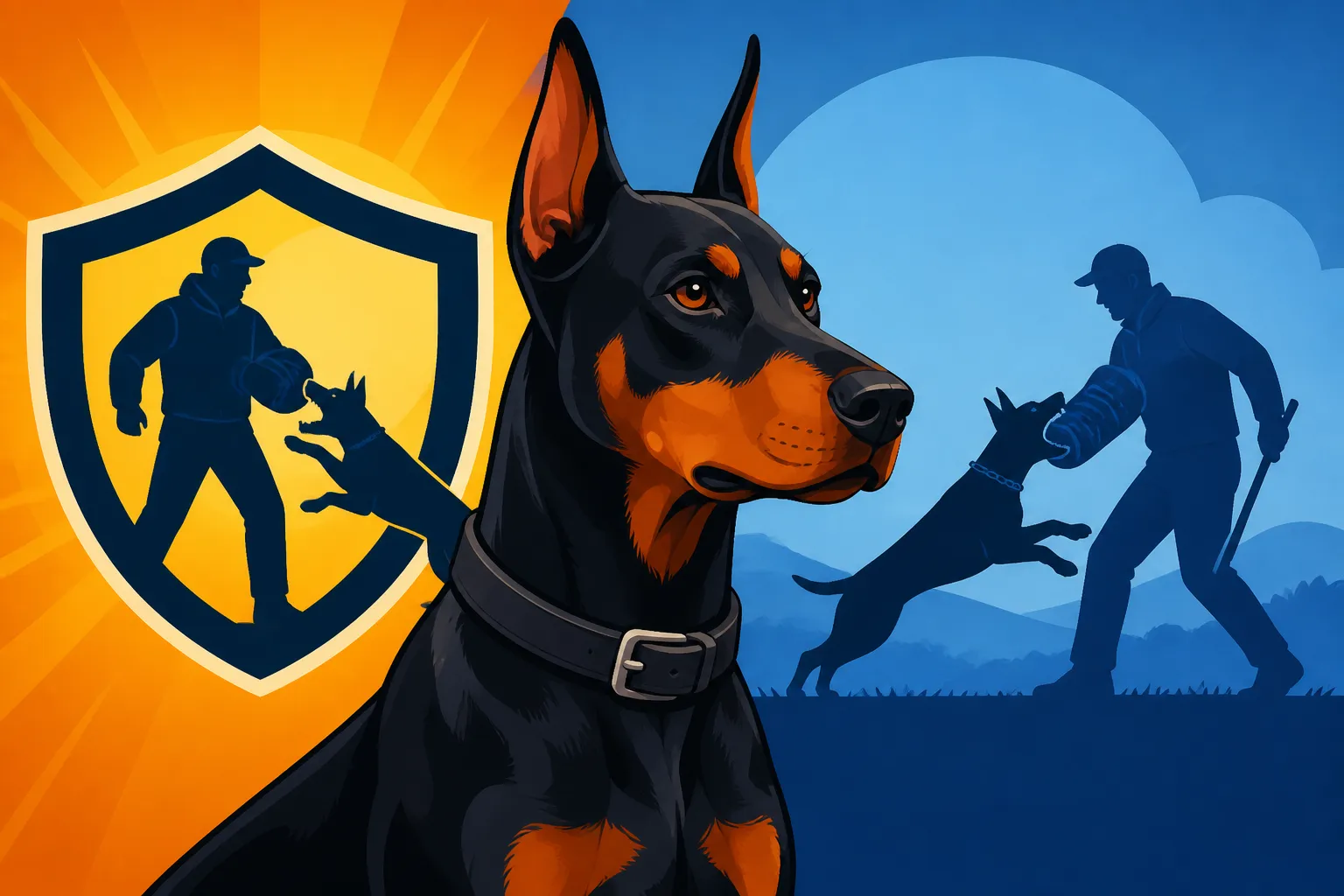
When people hear "protection sports," they often jump to images of uncontrolled, aggressive dogs. Nothing could be further from the truth in legitimate sport contexts like Schutzhund (now officially known as IGP – International Gebrauchshund Prufung, or working dog test) or French Ring. These aren't about creating a dangerous pet; they're about proving a dog's genetic suitability for work, demonstrating rock-solid obedience under extreme distraction, and showcasing their courage and control in a simulated protection scenario. Think of it as a highly athletic and mental competition, like canine gymnastics or a tri-athlon, but with a protection element.
A typical protection sport trial involves three main phases: Tracking, Obedience, and Protection work. Each phase demands intense focus and a specific skill set. Tracking requires meticulous scent discrimination and endurance. The obedience phase is stringent, demanding precise heeling, retrieves, and stays, often performed off-leash in distracting environments. Finally, the protection phase is where the dog engages with a "decoy" (a trained person in protective gear), demonstrating controlled aggression, bite work, and a clear "out" command, proving the handler's absolute control. It’s a testament to the dog’s mental fortitude and the handler's training prowess, not a free-for-all.
For a Doberman, excelling in these areas means they are not only physically capable but also mentally sound. It proves they can switch from intense drive to calm obedience at a moment’s notice, a critical trait for any working dog. This kind of structured work can be incredibly enriching for a Doberman, giving them a purpose and building a profound bond with their handler. You can learn more about What Protection Sport Involves for a Doberman by looking into the details of the different phases.
Why a Doberman Excels in Protection Work (and the Pitfalls)
Dobermans, by their very nature and historical breeding, were designed to be working dogs. They possess an incredible combination of intelligence, athletic ability, and a strong protective instinct. This is why they often sit high on intelligence rankings, capable of learning complex tasks and retaining them. Their physical build – lean, muscular, and agile – makes them perfect for the bursts of speed, power, and precise movements required in protection work. More than that, their inherent desire to bond closely with their family and protect their territory can be a powerful motivator in this sport, as they see the work as defending their handler.
However, these very traits can also become pitfalls if not managed correctly. A Doberman's high drive and protective instincts, without proper guidance and socialization, can easily tip over into unwanted behaviors. This is why careful breeding for stable temperaments is paramount, and why early, extensive socialization is non-negotiable for a Doberman puppy destined for protection work or even just as a stable family companion. You’re not trying to create aggression; you’re trying to channel natural guarding instincts into a controlled, disciplined sport. For more on the breed's historical traits, you might find The Working Sports a Doberman Was Built For interesting.
A Doberman that is naturally shy, fearful, or already showing signs of uncontrolled aggression is not a candidate for protection sports. These sports are designed to test and enhance existing stable temperament traits, not fix or create them. Putting an unstable dog into protection work is irresponsible and dangerous, reinforcing negative behaviors rather than building confidence and control. The goal is a confident, clear-headed dog that understands when and how to engage, and, most importantly, when to stop.
Navigating the Search for a Doberman-Friendly Club
Finding a protection club can feel a bit like searching for a needle in a haystack, especially with a Doberman. There are often stereotypes and misunderstandings surrounding the breed that can make some clubs hesitant. But don't despair; the right club is out there, and knowing what to look for will make your search much easier.
The Stereotype Barrier: Why Some Clubs Hesitate
Let's be honest, Dobermans have a reputation. They’re often portrayed in media as aggressive, intimidating "attack dogs." While we, as Doberman owners, know the reality – that our dogs are often velcro, goofy, intelligent, and deeply sensitive companions – this stereotype persists. Unfortunately, it can sometimes extend into the world of dog sports, where clubs might have blanket policies against certain breeds or trainers might harbor their own biases. It’s a frustrating reality, especially when you know your Doberman is a prime candidate for the work.
Some clubs might have had negative experiences with Dobermans (or other guardian breeds) in the past, often due to owners who didn't understand the sport or their dog's temperament. They might be wary of taking on a breed they perceive as "difficult" or "high-risk." This isn't fair, of course, because every dog is an individual, and a well-bred, well-socialized Doberman can be an absolute superstar in these sports. Your job, then, becomes a bit of an advocate for your Doberman, proving their stability and your commitment to responsible training. It can feel like an uphill battle, but don't let it discourage you. Finding a trainer who has experience with Dobermans is key, and you might want to check out Finding a Trainer Who Has Worked With Dobermans.
Key Qualities to Look for in a Protection Club
When evaluating potential clubs, remember you’re interviewing them as much as they are evaluating your dog. Look for these crucial qualities:
- Experienced Trainers with Working Breed Knowledge: This is non-negotiable. The trainers should have extensive experience not just with protection sports in general, but specifically with Dobermans or similar high-drive working breeds. They should understand the Doberman temperament, their unique training needs, and how to harness their drive effectively without crushing their spirit or resorting to overly harsh methods.
- Emphasis on Control and Obedience: A good club prioritizes control above all else. The protection work should be an extension of advanced obedience, not a substitute for it. You should see dogs that are focused, responsive to their handlers, and capable of a clean "out" command on the decoy.
- Positive Reinforcement and Fair Methods: While protection sports are demanding, the training should still be based on fair, understandable methods. Look for clubs that use a balance of motivation (toys, praise, food) and clear corrections, avoiding overly harsh or fear-based techniques. The goal is to build confidence and drive, not instill fear.
- Safety Protocols: Safety for both dogs and humans is paramount. Observe how decoys handle themselves, how dogs are managed on and off the field, and whether there are clear rules for dog interactions.
- Transparent and Welcoming Atmosphere: The club should be open to visitors and willing to answer all your questions. A healthy club environment is supportive, with experienced members willing to mentor newcomers. If you feel unwelcome or like they're hiding something, it's a red flag.
- Breed-Specific Experience: Ideally, find a club that either has Dobermans currently training or has a history of successfully training Dobermans. This shows they are truly Doberman-friendly and understand the breed's nuances.
Here's a quick comparison of what to look for and what to avoid:
| Feature | Look For | Avoid |
|---|---|---|
| Trainer Experience | Deep knowledge of Dobermans & working breeds | Generic dog trainers, no experience with high-drive breeds |
| Training Philosophy | Focus on control, obedience, building drive & confidence | Overly harsh corrections, fear-based methods |
| Club Atmosphere | Welcoming, transparent, supportive, safety-conscious | Secretive, clique-y, chaotic, unsafe field |
| Dog Temperament Focus | Emphasizes stable, confident dogs; assesses individuals | Discriminates by breed; accepts unstable/aggressive dogs |
| Trial Preparation | Clear progression, teaches rules and expectations | Rushes dogs, focuses solely on biting |
Practical Steps for Finding and Joining the Right Club
Finding the right club involves a bit of legwork and due diligence, but it's an investment that will pay off hugely in your Doberman's development and your enjoyment of the sport. Don't rush the process; take your time to ensure a good fit.
Where to Start Your Search: Online and Offline Resources
Your search should really begin with national organizations that govern these sports. In the United States, the United Schutzhund Clubs of America (USCA) and DVG America are excellent starting points for IGP clubs. Their websites often have a "Find a Club" or "Club Directory" section where you can search by state or region. These clubs adhere to specific standards and rules, which helps ensure a level of quality.
Beyond national organizations, consider looking for local Doberman breed clubs. While not all breed clubs focus on protection sports, many have members who are involved, and they can often point you in the right direction or recommend specific trainers. Word-of-mouth recommendations from other Doberman owners or respected breeders in your area can also be gold. Don't hesitate to ask your veterinarian or even local obedience trainers if they know of any reputable protection sport clubs. Sometimes the best leads come from unexpected places.
Online forums and social media groups dedicated to Dobermans or specific working dog sports can also be valuable resources. Just be discerning; always cross-reference information and prioritize in-person visits over online testimonials alone. When you find a promising club, make sure to check their training schedule and confirm that visitors are welcome.
Your First Visit: What to Observe and Ask
Once you’ve identified a few potential clubs, the next crucial step is to visit them without your dog for the first time. This allows you to observe without distraction and assess the environment objectively. When you visit, pay close attention to:
- Dog Behavior: Are the dogs on the field focused, happy, and under control? Do they appear confident and enjoy the work? Or do they seem stressed, fearful, or overly agitated?
- Handler-Dog Interaction: Observe how handlers interact with their dogs. Is it respectful and encouraging? Do they use clear communication?
- Trainer Style: Watch the trainer in action. Are they clear, patient, and good communicators? Do they provide constructive feedback? Do they adjust their approach for different dogs and handlers?
- Club Culture: Does the club feel welcoming? Do members seem friendly and willing to chat? A supportive community is a huge part of enjoying dog sports.
After observing, approach the head trainer or a senior member and introduce yourself. Explain that you have a Doberman and are interested in learning about their protection program. Be prepared to discuss your Doberman’s temperament, any prior training (even basic puppy training like from BAXTER & Bella, for example, shows commitment), and what your goals are. Ask specific questions:
- "Do you have experience training Dobermans for protection sports?"
- "What is your philosophy on building drive and control?"
- "How do you assess a new dog’s suitability for the program?"
- "What is the typical progression for a new dog and handler?"
- "Are there any specific prerequisites for joining, beyond basic obedience?"
- "What are the club fees and training schedule?"
A good club will be transparent and happy to answer your questions thoroughly. They might even suggest a trial session with your dog after the initial visit. Remember, you're looking for a long-term partnership, so trust your gut feeling about the people and the environment.
Preparing Your Doberman for Protection Sports
Even if you find the perfect club, your Doberman won't just walk onto the field and start working. Protection sports require a strong foundation that goes beyond typical pet obedience. Think of it as preparing an athlete for a demanding competition – there are basic skills and mental preparedness that need to be in place long before the specific sport training begins.
Foundation Training Beyond Basic Obedience
Before your Doberman ever meets a decoy, they need rock-solid obedience. We’re talking about more than just "sit" and "stay." They need an absolutely bomb-proof recall, meaning they will come to you instantly, regardless of distractions. Their "stay" needs to be unwavering, even when you walk away or other dogs are moving around. Loose-leash walking is also critical, as control on the leash is foundational. These advanced obedience skills demonstrate that your Doberman understands and respects your commands, which is non-negotiable for the safety and success of protection work. You can always work on your Doberman's early obedience skills by building up solid recall and focus.
Beyond the basic commands, focus on building "drive" for toys and food. Protection work is highly rewarding for dogs, and much of that reward comes in the form of playing with the decoy or receiving a coveted toy after a successful "out." A Doberman with high toy drive and an enthusiastic retrieve will be a much easier and more motivated student. Practice engaging play at home with durable tug toys, available on sites like Amazon, and use high-value treats to reward focus and effort. This groundwork ensures your Doberman arrives at the club with a solid understanding of engagement and motivation, setting them up for success. Remember, Why a Clever Doberman Is Harder to Train is often because they need more mental engagement, which sport training provides.
Temperament and Socialization: Ensuring Your Doberman is Ready
This is perhaps the most critical component. Protection sports are for mentally stable, confident, and well-socialized Dobermans. They are not a fix for shyness, fear, or insecurity. A dog that is fearful might lash out defensively, which is dangerous and completely inappropriate for the sport. Similarly, an inherently aggressive dog (not to be confused with a dog with strong protective instincts) is also a poor candidate, as the goal is controlled courage, not unbridled aggression.
Early and ongoing socialization is key. Your Doberman puppy should be exposed to a wide variety of sights, sounds, people, and safe environments from a young age. This helps them build confidence and resilience. A well-socialized Doberman should be confident in new situations, curious rather than fearful, and able to recover quickly from novel or startling experiences. This early exposure helps in Building a Doberman Puppy That Is Confident, Not Sharp.
Furthermore, avoid any attempts at "guard training" at home. This can be detrimental, teaching your Doberman to be inappropriately protective or to make their own decisions about threats. A true protection sport dog learns when to engage and when to stop, all under the handler's explicit command. Any dog showing reactivity towards strangers or other dogs without a clear "off switch" should not be considered for protection work. Instead, focus on building a happy, balanced companion. Sometimes, Why Guard Training Ruins Most Pet Dobermans is due to a lack of understanding of canine behavior and proper channeling of instincts.
If you have any doubts about your Doberman’s temperament, consult with a professional, certified behaviorist before seeking a protection club. They can help you assess your dog's suitability and guide you toward appropriate activities. For a breed like the Doberman, a responsible approach to training and behavior is paramount.
Finding the right protection club for your Doberman might take some dedicated searching and careful evaluation, but the reward of engaging in such a demanding and enriching sport with your intelligent, driven companion is immeasurable. Remember, it's about partnership, discipline, and channeling your Doberman's incredible abilities in a responsible and structured way.
Disclaimer
This article is for general informational purposes only and does not constitute professional advice. Laws, prices and regulations vary by location and change over time. Consult a qualified professional for guidance on your specific situation.