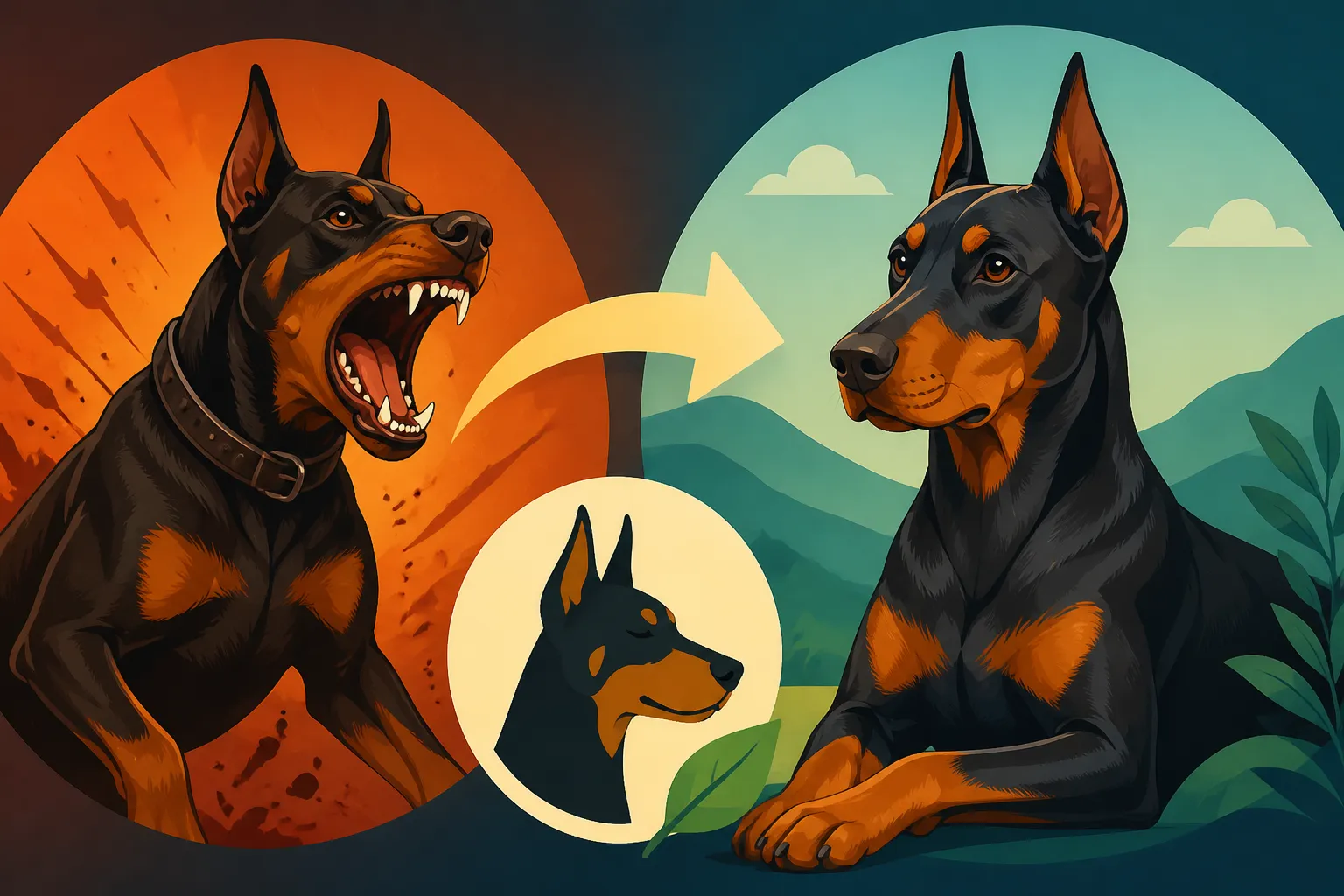
Why the Doberman Was Bred Calmer Over Time
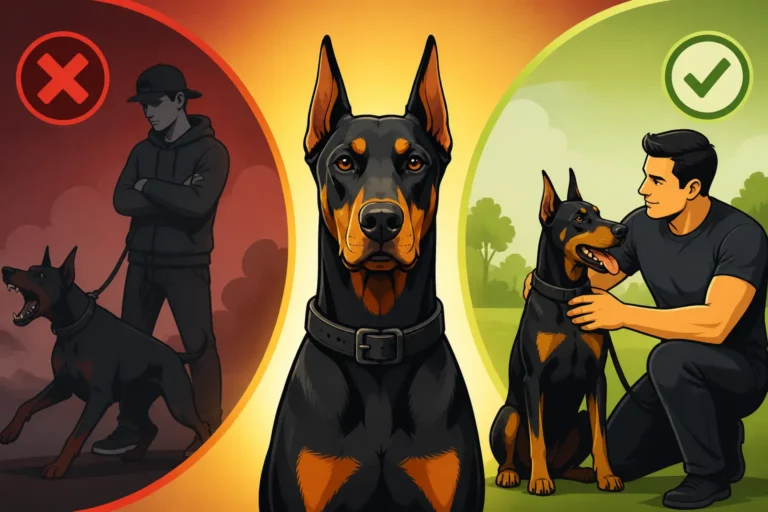
Many people picture a Doberman as an inherently aggressive, intimidating dog, a reputation often fueled by historical roles and media portrayals. However, if you've spent any time around a well-bred, well-socialized Doberman today, you'll likely see a devoted, intelligent, and surprisingly sensitive companion. This dramatic shift in temperament isn't accidental; it’s the result of generations of intentional breeding choices. This guide will explore the fascinating journey of the Doberman Pinscher, from its origins as a fierce protector to the more balanced and beloved family member we know today.
The Formative Years: A Fierce Protector for a Specific Need
To understand why the Doberman was eventually bred to be calmer, we first need to look at its beginnings. The breed wasn't originally conceived to be a gentle family pet; it was a dog born of necessity, forged in a specific, demanding environment.
Karl Dobermann's Vision: Protection on the Streets
Imagine living in late 19th-century Apolda, Germany, working as a tax collector, dog catcher, and night watchman. Your job puts you in potentially dangerous situations daily, dealing with unpredictable people and often carrying money. This was the life of Karl Friedrich Louis Dobermann, the man credited with creating the breed. He needed a dog that was more than just a companion; he needed a fearless, uncompromising personal bodyguard.
Dobermann's vision was clear: a medium-sized, intelligent, and robust dog with an unshakeable protective instinct. This wasn't about aesthetics or winning ribbons in a show ring; it was about survival and personal safety. The dogs he initially developed were highly driven, sharp-witted, and undoubtedly more confrontational than the Dobermans many of us share our homes with today. They were bred to deter threats and, if necessary, to engage them without hesitation. Their courage and ferocity were their primary assets, making them perfectly suited to a demanding role. You can learn more about his life and why he chose to create this specific breed in The Tax Collector Who Invented the Doberman.
The Early Blend: Sharpness and Utility
While Dobermann kept meticulous records of his tax collections, the exact genetic recipe for his new breed was less formally documented. However, breed historians generally agree that he blended several existing types of dogs to achieve his goal. These likely included old German Shepherd Dogs, Rottweilers, German Pinschers, and even some types of Greyhounds or English Greyhounds for their speed and elegance.
The key takeaway here is that many of these foundational breeds possessed strong protective instincts, high prey drive, and a certain "sharpness" that Dobermann intentionally sought. For example, the Rottweiler contributed its powerful guarding instincts, while the German Pinscher likely lent its tenacious, alert, and sometimes fiery temperament. These traits, combined with the Doberman's natural intelligence, resulted in a dog that was highly effective in its original job. The early Doberman was a formidable presence, always on guard, and quick to react. It was a dog that commanded respect and instilled a healthy dose of fear in potential wrongdoers. You can delve deeper into their lineage in What Went Into the First Dobermans and Which Breeds Went Into the Doberman. This early Doberman was a true working dog, designed for utility above all else, and its temperament reflected that intense purpose.
Shifting Sands: The Demand for a More Balanced Companion
As the Doberman breed gained recognition and spread beyond Germany, its role began to change. Society evolved, and with it, the expectations placed upon companion animals. The intense, often reactive temperament of the early Doberman, while effective for its original purpose, started to become less desirable for broader adoption.
The Rise of Breed Clubs and Standardization
The turning point for the Doberman's temperament largely began with the establishment of breed clubs and the creation of formal breed standards. A key figure in this era was Otto Goeller, who took over Dobermann's breeding efforts after his death and founded the first Doberman Pinscher Club in Apolda in 1899. Goeller and other early breeders recognized the breed's incredible potential but also understood the need to refine its temperament for wider acceptance.
These clubs introduced formal standards that went beyond mere physical appearance. They began to emphasize characteristics like courage, intelligence, and obedience, but also stability and trainability. The goal was to move from a purely instinctive, reactive guard dog to a more controllable, predictable, and confident animal. This meant actively selecting against extreme shyness or outright aggression that wasn't justified by a real threat. Otto Goeller and the First Doberman Club offers more insight into this foundational period. The original The 1900 German Doberman Standard was a critical step in guiding breeders towards a more uniform and, importantly, a more stable temperament. This shift meant that dogs with overly sharp or nervous dispositions, while perhaps fearless, would no longer meet the ideal for the budding breed.
From War Dog to Family Member: Societal Changes
The Doberman's reputation as a formidable working dog grew, leading to its use in military and police roles, particularly during the World Wars. Their bravery and intelligence made them invaluable. However, after these conflicts, as societies settled into peacetime, the demand for purely utility dogs waned, and the desire for family companions increased. People wanted dogs that could protect their homes, certainly, but also dogs that could live peacefully alongside their children, socialize politely, and fit into suburban life.
The intense guarding instincts of the early Dobermans, while celebrated in their original context, could be problematic in a domestic setting if not properly managed. An overly "sharp" dog might be too wary of visitors, too quick to perceive threats, or simply too much for the average pet owner to handle. This societal shift naturally put pressure on breeders to select for dogs with a more adaptable and calmer disposition. As the breed gained popularity as a show dog and family pet, the "bad press" associated with overly aggressive individuals became a serious concern. This crucial period, especially after the 1950s, saw a conscious effort by breeders to temper the Doberman's natural intensity, as further explained in Why the Doberman Softened After the 1950s.
The Influence of Show Rings and Conformation
The growing popularity of dog shows and conformation events played a significant, albeit sometimes controversial, role in the Doberman's temperament evolution. Judges in the show ring evaluate not just a dog's physical appearance against the breed standard but also its overall demeanor. A Doberman that is nervous, snappy, or overly reactive is unlikely to perform well or win, regardless of its physical beauty.
This emphasis on a stable, confident, and biddable temperament in the show ring inadvertently (or perhaps intentionally, by some breeders) pushed the breed towards a calmer profile. Breeders began selecting for dogs that could handle the crowds, noise, and close examination of a show environment without stress or aggression. Over generations, this selection pressure rewarded lines that produced dogs with stronger nerves, more inherent composure, and a greater willingness to cooperate. The AKC's recognition of the breed, detailed in AKC Recognition of the Doberman in 1908, and the specifics of The Doberman the AKC Standard Describes further solidified these desired traits, emphasizing courage without viciousness, and alertness without nervousness. This process, combined with increasing public awareness about responsible pet ownership, meant that breeders were actively seeking to produce Dobermans that were less of a liability and more of a pleasure to live with.
The Modern Doberman: Intentional Breeding for Temperament
Today, the Doberman remains a powerful and intelligent breed, but the emphasis has shifted dramatically. Responsible breeders prioritize a balanced temperament, aiming for dogs that are confident, stable, and devoted family members.
Temperament as a Breeding Priority
For any reputable Doberman breeder today, temperament is as critical as health and conformation. They understand that a Doberman is a significant commitment, and an unstable temperament can lead to heartbreaking situations for owners. Modern breeders meticulously screen their breeding stock not only for physical health conditions but also for psychological soundness. They look for parents who are calm, self-assured, and friendly without being overly familiar or anxious.
The goal is to produce puppies that are naturally confident, curious, and resilient, capable of handling the ups and downs of a typical family home. This careful selection process helps to ensure that the inherent guarding instincts are channeled into appropriate behavior, rather than manifesting as aggression or fear. It’s about cultivating a dog that is an excellent companion first, and a protector only when truly necessary. You can gain more insight into this in The Doberman Temperament as the Standard Describes It. They understand that a well-adjusted Doberman needs a secure and stimulating environment from day one, which includes not just training, but also appropriate bedding, crates, and toys, all of which are easily found on sites such as Chewy.
The "Velcro Dog" Phenomenon and Trainability
One of the most endearing and well-known traits of the modern Doberman is often referred to as the "Velcro dog" phenomenon. These dogs are intensely devoted to their families, often shadowing their owners from room to room, seeking physical closeness, and thriving on interaction. This strong bond is a testament to the selective breeding for companionship and biddability. It’s a far cry from the more detached, purely utilitarian guard dog of the past.
Their high intelligence, coupled with this desire to be involved with their people, makes Dobermans incredibly trainable. They are quick learners, eager to please, and excel in various dog sports, from obedience to agility and even therapy work. This trainability is a direct result of breeders valuing a cooperative and engaged temperament. However, this intense bond also means they crave attention and mental stimulation. For these smart, engaged dogs, mental stimulation is just as important as physical exercise. I often look for high-quality puzzle toys or engaging chews on sites like Chewy to keep their minds busy when I can't be actively training them. Living with a Doberman often means they will be right by your side, as explored in Living With a Doberman That Follows You Everywhere.
Addressing Misconceptions and Promoting Education
Despite decades of intentional breeding for a more balanced temperament, the Doberman still struggles with its old reputation. People who aren't familiar with the breed may still perceive them as inherently dangerous or aggressive, simply due to their powerful appearance and historical roles. It's a perception that responsible Doberman owners and breeders work tirelessly to counteract.
Educating prospective owners is paramount. It's crucial for anyone considering a Doberman to understand the breed's needs: consistent training, early socialization, plenty of exercise, and a committed owner who can provide leadership and structure. A Doberman is not a dog for the faint of heart or an owner who is unwilling to invest time and effort into their upbringing. However, with the right environment, they blossom into loyal, loving, and reliable companions. This means understanding that the breed is still strong-willed and intelligent, requiring thoughtful handling. While you might wonder Whether Old Dobermans Were More Aggressive, the truth is, the breed has come a long way. And remember, proper nutrition also plays a role in a dog's overall well-being and ability to focus during training. Choosing quality kibble and treats, perhaps with the guidance of a vet and readily available on platforms like Chewy, contributes to a healthy, balanced dog. Building a confident Doberman puppy starts early, as discussed in Building a Doberman Puppy That Is Confident, Not Sharp.
Here's a quick comparison of the Doberman's temperament evolution:
| Trait | Early Doberman (Late 1800s) | Modern Doberman (21st Century) |
|---|---|---|
| Primary Role | Personal protection, guard dog, utility dog | Family companion, protection, dog sports, working dog |
| Protective Drive | Very high, often sharp, quick to engage | High, discerning, protective when necessary, stable |
| Reactivity | Potentially high, less tolerant of strangers | Confident, can be reserved with strangers, generally stable |
| Trainability | Intelligent, but required firm, experienced hand | Highly intelligent, eager to please, excels in obedience |
| Family Life | Less emphasized, more independent | Devoted, "Velcro dog," thrives on family interaction |
| Socialization Needs | Minimal emphasis beyond core utility | Extensive and early socialization critical for stability |
The journey of the Doberman Pinscher is a testament to the power of selective breeding and how a breed can adapt to changing societal needs without losing its core essence. From a fierce, uncompromising protector, the Doberman has been refined into a noble, intelligent, and deeply affectionate companion, a true testament to the dedication of generations of breeders who sought to create a balanced and extraordinary dog.
Disclaimer
This article is for general informational purposes only and does not constitute professional advice. Laws, prices and regulations vary by location and change over time. Consult a qualified professional for guidance on your specific situation.