Whether a Doberman Can Sleep Outdoors
It’s a natural question for many dog owners: can my Doberman, this magnificent and sturdy-looking breed, comfortably sleep outside? The truth, however, is that while they might appear tough and resilient, Dobermans are uniquely vulnerable to the elements and thrive on close companionship, making unsupervised outdoor sleeping a recipe for physical and emotional distress. This guide will explore exactly why your Doberman needs to be an indoor companion, especially when the sun goes down, and the surprising ways their bodies and minds are simply not equipped for a night in the backyard.
Why Dobermans Aren't Built for the Outdoors
Let’s be honest, a Doberman looks like a powerhouse, doesn't it? Sleek, muscular, athletic – you might imagine them shrugging off cold weather with ease. But their striking appearance actually hides some significant vulnerabilities that make them truly unsuited for prolonged exposure to the elements, especially overnight. It’s not just about a little chill; their very physiology works against them when it comes to staying warm.
The Doberman's Thin Coat and Lack of Underfur
Unlike many breeds bred for working outdoors, like German Shepherds or Siberian Huskies, Dobermans possess a single, very thin coat of fur. There's no dense, insulating undercoat to trap warm air against their skin. Think of it like this: if you went outside in winter wearing only a t-shirt, you'd feel the cold bite almost immediately, even if you were moving. Your Doberman is essentially in that same situation, year-round, except they can't simply go grab a warmer jacket.
This lack of insulation means that any dip in temperature, even a mild autumn evening, will feel much more pronounced to a Doberman than to a dog with a double coat. Rain, wind, or even just dampness can cut straight through their sparse fur, making them feel chilled to the bone very quickly. Owners often notice this even indoors, where a Doberman might seek out sunbeams or burrow under blankets. If they're doing that inside, imagine how they'd fare outdoors. You can feel their skin temperature drop incredibly fast, highlighting just Why a Doberman Feels the Cold Before Other Dogs.
Low Body Fat and Rapid Heat Loss
Beyond their thin coat, Dobermans are a lean breed, built for speed and agility rather than bulk and insulation. They naturally have very low body fat compared to many other dogs. While this contributes to their athletic physique, it also means they have less natural "padding" to help them retain body heat. Fat acts as an insulator, much like a thick blanket. Without it, heat radiates away from their bodies at a faster rate.
This combination of a thin coat and minimal body fat makes Dobermans incredibly efficient at losing heat, which is great for high-intensity exercise in warm weather, but disastrous for staying warm in cool or cold conditions. If they're not actively moving, generating their own body heat, they'll become cold quickly. A Doberman lying still in an outdoor kennel overnight, even with some bedding, will struggle to maintain its core body temperature once the ambient temperature drops. This isn't just uncomfortable; it can be dangerous, leading to more serious health issues if not addressed.
The Doberman's Deep-Seated Need for Company
Beyond their physical vulnerabilities, there's another, perhaps even more crucial, reason why Dobermans should never be relegated to sleeping outdoors: their profound need for human companionship. Dobermans are famously known as "Velcro dogs" for a reason – they thrive on being an integral part of their human family and are deeply sensitive to isolation.
The "Velcro Dog" Phenomenon and Separation Anxiety
If you own a Doberman, you know exactly what I'm talking about when I say "Velcro dog." They follow you from room to room, often settling right at your feet or leaning against your legs. They crave physical closeness and are happiest when they are involved in whatever you're doing, even if that's just watching TV. This isn't just a cute quirk; it's a fundamental aspect of their temperament, bred into them over generations. They are intensely loyal and bond very deeply with their family members, often singling out one person as their primary attachment figure, though they love the whole family.
When a Doberman is left alone outside, especially overnight, it directly contradicts this deeply ingrained need for proximity and security. This isn't just "roughing it" for them; it's a terrifying experience that can trigger immense stress and anxiety. They don't understand why they're separated from their pack, and their strong guarding instincts, combined with feelings of vulnerability, can quickly escalate their emotional distress. This level of sustained anxiety can easily lead to serious cases of separation anxiety, a heartbreaking condition for both dog and owner. For more on this, you might find our article Where the Velcro Doberman Nickname Comes From helpful.
Behavioral Problems Stemming from Isolation
A Doberman left to sleep outdoors regularly is almost guaranteed to develop behavioral problems, regardless of how well-behaved they are otherwise. The constant stress and isolation chip away at their confidence and well-being. Imagine being intelligent and social, but constantly feeling abandoned and vulnerable. This can manifest in a variety of ways:
- Excessive Barking or Howling: This is often a desperate attempt to call out for their family or to deter perceived threats while feeling exposed. It's a sign of distress, not just being a "noisy dog."
- Destructive Behavior: Dogs under extreme stress will often engage in destructive chewing, digging, or scratching as a coping mechanism to relieve anxiety. Your fence, your patio furniture, or even their own bedding can become targets.
- Aggression or Reactivity: A Doberman that feels insecure or constantly on guard might become more reactive to stimuli it encounters. This could mean increased barking or lunging at passersby, other dogs, or even becoming wary of family members who come and go, associating them with the return of isolation. Their natural guarding instincts, without the steadying presence of their human pack, can become over-amplified and misdirected.
- Withdrawal or Depression: Conversely, some Dobermans might become withdrawn, lethargic, or show signs of depression. They may lose interest in play, refuse food, or seem generally subdued. This is a quieter but equally serious sign that their emotional needs are not being met. These behavioral changes can be incredibly difficult to reverse once ingrained. An article like A Doberman That Cannot Cope When You Go Out delves deeper into these issues.
Real Health Risks of Outdoor Sleeping for Dobermans
It’s easy to focus on the immediate discomfort, but allowing a Doberman to sleep outdoors regularly, particularly overnight or in less-than-ideal weather, exposes them to a host of significant health risks that can seriously impact their well-being and shorten their Doberman Lifespan and Why It Is Short. These aren't just minor concerns; they can be life-threatening or lead to chronic conditions requiring expensive, ongoing veterinary care.
Hypothermia and Cold-Related Illnesses
As discussed, a Doberman's thin coat and low body fat make them incredibly susceptible to cold. When their core body temperature drops below normal, they enter a state of hypothermia. Initial signs might include shivering, lethargy, and a cold nose or ears. However, as it progresses, their heart rate and breathing can slow, they may become disoriented, and eventually, their organs can begin to shut down. This is a true medical emergency.
Beyond outright hypothermia, prolonged exposure to cold and damp conditions can also predispose them to other cold-related illnesses. Respiratory infections, like pneumonia, are a real danger, especially if they are inhaling cold, damp air for extended periods or if their immune system is compromised by stress. Frostbite, while less common in areas with milder winters, is a genuine risk for extremities like ear tips, paw pads, and tail tips in truly freezing temperatures. Even seemingly mild cold can exacerbate underlying health conditions.
Joint Stress and Worsened Chronic Conditions
Dobermans, like many large and athletic breeds, can be prone to certain orthopedic issues, such as Doberman Hip Dysplasia or elbow dysplasia, as well as arthritis as they age. Sleeping on cold, hard surfaces outdoors, even with some basic bedding, places significant stress on their joints. The cold can stiffen muscles and exacerbate joint pain, making movement difficult and uncomfortable.
A Doberman with existing joint issues will find their condition significantly worsened by outdoor living. They may experience increased pain, reduced mobility, and a faster progression of degenerative joint disease. Furthermore, the inability to move freely or find a truly comfortable, warm resting spot can lead to pressure sores on bony prominences like elbows and hocks, which can become infected and very painful.
Skin Issues and Parasite Exposure
While Doberman skin is typically healthy, it is notably thin and lacks the protection of a dense coat. This makes it more vulnerable to external factors when sleeping outdoors. Constant exposure to dampness can lead to skin infections, fungal issues, or "hot spots" – localized areas of inflammation and infection. Allergies, which many Dobermans are prone to, can also be aggravated by environmental irritants or molds found in outdoor shelters.
Furthermore, an outdoor environment, especially if not meticulously cleaned and maintained, is a haven for parasites. Fleas, ticks, and other external parasites are far more prevalent outdoors, and while monthly preventatives are crucial, the risk of infestation increases significantly. These parasites don't just cause itching; they can transmit serious diseases like Lyme disease, Ehrlichiosis, or tapeworms. The stress of constant scratching or irritation, combined with the underlying emotional stress of isolation, further compromises their immune system, making them more susceptible to illness. Our article on Thin Doberman Skin and Everyday Cuts also discusses their delicate skin.
Creating a Safe Outdoor Environment (If You Absolutely Must)
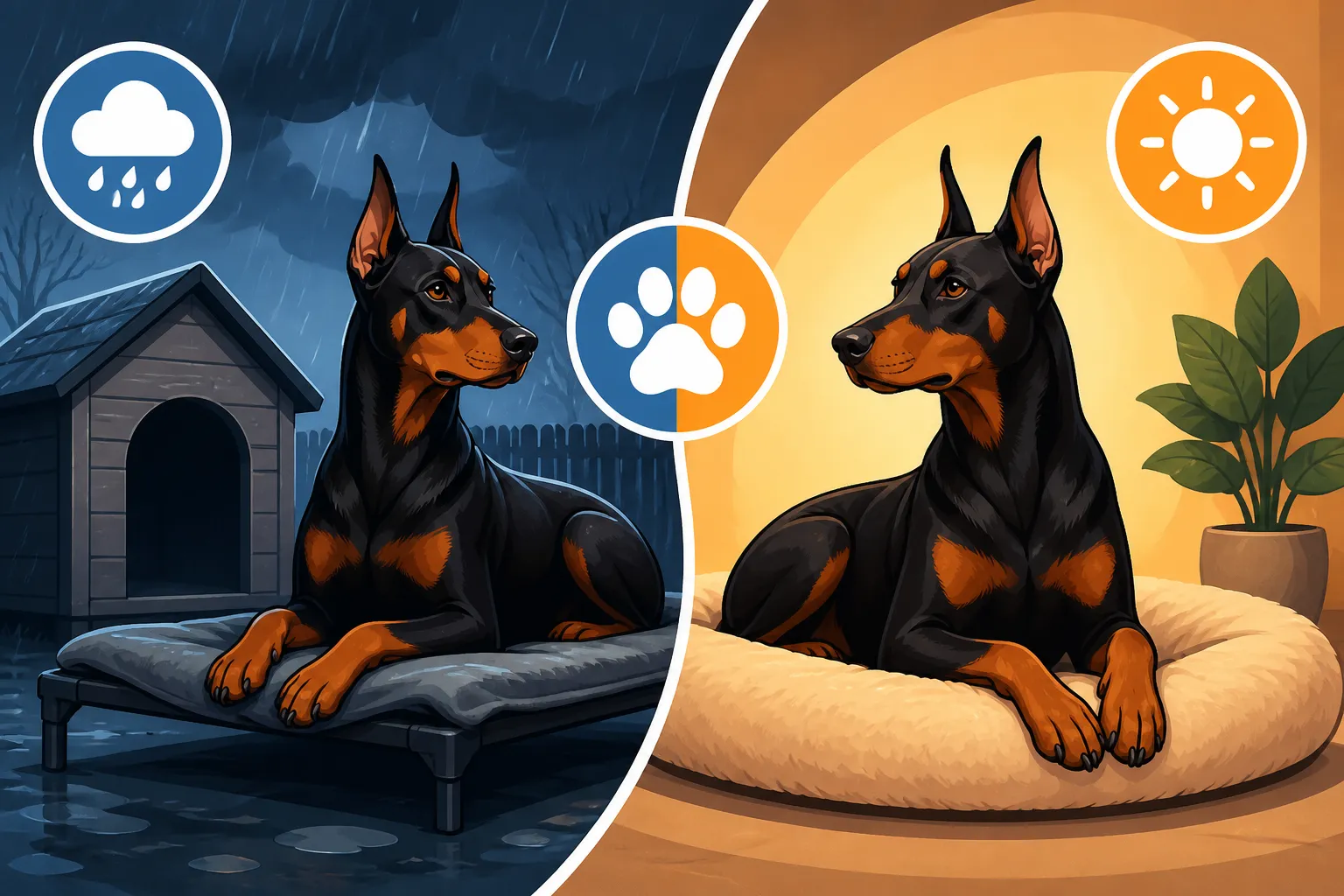
Let's be very clear: the ideal place for a Doberman to sleep is indoors, right alongside their human family. Given their physical vulnerabilities and profound need for companionship, it's truly the best choice for their health and happiness. However, if for some unforeseen, temporary, or exceptional circumstance, your Doberman must spend some time outdoors, it's absolutely critical to understand that merely providing a "dog house" isn't enough. You need to invest heavily in creating an environment that mitigates the inherent risks as much as humanly possible. This is about survival, not thriving.
Insulated and Heated Shelters
A standard wooden doghouse, even a large one, offers minimal protection against cold, wind, and dampness for a Doberman. You need something far more robust. Look for shelters specifically designed with insulation, much like a miniature, well-built home. These often feature double walls with an insulating layer, raised floors to prevent ground dampness, and an offset door to block direct wind.
Even with insulation, in any temperature below mild, supplemental heat is vital. Options include:
- Heated Dog Beds: These are often low-wattage, thermostat-controlled pads that can be placed inside the shelter. Brands available on platforms like Chewy or Amazon offer a range of sizes. Ensure they are designed for outdoor use and have chew-resistant cords. These provide direct warmth where your Doberman is resting. You can read more about options in Heated Beds for a Doberman in Winter.
- Heated Dog Houses: Some high-end dog houses come with built-in heating elements. These are an excellent investment if outdoor time is unavoidable, but they require a safe, outdoor-rated power source.
- Self-Warming Beds: While not actively heated, these beds use reflective materials to capture and reflect a dog's body heat back to them. They're better than nothing but won't be sufficient in truly cold weather for a Doberman.
Whatever solution you choose, ensure it's properly sized so your Doberman can stand, turn around, and lie down comfortably, but not so large that their body heat disperses too much.
Proper Bedding and Protective Gear
Even inside an insulated, heated shelter, the right bedding is crucial for a Doberman. Avoid towels or thin blankets that can quickly get damp and offer little insulation. Instead, opt for:
- Thick, Waterproof Dog Beds: Look for beds with dense foam or cedar shavings that offer good insulation from the cold floor and resist moisture. Elevated beds can also help keep them off the cold ground.
- Straw (clean, fresh, and regularly changed): While not as cozy as a bed, clean straw can offer surprising insulation. It traps air and keeps moisture away from the dog's body. However, it needs frequent replacement to prevent mold or attracting pests.
- Warm Blankets: Thick, washable fleece or wool blankets can be added on top of a bed for extra warmth, but ensure they don't get wet.
Additionally, consider protective gear for your Doberman:
- Winter Coats: A high-quality, waterproof, and insulated winter coat is an absolute must if your Doberman will be spending any significant time outdoors in cold weather. Many excellent options are available from retailers like Chewy or Amazon, specifically designed for large breeds. Ensure it fits well and covers their chest and belly. Winter Coats Sized for a Doberman can help you choose.
- Boots: In snowy or icy conditions, or on rough terrain, protective boots can prevent frostbite, cuts, and irritation from salt or chemicals. This is especially important given their thin skin.
| Consideration | Standard Dog House (Not Recommended) | Insulated/Heated Shelter (Min. Requirement) |
|---|---|---|
| Insulation | Little to none | Double walls, foam/straw layer |
| Heating | None | Electric heated bed or built-in heater |
| Flooring | Often direct on ground | Raised, insulated floor |
| Draft Protection | Direct open door | Offset door, wind baffling |
| Bedding | Basic blanket/towel | Thick, waterproof orthopedic bed; clean straw |
| Coat Requirement | Always, even in mild temps | Still recommended in colder weather |
| Purpose | Minimal shelter | Survival in temporary outdoor situations |
Long-Term Impact on Your Doberman's Well-being
Deciding where your Doberman sleeps isn't just a matter of convenience; it has profound, lasting effects on their overall well-being, their relationship with you, and ultimately, their quality of life. Repeatedly isolating a Doberman, particularly overnight, isn't just a temporary discomfort; it's a detrimental practice that can undermine their emotional stability, their training, and even their health in the long run.
Compromised Bonding and Trainability
A Doberman's bond with its human family is paramount. This breed thrives on interaction, shared experiences, and feeling like a valued member of the household. When a Doberman is consistently relegated to sleeping outdoors, especially while the family is comfortably inside, that bond is inevitably compromised. They miss out on countless small interactions that build trust and affection – the gentle pets, the quiet moments of companionship, the feeling of security that comes from being near their people.
This erosion of the bond can have a direct impact on their trainability. A Doberman that feels distant or insecure is less likely to be eager to please, less responsive to commands, and more prone to displaying independent or anxious behaviors. Training relies heavily on a strong, trusting relationship, and constant isolation can severely weaken that foundation. It can become much harder to motivate them, to teach them new things, or to reinforce good behavior when they are experiencing chronic emotional stress. They may start to question their place in the family unit, leading to a general lack of confidence and cooperation.
Reduced Quality of Life and Longevity Concerns
Ultimately, denying a Doberman the warmth, security, and companionship of indoor living, particularly at night, significantly reduces their overall quality of life. This isn't just about comfort; it's about providing an environment where they can truly thrive. A Doberman that is consistently cold, anxious, lonely, and physically stressed by sleeping outdoors will not be a happy, well-adjusted dog.
The chronic stress, both physical and emotional, can take a heavy toll on their body. We've already discussed specific health risks like hypothermia, joint issues, and skin problems, but consistent stress also weakens the immune system, making them more susceptible to general illnesses. The mental toll can lead to depression, aggression, or chronic anxiety, none of which contribute to a long, joyful life. While Dobermans are not known for extreme longevity to begin with, ensuring they have a secure, warm, and loving indoor environment is one of the most fundamental ways to promote their health and potentially extend their time with you. They deserve to be cherished members of the family, sharing in the comfort and security of your home, especially during those vulnerable overnight hours.
Disclaimer
This article is for general informational purposes only and does not constitute professional advice. Laws, prices and regulations vary by location and change over time. Consult a qualified professional for guidance on your specific situation.