Whether Joint Supplements Help a Long-Backed Doberman
It’s a common worry for Doberman owners, isn’t it? You look at that magnificent, athletic frame, those long powerful legs, and that surprisingly long back, and you can’t help but wonder if all that elegance comes with a price later in life. We pour so much love and care into our Dobermans, and the thought of them struggling with discomfort or limited mobility due to joint issues is just heartbreaking. This guide is here to cut through the noise and confusion about joint supplements, helping you understand whether they truly offer a helping hand for your long-backed Doberman, and how they fit into a bigger picture of lifelong well-being.
Understanding the Doberman's Unique Anatomy and Joint Vulnerabilities
Dobermans are built for speed and power, lean and muscular with a distinctive build. But that very build, while striking, can sometimes predispose them to certain joint challenges. It’s not just about their size; it’s about the specific way their bodies are structured that makes some owners especially vigilant about joint health.
The Impact of a Long Back and Deep Chest
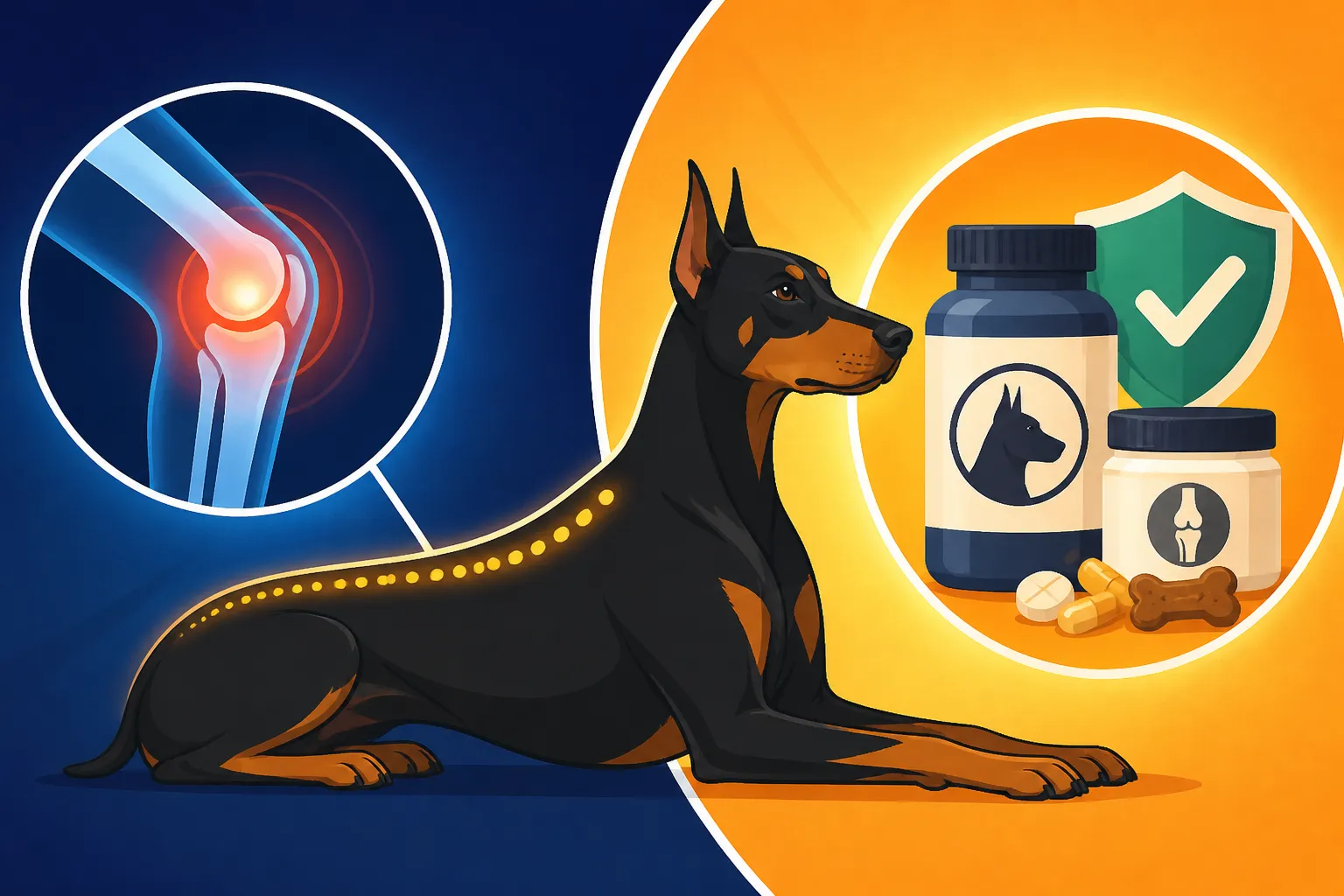
The Doberman’s elegant, often long, back is a hallmark of the breed. While it contributes to their powerful stride and impressive silhouette, it also means a longer vertebral column, which can, over time, be subject to different stresses than a more compact dog. Think of it like a bridge: a longer bridge needs stronger support and is potentially more susceptible to certain types of strain. This isn't to say every Doberman will have back problems, but it's a structural reality worth acknowledging.
Furthermore, their deep, narrow chest, while iconic, also influences their overall body mechanics. While primarily related to conditions like bloat, the proportions of their torso affect how weight is distributed and how their limbs articulate, especially as they age or if they’re very active. We're looking at a breed that often reaches heights of up to 28 inches at the shoulder for males, and with that height comes significant leverage and impact on their joints, particularly when they're running, jumping, and playing with the intense enthusiasm Dobermans are known for.
Doberman Predispositions to Orthopedic Conditions
Beyond general wear and tear, Dobermans, unfortunately, have a genetic lottery that can sometimes include specific orthopedic conditions. It's not a universal sentence, but it's why responsible breeders screen diligently, and why owners need to be aware. Conditions like hip and elbow dysplasia, while perhaps more commonly associated with other large breeds, can absolutely affect Dobermans. These are developmental issues where the joints don't form correctly, leading to instability, pain, and eventually arthritis.
Another condition to be especially mindful of with Dobermans, particularly related to their spine, is Wobbler Syndrome, or cervical spondylomyelopathy. This condition involves compression of the spinal cord in the neck, leading to an unsteady gait and neurological symptoms. While joint supplements aren't a treatment for Wobbler's, the overall health of the spinal column and surrounding structures can play a role in managing comfort and progression, emphasizing a holistic approach to their musculoskeletal system. Understanding these predispositions helps us think proactively about support. You might find it useful to read Wobbler Syndrome in the Doberman to learn more about this specific challenge.
Common Joint Issues Affecting Dobermans
Even with the best breeding and care, Dobermans can face a range of joint issues. Recognizing these early and understanding their progression can make a huge difference in managing your dog's comfort and mobility. It's not always easy to spot, especially with a stoic Doberman who might try to hide discomfort.
Arthritis and Degenerative Joint Disease
Just like in humans, arthritis is a common foe for aging Dobermans. This degenerative joint disease (DJD) is essentially the breakdown of cartilage within the joint, leading to bone-on-bone friction, inflammation, and pain. It can affect any joint but is often seen in the hips, elbows, shoulders, and even the spine. You might notice your Doberman being slower to get up in the morning, hesitating before jumping into the car, or simply not wanting to play as long as they used to. Sometimes, the signs are subtle, like a slight Stiffness in a Doberman That Used to Sprint that you might initially attribute to old age, but it could be the early whispers of arthritis.
The progression of arthritis can be insidious. What starts as occasional stiffness can become chronic pain, significantly impacting their quality of life. This is where proactive management, including weight control, appropriate exercise, and potentially, joint supplements, becomes so crucial. It’s about slowing down that degenerative process and keeping them comfortable for as long as possible.
Hip and Elbow Dysplasia
While less prevalent than in some other large breeds, hip and elbow dysplasia are definitely on the radar for Doberman owners and breeders. Hip dysplasia occurs when the ball and socket joint of the hip doesn't fit together properly, leading to laxity and abnormal wear. Elbow dysplasia is a more complex condition involving several potential developmental abnormalities in the elbow joint. Both are often inherited.
Dogs with dysplasia may show signs of lameness, reluctance to exercise, or difficulty rising. Some Dobermans, however, can be surprisingly asymptomatic, especially in their younger years, masking underlying issues until the arthritis becomes severe. This is why good breeders will provide health clearances, and it underscores the importance of discussing these conditions with your vet, especially if your Doberman shows any signs of discomfort or unusual gait. Learning about Doberman Hip Dysplasia can give you a clearer picture of what to look for.
Spinal Issues Beyond Wobblers
While Wobbler Syndrome gets a lot of attention due to its specific breed prevalence, Dobermans can also experience other spinal issues common to long-backed breeds. These can include intervertebral disc disease (IVDD), where the discs between the vertebrae bulge or rupture, pressing on the spinal cord. This can lead to pain, weakness, and even paralysis. Though less common in Dobermans than in breeds like Dachshunds, their build means it’s still a possibility.
Symptoms of spinal problems can range from subtle back pain or a reluctance to jump to more severe neurological signs like dragging their back feet or a sudden inability to walk. The complexity of the spine means that any signs of back pain or changes in gait warrant immediate veterinary attention. Keeping a Doberman at a healthy weight and ensuring they have good core strength through appropriate exercise can help support spinal health, but genetic factors and sudden movements can still lead to issues.
The Science Behind Joint Supplements: What They Offer
When we talk about joint supplements, we're really discussing a range of ingredients, each purporting to offer different benefits. It's not a one-size-fits-all magic pill, and understanding what's actually in these products can help you make a more informed choice for your Doberman.
Key Ingredients and Their Purported Benefits
The landscape of joint supplements can feel overwhelming, with countless brands and ingredient lists that sound like a chemistry textbook. However, a few key players dominate the scene, each with a specific role in joint health.
- Glucosamine: This is perhaps the most widely recognized ingredient. Glucosamine is an amino sugar that is a natural component of healthy cartilage. The theory is that supplementing with glucosamine provides the building blocks for cartilage repair and maintenance, and it may also have mild anti-inflammatory properties. It's often sourced from shellfish.
- Chondroitin Sulfate: Often paired with glucosamine, chondroitin is another major component of cartilage. It's believed to help maintain cartilage elasticity and prevent enzymatic degradation of cartilage. It also aids in water retention within the cartilage, which is crucial for shock absorption.
- MSM (Methylsulfonylmethane): This is a sulfur compound that's often included for its anti-inflammatory and pain-relieving properties. Sulfur is a vital building block for healthy joints, skin, and hair.
- Omega-3 Fatty Acids (EPA and DHA): While not directly building blocks for cartilage, omega-3s are powerful anti-inflammatory agents. They can help reduce the inflammation that contributes to joint pain and further cartilage damage in arthritic joints. Fish oil is a common source, and many Doberman owners will supplement with it for general health.
- Hyaluronic Acid (HA): A component of synovial fluid, which lubricates the joints. Supplementing with HA aims to improve the viscosity and elasticity of this fluid, enhancing joint lubrication and shock absorption.
- Green-Lipped Mussel (GLM): Hailing from New Zealand, GLM is a natural source of glucosamine, chondroitin, and omega-3 fatty acids, offering a combined approach to joint health. It also contains unique fatty acids that may have potent anti-inflammatory effects.
These ingredients work synergistically, aiming to support cartilage, reduce inflammation, and improve joint lubrication. It’s not just about one compound; it’s about a comprehensive approach to joint support.
What the Research Says (and Doesn't Say)
It's important to approach joint supplements with realistic expectations. While many veterinarians recommend them, and countless owners swear by their efficacy, the scientific evidence for their benefits can be a bit mixed and sometimes anecdotal. Large, well-controlled studies in dogs are challenging to conduct and often have varying results.
Generally, glucosamine and chondroitin are considered to have a good safety profile, and many studies suggest they can help reduce pain and improve mobility in dogs with mild to moderate osteoarthritis. The effects are often subtle and take time to become apparent – typically several weeks or even months of consistent use. They aren't pain relievers like NSAIDs, which work quickly; rather, they aim to support the joint structures and reduce the progression of degeneration.
The consensus among many canine health professionals is that while they might not "cure" joint disease, they can be a valuable part of a multimodal management plan, especially when started early. They are often most effective as a preventative measure or in the early stages of arthritis, before severe damage has occurred. For more insights into proactive care, consider reading Protecting a Growing Doberman's Joints.
Choosing the Right Joint Supplement for Your Doberman
Navigating the supplement aisle, whether online or in a pet store, can be a minefield of choices. For your Doberman, making an informed decision means looking beyond flashy marketing and focusing on quality, appropriate dosage, and a brand you can trust.
Factors to Consider When Selecting a Supplement
When you’re looking for a joint supplement for your Doberman, keep these points in mind:
- Active Ingredients and Quality: Look for supplements that clearly list the amounts of glucosamine, chondroitin, and other active ingredients per dose. Proprietary blends, where ingredient amounts aren't specified, make it hard to know what you’re truly giving your dog. The quality of the ingredients matters too – reputable brands will often source high-quality, human-grade ingredients.
- Third-Party Testing: This is a big one. Since supplements aren't as strictly regulated as prescription medications, third-party testing provides an extra layer of assurance that what's on the label is actually in the product, and that it's free from contaminants. Organizations like the National Animal Supplement Council (NASC) stamp are good indicators of adherence to quality standards.
- Formulation and Delivery: Joint supplements come in various forms: chews, tablets, powders, and liquids. Consider what will be easiest for you to administer consistently to your Doberman. Some Dobermans are notoriously picky, so a palatable chew or a powder that can be mixed into their food (perhaps even a fresh food delivery service like Ollie that might integrate supplements) might be more successful than a pill they spit out.
- Dosage: Dobermans are large dogs, so ensure the supplement is appropriately dosed for their weight. Under-dosing may render the supplement ineffective, while over-dosing can sometimes lead to mild digestive upset. Always follow the manufacturer's recommendations or your vet's specific guidance.
- Reputation and Reviews: While not the sole factor, looking at reviews from other large breed owners can be helpful. However, always prioritize veterinary recommendations and scientific backing over popular opinion alone. Brands found on platforms like Chewy or Amazon often have extensive customer reviews, but remember to cross-reference with quality indicators.
Discussing Options with Your Veterinarian
This is perhaps the most critical step. Before starting any new supplement regimen for your Doberman, a conversation with your veterinarian is non-negotiable. Your vet knows your Doberman's medical history, current health status, and any pre-existing conditions. They can:
- Confirm a Diagnosis: If your Doberman is showing signs of joint pain, your vet can perform an examination and recommend diagnostics (like X-rays) to determine the underlying cause. Starting supplements without a clear picture might delay necessary medical treatment.
- Recommend Specific Products: Vets often have preferred brands or formulations based on their experience and knowledge of efficacy and quality. They can guide you through the maze of choices and suggest products that are most likely to benefit your Doberman's specific needs.
- Advise on Dosage and Interactions: They can help you determine the correct dosage for your Doberman's weight and condition and alert you to any potential interactions with other medications your dog might be taking.
- Integrate into a Holistic Plan: Joint supplements are rarely a standalone solution. Your vet can help integrate them into a comprehensive plan that might include pain management, anti-inflammatory medications, physical therapy, weight management, and specific exercise modifications. This holistic approach is key to improving mobility and comfort. For an older Doberman, these discussions become even more frequent, perhaps even Screening an Older Doberman More Often for overall health issues.
Integrating Supplements into a Holistic Joint Care Plan
Joint supplements, when appropriate, are just one piece of a much larger puzzle when it comes to keeping your Doberman's joints healthy and strong throughout their life. A truly effective approach is always multi-faceted, addressing nutrition, exercise, and overall well-being.
The Role of Diet and Weight Management
One of the most impactful things you can do for your Doberman’s joints is to maintain a healthy weight. Excess weight puts incredible strain on all joints, accelerating the progression of arthritis and exacerbating conditions like dysplasia. Even a few extra pounds can make a significant difference in their comfort levels.
- Balanced Nutrition: A high-quality diet provides the necessary nutrients for overall health, including strong bones and healthy cartilage. Some foods are even formulated with joint-supporting ingredients. Ensure your Doberman is receiving appropriate calories for their activity level and age. You can refer to Feeding an Eighty-Pound Doberman Well for more insights into their dietary needs.
- Anti-Inflammatory Foods: Beyond just the core diet, some owners explore adding natural anti-inflammatory foods or spices in consultation with their vet, such as turmeric or ginger (in appropriate, small amounts), or ensuring their dog's diet is rich in natural sources of omega-3s, like salmon or flaxseed.
- Specialty Diets: For Dobermans with advanced joint disease or those on a specific treatment plan, your vet might recommend a prescription joint care diet. These diets are specifically formulated with higher levels of joint-supporting nutrients and sometimes have controlled calorie counts to aid in weight management.
Remember, supplements are designed to supplement a good diet, not replace it.
Appropriate Exercise and Physical Therapy
Dobermans are active dogs, and maintaining muscle mass and flexibility is crucial for joint health. However, the type and intensity of exercise need to be carefully considered, especially if your Doberman has known joint issues or is getting older.
- Low-Impact Activities: Swimming is fantastic for Dobermans with joint concerns because it provides excellent cardiovascular exercise and builds muscle without putting stress on their joints. Leash walks on soft surfaces (like grass or dirt trails) are also preferable to pounding pavement.
- Controlled Exercise: Avoid activities that involve excessive jumping, twisting, or sudden stops and starts, especially with puppies whose growth plates are still open. For adult and senior Dobermans, these high-impact movements can aggravate existing joint issues.
- Core Strength: Building strong core muscles helps support the spine and distribute weight more evenly, which is particularly important for a long-backed Doberman. Your vet or a certified canine rehabilitation therapist can show you exercises to help build this strength.
- Physical Therapy/Rehabilitation: For Dobermans with diagnosed joint conditions, a course of physical therapy can be incredibly beneficial. This can include modalities like therapeutic exercises, underwater treadmill, laser therapy, and massage, all designed to reduce pain, improve range of motion, and strengthen supporting muscles. These services, while an investment, can significantly improve a Doberman's quality of life and are often part of the Doberman Wobbler Surgery and the Bills That Follow rehabilitation process.
Lifestyle Adjustments and Environmental Support
Beyond what goes into their bowl or how they exercise, your Doberman's daily environment can also be optimized to support their joint health.
- Orthopedic Bedding: A supportive, orthopedic bed is essential for Dobermans, particularly as they age or if they have joint pain. Their lean build means they don't have much natural padding, so a firm, pressure-relieving bed prevents pressure sores and provides comfort. Consider looking for options available on Amazon or Chewy. Soft, squishy beds might feel good initially, but they don't offer the necessary support to keep their spine and joints aligned. Finding Beds That Cushion a Bony Doberman is vital.
- Ramps and Stairs: If your Doberman has difficulty jumping into the car or onto furniture, provide ramps or doggy stairs. This reduces the impact on their joints and prevents painful jarring.
- Non-Slip Surfaces: Hardwood or tile floors can be challenging for dogs with arthritis or instability. Lay down rugs or runners to provide better traction and prevent slips and falls, which can lead to injury.
- Warmth in Winter: Dobermans, with their short coats and lack of undercoat, are susceptible to cold. Cold muscles and joints are often stiffer and more painful. A warm coat during winter walks and a cozy, draft-free sleeping area can make a big difference in their comfort. You can learn more about this in The Temperature a Doberman Needs a Coat.
- Regular Veterinary Check-ups: These are crucial for ongoing monitoring of joint health, especially as your Doberman enters their senior years. Your vet can assess their mobility, check for signs of pain, and adjust their management plan as needed. Catching issues early is always better than waiting until they're severe.
By combining appropriate joint supplements with a thoughtful diet, tailored exercise, and a supportive home environment, you can give your long-backed Doberman the best possible chance at a comfortable, active life. It's about being proactive and consistent, showing them the same dedication they show us every single day.
Disclaimer
This article is for general informational purposes only and does not constitute professional advice. Laws, prices and regulations vary by location and change over time. Consult a qualified professional for guidance on your specific situation.