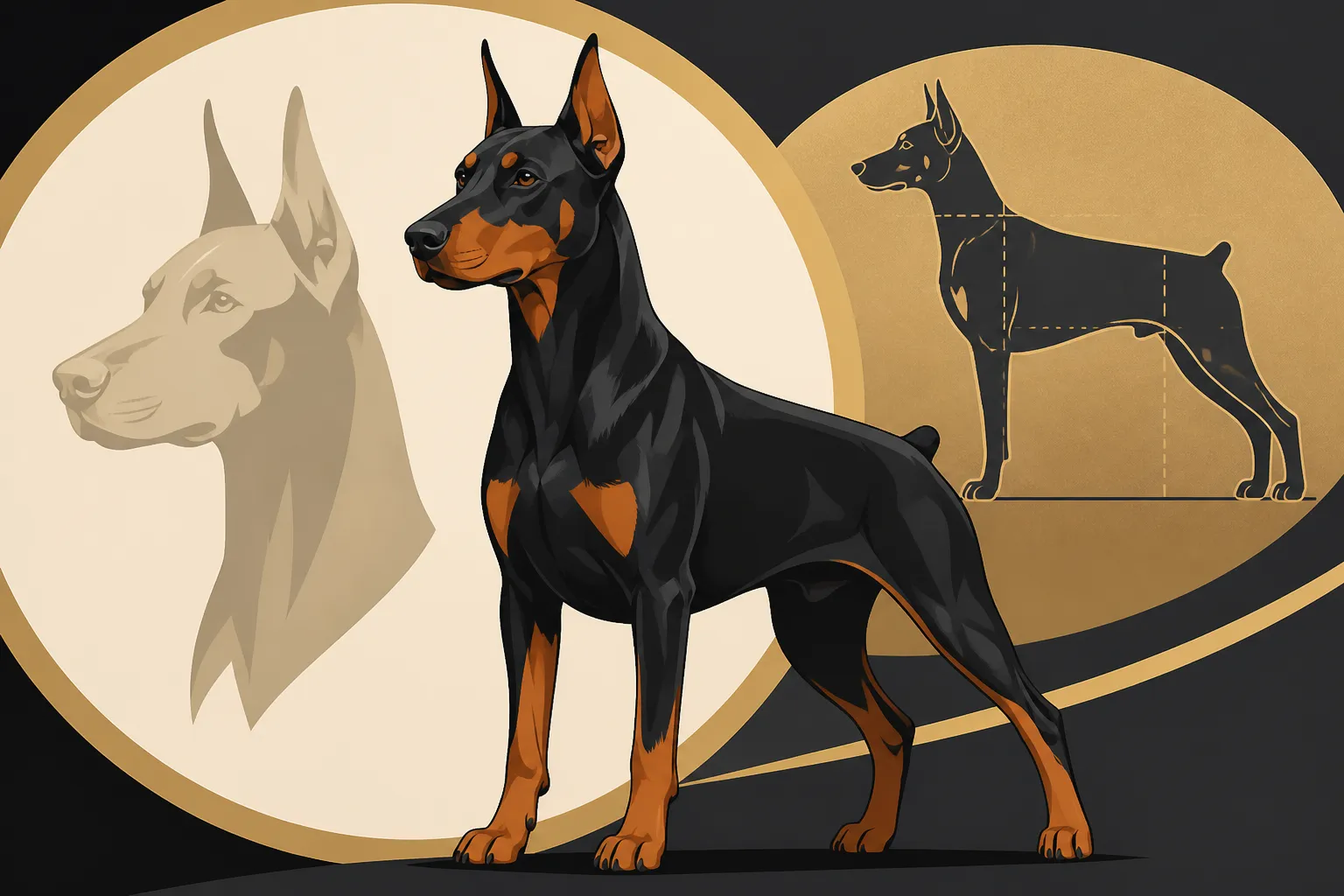
The 1900 German Doberman Standard
It’s easy to look at a Doberman today and imagine they’ve always been this recognizable, elegant guardian. But rewind to the late 19th century, and the breed was still very much a work in progress, a collection of unique dogs rather than a standardized type. This lack of uniformity presented a real challenge for early enthusiasts who loved the breed’s potential but sought consistency. This guide delves into the foundational document that changed everything: the 1900 German Doberman Standard, exploring how it shaped the breed we know and love today, from physical appearance to the very essence of its temperament.
The Historical Context: Why a Standard Was Needed
Imagine a world where the Doberman was just starting to emerge, a mix of various dogs brought together by Karl Dobermann, a tax collector with a vision. These early dogs, while possessing many desirable traits for a guardian, weren't a cohesive breed with predictable characteristics. Breeders and fanciers knew they had something special, but without a clear blueprint, the breed risked fragmenting into many different types. The 1900 German Doberman Standard wasn't just a piece of paper; it was a declaration, a commitment to solidify the Doberman's identity and guide its future.
From Tax Collector's Dog to Defined Breed
Karl Dobermann, an intrepid tax collector from Apolda, Germany, is widely credited with developing the Doberman Pinscher in the late 19th century. He needed a dog that was fiercely protective, intelligent, and fearless to accompany him on his rounds, which often involved carrying valuables and encountering potentially dangerous situations. So, he began breeding various local dogs, reportedly including Rottweilers, German Pinschers, and possibly Greyhounds or Weimaraners, to create the ultimate personal protection animal. The early Dobermans were rugged, courageous, and perfectly suited to their demanding role. They were literally "the tax collector's dog."
However, Dobermann himself was not a meticulous record-keeper in the way modern breeders are. He was more focused on function than on establishing a precise genetic lineage or physical type. After his death, other breeders took up the mantle, recognizing the immense potential of this nascent breed. The challenge was to take these diverse, functional dogs and mold them into a breed that would consistently produce specific traits, both in appearance and character. This required a clear, written standard. If you're curious about the breed's very beginnings, you might enjoy reading about Karl Dobermann and the Dogs He Needed.
The Need for Uniformity in a Young Breed
Without a breed standard, every breeder might pursue their own interpretation of what a Doberman should be, leading to significant variations in size, build, coat type, and even temperament. This would make it incredibly difficult to maintain the integrity of the breed and for judges at dog shows to consistently evaluate entries. A standard provides a common goal, a target for all breeders to aim for, ensuring that the breed's distinct characteristics are preserved and enhanced over generations. It brings order to what could otherwise be a chaotic and inconsistent breeding landscape.
For a new breed like the Doberman, which quickly gained popularity due to its impressive guarding abilities and striking looks, this uniformity was crucial for its long-term recognition and acceptance. It wasn't just about aesthetics; it was about solidifying the Doberman's reputation as a reliable, predictable working dog. A strong standard helps prevent dilution of desirable traits and the introduction of undesirable ones, safeguarding the breed's future.
Otto Goeller's Vision and the Doberman Club
One of the most instrumental figures in formalizing the Doberman breed was Otto Goeller, another resident of Apolda and a passionate Doberman enthusiast. Goeller recognized the critical need for a written standard to guide the breed's development. In 1899, he, along with other dedicated individuals, founded the National Doberman Pinscher Club (Nationaler Dobermann Pinscher Club) in Apolda, Germany. This club was pivotal in creating and publishing the first official breed standard in 1900. You can learn more about this foundational moment by exploring Otto Goeller and the First Doberman Club.
Goeller's vision, encapsulated in the 1900 standard, aimed to define the ideal Doberman, setting clear guidelines for conformation, size, and temperament. This document became the bedrock upon which all subsequent Doberman breeding and showing were built, not just in Germany but eventually around the world as the breed gained international acclaim. It gave breeders a common language and a shared goal, truly establishing the Doberman as a distinct and recognized breed.
Defining the Doberman's Form: Key Physical Traits
The 1900 German Doberman Standard was meticulous in its description of the ideal Doberman's physical attributes. It painted a clear picture of a dog built for speed, agility, and strength, a true athlete designed for protection work. These early specifications laid the groundwork for what judges and breeders would look for in the breed for decades to come, emphasizing balance, power, and a noble bearing.
Proportionality and Overall Impression
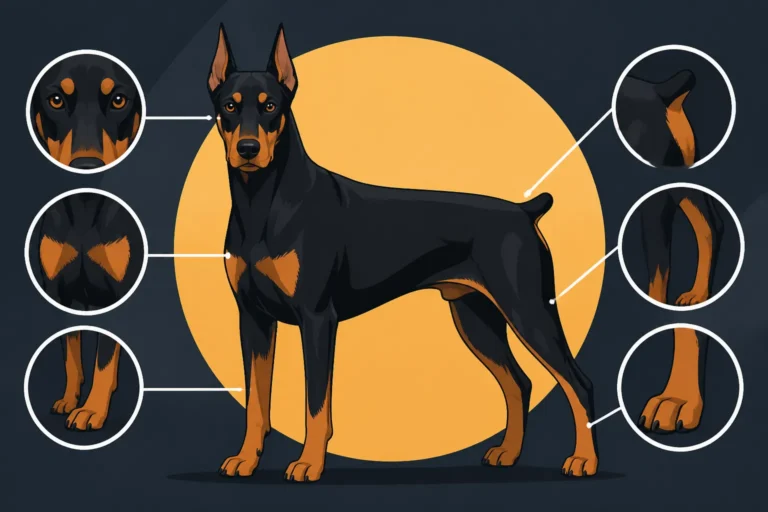
The standard described the Doberman as a medium-sized, powerfully built dog, with a rather short, firm body. It stressed the importance of proportionality, wanting a square-bodied dog – meaning the length of the body, from the point of the breastbone to the point of the rump, should be approximately equal to the height at the highest point of the shoulder (withers). This squareness contributed to the Doberman's athletic and balanced appearance, suggesting both elegance and underlying strength.
The overall impression was one of alertness, courage, and determination. The Doberman was not to be coarse or clumsy, but rather refined and agile. Think of a finely tuned machine, ready for action at a moment's notice. This emphasis on balance and functional physique continues to be a hallmark of the breed today, even as specific interpretations have evolved. For more on how these physical traits are evaluated in the show ring, consider reading Doberman Height and Weight in the Ring.
The Head, Eyes, and Expression
The head was to be dry, strong, and wedge-shaped, viewed from both the top and the side. This distinctive wedge, not too heavy and not too fine, was a crucial part of the Doberman's intimidating yet intelligent expression. The skull was described as flat, with a slight stop (the transition from forehead to muzzle). The muzzle itself was to be powerful, with strong jaws and a full complement of teeth.
The eyes were expected to be dark and almond-shaped, conveying an intelligent and keen expression. Light eyes were considered a fault, as they could detract from the desired intense gaze. The standard emphasized that the expression should reflect the Doberman's courageous and watchful nature, never dull or timid. This detailed focus on the head contributes significantly to the breed's iconic look, and you can delve deeper into it with Doberman Head, Eye and Expression in the Standard.
Body, Coat, and Color Requirements
The body of the Doberman was to be compact and muscular. The neck was described as long, elegant, and well-arched, flowing smoothly into a strong, short back. A broad, deep chest was also a key feature, providing ample room for the heart and lungs of an active working dog. The loin was to be short and well-muscled, contributing to the breed's powerful hindquarters.
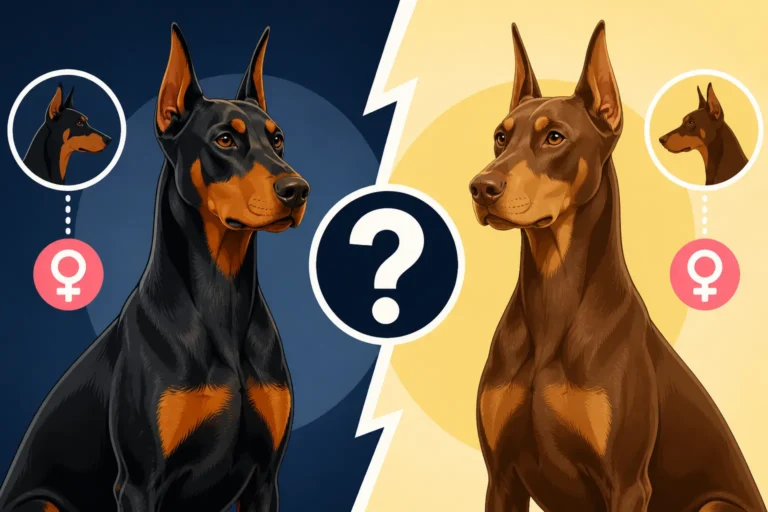
The coat was specified as short, hard, and thick, lying smoothly and evenly over the body. This coat type offered protection without being cumbersome, ideal for an active working dog. The accepted colors at the time were primarily black and rust, though other colors like red (brown) with rust markings were also present and later officially recognized. This combination of a sleek coat and distinct markings added to the Doberman's striking appearance, making them easily identifiable.
The Controversial Ears and Tail
Perhaps one of the most distinctive, and indeed controversial, aspects of the Doberman's appearance outlined in the early standard was the practice of ear cropping and tail docking. The 1900 standard implicitly supported these practices by describing the ideal Doberman with short, erect ears and a very short tail. Tail docking was performed soon after birth, while ear cropping, a more involved surgical procedure, typically happened a bit later.
These modifications were not merely cosmetic; they were believed to enhance the dog's intimidating appearance, protect working dogs from injury, and improve their ability to hear. While these practices are now banned in many countries due to welfare concerns, at the time, they were an integral part of shaping the Doberman's "look" as a formidable guardian. To understand the historical significance and modern debate around this, explore Doberman Ear Cropping in the Standard and Docked Tails and the Modern Doberman.
Temperament and Working Aptitude: The Heart of the Breed
While physical traits define what a Doberman looks like, the true essence of the breed, especially in its early development, was its temperament and working ability. The 1900 German Doberman Standard placed immense importance on character, knowing that a magnificent-looking dog was useless if it didn't possess the mental fortitude and intelligence for its intended purpose. This section of the standard spoke to the Doberman's soul.
The Ideal Doberman Character
The standard called for a Doberman with a "firm and fearless character" and a "determined and spirited disposition." They were to be courageous, bold, and self-assured, never timid or overly aggressive without cause. This didn't mean a dog that was constantly looking for a fight, but rather one that possessed an innate confidence and willingness to protect its owner and property. The ideal Doberman was described as intelligent, loyal, and highly trainable, with a keen sense of observation.
This emphasis on a balanced but formidable character was paramount. The breed was meant to be a devoted companion at home and a steadfast protector when called upon. This dual nature required a dog that was stable under pressure yet capable of swift, decisive action. The very definition of a Doberman's nature is something many still discuss, and you can learn more by reading The Doberman Temperament as the Standard Describes It.
Intelligence and Trainability
One of the Doberman's most celebrated traits, even from its earliest days, was its intelligence. The 1900 standard implicitly recognized this by expecting a dog capable of complex training and demanding work. Dobermans were not just brawn; they were brains. Their quick wit and eagerness to please made them highly trainable, a crucial characteristic for a breed intended for police, military, and personal protection work.
This intelligence, however, comes with its own set of challenges. A Doberman thrives on mental stimulation and needs consistent, intelligent handling. Owners quickly learned that these dogs required more than just physical exercise; their minds needed to be engaged daily. Neglecting this aspect can lead to boredom and undesirable behaviors. For insights into keeping these smart dogs engaged, you might find Keeping a Doberman Mentally Tired helpful.
Guarding Instincts and Fearlessness
The Doberman was, first and foremost, a guardian breed. The 1900 standard highlighted its inherent guarding instincts and fearlessness. This wasn't about teaching a dog to be aggressive; it was about nurturing its natural protective drives. A Doberman was expected to be watchful, alert to its surroundings, and capable of assessing threats. When a threat was perceived, the Doberman was to respond with courage and determination, standing its ground.
This fearlessness was not recklessness but rather a deep-seated confidence in its own abilities. This characteristic made them highly effective working dogs in demanding roles. However, it also meant that early socialization and training were crucial to channel these powerful instincts appropriately, ensuring the Doberman remained a reliable and safe companion. The responsibility of owning such a dog is significant, and understanding The Owner a Doberman Actually Needs is vital.
Early Doberman Care Considerations Based on the Standard
While the 1900 standard primarily focused on defining the ideal Doberman, its descriptions of the dog’s physical and mental attributes inherently pointed to certain care requirements. A dog built for strength and endurance, with a lean body and a short coat, naturally dictates a particular approach to nutrition, exercise, and protection from the elements. Understanding these foundational aspects helps us appreciate the historical context of Doberman care.
Exercise Needs for a Working Dog
The Doberman, as described in the 1900 standard, was a dog of action. Its muscular build, powerful gait, and spirited disposition all spoke to a need for significant physical exercise. These were not dogs meant to be couch potatoes. Early Doberman owners understood that their dogs required extensive daily activity to maintain their physical condition and mental well-being. This would have included long walks, runs, and engaging in working tasks.
Without adequate exercise, a Doberman could easily become restless, destructive, or even develop behavioral issues. The standard’s emphasis on a strong, athletic physique meant that owners were implicitly tasked with providing the necessary outlets for this energy. This continues to be a crucial aspect of Doberman ownership today, ensuring they remain healthy and happy.
Coat Maintenance and Protection from Elements
The standard described a short, hard, and thick coat. While this coat is generally low-maintenance in terms of shedding (though Dobermans do shed!), its brevity means the Doberman offers little insulation against cold weather. Even in 1900, owners of Dobermans would have quickly realized that their dogs were sensitive to cold temperatures. This would have necessitated providing warm, sheltered sleeping areas and possibly even early forms of dog coats for protection during colder months or prolonged outdoor activity.
Today, this is still a primary consideration for Doberman owners. If you're looking for solutions to keep your Doberman warm, retailers like Chewy offer a wide selection of insulated dog coats and sweaters designed specifically for lean breeds. Providing proper shelter and warmth isn't just a comfort; it's a health consideration for a breed with such a minimalist coat. This vulnerability to cold is further explored in Why a Doberman Feels the Cold Before Other Dogs.
Feeding for a Lean, Muscular Build
A dog of the Doberman's size and activity level, especially one with a lean, muscular build as defined by the standard, requires a high-quality diet to sustain its energy and maintain its physique. The 1900 standard didn't specify dietary details, of course, but the requirements for a powerful working dog would have implied a need for nutrient-dense food. Early owners would have fed their Dobermans based on available meat, grains, and other suitable provisions, focusing on a diet that supported their demanding lifestyle.
Maintaining the Doberman's lean profile, rather than allowing them to become overweight, would have been important for their agility and overall health. Today, Doberman owners benefit from a vast array of scientifically formulated dog foods designed to meet the specific needs of active, large breeds. Reputable pet supply stores, including platforms like Chewy, provide numerous options for feeding an eighty-pound Doberman well, ensuring they get the right balance of protein, fats, and carbohydrates. Understanding a Doberman's nutritional needs is critical, and there's a dedicated guide on Feeding an Eighty-Pound Doberman Well that you might find helpful.
| Key Characteristic | 1900 German Doberman Standard Description | Modern Interpretation/Impact |
|---|---|---|
| Overall Impression | Medium size, powerfully built, square body, agile, noble. | Still emphasizes athleticism, elegance, and balance. |
| Head | Dry, strong, wedge-shaped; flat skull, slight stop. | Iconic Doberman head shape remains crucial. |
| Eyes | Dark, almond-shaped, intelligent, keen expression. | Dark eyes are preferred; light eyes still a fault. |
| Ears & Tail | Short, erect ears (cropped); very short tail (docked). | Practices are controversial, banned in many regions; natural ears/tails increasingly seen. |
| Coat | Short, hard, thick, smooth. | Remains a signature trait, contributing to cold sensitivity. |
| Color | Black and rust primarily, red (brown) also present. | Black & rust, red & rust, blue & rust, fawn & rust are recognized (dilutes cause health issues). |
| Temperament | Firm, fearless, determined, spirited, courageous, loyal, intelligent. | Core temperament traits are still highly valued, emphasizing stable confidence. |
| Purpose | Guardian, protector, working dog. | Still considered a guardian breed; excelling in various dog sports and working roles. |
The Standard's Lasting Legacy and Evolution
The 1900 German Doberman Standard was far more than a set of rules for a young breed; it was a foundational document that set the Doberman on a specific path. It defined its identity, guided its development, and ensured its distinctive traits were preserved for generations. While the world, and indeed dog breeding practices, have evolved significantly since 1900, the essence of that original standard continues to echo in today’s Doberman.
Influence on Modern Doberman Standards
Every Doberman breed standard adopted by kennel clubs around the world today, whether it's the American Kennel Club (AKC) or the Fédération Cynologique Internationale (FCI) standard, can trace its roots back to that seminal 1900 German document. While modern standards have been refined, updated, and in some cases, adapted to regional preferences or changing societal views (such as on cropping and docking), the core description of the Doberman's structure, temperament, and overall character remains remarkably consistent with Otto Goeller's early vision.
The emphasis on a strong, wedge-shaped head, dark intelligent eyes, a square and muscular body, and a fearless yet stable temperament are all direct legacies of that first standard. It provided a universal starting point that allowed the Doberman to develop as a recognizable and unified breed across different continents, solidifying its place as one of the world's most impressive canine companions.
The Standard's Role in Breed Preservation
For any breed, a well-defined standard is a critical tool for preservation. It prevents indiscriminate breeding that could dilute the breed's unique characteristics or introduce undesirable traits. By giving breeders a clear ideal to strive for, the 1900 standard ensured that efforts were concentrated on producing Dobermans that conformed to the established type, thus maintaining the breed's integrity. It guided selection, helping to eliminate genetic faults and promote desired qualities.
This commitment to a standard meant that the Doberman developed with a purpose, with both form and function carefully considered. It’s why, despite more than a century passing, a Doberman Pinscher is instantly recognizable and largely adheres to the fundamental descriptions laid out so long ago. The early breeders, by codifying their ideal, ensured the Doberman's distinctiveness would endure.
Adapting to Changing Times and Societies
Of course, no standard remains static forever. The world of dog breeding and ownership has seen profound changes since 1900. Veterinary science has advanced, understanding of genetics has deepened, and public perception of animal welfare has evolved. Consequently, modern Doberman standards have adapted. For instance, while ear cropping and tail docking were implicitly expected in the 1900 standard, many contemporary standards (particularly in Europe) now either forbid these practices or describe the natural ear and tail carriage.
Despite these necessary updates and adaptations, the spirit of the 1900 German Doberman Standard—its celebration of the Doberman as an intelligent, courageous, and noble guardian—persists. It reminds us of the breed's roots, its intended purpose, and the vision of the dedicated individuals who worked to establish it. It’s a testament to the enduring power of a carefully crafted blueprint for a beloved breed.
Disclaimer
This article is for general informational purposes only and does not constitute professional advice. Laws, prices and regulations vary by location and change over time. Consult a qualified professional for guidance on your specific situation.