The Doberman Against the German Shepherd
Deciding between a Doberman and a German Shepherd for your next canine companion can feel like trying to choose between two top-tier athletes – both are incredibly capable, intelligent, and loyal, but they've got distinct styles. Many folks find themselves drawn to these impressive breeds for their protective instincts and sharp minds, only to realize that their day-to-day personalities and needs are quite different. This guide is here to break down the nuances between the Doberman and the German Shepherd, helping you understand which breed might truly be the best fit for your life, your home, and your family, without glossing over the commitment each requires.
Origins and Breed Purpose: A Tale of Two Working Dogs
Both the Doberman and the German Shepherd were meticulously developed for specific working roles, and understanding these historical purposes is key to grasping their inherent traits today. They weren’t simply backyard mutts that gained popularity; they were carefully crafted for a purpose, and those original intentions still resonate deeply in their modern temperaments and needs. It's truly fascinating how a breed's past can so profoundly shape its present.
The Doberman's Entrepreneurial Beginning
Imagine a late 19th-century German tax collector, Karl Friedrich Louis Dobermann, who needed a steadfast protector to accompany him on his rounds, carrying money and facing potential threats. He wasn't just looking for any dog; he needed one that was intelligent, brave, and had an intimidating presence. This wasn't a casual breeding project; it was a focused endeavor to create the ultimate personal bodyguard.
Dobermann’s breeding efforts were steeped in necessity. He reportedly used various local dogs, including Rottweilers, German Pinschers, and possibly Greyhounds and Weimaraners, to forge a dog with the precise characteristics he required. The result was a dog that was fearless yet refined, powerful yet agile – a true sentinel. This origin story explains why Dobermans tend to be so acutely aware of their surroundings, often forming an incredibly strong bond with one primary handler, almost like a shadow. They were bred to be constantly vigilant, assessing situations, and acting as a seamless extension of their owner's protective will. This deep-seated need to be with their person and observe everything is why they’ve earned the nickname "Velcro Doberman." They truly see themselves as part of your personal space and security detail, which is wonderful for those who want a constant companion but can be a bit much for others. To delve deeper into his story, check out The Tax Collector Who Invented the Doberman.
The German Shepherd's Herding Heritage
On the other side of the coin, we have the German Shepherd, envisioned by Captain Max von Stephanitz around the same time. His goal was equally ambitious but entirely different: to create the ultimate German herding dog. He sought a dog that was intelligent, obedient, versatile, and possessed an unwavering work ethic. The German Shepherd was not primarily bred for personal protection, but rather for its keen intellect, trainability, and ability to manage livestock independently while also taking direction.
Von Stephanitz scoured Germany for working sheepdogs, selecting only those with the most desirable traits – strength, intelligence, and a stable temperament. The breed was later adapted for military and police work due to these inherent qualities, proving its versatility beyond the pasture. This herding background explains the German Shepherd's strong desire for a "job," whether that's herding actual sheep, excelling in obedience, or patrolling a property perimeter. They thrive on having a purpose and mental stimulation, often displaying a remarkable ability to problem-solve and adapt. Their inherent need to gather and control can sometimes manifest as a tendency to "herd" family members, especially children, which can be endearing but also requires consistent guidance. They are incredibly devoted to their family unit, viewing it as their flock, and will naturally protect it, a testament to their versatile working origins.
Physical Characteristics: Form Follows Function
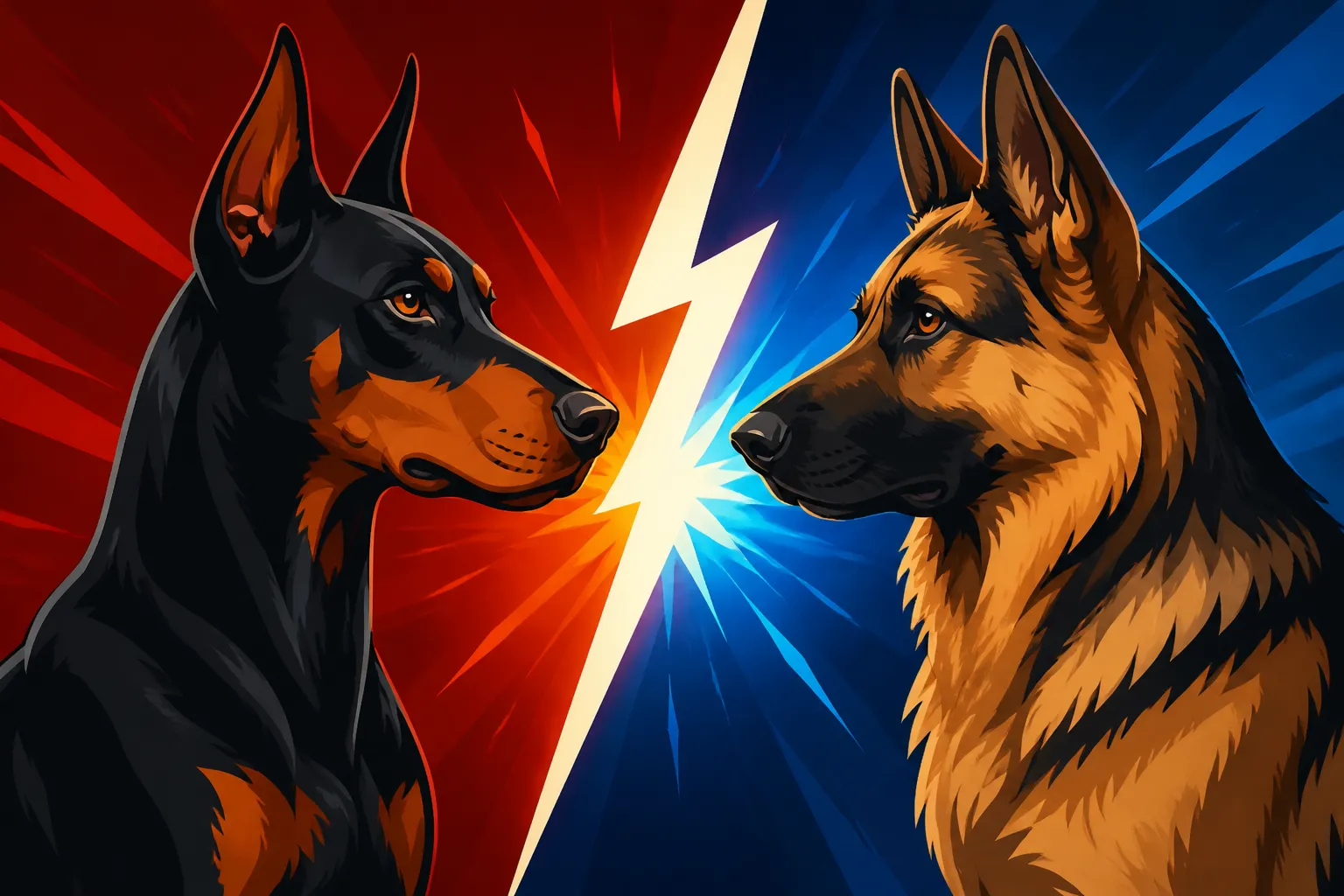
When you look at a Doberman and a German Shepherd side-by-side, their differences in build and coat are immediately apparent, reflecting the divergent tasks they were bred to perform. Both are undeniably impressive animals, but their physical design tells a story about their capabilities and requirements.
Doberman's Sleek and Athletic Build
The Doberman, as described in The Doberman the AKC Standard Describes, boasts a sleek, elegant, and decidedly athletic physique. They are built for speed, agility, and powerful, decisive movements. Think of a Doberman as a finely tuned machine, streamlined for efficiency. Males typically stand between 26 to 28 inches at the shoulder and weigh 75 to 100 pounds, while females are slightly smaller. Their frame is lean and muscular, without being bulky.
Their short, smooth, and hard coat lies close to the body, offering minimal insulation. This means Dobermans are particularly susceptible to cold weather, often needing sweaters or coats even in moderate temperatures. I remember one winter trying to convince my Doberman, Bella, that a five-minute potty break was all she needed without her snazzy fleece coat. She gave me a look that clearly said, "Are you serious right now?" Her shivering quickly convinced me otherwise! This lack of a dense undercoat also means they shed, but generally not as much as double-coated breeds, and their grooming needs are relatively simple, mostly involving regular brushing to keep their coat gleaming. Their long, refined head and intelligent eyes complete the picture of a noble and alert guardian.
German Shepherd's Robust and Versatile Frame
In contrast, the German Shepherd presents a more robust, substantial, and powerfully built physique. They are designed for endurance, strength, and resilience in various terrains and climates. German Shepherds are built to work long hours, whether herding, tracking, or assisting in search and rescue. Males typically stand 24 to 26 inches at the shoulder and weigh 65 to 90 pounds, with females again being slightly smaller. Their build is strong and muscular, often appearing more substantial than the Doberman.
Their coat is usually a double coat, consisting of a dense, harsh outer coat and a softer undercoat. This provides excellent insulation against both cold and heat, making them much more adaptable to different environmental conditions than Dobermans. However, this also means they are prodigious shedders, especially during seasonal "blows." If you've ever owned a German Shepherd, you know that their hair becomes a part of your decor, your clothes, and quite possibly, your morning coffee. Regular, thorough brushing is a must to manage the shedding and keep their coat healthy. Their broad heads, erect ears, and watchful expressions convey their intelligence and keen awareness. There's a certain ruggedness to a German Shepherd's appearance that speaks to its working-dog roots.
Temperament and Trainability: Minds Ready for Work
Both breeds are celebrated for their intelligence and eagerness to please, making them highly trainable. However, their specific temperamental nuances mean they approach learning and interaction in slightly different ways, which can impact how you approach their training and daily life.
The Doberman's Loyal and Intuitive Mind
Dobermans are renowned for their sharp intellect and a profound loyalty that often borders on obsession. This is where the "Velcro Doberman" moniker really comes into play; they want to be involved in everything you do, and they'll follow you from room to room just to be in your presence. This intense bond makes them incredibly attuned to their owner's moods and intentions. They can pick up on the slightest shift in your tone or body language, making them intuitive partners.
Their intelligence means they learn incredibly quickly, often grasping new commands in just a few repetitions. This can be a double-edged sword, though, as they can also pick up bad habits with equal speed! They thrive on consistency and clear communication. If you're not consistent, they'll often figure out how to work around your rules, because they're smarter than you expect. This sensitivity means that harsh corrections can be counterproductive, potentially shutting down their eagerness to please and eroding trust. Positive reinforcement methods, coupled with a firm but fair hand, generally work best. They excel in advanced obedience, rally, and protection sports, showcasing their athleticism and mental prowess. My Doberman, Rex, once learned to open the pantry door in about ten minutes after watching me do it twice. Suddenly, all the Chewy boxes were in danger! Their intelligence demands an owner who is equally sharp and dedicated to providing mental stimulation. Take a look at Training a Doberman That Is Smarter Than You Expect for more insights into harnessing their intellect.
The German Shepherd's Steady and Eager-to-Please Nature
German Shepherds are also highly intelligent, consistently ranking among the most intelligent breeds. What sets them apart is their inherent desire to please their handler and their remarkable steadiness under pressure. They are often described as being more "stoic" than Dobermans, less overtly emotional, but no less devoted. Their work ethic is legendary; they genuinely love having a job to do and will apply themselves with unwavering focus.
Their trainability makes them staples in police, military, and service dog roles. They are incredibly versatile and can excel in virtually any dog sport or working discipline, from herding and tracking to competitive obedience and Schutzhund. German Shepherds typically respond well to structured training, appreciating clear boundaries and consistent expectations. While they are intelligent, they might take a few more repetitions to solidify a command than a Doberman, but once they've got it, they've got it. They possess an incredible drive to work alongside their human, forming a partnership built on mutual respect and shared purpose. This unwavering commitment to their handler makes them incredibly reliable companions, capable of handling complex tasks and stressful situations with a calm demeanor. They need a strong leader who provides direction and consistent training to channel their boundless energy and intelligence productively.
Health and Lifespan: Understanding Breed-Specific Predispositions
Both Dobermans and German Shepherds are large, purebred dogs, and as such, they come with certain breed-specific health concerns that prospective owners absolutely need to be aware of. Responsible breeding has aimed to reduce the incidence of these conditions, but they remain prevalent.
Doberman's Unique Health Challenges
Dobermans, unfortunately, are prone to several serious health conditions that can significantly impact their lifespan and quality of life. The most devastating is Dilated Cardiomyopathy (DCM), a progressive heart disease that often leads to sudden death. It's a heartbreaking reality for many Doberman owners. The Heart Disease That Reaches Most Dobermans is a must-read for anyone considering the breed. The disease often progresses silently for years before symptoms like coughing, breathlessness, or fainting appear.
Other significant concerns include:
- Wobbler Syndrome (Cervical Vertebral Instability): A neurological condition affecting the neck and spinal cord, leading to an unsteady gait and weakness, particularly in the hind limbs. You can learn more here: Wobbler Syndrome in the Doberman.
- Von Willebrand's Disease: A hereditary bleeding disorder that impairs the blood's ability to clot. It's crucial for Dobermans to be tested for this, especially before any surgery. The Bleeding Disorder Almost Every Doberman Line Carries offers a detailed explanation.
- Hypothyroidism: An underactive thyroid gland, which can cause weight gain, lethargy, and skin issues.
- Copper Liver Disease: A genetic condition where the liver stores too much copper, leading to liver damage.
Managing these conditions requires diligent health screening, particularly annual cardiac checks, and can lead to significant veterinary bills. Many Doberman owners have a dedicated fund or robust pet insurance to cover the potential costs of these chronic illnesses.
German Shepherd's Predispositions
German Shepherds also have their share of common health issues, primarily affecting their musculoskeletal system. Their athletic build and rapid growth can predispose them to orthopedic problems.
The most widely known concerns include:
- Hip and Elbow Dysplasia: These are genetic conditions where the hip or elbow joints don't form correctly, leading to arthritis, pain, and lameness. Responsible breeders screen their dogs rigorously, but it remains a concern in the breed.
- Degenerative Myelopathy (DM): A progressive neurological disease that affects the spinal cord, leading to weakness and paralysis in the hind limbs, similar to ALS in humans. While it's generally painless, it is ultimately debilitating.
- Gastric Dilatation-Volvulus (GDV), or Bloat: A life-threatening condition where the stomach twists, trapping gas and food. Deep-chested breeds like German Shepherds are particularly susceptible. Eating smaller meals more frequently and avoiding vigorous exercise after eating can help mitigate the risk.
- Exocrine Pancreatic Insufficiency (EPI): A condition where the pancreas doesn't produce enough digestive enzymes, leading to malabsorption and weight loss.
While the severity of these conditions varies, they often require ongoing veterinary care, medication, and sometimes surgery. Regular screenings and working with a reputable breeder who prioritizes health testing are paramount for German Shepherd owners.
Here's a quick comparison of their typical health predispositions:
| Feature | Doberman Pinscher | German Shepherd Dog |
|---|---|---|
| Cardiac | High incidence of Dilated Cardiomyopathy (DCM) | Lower incidence of DCM, some heart conditions |
| Neurological | Wobbler Syndrome (Cervical Vertebral Instability) | Degenerative Myelopathy (DM), epilepsy |
| Orthopedic | Less common Hip/Elbow Dysplasia (compared to GSD) | High incidence of Hip/Elbow Dysplasia, arthritis |
| Blood Disorder | Von Willebrand's Disease (bleeding disorder) | Hemophilia, other clotting disorders (less common) |
| Digestive | Bloat (Gastric Dilatation-Volvulus) | Bloat (Gastric Dilatation-Volvulus), Exocrine Pancreatic Insufficiency (EPI) |
| Thyroid | Hypothyroidism | Hypothyroidism |
| Other | Copper Storage Hepatopathy (liver disease), skin issues | Allergies, Pannus (eye condition) |
Exercise and Living Needs: More Than Just a Walk in the Park
Both Dobermans and German Shepherds are high-energy, intelligent breeds that require significant physical and mental exercise to thrive. Simply letting them out in the yard isn't enough; they need structured activity that engages both their bodies and their brilliant minds.
Doberman's Need for Consistent Activity
A Doberman isn't a couch potato. They need consistent, vigorous exercise every single day to be happy and well-adjusted. This isn't just about burning off physical energy; it's also about satisfying their need for mental engagement. A bored Doberman is a destructive Doberman, trust me! They will channel their intelligence into finding ways to entertain themselves, which usually involves chewing things they shouldn't or reorganizing your belongings.
My Doberman, Luna, used to get antsy if she missed her morning run and afternoon training session. She'd start nudging my hand with her nose, then bring me her leash, and finally, if ignored, she'd "herd" me to the door with soft but persistent nudges. Their exercise regimen should include:
- Daily runs or long brisk walks: At least 60-90 minutes of active movement.
- Interactive play: Fetch, flirt pole, or chase games.
- Mental stimulation: Puzzle toys, obedience training, or nose work. These activities are crucial for preventing boredom and challenging their sharp minds. You can find a fantastic selection of durable puzzle toys at Chewy to keep them engaged.
- Dog sports: Dobermans excel in sports like agility, obedience, rally, and Schutzhund, which tap into their natural athleticism and intelligence. Considering The Working Sports a Doberman Was Built For can offer great ideas for channeling their energy.
Because of their thin coats, Dobermans also need to be protected from extreme weather. In winter, they'll need a warm coat, and in summer, care must be taken to prevent overheating during exercise. They thrive in homes where they are an integral part of the family's activities, not relegated to the backyard.
German Shepherd's Drive for Purposeful Work
German Shepherds are true working dogs, and they possess an innate drive to have a purpose. Their exercise needs are equally demanding, if not more so, than the Doberman's. They need intense physical activity coupled with significant mental engagement to prevent behavioral issues. Without a "job," a German Shepherd can become anxious, destructive, or develop problematic behaviors like excessive barking or compulsive chewing.
Their ideal day involves:
- Rigorous exercise: Long hikes, extensive fetch sessions, or running alongside a bicycle are excellent ways to burn off their ample energy. Many owners enjoy jogging or biking with their GSDs.
- Advanced training and dog sports: German Shepherds truly shine when given a challenge. Competitive obedience, tracking, search and rescue, agility, and Schutzhund are all excellent outlets for their intelligence and drive. They love to learn and perform tasks for their handlers.
- Interactive play with a purpose: Games that mimic hunting or herding, like hide-and-seek with toys or controlled "find it" games, can be highly satisfying for them.
- Plenty of space: While they can adapt to apartment living if their exercise needs are met, a home with a securely fenced yard is often preferred to give them room to patrol and play.
German Shepherds, with their double coats, are generally more tolerant of various weather conditions than Dobermans, though care should always be taken in extreme heat to prevent heatstroke. Their sheer stamina and mental fortitude mean they can go, and go, and go. If you're looking for a hiking buddy who can keep up for miles, a German Shepherd is often an excellent choice.
Guard Dog Instincts and Family Life: Protectors and Companions
Both Dobermans and German Shepherds are renowned for their protective instincts, a trait that appeals to many prospective owners. However, the manifestation of these instincts, and how they integrate into family life, can differ, influenced by their original breeding purposes.
Doberman's Natural Protective Instinct
The Doberman's guarding instinct is inherent and powerful, stemming directly from its origins as a personal protector. They are naturally suspicious of strangers and possess a keen awareness of their surroundings. This doesn't mean they are aggressive by default; rather, they are reserved, watchful, and will place themselves between their family and perceived threats. A Doberman is often quick to assess a situation and will react decisively if they believe their family is in danger. You can read more about this in Doberman Guarding Instinct and Where It Tips Over.
With family, however, the Doberman is a completely different dog. They are famously affectionate, often described as "Velcro dogs" who thrive on close physical contact with their people. They love to lean, cuddle, and be near you at all times. This strong bond means they are generally excellent with respectful children within their own family, often becoming their watchful shadows. My Doberman, Maya, was incredibly patient with my niece, letting her "read" to her while lying on the rug, never once getting annoyed.
Introducing Dobermans to other pets can vary. With proper early socialization, many Dobermans can coexist peacefully with cats and other dogs, especially if raised together. However, their strong prey drive means careful introductions and supervision are always necessary, particularly with smaller animals. Socialization from a young age is paramount to ensure they grow into confident, well-adjusted adults who can discern between a true threat and an innocuous visitor. Without proper socialization, their natural suspicion can easily tip into fearfulness or reactivity, which is not what you want in a powerful guard breed.
German Shepherd's Guarding and Herding Blend
The German Shepherd's protective instincts are equally strong but often manifest with a blend of guarding and their innate herding tendencies. They are territorial and watchful, viewing their home and family as their flock to be protected. They are often aloof with strangers, taking time to assess new people and situations. Unlike the Doberman's more direct approach, a German Shepherd might initially choose to observe from a distance, barking to alert, before escalating their response if they perceive a threat.
Within the family, German Shepherds are incredibly devoted and gentle giants. They form strong bonds with all family members, often showing a particular fondness for children, whom they may instinctively "herd" or watch over. Their patience and loyalty make them wonderful family companions. I've known German Shepherds who would gently nudge a wandering toddler back towards their parents with their nose – a classic herding behavior!
Regarding other pets, German Shepherds, like Dobermans, can integrate well into multi-pet households with early socialization and careful introductions. Their prey drive can be significant, especially with smaller, fast-moving animals. However, with consistent training and supervision, many learn to live harmoniously with cats and other dogs. The key for both breeds is early exposure to a variety of people, places, sounds, and other animals in a positive and controlled manner. This foundational socialization is crucial for building a confident, stable temperament that understands the world isn't always a threat.
Ultimately, the choice between a Doberman and a German Shepherd comes down to personal preference, lifestyle, and what you’re looking for in a companion. Both are intelligent, loyal, and powerful dogs that demand experienced, dedicated owners. Whether you gravitate towards the sleek, personal bodyguard or the robust, versatile worker, you’ll be bringing home an incredible canine partner who will enrich your life immensely.
Disclaimer
This article is for general informational purposes only and does not constitute professional advice. Laws, prices and regulations vary by location and change over time. Consult a qualified professional for guidance on your specific situation.