Whether an Uncropped Doberman Can Win
It's a question many aspiring Doberman owners and even seasoned enthusiasts grapple with: can an uncropped Doberman truly shine in the conformation ring, or is the traditional cropped look an unspoken requirement for success? The truth is, navigating the world of dog shows with a natural-eared Doberman can feel like an uphill battle against long-held traditions and aesthetic preferences. This guide aims to demystify the rules, expose the realities, and offer practical advice for those who choose to present their Doberman au naturel.
Understanding the Doberman Breed Standard and Cropping
When you first dive into the world of Dobermans, you quickly realize that the breed's appearance is often defined by its iconic cropped ears and docked tail. It's a striking silhouette that has been etched into public consciousness, but understanding its origins and how it applies to modern conformation is key.
The Historical Context of Cropping and Docking
The Doberman Pinscher was originally bred in the late 19th century by Karl Friedrich Louis Dobermann, a tax collector in Germany, who needed a loyal, protective companion for his rounds. These early Dobermans were utility dogs, bred for work and protection. The practice of ear cropping and tail docking was not just about aesthetics; it was deeply rooted in their working purpose. Cropped ears were believed to reduce the chance of injury during conflicts with animals or assailants, making it harder for an adversary to grab an ear. Tails were docked for similar practical reasons—to prevent injury in the field. These were working dogs, and their appearance reflected that utilitarian need. Over time, these practices became synonymous with the breed's image, evolving into a recognized standard even as the breed transitioned from solely working roles to companion and show dogs.
What the AKC and Other Major Kennel Clubs Say
This is where it gets interesting and often, a little confusing for new owners. The American Kennel Club (AKC) Doberman Pinscher breed standard, like many national standards, describes the ideal Doberman with cropped ears. It states, "Ears normally cropped and carried erect." However, and this is a critical point, it also explicitly states that "An uncropped ear should be penalized only to the extent that it detracts from the dog's expression and overall head properties." This means that technically, an uncropped Doberman is not disqualified solely for having natural ears. The judges are instructed to evaluate the dog based on its overall conformance to the standard.
Other kennel clubs around the world have varying stances. In many European countries, ear cropping has been banned for years due to animal welfare concerns. Consequently, Dobermans shown in these countries must have natural ears. This has led to a growing acceptance of the natural look globally, though older traditions persist in certain regions. In Canada, for instance, the Canadian Kennel Club (CKC) similarly allows uncropped Dobermans to compete, but judges are still evaluating how the natural ears contribute to or detract from the overall breed type described in their standard. It creates a subtle dance between the written rule and the ingrained aesthetic preference. For anyone interested in The Doberman the AKC Standard Describes, it's important to read the full text to understand all nuances beyond just the ears.
The Reality of Competing with an Uncropped Doberman
While the rules technically allow for uncropped Dobermans to win, the practical reality in the conformation ring can be a different story. It’s not just about what the rulebook says, but also about human perception and years of tradition.
The Visual Impact in the Show Ring
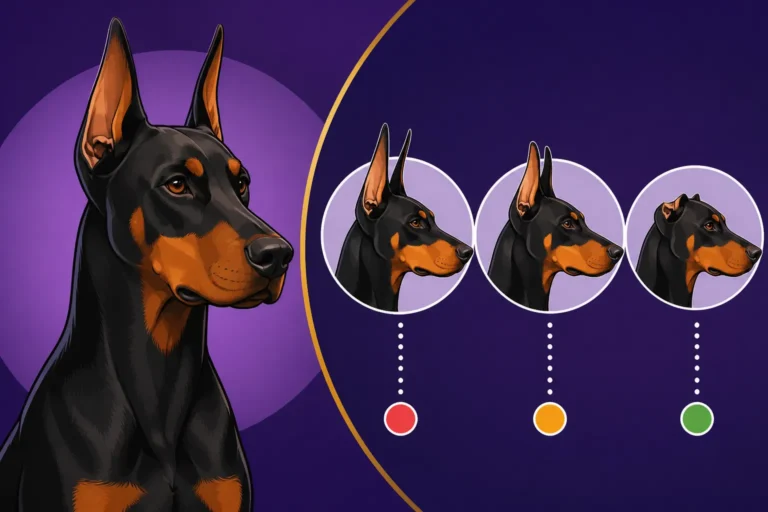
Let's be honest, the cropped ear look is what most people, including many judges, envision when they think of a Doberman. It creates a bold, alert, and often intimidating silhouette that highlights the Doberman's elegant neck and strong head. When an uncropped Doberman steps into the ring, its appearance is undeniably different. Natural ears, whether they are dropped, semi-prick, or rose, soften the expression and change the "head picture" quite significantly. This isn't a criticism of natural ears; it's simply an observation of how centuries of selective breeding and aesthetic tradition have shaped expectations.
A Doberman's expression is a crucial part of its breed type, conveying alertness and intelligence. The way natural ears frame the face can sometimes make a dog appear less sharp or intense to a judge accustomed to the cropped aesthetic. Even if the dog has impeccable structure, a fantastic gait, and a brilliant temperament, the ears can be an immediate visual differentiator that requires the judge to actively "look past" the traditional image. Owners sometimes feel their natural-eared Doberman needs to be twice as good in every other aspect just to get noticed, let alone considered for a win.
Judge Preference and Perception
This is perhaps the biggest hurdle. While judges are trained to evaluate a dog against the written breed standard impartially, they are human, and unconscious biases can creep in. Many judges have spent decades seeing, breeding, and showing cropped Dobermans. It's the aesthetic they know, appreciate, and often, associate with excellence. This isn't to say they are unfair, but rather that they are working within a framework of what has traditionally been considered "type." An uncropped Doberman forces them to reconsider that ingrained image.
For an uncropped Doberman to win, it usually needs to be truly exceptional. We’re talking about a dog that moves flawlessly, possesses an outstanding temperament, and has a structure that is absolutely undeniable. It needs to be so undeniably correct in every other aspect that the ears become almost irrelevant. There are, thankfully, more judges today who are open to and even embrace natural ears, especially as the global trend moves away from cosmetic surgeries. However, finding these judges can sometimes require strategic entry choices. It's a delicate balance, and owners often share stories of mixed experiences, from judges who genuinely appreciate a well-put-together natural dog to those who simply cannot seem to look past the lack of cropped ears. Learning about Doberman Temperament as the Standard Describes It is key, as a confident, well-behaved dog can make a powerful impression regardless of ear style.
Strategies for Success with an Uncropped Doberman in Conformation
If you're committed to showing your natural-eared Doberman, don't despair! While it might present unique challenges, success is absolutely achievable. It requires dedication, a keen eye for quality, and a strategic approach.
Focusing on Overall Quality and Temperament
The most fundamental strategy for any show dog, and especially for an uncropped Doberman, is to ensure your dog embodies the breed standard in every other way. This means impeccable structure, a powerful and efficient gait, excellent musculature, and a confident, stable temperament. These are the pillars of the Doberman breed, far more critical than ear shape. A judge can overlook natural ears if the dog's movement is breathtaking, its topline is rock-solid, and its personality shines with intelligence and courage.
Investing in a well-bred Doberman from a reputable breeder is the first step. Then, focus on expert conditioning. This includes a proper diet, appropriate exercise to build and maintain muscle tone, and meticulous grooming. Make sure your Doberman is healthy, happy, and gleaming in the ring. A dog that is conditioned to perfection and exhibits a calm, self-assured demeanor will draw the judge's eye. Good handling also plays a crucial role; a skilled handler can present the dog in a way that emphasizes its best qualities and minimizes any perceived distractions. For conditioning and diet, make sure you're getting quality food and supplements. Places like Chewy offer a wide range of premium dog food and supplements that can help maintain your Doberman's peak physical condition for the ring. A healthy Doberman should have strong nails, clear ears, and clean teeth, so consistent care, which Chewy also provides supplies for, is critical, as covered in Doberman Nail, Ear and Tooth Care.
Finding Supportive Judges and Circuits
One of the smartest moves you can make is to research judges before entering shows. Many experienced exhibitors and handlers keep mental notes (or even actual lists) of judges who are known to be more open-minded or less traditional in their aesthetic preferences. Some judges actively champion animal welfare and are therefore more inclined to reward a natural-eared dog based purely on its conformation. Look for judges who have a reputation for placing dogs based on true merit, regardless of cosmetic alterations.
Furthermore, consider the geographic region and specific show circuits. In areas where ear cropping is outright banned (like many parts of Europe or certain states/provinces), natural ears are the norm, and your Doberman will be judged on a level playing field. Even within regions where cropping is common, some local clubs or independent shows might attract a more progressive judging panel. Engaging with local Doberman clubs and communities can provide invaluable insights into judges and show environments that might be more favorable. The trend towards accepting natural ears is growing, so perseverance and strategic planning are vital. The Doberman the AKC Standard Describes provides the foundation for judging, but personal interpretation still exists.
Beyond the Show Ring: The Broader Perspective
While winning in the conformation ring is a wonderful achievement, it's essential to remember that a Doberman's value extends far beyond ribbons and titles. For many owners, the health, welfare, and companionship aspects are paramount.
Health and Welfare Considerations of Natural Ears
Choosing not to crop your Doberman's ears avoids a surgical procedure that, while common, is not without risks. Anesthesia always carries a slight risk, and the recovery and aftercare involved in ear cropping can be extensive and uncomfortable for the puppy. The weeks or even months of posting the ears require diligent care to prevent infection, ensure proper healing, and achieve the desired erect stand. Many owners opt for natural ears precisely to spare their puppy this process.
Natural ears also allow Dobermans to express a broader range of emotions more clearly. The subtle shifts in ear position – flattened in submission, pricked in alertness, slightly cocked in curiosity – are key indicators of a dog's mood and intent. This can be particularly helpful in communication with other dogs and with people, providing clearer signals than a fixed, erect ear. For those concerned about health testing, such as The Health Testing a Doberman Breeder Must Show, prioritizing overall well-being often includes making decisions about cosmetic procedures.
| Feature | Cropped Doberman (Show Ring Perception) | Uncropped Doberman (Show Ring Perception) |
|---|---|---|
| Aesthetic | Traditional, alert, sharp, iconic. Often preferred by judges and public. | Softer, more natural, less intense. May require a stronger overall dog to win. |
| Expression | Enhanced perception of alertness and confidence. | Can appear more "friendly" or less "intense" depending on ear set. Clearer natural body language. |
| Breeding Stock | Traditionally seen as conforming more closely to the "ideal" silhouette. | Increasingly accepted as valid, especially in areas with cropping bans. Judges focusing on overall merit. |
| Health Impact | Surgical risks, painful recovery, lengthy posting/aftercare. | Avoids surgery, no post-operative care related to ears. Natural ear movement for communication. |
| Public Image | Can sometimes be perceived as intimidating by the general public. | Often seen as less intimidating, more approachable by the public. |
The Doberman's Core Purpose and Your Bond
At the end of the day, a Doberman's true essence lies in its incredible intelligence, unwavering loyalty, and protective nature. Whether its ears are cropped or natural, these fundamental traits remain. A Doberman is a Doberman: a devoted family member, a keen working partner, and a highly capable animal. The appearance of its ears does not change its ability to excel in obedience, agility, tracking, or as a beloved companion.
The bond you share with your Doberman, the joy they bring to your life, and their unique personality are what truly matter. While conformation shows are important for preserving breed type, they are only one facet of responsible dog ownership. If you choose natural ears, you're making a statement about valuing your dog's welfare and natural beauty, and that's something to be proud of. Focus on training, socialization, and providing a loving home. Whether you need training treats, durable toys, or just their regular food, places like Chewy are excellent resources for all your Doberman’s needs, cropped or uncropped. Regardless of ear style, ensure your Doberman gets proper nutrition, as outlined in Feeding an Eighty-Pound Doberman Well, and lives a full, happy life.
Disclaimer
This article is for general informational purposes only and does not constitute professional advice. Laws, prices and regulations vary by location and change over time. Consult a qualified professional for guidance on your specific situation.