Cruciate Injury in an Athletic Doberman
It's absolutely heartbreaking when your typically energetic Doberman, who loves to zoom around and play with such athletic grace, suddenly starts limping. One day they're flying across the yard, the next they're hesitant, favoring a leg, or struggling to stand up. This sudden change can be incredibly worrying, and for many Doberman owners, it immediately brings to mind a potential cruciate ligament injury. This guide will walk you through what a cruciate injury is, why it's so common in our Dobermans, how to recognize the signs, and what steps you can take for diagnosis, treatment, and recovery.
Understanding Cruciate Ligament Injuries in Our Athletic Dobermans
When your Doberman suddenly comes up lame, especially after a particularly exuberant play session or an awkward turn, a cruciate ligament injury is often high on the list of concerns. It's a debilitating injury that can drastically impact their quality of life if not addressed properly.
What is the Cranial Cruciate Ligament (CCL) and How Does it Get Damaged?
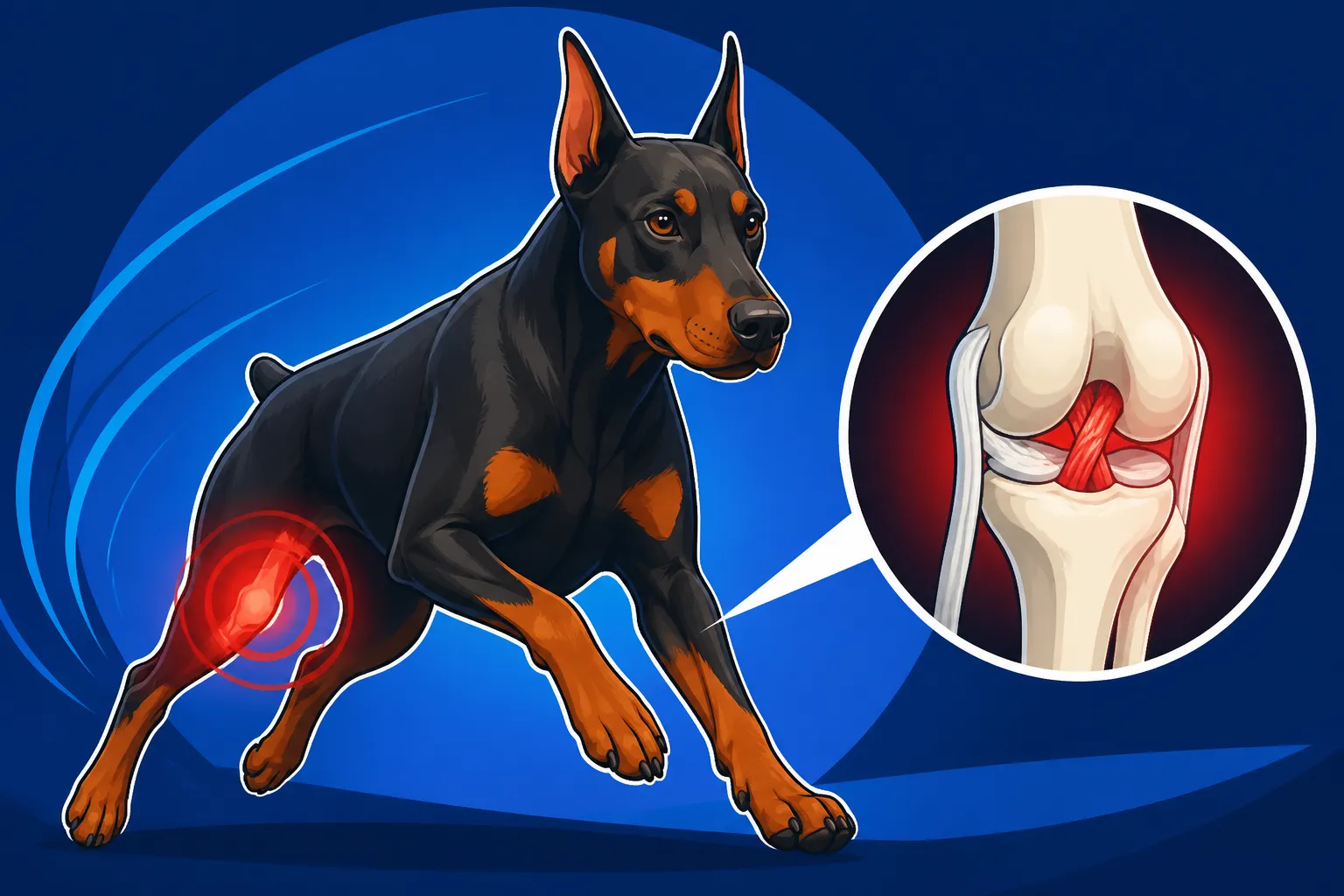
Think of your Doberman's knee joint, or stifle, as a sophisticated hinge. Inside this hinge, there are two crucial ligaments that cross over each other, much like an "X," connecting the femur (thigh bone) to the tibia (shin bone). These are called the cruciate ligaments. The one we're most concerned about is the cranial cruciate ligament (CCL), often called the anterior cruciate ligament (ACL) in humans. Its job is to prevent the tibia from sliding forward relative to the femur and to limit internal rotation of the joint. It essentially keeps the knee stable.
Damage to this ligament typically manifests in two main ways. The first is an acute tear, which happens suddenly, often during a specific event like a misstep, a hard landing from a jump, or a quick change in direction. You might see your Doberman yelp or immediately hold the leg up, unable to put weight on it. The second, and more common, way the CCL is damaged in dogs, especially larger breeds like Dobermans, is through a slow, progressive degeneration over time. This isn't usually due to a single traumatic event, but rather a weakening and fraying of the ligament fibers that eventually lead to a partial or complete rupture. This degenerative process means that the ligament is often already compromised before an owner even notices any lameness, and a seemingly minor twist can be the final straw that causes a full tear.
Why Athletic Dobermans Are Prone to Cruciate Issues
Dobermans are known for their powerful, athletic builds. They are strong, agile, and love to run, jump, and pivot. While these traits make them incredible companions and competitors in dog sports, they also put significant stress on their joints, particularly their knees. Their deep, narrow chests and powerful hindquarters mean they can generate immense speed and force, but this also means more strain on their ligaments when they accelerate, brake hard, or twist.
Beyond their natural athleticism, there are other factors that make Dobermans more susceptible. While not as high on the list as some other large breeds like Rottweilers or Newfoundlands, Dobermans do have a predisposition to these injuries due to a combination of their conformation and genetics. Overweight Dobermans are at an even higher risk because the extra pounds add tremendous strain to already vulnerable ligaments. Even seemingly minor missteps during vigorous play, like an abrupt stop to chase a squirrel or a sharp turn during a game of fetch, can put undue stress on a compromised CCL. It's a common scenario for many Doberman owners: one minute your dog is enjoying a spirited run, the next they're showing signs of Stiffness in a Doberman That Used to Sprint or a noticeable limp.
Recognizing the Signs and Getting a Diagnosis
Catching a cruciate injury early can sometimes make a difference in how it's managed, though surgery is often the eventual recommendation for a complete tear in an active Doberman. Knowing what to look for is the first step.
From Subtle Limps to Obvious Lameness
The signs of a CCL injury can vary greatly depending on whether it's an acute, complete tear or a more insidious, partial tear that's been developing over time. If your Doberman suffers a sudden, complete tear, you'll likely notice an immediate, non-weight-bearing lameness – they might hold the leg up completely, refusing to put any weight on it. This is usually accompanied by obvious pain.
More commonly, especially with degenerative tears, the signs might start subtly. You might first notice a slight limp after exercise that seems to improve with rest, only to return. Perhaps your Doberman is less enthusiastic about jumping into the car, or they're slower to get up from a lying position. You might observe a "toe-touching" gait, where they only put the very tip of their paw down, trying to avoid full weight bearing. Over time, this intermittent lameness can become more constant, and you might see muscle wasting (atrophy) in the affected leg as they use it less. Sometimes, owners mistake the initial subtle lameness for general stiffness or even attribute it to an age-related issue, particularly when The Doberman Years When Everything Shows Up might start bringing other aches and pains. It's crucial not to dismiss these subtle changes in gait or activity level.
The Diagnostic Process and What to Expect at the Vet
When you bring your Doberman to the vet with suspected lameness, the diagnostic process will typically begin with a thorough physical examination. Your veterinarian will palpate the affected knee, looking for swelling, pain, and instability. The key diagnostic tests are the "cranial drawer test" and the "tibial compression test."
- Cranial Drawer Test: During this test, the vet will attempt to manually slide the tibia forward relative to the femur. If the CCL is torn, there will be abnormal movement, often described as a "drawer sign" because it mimics pulling out a drawer.
- Tibial Compression Test: For this, the vet holds the femur still and flexes the ankle joint. If the CCL is torn, the tibia will move forward, indicating instability.
Sometimes, especially in very tense or painful Dobermans, these tests might be difficult to perform accurately without sedation. Your vet will also likely recommend X-rays of the knee. While X-rays don't directly show the ligament (ligaments are soft tissue), they are invaluable for several reasons: they can show signs of secondary arthritis (which develops quickly with CCL tears), rule out other conditions like fractures or bone tumors such as Osteosarcoma in a Doberman Leg, and help assess the overall health of the joint. They can also reveal specific changes in the joint angle that indicate a tear. In some cases, a specialist referral to an orthopedic surgeon might be recommended, who may suggest advanced imaging like an MRI, although typically the clinical examination and X-rays are sufficient for diagnosis. It's important to differentiate cruciate injuries from other conditions that might affect your Doberman's hind legs, such as A Doberman That Wobbles on Its Back Legs, which points to a spinal issue rather than a knee problem.
Treatment Options for a Doberman CCL Injury
Once a cruciate ligament tear is confirmed, deciding on the best course of action can feel overwhelming. For an athletic Doberman, surgical intervention is often the most recommended path for a successful return to activity.
Surgical Solutions: TPLO, TTA, and Lateral Suture
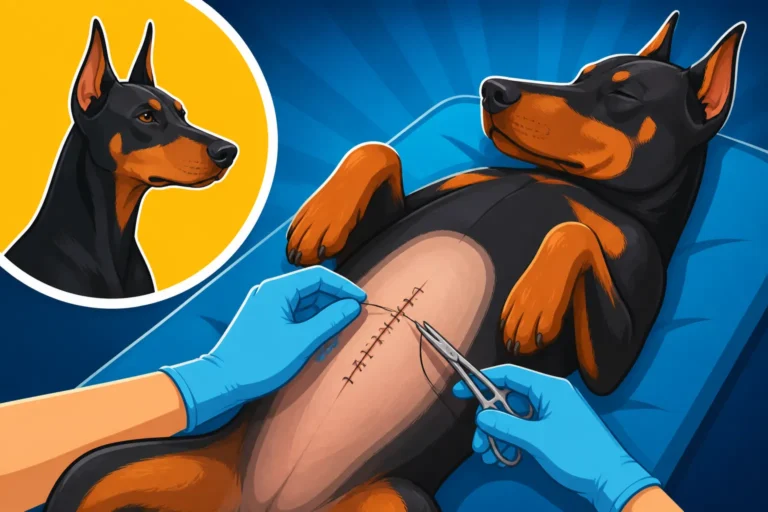
For large, active breeds like Dobermans, surgical stabilization of the knee is generally considered the gold standard, offering the best long-term outcome and return to function. Without surgical repair, the knee remains unstable, leading to rapid development of debilitating arthritis and a high likelihood of tearing the CCL in the other knee. The most common and successful surgical techniques for Dobermans include:
- Tibial Plateau Leveling Osteotomy (TPLO): This is one of the most popular and effective procedures. The surgeon makes a curved cut in the tibia (shin bone) and rotates a segment of the bone. This changes the angle of the tibial plateau, effectively neutralizing the "tibial thrust" that causes instability when the dog bears weight. A bone plate and screws are then used to secure the bone in its new position. The goal isn't to repair the ligament, but to alter the biomechanics of the joint so that the CCL is no longer needed for stability.
- Tibial Tuberosity Advancement (TTA): Similar to TPLO, TTA also aims to change the biomechanics of the knee. In this procedure, the front part of the tibia (the tibial tuberosity) is cut and advanced forward, shifting the patellar tendon's pull. This also helps to neutralize tibial thrust. A titanium cage and plate are used to hold the advanced bone segment in place. Both TPLO and TTA have high success rates, typically allowing Dobermans to return to a high level of activity.
- Lateral Suture Technique (Extracapsular Repair): This older, simpler technique involves placing a strong suture material outside the joint, mimicking the function of the torn CCL. While it can be effective for smaller, less active dogs, it's generally considered less durable for large, athletic breeds like Dobermans who put significant stress on their knees. It may be considered in cases where TPLO or TTA are not feasible due to other health issues or financial constraints, but recurrence of instability is a higher risk.
Choosing the right surgical approach often depends on the specific surgeon's preference, the individual Doberman's conformation, and the extent of arthritis already present. These surgeries are significant undertakings, and the associated costs can be substantial. This is where pet insurance, like a policy from Healthy Paws, can be a lifesaver, covering a large percentage of the surgical fees.
Non-Surgical Management: When it's an Option, and Why It's Often Not Enough
While surgery is usually recommended for active Dobermans with complete CCL tears, non-surgical management might be considered in very specific circumstances. These include Dobermans with very minor, partial tears, those with severe underlying health conditions that make anesthesia risky, or owners who simply cannot afford surgery.
Non-surgical management typically involves strict rest for several weeks to months, often followed by a gradual return to controlled exercise. Anti-inflammatory medications (NSAIDs) will be prescribed to manage pain and inflammation. Physical therapy, including controlled leash walks, hydrotherapy, and therapeutic exercises, is critical to maintain muscle mass and joint mobility. Weight management is paramount; even a few extra pounds can severely hinder recovery and increase strain on the joint. The challenge with non-surgical management in Dobermans is that their size and activity level make it difficult to achieve true stability without intervention. The joint remains unstable, leading to progressive arthritis, persistent lameness, and a very high risk (around 50-60%) of the other knee tearing within a year or two. While it might seem like a less invasive route, for most athletic Dobermans, it rarely provides a satisfactory long-term solution for full functionality.
Post-Operative Care and Rehabilitation: The Road to Recovery
Surgery is just the beginning of the journey. The success of a cruciate repair, especially TPLO or TTA, hinges heavily on diligent post-operative care and a structured rehabilitation program. The initial weeks after surgery require strict confinement and activity restriction. Your Doberman will need to be leash-walked only for potty breaks, and jumping, running, and rough play are strictly forbidden. This can be challenging for an active Doberman, but it's crucial for bone healing.
Pain management will be a priority, with medications prescribed to keep your Doberman comfortable. Physical therapy often starts early, sometimes within days of surgery, with passive range of motion exercises to prevent stiffness. As healing progresses, a gradual increase in controlled exercise will be introduced, including longer leash walks, underwater treadmill therapy, and specific strengthening exercises. This rehabilitation period can last several months, typically 3-6 months, before your Doberman is cleared for full activity. Consistent follow-up appointments, including X-rays, will monitor bone healing. It's a significant commitment of time, effort, and resources, but it's what ensures your Doberman has the best chance of regaining full function and enjoying an active life again. Many Doberman owners find that having comprehensive pet insurance, such as through Healthy Paws, significantly eases the financial burden of these extensive rehabilitation costs.
Preventing Future Injuries and Financial Considerations
The prospect of dealing with a cruciate injury is daunting, and unfortunately, once one knee is affected, the other is at a higher risk. Proactive measures and careful financial planning are key.
Proactive Steps to Protect Your Doberman's Joints
While you can't completely eliminate the risk of a CCL injury, especially if your Doberman has a genetic predisposition, there are several steps you can take to minimize the chances of future problems:
- Maintain an Ideal Weight: This is perhaps the single most important preventative measure. Excess weight puts immense strain on all joints, particularly the knees. Work with your vet to determine your Doberman's ideal body condition and adjust their diet and exercise accordingly. If your Doberman is prone to Weight Gain and Low Energy in a Doberman, addressing this proactively can save their joints.
- Consistent, Controlled Exercise: Avoid being a "weekend warrior" with your Doberman. Instead of sporadic bursts of intense activity, aim for consistent, moderate exercise. This keeps muscles strong and ligaments conditioned without overstressing them. Ensure proper warm-up and cool-down periods.
- Avoid High-Impact Activities and Awkward Maneuvers: While Dobermans love to run, try to limit activities that involve sudden stops, sharp turns, or high jumps, especially on slippery surfaces. If they're involved in agility or other intense sports, ensure they are properly conditioned and trained to minimize awkward movements.
- Consider Joint Supplements: Glucosamine, chondroitin, and omega-3 fatty acids can support joint health and reduce inflammation. Discuss with your veterinarian if these supplements, such as those often found in formulations by brands like Dasuquin or Cosequin, would benefit your Doberman, especially as they get older or if they have a history of joint issues.
- Strengthen Core Muscles: A strong core and hindquarter musculature can help stabilize the knee joint. Targeted exercises recommended by a physical therapist can be beneficial.
It's also important to be aware that Dobermans who have torn one CCL have a significant risk (up to 50-60%) of tearing the other one within a few years. Being proactive with these measures can potentially delay or even prevent this secondary injury.
The Cost of Cruciate Repair and the Lifesaving Role of Pet Insurance
Let's be blunt: cruciate ligament repair surgery is expensive. The cost can vary widely based on your location, the specific surgeon, and the complexity of the case, but you can typically expect to pay anywhere from $3,500 to $7,000 per knee for a TPLO or TTA procedure, sometimes even more when you factor in diagnostics, anesthesia, hospitalization, and crucial post-operative rehabilitation. For many Doberman owners, this unexpected expense can be a significant financial burden.
This is where pet insurance becomes invaluable. A good pet insurance policy can cover a large percentage of these costs, often 70-90%, after your deductible is met. Companies like Healthy Paws offer comprehensive plans that are particularly well-suited for Dobermans, who, sadly, are prone to several costly health issues beyond cruciate tears, such as The Heart Disease That Reaches Most Dobermans or Wobbler Syndrome in the Doberman. The critical thing about pet insurance is enrolling before any signs of illness or injury appear. Once a condition is documented in your Doberman's medical records, it becomes a pre-existing condition and will likely not be covered by a new policy. Thinking ahead and enrolling your Doberman in a robust pet insurance plan early can provide immense peace of mind and ensure you can make the best medical decisions for your dog without financial constraints. It's an investment in their long-term health and your financial security as an owner, often proving its worth when faced with high-cost treatments like cruciate surgery or managing The Yearly Heart Bill for a Doberman.
Here's a comparison of common surgical options for Doberman CCL repair:
| Surgical Procedure | Description | Pros | Cons | Typical Cost Range (USD) |
|---|---|---|---|---|
| TPLO | Tibial Plateau Leveling Osteotomy: Bone cut and rotated to neutralize tibial thrust. | Very high success rate (90%+) for large, athletic dogs; rapid return to function. | More invasive, requires specialized equipment/training; higher initial cost. | $4,000 – $7,000+ |
| TTA | Tibial Tuberosity Advancement: Tibial tuberosity cut and advanced to alter patellar tendon pull. | High success rate for large dogs; potentially less invasive than TPLO in some cases. | Not suitable for all knee conformations; still relatively invasive and costly. | $3,800 – $6,800+ |
| Lateral Suture | Extracapsular Repair: Suture material placed outside the joint to mimic CCL function. | Less invasive, lower cost, quicker procedure. | Less stable for large, active Dobermans; higher failure rate or re-injury risk compared to TPLO/TTA. | $2,000 – $4,000 |
Remember, these costs are estimates and can vary significantly. Always consult with your veterinarian and an orthopedic specialist for the most accurate information and tailored recommendations for your Doberman.
Disclaimer
This article is intended for informational purposes only and is not a substitute for professional veterinary advice. Always consult with a qualified veterinarian for any health concerns or before making any decisions about your Doberman's care.