A Doberman That Cannot Cope When You Go Out
It's heartbreaking to leave your Doberman at home, only to return to a scene of destruction, or worse, to hear from your neighbors that your beloved companion spent the entire day howling or barking. This deeply distressing behavior, often mistaken for mere naughtiness, is a genuine anxiety disorder known as separation distress or separation anxiety, and it's a common struggle for Doberman owners. This comprehensive guide will walk you through understanding why your Doberman struggles when you're away, how to identify the nuanced signs, and practical, empathetic strategies to help your dog build confidence and cope peacefully with alone time.
Understanding Separation Distress in Dobermans
The bond with a Doberman is unlike any other. They are often called "Velcro dogs" for a reason, and while this devotion is part of their charm, it can also manifest as intense anxiety when separated from their people. It's crucial to understand that this isn't about your dog being "naughty" or "stubborn"; it's a genuine panic response that they can't control on their own.
The "Velcro" Nature of the Doberman
Dobermans were bred to be close companions and guardians, deeply attuned to their human families. This innate desire for proximity means they thrive on interaction and can find isolation profoundly unsettling. They see themselves as an integral part of your daily life, and when that connection is abruptly severed, even for a few hours, it can trigger a primal sense of abandonment or threat. It's not just a preference; for many Dobermans, it's a fundamental aspect of their emotional well-being to be near their human.
Think about it from their perspective: one moment, they're part of a cohesive pack unit, and the next, their most important pack members vanish without explanation. This can be genuinely terrifying for a dog whose entire world revolves around that connection. Owners often feel a deep sense of guilt when they realize their Doberman's clinginess isn't just endearing but a potential precursor to serious anxiety. Understanding Where the Velcro Doberman Nickname Comes From really helps put this into perspective.
This intense attachment means that the concept of "alone time" is something many Dobermans struggle to grasp as a normal, safe part of their routine. They aren't trying to manipulate you with their distress; they are genuinely in a state of fear or panic, and their behaviors are an outward manifestation of that internal turmoil. Acknowledging this emotional depth is the first step toward effective intervention.
Differentiating Boredom from Anxiety
It's easy to confuse simple boredom with genuine separation anxiety, especially when both can lead to destructive behaviors. A bored Doberman might chew on a shoe because there's nothing else to do, while an anxious Doberman might chew through a door frame in a frantic attempt to escape and find you. The key difference lies in the motivation behind the behavior and the accompanying physiological signs.
Boredom-induced destruction often occurs sporadically, might be directed at items your dog usually ignores when you're home, and generally lacks the frantic, desperate quality of anxiety. A bored Doberman might eventually settle down and nap, or just look for something else to occupy themselves. They might exhibit some whining, but it typically doesn't escalate to prolonged, frantic vocalizations or self-injury.
Separation anxiety, on the other hand, is characterized by a cluster of symptoms that consistently appear only when the dog is left alone. These behaviors are often intense and relentless, driven by genuine panic. It's a fundamental distinction that informs the entire treatment approach; you can't "train away" panic with simple obedience cues, just like you wouldn't expect a person having a panic attack to simply "calm down" on command.
Common Triggers for Alone-Time Issues
Several factors can contribute to a Doberman developing separation distress. It's rarely one single thing, but often a combination of temperament, life experiences, and environmental influences. Understanding these triggers can help you identify potential vulnerabilities in your own dog.
Changes in routine are huge. A Doberman accustomed to having someone home all day might suddenly develop anxiety when the owner returns to work, as the drastic shift in their daily schedule leaves them unprepared for extended solitude. Moving to a new home, the loss of a family member (human or pet), or even a new baby can disrupt their sense of security and trigger issues. Even something as seemingly minor as a change in your work schedule can throw them off.
Temperament also plays a significant role. Some Dobermans are naturally more sensitive or prone to anxiety than others, even within the same litter. Early socialization, or lack thereof, can also contribute. A Doberman puppy that wasn't gradually accustomed to short periods of being alone might struggle more as an adult. Furthermore, dogs from rescue situations who have experienced abandonment or multiple homes might be more susceptible to separation distress, even if they've found their "forever" family.
Recognizing the Signs: Beyond Just Crying
It's easy to spot the obvious signs of separation distress like loud barking, but many Dobermans exhibit more subtle, yet equally heartbreaking, indicators of their anxiety. Truly understanding these signs requires careful observation and often, a little investigative work once you're out of sight.
Destructive Behavior and Property Damage
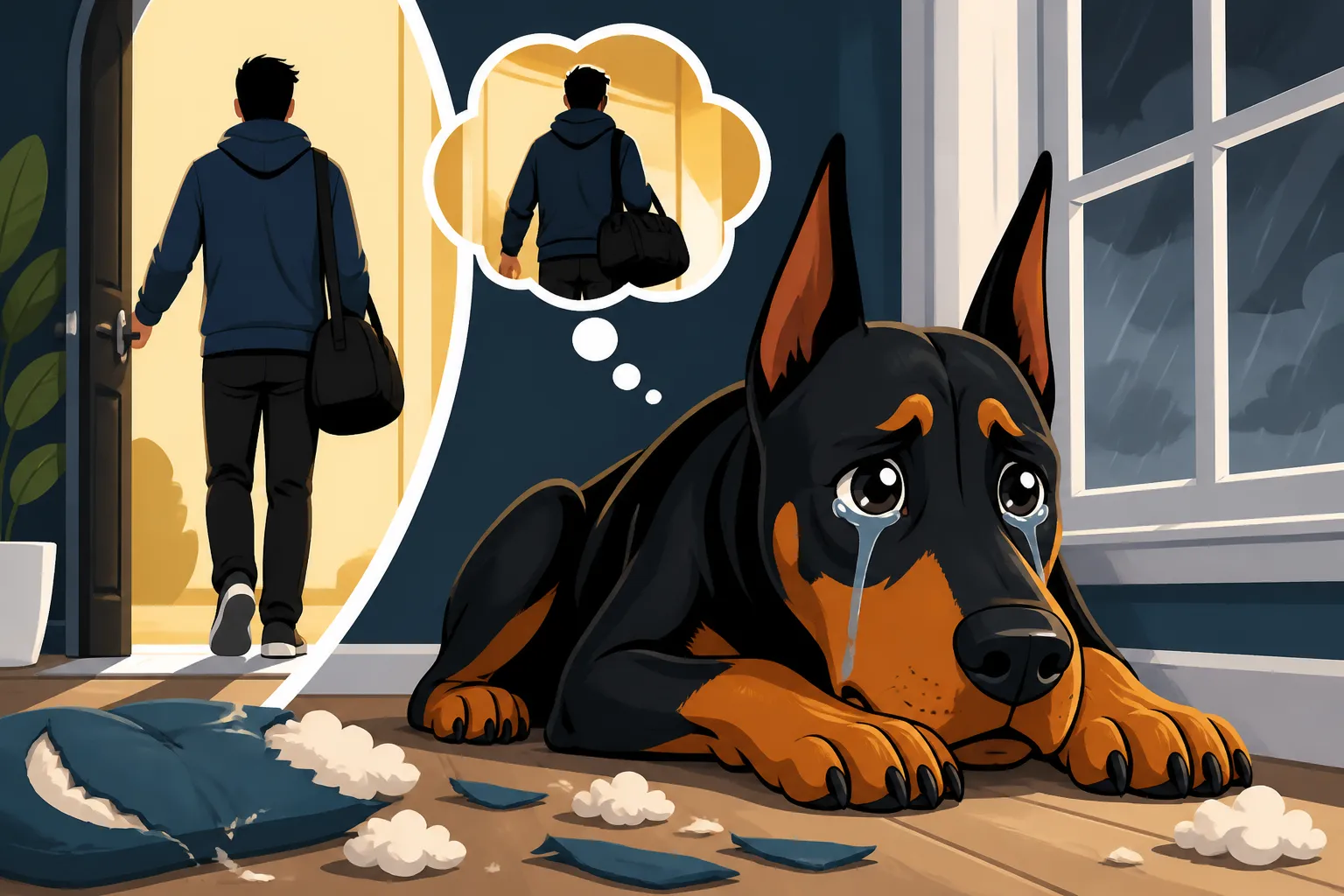
When a Doberman is in the throes of separation anxiety, their destructive behaviors aren't about malice; they're an attempt to cope with overwhelming panic or to try and escape to find you. This can manifest in truly shocking ways, far beyond a chewed shoe. Many owners return home to torn-up carpets, shredded furniture, or even damaged walls and door frames.
The destruction is often concentrated around exit points – doors, windows – as the dog desperately tries to follow you or dig their way out. You might find claw marks on the door or chew marks on the window sill. This isn't just about boredom; it's a frantic effort born of genuine fear. These behaviors can not only be costly but also dangerous, as dogs can injure themselves on sharp edges or by ingesting foreign objects.
Sometimes, the destruction can seem almost ritualistic, always targeting the same spot or object. This consistency helps distinguish it from random acts of boredom. An anxious Doberman might also engage in frantic digging, either indoors or out, trying to create an escape tunnel. The sheer force and persistence behind this destruction underscore the depth of their distress.
Excessive Vocalization and Neighbors' Complaints
This is often the first sign that alerts owners to a problem, usually through a polite (or not-so-polite) conversation with a neighbor. A Doberman with separation anxiety might engage in relentless barking, howling, or whining the entire time you're gone, or for significant portions of it. A Doberman That Screams the Moment the Door Shuts is a heartbreaking reality for many.
This vocalization is not typically a "guard bark" at perceived threats outside; it's a sustained, distressed sound. Imagine a child crying for their parent – that's the emotional equivalent for your Doberman. They are calling out for you, expressing their profound discomfort and panic. It's exhausting for them, and it's certainly disruptive for anyone living nearby.
To truly understand the extent of this, you might need to invest in a camera with audio capabilities. You might be surprised at the intensity and duration of the vocalizations once you're out of earshot. What you hear from the driveway might only be the beginning, or a brief burst of activity, and the sustained distress happens long after you've gone.
Inappropriate Elimination
Finding urine or feces in the house when your Doberman is normally perfectly house-trained is a strong indicator of anxiety, especially if it only happens when they're left alone. This isn't spite or a lapse in training; it's an involuntary physical manifestation of extreme stress. Just like humans can have "nervous stomachs," dogs can lose control of their bladder or bowels when deeply anxious.
This often occurs in areas where the dog usually wouldn't eliminate, like their bed or crate, which further highlights the severity of their distress. A Doberman would typically try to keep their sleeping area clean, so soiling it is a clear sign that they are too panicked to adhere to their normal habits or seek an appropriate spot.
If your Doberman is relieving themselves indoors only when you're away, and they show no other signs of illness (like increased thirst, frequent urination when you are home, or changes in stool consistency), separation anxiety is a very likely culprit. This particular symptom can be one of the most frustrating for owners, but it's vital to approach it with empathy rather than anger, recognizing it as a cry for help.
Physiological Symptoms and Self-Harm
Beyond the visible destruction and noise, Dobermans experiencing severe separation distress can exhibit physiological signs of anxiety and, in extreme cases, even engage in self-harm. These are the most worrying indicators and demand immediate attention.
Excessive drooling, panting, or trembling are common signs of acute stress, even in a comfortable temperature. Your dog might be sweating through their paw pads, leaving damp prints. Some dogs become so agitated that they might repeatedly lick or chew at their paws, tail, or flanks, leading to hot spots, skin infections, or even severe wounds. I've seen Dobermans gnaw at their own skin until it's raw, simply because the anxiety is so overwhelming they don't know how else to cope.
In truly desperate cases, Dobermans have been known to injure themselves attempting to escape their confinement, breaking teeth on crates, or cutting paws on broken glass from windows. It’s a stark reminder that this is not a behavioral quirk but a serious welfare issue requiring careful, compassionate intervention. If you suspect these severe signs, especially self-harm, veterinary consultation is critical.
Creating a Safe and Predictable Environment
One of the most powerful tools in combating separation distress is establishing a sense of safety and predictability for your Doberman. Dogs thrive on routine, and when they know what to expect, it significantly reduces anxiety. This means consciously crafting an environment and routine that minimizes triggers and maximizes comfort.
The Importance of a Den or Crate
For many Dobermans, a properly introduced crate or a designated "den" space can be a sanctuary, not a punishment. It should be a place where they feel secure, protected, and can retreat when overwhelmed. The key is to make it a positive, inviting space before you ever try to use it for alone time. Choosing a Crate for a Doberman involves selecting one that is appropriately sized, sturdy, and comfortable.
This den should be introduced gradually, making it a place where good things happen: tasty chew toys, special treats, and comfortable bedding. Never use the crate for punishment, as this will immediately associate it with negative experiences. For a Doberman with separation anxiety, the crate can become a safe haven that limits destructive behavior and potentially injury, but only if it's conditioned positively and isn't perceived as a trap. If your dog is panicking in the crate, it's not a solution; it's making things worse.
Some Dobermans do better with a larger, designated room rather than a traditional crate, especially if their anxiety is severe. This could be a dog-proofed laundry room or a spare bedroom, fitted with a comfortable bed, water, and appropriate enrichment toys. The goal is a contained space where they feel safe, not trapped, and where the risk of destruction or injury is minimized.
Establishing a Consistent Departure Routine
The moments leading up to your departure can be a significant source of anxiety for your Doberman. They pick up on every cue: you grabbing your keys, putting on your shoes, or even the sound of your morning coffee routine. By making your departure routine consistent, predictable, and boring, you can help desensitize your Doberman to these cues.
The trick is to break down your departure into small, non-alarming steps. Start picking up your keys and putting them back down, without leaving. Put on your coat, then take it off and sit on the couch. Do these actions randomly throughout the day, so they lose their predictive power of your departure. This helps to disconnect the cues from the actual leaving.
When you do leave, try to make it as unremarkable as possible. Don't make a big fuss, say lengthy goodbyes, or shower your dog with attention. Simply give them a special, long-lasting chew toy (like a frozen KONG filled with peanut butter), say a calm, brief "See you later," and walk out the door. Your calm demeanor communicates that there's nothing to worry about. Upon your return, also keep greetings low-key until your dog is settled.
Enrichment Toys and Puzzle Feeders
Mental stimulation and physical activity are crucial for a Doberman, even more so when tackling anxiety. A tired dog, both physically and mentally, is a more relaxed dog. But when you leave, your Doberman needs something to occupy their mind and body that doesn't involve panicking. This is where enrichment toys and puzzle feeders come in handy.
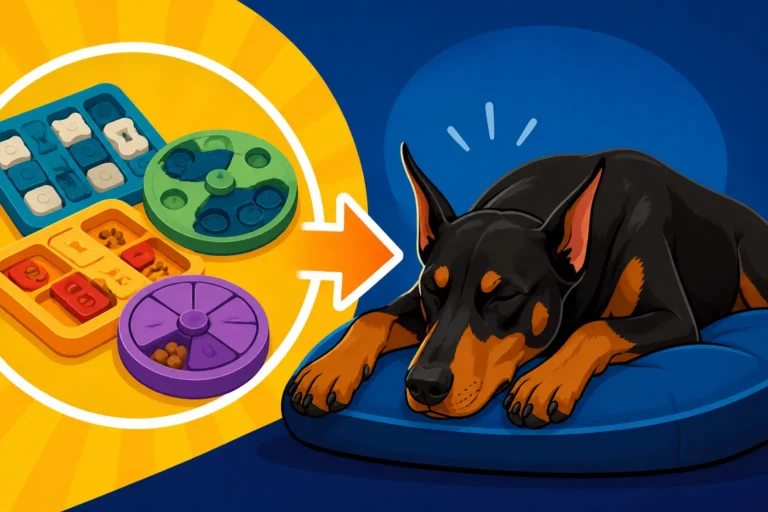
Long-lasting chew toys, particularly those that dispense food, can provide a fantastic distraction. A frozen KONG, a West Paw Toppl, or a snuffle mat can keep your Doberman engaged for a significant period. The act of licking or chewing is naturally calming for dogs, releasing endorphins that help reduce stress. You can find a vast array of these options on Amazon, allowing you to experiment with what your Doberman enjoys most.
Rotate toys to keep things fresh and exciting, so your dog doesn't get bored with the same old thing. Save these special, high-value toys exclusively for when you leave, making alone time associated with something positive. The goal is to create a positive association, shifting their focus from your absence to an enjoyable, self-soothing activity. Puzzle Work That Actually Tires a Doberman can be a game-changer for many owners.
Gradual Desensitization: Building Alone Time Bit by Bit
This is the cornerstone of treating separation distress. You cannot expect a Doberman to suddenly be okay with hours of alone time if they panic after just a few minutes. The process involves systematically and very gradually increasing the duration of your absence, always ensuring your dog remains under their anxiety threshold. This takes immense patience, but it’s the most effective route to lasting change.
Short Departures: The "Fake Out" Method
The very first step is to practice extremely short absences, so brief that your Doberman barely registers your departure before you return. We call this the "fake out" method. It’s not about leaving for errands; it’s about micro-departures designed to build confidence in your return.
Start by simply walking out the door, closing it, and immediately opening it and stepping back inside. Don't make eye contact or a fuss; just walk in and continue with whatever you were doing. Repeat this several times a day. Your Doberman will quickly learn that the door closing doesn't always mean a long, scary absence. They'll start to habituate to the sound and action, realizing you always come back.
As your Doberman becomes comfortable with this, you can increase the duration by a few seconds. Maybe you walk out, close the door, count to five, and then come back in. The absolute rule here is to return before your dog shows any signs of anxiety. If they start whining or barking, you've gone too far, too fast, and you need to backtrack. This is a marathon, not a sprint, and patience is your most valuable asset.
Increasing Duration Systematically
Once your Doberman is relaxed with the "fake out" method, you can start slowly increasing the duration of your absences. This must be done incrementally, perhaps by minutes at a time, always staying below their anxiety threshold. This is where a reliable camera becomes indispensable.
You'll set up your camera to monitor your Doberman, then leave for a very short period – maybe five minutes. If your Doberman remains calm, happy, or simply resting, that's a success! The next time, you might try seven minutes, then ten. The goal is to build up to longer periods, minute by painstaking minute, ensuring they never experience the full panic. Building a Doberman's Alone Time From Minutes is a slow but steady process.
If you observe any signs of anxiety (pacing, whining, barking, panting, destructive attempts) on your camera, you've stretched their comfort zone too much. You must reduce the duration on your next attempt. This is critical: every time your Doberman experiences full-blown anxiety, it reinforces the negative association with being alone, setting back your progress. It might mean that you can't leave your Doberman alone for any significant period until this training is solid, which can be a huge commitment.
The Role of Cameras and Monitoring
A high-quality pet camera is not just a helpful tool; it's practically non-negotiable for effectively treating separation distress. You simply cannot know what your Doberman is doing the moment you close the door without one. Hearing them from outside the house gives you only a tiny snapshot, and often, the most intense anxiety happens once you've truly left the vicinity.
A camera with two-way audio can even allow you to speak to your dog, though this should be used judiciously. Sometimes, hearing your voice can be reassuring; other times, it can heighten their anxiety, making them wonder why you're talking but not coming home. Observing their body language, listening to their vocalizations, and tracking their activity levels will give you invaluable data on their progress and where their comfort limits lie.
Many popular pet cameras connect to your phone, allowing you to monitor from anywhere. This immediate feedback is essential for knowing when to return during training sessions and for understanding how your Doberman is truly coping when you're away. Some even offer recording features, so you can review longer periods and identify patterns in their anxiety.
Management Strategies for When You Have to Leave
While you're working through the gradual desensitization process, there will inevitably be times when you absolutely have to leave your Doberman for longer than they can comfortably tolerate. In these situations, management strategies are crucial to prevent setbacks and ensure your dog's well-being. This is not training, but rather a way to safely bridge the gap until training takes hold.
Hiring a Trusted Pet Sitter or Dog Walker
For many Doberman owners, particularly during the initial stages of separation anxiety treatment, a pet sitter or dog walker becomes a lifeline. The goal is to ensure your Doberman is never left alone beyond their current comfort level. This might mean having someone come over to sit with them while you're at work, or arranging for several midday walks and playtime sessions.
A professional pet sitter can offer one-on-one attention, ensuring your Doberman is exercised, fed, and has company for the bulk of your absence. This prevents the anxiety from escalating and gives your dog a positive experience while you're away. It's an investment, but it's an investment in your Doberman's mental health and your peace of mind. Finding a Sitter Who Can Dose a Doberman (if medication is involved) is an important consideration.
Even a dog walker who comes for a brief, but engaging, walk can break up a long period of solitude and provide a much-needed mental and physical outlet. Interview candidates carefully, check references, and ensure they are comfortable and experienced with the Doberman breed's strength and intelligence. The person needs to be reliable and genuinely care for your dog's well-being.
Exploring Doggy Daycare Options
Doggy daycare can be an excellent option for some Dobermans, offering supervised play, socialization, and plenty of activity throughout the day. It ensures your dog isn't left alone, gets ample exercise, and comes home tired and happy. This can be a fantastic way to manage their energy and prevent the onset of anxiety when you're gone.
However, daycare isn't for every Doberman, especially those with severe anxiety or reactivity towards other dogs. A Doberman who is already stressed by separation might find a noisy, busy daycare environment overwhelming rather than stimulating. Some Dobermans can also be particular about other dogs, especially in groups. Whether Daycare Helps a Clingy Doberman really depends on the individual dog and the quality of the daycare.
If you consider daycare, look for facilities with experienced staff, good supervision ratios, and a temperament test process to ensure your Doberman will thrive in that specific environment. A trial day or two can help you assess if it's a good fit. You want a place that prioritizes safety and positive experiences, not just one that packs in as many dogs as possible.
Calming Aids and Supplements
While not a magic bullet, certain calming aids and supplements can be part of a multi-faceted approach to managing separation distress. These are typically used to take the edge off the anxiety, making your Doberman more receptive to training and able to cope better with short absences. Always discuss any supplements with your veterinarian before introducing them.
Products like Adaptil diffusers or collars release synthetic dog appeasing pheromones, which can have a calming effect on some dogs. Thundershirts or anxiety wraps apply gentle, constant pressure, similar to swaddling a baby, which can be soothing. Many owners have found these useful in conjunction with training.
Supplements containing ingredients like L-theanine, tryptophan, or CBD oil are also popular. These aim to promote relaxation without sedation. Again, individual results vary widely, and it's essential to use them under veterinary guidance to ensure they are safe and appropriate for your Doberman, especially if they have underlying health conditions like heart issues. You can often find these types of products and calming chews on Amazon or at your local pet store.
Seeking Professional Help for Severe Cases
Sometimes, despite your best efforts, your Doberman's separation distress is simply too severe to manage on your own. This is not a failure on your part, but an indication that it's time to bring in the experts. Professional help can provide tailored strategies, medical interventions, and the support you need to navigate truly challenging cases.
Consulting a Veterinary Behaviorist
For severe or persistent separation anxiety, a board-certified veterinary behaviorist is the gold standard. These are veterinarians who have gone on to specialize in animal behavior, meaning they can diagnose underlying medical conditions that might contribute to anxiety, as well as prescribe medication. They approach behavior from both a medical and behavioral perspective, offering the most comprehensive treatment plan.
A veterinary behaviorist will conduct a thorough assessment, taking into account your Doberman's medical history, living situation, and specific behavioral patterns. They'll help you differentiate between separation anxiety and other behavioral issues that might mimic it, ensuring the treatment is precisely targeted. This holistic approach is crucial for complex cases that haven't responded to conventional training.
They will work with you to create a detailed behavior modification plan, often integrating environmental management, counter-conditioning, desensitization, and potentially medication. This isn't a quick fix, but a structured, science-based approach designed for long-term success.
Medication as Part of a Comprehensive Plan
In many cases of severe separation anxiety, medication can be a vital component of the treatment plan, particularly when prescribed by a veterinary behaviorist or a knowledgeable general practitioner. It's important to understand that medication isn't a standalone solution; it's a tool used in conjunction with behavior modification to help your Doberman learn to cope.
The purpose of anti-anxiety medication is to lower your Doberman's overall anxiety levels, bringing them below their panic threshold. This allows them to be more receptive to the behavior modification training, essentially creating a window where they are calm enough to learn new coping mechanisms. Without medication, some Dobermans are simply too overwhelmed by panic to make progress with training alone. Medication for a Doberman With Separation Distress can significantly improve quality of life for the dog and owner.
Medications might include selective serotonin reuptake inhibitors (SSRIs) or tricyclic antidepressants (TCAs), which help regulate brain chemistry. These often take several weeks to reach full effect. Faster-acting anxiolytics might be prescribed for specific, high-stress situations. Your vet will discuss potential side effects and monitor your Doberman closely.
Finding a Trainer Experienced with Dobermans and Anxiety
While a veterinary behaviorist handles the medical side, a qualified, force-free dog trainer can be invaluable in implementing the behavior modification techniques. It's crucial to choose a trainer who is not only experienced with Dobermans but also specializes in anxiety and uses positive reinforcement methods. Avoid trainers who advocate for punishment or harsh corrections for anxiety, as this will only worsen your Doberman's fear and distrust.
Look for trainers certified by reputable organizations and who understand the nuances of canine body language and emotional states. They should be able to guide you through the desensitization process, help you identify subtle signs of stress, and troubleshoot challenges. Many trainers offer virtual consultations, which can be particularly helpful for separation anxiety, as they can observe your dog's behavior in their home environment through video.
For example, BAXTER & Bella offers online training programs that can be incredibly useful for foundational obedience and general confidence building, which are essential precursors to tackling separation anxiety. While they might not be separation anxiety specialists, a strong foundation in positive reinforcement and clear communication skills they teach can empower you to work through more specific behavioral challenges with guidance from a professional. Your chosen trainer should work collaboratively with your veterinary behaviorist if medication is involved.
Long-Term Lifestyle Adjustments for a Doberman
Treating separation distress in a Doberman isn't just about structured training sessions; it's often about making ongoing lifestyle adjustments that cater to their deep need for connection, activity, and security. These changes can significantly reduce the likelihood of relapse and contribute to a generally happier, more balanced Doberman.
Exercise and Mental Stimulation
A physically and mentally tired Doberman is a much calmer Doberman. Their intelligence and athleticism demand significant outlets, and if these needs aren't met, they can contribute to overall anxiety and exacerbate separation distress. Simply letting them out in the yard isn't enough; they need structured exercise and mental challenges.
Aim for at least 60-90 minutes of vigorous physical exercise daily. This could be brisk walks, jogging, swimming, or playing fetch. Beyond physical activity, Dobermans thrive on mental stimulation. Engage them in obedience training, trick training, nose work, or puzzle games. Even simple training sessions throughout the day can help burn off mental energy.
A good long walk or a vigorous play session before you leave can make a significant difference. It helps them expend pent-up energy, making them more likely to settle down and rest rather than pace and panic. Providing stimulating toys (as discussed earlier) once you leave will keep their minds engaged and off your absence.
The Impact of Daily Routines
Dobermans, like many dogs, thrive on routine. A predictable daily schedule helps them feel secure and understand what to expect. While some flexibility is fine, maintaining a consistent feeding schedule, exercise times, and even departure/arrival rituals can greatly reduce anxiety.
If your schedule is erratic, your Doberman will have a harder time understanding when you'll be gone, when you'll return, and when they'll get their needs met. This uncertainty can heighten their baseline anxiety. Try to establish a consistent pattern for walks, meals, training, and playtime. Even if you're home for the day, practice "mock" departures and returns to reinforce the idea that your comings and goings are normal and temporary.
Consistency in your own behavior also matters. Your calm, confident demeanor helps your Doberman feel secure. If you're stressed and frantic before leaving, your Doberman will pick up on that energy and become more anxious themselves. Present a calm front, and your Doberman will be more likely to mirror that calm.
Considering a Second Dog (with caveats)
Many owners wonder if getting a second Doberman (or another dog) will help alleviate separation anxiety in their first. While a companion can sometimes provide comfort and distraction, it's a decision that comes with significant caveats and isn't a guaranteed solution.
A second dog might indeed provide companionship and reduce the feeling of isolation for some Dobermans. They can play together, nap together, and generally keep each other company, reducing the focus on your absence. However, this is more likely to be successful if the existing Doberman's anxiety is mild and primarily about loneliness, rather than severe panic.
Crucially, a second dog can also exacerbate the problem. If the first Doberman's anxiety is high, they might transfer their panic to the new dog, teaching them to be anxious too. You could end up with two Dobermans with separation anxiety. Also, managing two large dogs with their own needs and potential for interaction issues, such as Same-Sex Doberman Households can be a much bigger undertaking, both financially and emotionally. Whether Two Dobermans Double the Bills is a real question for owners to consider. This option should only be considered after the first Doberman's anxiety is well under control, and even then, with careful consideration of the temperament of the new dog.
Comparative Overview of Separation Distress vs. Boredom
Understanding the subtle differences between a Doberman merely being bored and one experiencing genuine separation distress is critical for effective intervention. Here’s a quick overview to help you discern which challenge you might be facing:
| Feature | Boredom | Separation Distress |
|---|---|---|
| Motivation | Lack of stimulation, seeking entertainment, unmet energy needs. | Panic, fear of abandonment, desperate attempt to reunite. |
| Timing of Behavior | Can happen at any time, but often after initial excitement wears off. | Begins within minutes of owner's departure, intensifies while alone. |
| Target of Destruction | Random household items, personal belongings. | Exit points (doors, windows), crate, items highly scented with owner. |
| Vocalization | Occasional whining, barking at external stimuli, short bursts of noise. | Sustained, frantic barking, howling, crying; often non-stop. |
| Elimination | May happen if not let out on time, or due to lack of training. | Involuntary urination/defecation, often in unusual spots (bed, crate). |
| Physiological Signs | Generally absent. | Excessive drooling, panting, trembling, self-mutilation. |
| Owner's Presence | Behaviors usually cease or decrease significantly when owner is home. | Behaviors only occur when owner is absent. |
| Response to Distraction | Can often be redirected with a new toy or activity. | Ignores food, toys, or other distractions due to overwhelming panic. |
| Body Language | Relaxed, inquisitive, sometimes destructive out of playfulness. | Pacing, frantic, wide-eyed, tense, hyper-vigilant. |
This table highlights that while some behaviors might overlap, the underlying why and the consistency of the symptoms are the true indicators. If you're seeing a cluster of symptoms primarily in the "Separation Distress" column, it's time to consider a more targeted approach.
It’s a long and challenging road when your Doberman struggles with separation distress, but with patience, consistency, and the right approach, you can help them build confidence and find peace when you're not around. Remember, your Doberman isn't trying to be difficult; they are genuinely suffering, and your understanding and calm guidance are the keys to their recovery.
Disclaimer
This article is for general informational purposes only and does not constitute professional advice. Laws, prices and regulations vary by location and change over time. Consult a qualified professional for guidance on your specific situation.