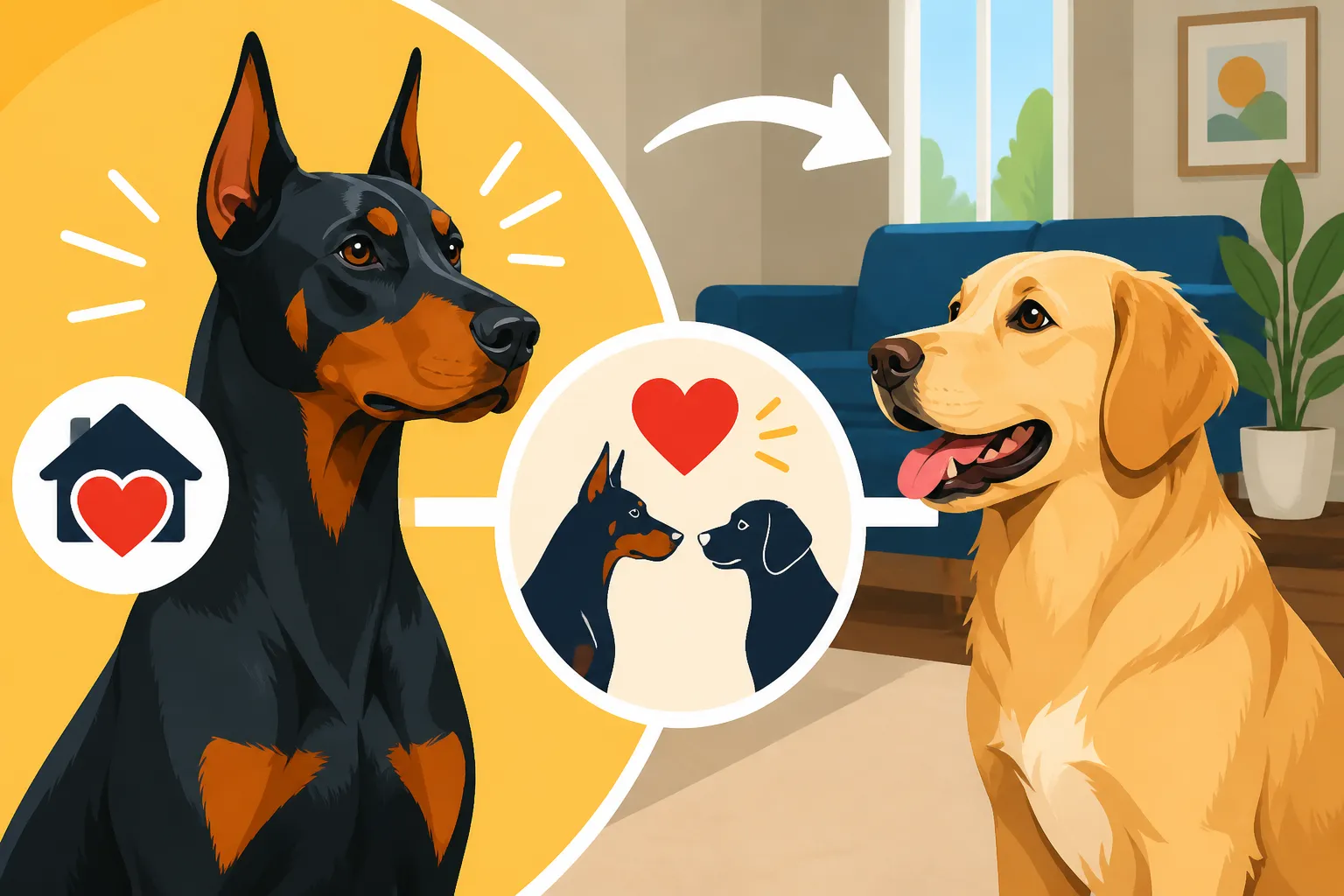
Adding a Doberman to a House That Has a Dog
Bringing a new dog into a home where another furry friend already reigns can feel like walking a tightrope – you're balancing excitement with a deep worry that things might not go smoothly. The potential for jealousy, conflict, or simply a personality clash can be incredibly stressful, leaving you wondering if you're making the right decision for either animal. This comprehensive guide will walk you through the essential steps, considerations, and strategies to help integrate a new Doberman into a multi-dog household as harmoniously as possible, setting everyone up for success.
Understanding Doberman Dynamics and Existing Dog Temperament
Before you even think about leash greetings, it's crucial to understand the inherent traits of the Doberman breed and honestly assess your current dog's personality. This isn't about stereotyping, but about recognizing tendencies that can either aid or hinder a smooth introduction.
The Doberman's Instinctual Traits
Dobermans are renowned for their intelligence, loyalty, and protective instincts. They are often called "Velcro dogs" for a reason – they bond deeply with their family and frequently want to be right by your side. This strong bond can sometimes translate into a desire to guard their family or perceived territory. While this is often a fantastic trait for personal protection, it's something to be mindful of when introducing a new dog. A Doberman might be used to being the sole recipient of affection and attention, and suddenly sharing that can be a big adjustment. Their keen intelligence also means they pick up on subtle cues, both from you and the other dog, and can learn routines and expectations very quickly, for better or for worse. For insights into this bond, you might find Living With a Doberman That Follows You Everywhere helpful.
They are generally confident and alert, but sometimes their perception of a threat or a perceived challenge from another dog can trigger a strong response. It's not about aggression in most cases, but a natural instinct to assess and establish boundaries. If you're bringing in a Doberman puppy, it's a critical period for Building a Doberman Puppy That Is Confident, Not Sharp through early socialization. An adult Doberman might already have established habits and expectations regarding other dogs, so understanding their history is vital.
Assessing Your Resident Dog's Personality
Your current dog's personality is perhaps the most critical factor in this equation. Is your dog generally laid-back and tolerant of other dogs, or do they tend to be a bit more aloof, or even reactive? Do they have a history of resource guarding their toys, food, or even you? A dog that happily shares toys and space is a much easier starting point than one that shows aggression over resources. Think about their play style: are they rough-and-tumble, or do they prefer gentle interactions? A mismatch in play styles can lead to frustration or injury.
Consider past experiences. If your resident dog has lived with other dogs successfully before, that's a positive sign. If they've had negative experiences, they might be more wary or anxious, requiring an even slower, more patient approach. Be honest with yourself about your dog's true nature, not just what you wish it to be. If your current dog tends to react to every dog it sees on walks, the introduction will require extreme care and management. Understanding their triggers and usual responses will help you anticipate potential problems and manage them proactively.
Considering Age, Size, and Sex Differences
These factors play a surprisingly large role in how well two dogs might integrate. A huge age gap can be beneficial, as an older, calmer dog might tolerate a rambunctious Doberman puppy better, while a puppy might be less threatening to an older dog. However, a very old, frail dog might be overwhelmed by a high-energy Doberman. Conversely, two young, energetic dogs of similar ages might constantly be vying for attention and play, which can lead to overstimulation and conflict if not managed.
Size difference also matters. A Doberman is a powerful, eighty-pound dog. If your resident dog is a small breed, accidental injury is a real concern during play or even during an excited greeting. Always supervise closely. When it comes to sex, traditional wisdom often suggests that a male and a female tend to get along better than two males or two females. However, this is not a hard-and-fast rule, and individual personalities are paramount. Same-Sex Doberman Households can certainly work, but they often require more careful management, particularly with two intact males or two dominant females. It's about monitoring dynamics and ensuring no dog feels constantly challenged or threatened by the other.
Preparing Your Home for a New Doberman and Resident Dog
Proper preparation of your home environment is not just about making space; it's about setting up a structure that minimizes stress and prevents early conflicts. This groundwork is foundational for a successful long-term relationship between your dogs.
Creating Separate Spaces and Resources
Before your new Doberman even steps paw inside, ensure you have completely separate spaces for both dogs. This means having two distinct living areas, at least initially, where each dog can eat, sleep, and relax without intrusion from the other. This isn't just a suggestion; it's essential. Think of it as creating individual "apartments" within your home. These areas should be quiet, comfortable, and exclusively for each dog.
This also extends to resources. Each dog needs their own food bowls, water bowls, beds, toys, and chew items. Never allow shared resources, especially in the early stages. Resource guarding, even if subtle, can quickly escalate tensions. For example, if your resident dog is protective of a favorite bone, the new Doberman shouldn't have access to it. Conversely, the Doberman should have its own prized possessions that the resident dog cannot take. You can find excellent crates and gates on platforms like Amazon that can help you physically divide your space and provide secure individual retreats for each dog. For many Dobermans, a crate becomes their den and a safe haven, so investing in a quality Choosing a Crate for a Doberman is wise.
Safety Measures and Environmental Management
Beyond separate spaces, you need tools and strategies for managing interactions. Baby gates are your best friend here. Use them to block off rooms, create a "dog-free zone" for each animal, or simply to ensure you can quickly separate them if needed. Leashes are also crucial; even inside the house, keeping both dogs on leashes during initial supervised interactions gives you immediate control and allows you to calmly redirect them if tension arises.
Consider setting up designated feeding areas that are entirely separate, perhaps even in different rooms, to prevent any food-related stress. When feeding, supervise closely, and pick up bowls as soon as they are finished eating. Think about high-value items, like special chew toys or long-lasting treats. These should always be given when dogs are completely separated. This prevents one dog from feeling the need to guard or steal from the other. Training cues like "place" or "stay" can be incredibly helpful for managing dogs in the same room, allowing you to give one dog attention while the other remains calmly on their mat.
Pre-Scent Introduction
Dogs primarily interpret the world through scent, so introducing them to each other's smell before a face-to-face meeting can dramatically ease the actual introduction. This isn't just a nice idea; it's a vital first step. Before the Doberman arrives, ask the previous owner or rescue to provide a blanket, towel, or toy that smells strongly of the new dog. Bring it home and let your resident dog sniff it at their leisure. Don't force it; just place it in their living area. Observe their reaction: are they curious, relaxed, agitated, or uninterested? This gives you valuable information about their potential initial feelings.
Once the Doberman is home (but still kept separate), do the same for them, giving them an item that smells of your resident dog. After a day or two, you can swap the items again. The goal is for both dogs to become accustomed to the other's scent, associating it with a neutral or even positive experience (e.g., getting a treat while sniffing the new scent). This process helps them build a mental file of the other dog without the pressure of direct interaction, reducing the novelty and potential anxiety when they finally meet.
The Introduction Process: Slow, Structured, and Supervised
This is where the rubber meets the road. Rushing introductions is the quickest way to create problems. Patience, structure, and constant supervision are your golden rules.
Neutral Territory First Meetings
The very first meeting between your Doberman and your resident dog should always happen on neutral territory. This means a place where neither dog feels they have established ownership or turf, such as a local park, a quiet field, or even a friend's large, fenced yard if your own isn't suitable. Crucially, both dogs should be on leashes, handled by separate adults. Having two handlers ensures each dog can be managed individually.
Start with a parallel walk rather than a direct face-to-face meeting. Walk them side-by-side, but with enough distance between them that they don't feel pressured to interact. The goal is for them to become aware of each other's presence, observe each other from a safe distance, and simply exist in the same space without incident. Keep the leashes loose; a tight leash can convey tension to the dog. Gradually, over several passes or even across multiple sessions, you can decrease the distance between them as long as both dogs remain calm and relaxed. Look for relaxed body language: loose tails, sniffing the ground, soft eyes. Avoid any direct nose-to-nose greetings until they've demonstrated sustained calm.
Controlled Leashed Interactions
Once they've successfully completed several parallel walks in neutral territory, you can move to more controlled, closer interactions, still on leash. Have both dogs on separate leashes, with handlers ready to redirect if needed. Allow them brief, sniff-and-go interactions. This means letting them approach, sniff for a few seconds, and then gently walking them away in different directions before any tension can build. Short, positive encounters are far more valuable than prolonged, stressful ones. Keep the atmosphere light and positive, offering verbal praise and small, high-value Rewards a Doberman Will Work For for calm behavior.
Do not allow them to stare intensely at each other, as this can be a precursor to conflict. If either dog shows signs of stiffness, a hard stare, growling, lunging, or excessive barking, immediately increase the distance and return to parallel walking. It’s important to end interactions on a positive note. Even if it was just a few seconds of calm sniffing, celebrate that. These short, positive exposures build trust and positive associations without overwhelming either dog. Repeat these controlled leashed interactions daily, or even multiple times a day, for as long as it takes.
Gradually Increasing Proximity and Duration
Only when both dogs are consistently calm and showing positive interest during leashed interactions in neutral territory can you begin to bring them closer and extend the duration of their time together. You can start bringing this into your home, but always with leashes on and constant supervision. Allow them to be in the same room, perhaps with a gate between them initially, or on opposite sides of a room on leash. This allows them to get used to each other's presence in the shared living space.
When they are ready for off-leash interaction, ensure it happens in a secure, dog-proofed area where you can easily separate them if necessary. For the first few off-leash sessions, keep them very short – just a few minutes. Continue to provide praise and rewards for calm, appropriate behavior. Gradually extend these sessions as they demonstrate comfort and good manners. Never leave them unsupervised during these initial off-leash interactions. Even if they seem to be getting along perfectly, an unexpected trigger (like a dropped piece of food or a new toy) can quickly change the dynamic. Always err on the side of caution.
Managing the First Weeks and Establishing Harmony
The initial introduction is just the beginning. The real work of building a harmonious multi-dog household happens over the first several weeks, sometimes even months, as everyone settles into a new routine.
Supervised Interactions and Managing Resources
Even after successful introductions, every interaction between your Doberman and resident dog should be supervised for quite some time. This means if you can't actively watch them, they should be separated by gates or in their individual crates. This prevents any mishaps from occurring when you're not there to intervene. You're not just watching for outright fighting, but also for subtle signs of discomfort, bullying, or resource guarding. A low growl over a toy, a hard stare over a favorite sleeping spot, or one dog constantly trying to get between you and the other are all important signals.
Continue to manage resources strictly. Feed them in separate rooms. Pick up all toys after playtime, or only allow access to specific toys when dogs are separate. If you give treats, do so individually and in separate spaces. This might seem like a lot of work, but it removes many common triggers for canine conflict. As they build a solid, trusting relationship, you may be able to relax some of these rules, but it's always better to be proactive and prevent issues rather than react to them.
| Resource Type | Initial Management Strategy | Long-Term Goal (if achieved) |
|---|---|---|
| Food Meals | Separate rooms, bowls removed immediately | Separate but visible, or supervised proximity |
| Water Bowls | Multiple bowls in separate areas | Shared water bowls freely available |
| High-Value Treats | Only when dogs are fully separated (e.g., in crates) | Supervised, given simultaneously |
| Toys | Rotate access, pick up after play | Shared access to low-value toys |
| Beds/Sleeping Spots | Individual beds in separate safe spaces | Shared common areas, individual preference |
| Your Attention | Equal individual time, no favoritism | Balanced, organic attention |
Maintaining Individual Attention and Routines
One of the biggest mistakes owners make is showering all attention on the new Doberman, neglecting the resident dog. This can foster resentment and jealousy, creating a rift between the dogs and potentially straining your bond with your original companion. It's vital that both dogs continue to receive ample individual attention, training, and exercise.
Make dedicated time for your resident dog: a special walk, a solo training session, or just some quiet cuddle time. This reassures them that their place in the family is secure. Do the same for your new Doberman, helping them bond with you and understand their new environment. Maintaining established routines for your resident dog as much as possible will also help reduce their stress and signal that not everything has changed. For your new Doberman, establishing a consistent routine early on (feeding times, potty breaks, walks, training) provides structure and helps them settle in. Remember, a Doberman is Training a Doberman That Is Smarter Than You Expect, so consistency in routine will serve you both well.
Reinforcing Positive Behavior
Actively seek out and reward moments of calm coexistence. If your Doberman and resident dog are lying peacefully in the same room (even if separated by a gate), casually toss them both a treat. If they ignore each other during a walk, praise them. The goal is to create positive associations with each other's presence. When they are together, encourage appropriate behaviors like parallel sniffing, walking together nicely, or even just relaxing in each other's vicinity.
Avoid scolding or punishing them for growling or minor squabbles if you can safely separate them instead. Harsh corrections can suppress the outward signs of discomfort without addressing the underlying issue, potentially leading to more dangerous, sudden conflicts. Instead, redirect them or separate them to diffuse tension. Tools like online puppy programs, such as BAXTER & Bella, offer structured training that can help you reinforce positive behaviors and communication with your new Doberman, which in turn helps with integration. You might also find Why a Clever Doberman Is Harder to Train interesting for understanding how to best engage your Doberman's mind positively.
Troubleshooting Common Challenges and When to Seek Help
Even with the best preparation, challenges can arise. It’s important to know how to respond and when it’s time to call in the professionals.
Dealing with Resource Guarding and Jealousy
Resource guarding can manifest in various ways: growling over food bowls, hovering over a favorite toy, pushing another dog away from you, or even guarding a specific piece of furniture. If you observe any resource guarding, it's crucial to address it immediately and consistently. The first line of defense is strict management: prevent access to high-value items when dogs are together, feed in separate rooms, and give treats individually.
For mild cases, you can work on "trade up" exercises. If one dog is guarding a toy, offer an even higher-value treat in exchange, teaching them that giving up an item results in something better. Never try to forcibly take an item from a resource-guarding dog, as this can escalate the behavior. If resource guarding is intense or involves aggression, it's a serious issue that requires professional help from a certified dog trainer or veterinary behaviorist. Do not try to solve it on your own, as you could inadvertently make it worse or put yourself at risk. This is a common challenge, and sometimes it's an instinctual issue, like with Doberman Guarding Instinct and Where It Tips Over.
Managing Play Styles and Energy Levels
A Doberman often has a high energy level and a distinct play style – they can be physical, mouthy, and love to wrestle or chase. If your resident dog has a very different play style (e.g., preferring gentle sniffing or polite chasing), there can be mismatches. One dog might constantly pester the other, leading to frustration, or one might accidentally injure the other due to size and intensity differences.
Supervise all play sessions closely. If play gets too rough, too intense, or one dog seems overwhelmed or unhappy, intervene immediately. Use a consistent cue like "break" or "enough," separate them calmly for a few minutes, and then allow them to resume if they settle. Short, positive play sessions are better than long, overstimulated ones. Ensure both dogs get plenty of individual exercise and mental stimulation (puzzle toys from Amazon are great for this!) to burn off energy separately. This can reduce the pressure to always play together. If the play styles are consistently mismatched and causing stress, consider limiting their unsupervised play entirely.
Recognizing Red Flags and Professional Intervention
Knowing when to get outside help is critical. Some behaviors are clear red flags that indicate a need for professional intervention:
- Aggression: Any instance of biting that breaks skin, sustained growling with lunging, snapping, or attempts to guard you aggressively from the other dog.
- Constant Bullying: One dog consistently harassing, pinning, or preventing the other dog from accessing resources or space, despite your attempts to manage it.
- Persistent Fear/Anxiety: One dog is constantly hiding, trembling, or showing overt signs of stress whenever the other dog is present.
- Escalating Conflicts: What started as minor disagreements are becoming more frequent or more intense.
If you observe these behaviors, don't delay in contacting a qualified professional. Look for a certified professional dog trainer (CPDT-KA) or a veterinary behaviorist (DACVB). Avoid trainers who advocate for harsh, punitive methods, as these can severely damage the dogs' relationship and your trust. A good trainer will help you understand the underlying causes of the behavior, develop a safe and effective management plan, and guide you through behavior modification techniques. Sometimes, simply having an objective pair of eyes from someone who has worked with Finding a Trainer Who Has Worked With Dobermans can make all the difference. Remember, your ultimate goal is a safe and peaceful home for all your beloved pets.
Disclaimer
This article is for general informational purposes only and does not constitute professional advice. Laws, prices and regulations vary by location and change over time. Consult a qualified professional for guidance on your specific situation.