Whether a Doberman Would Really Defend You
Many Doberman owners, or those considering bringing one into their lives, often wonder if their elegant, powerful companion would truly step up to defend them in a dangerous situation. It's a question rooted in the breed's history and imposing presence, but the reality of canine protection is far more nuanced than simple movie scenes. This guide will delve deep into what "defense" really means for a Doberman, how their natural instincts play out, and what it takes to cultivate a truly reliable, safe guardian, rather than an uncontrolled menace.
What "Defense" Actually Means for a Doberman (and for You)
When people ask if a Doberman will defend them, they often envision a dog launching into action, warding off an attacker with bared teeth. While Dobermans certainly possess the physical capabilities and inherent courage for such a scenario, true defense from a well-adjusted Doberman is often much more subtle, strategic, and, frankly, safer for everyone involved. It's about deterrence and discernment, not just brute force.
Defining True Protection Versus Aggression
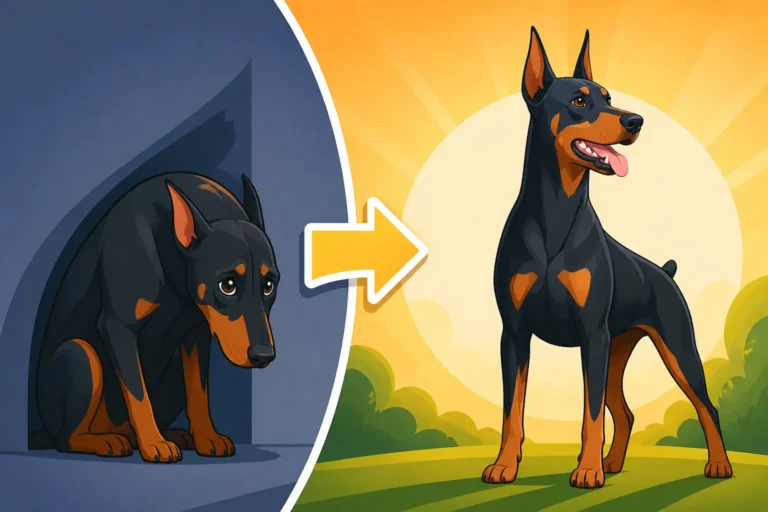
Let's get one thing straight: a truly protective Doberman is not an aggressive Doberman. Aggression is often born of fear, insecurity, or poor training, leading to unpredictable and dangerous behavior. A Doberman that lunges, snarls, and bites indiscriminately is a liability, not a protector. True protection, on the other hand, is a measured response based on a perceived threat to its family. It stems from a deep bond and a clear understanding of its role, not from a desire to harm.
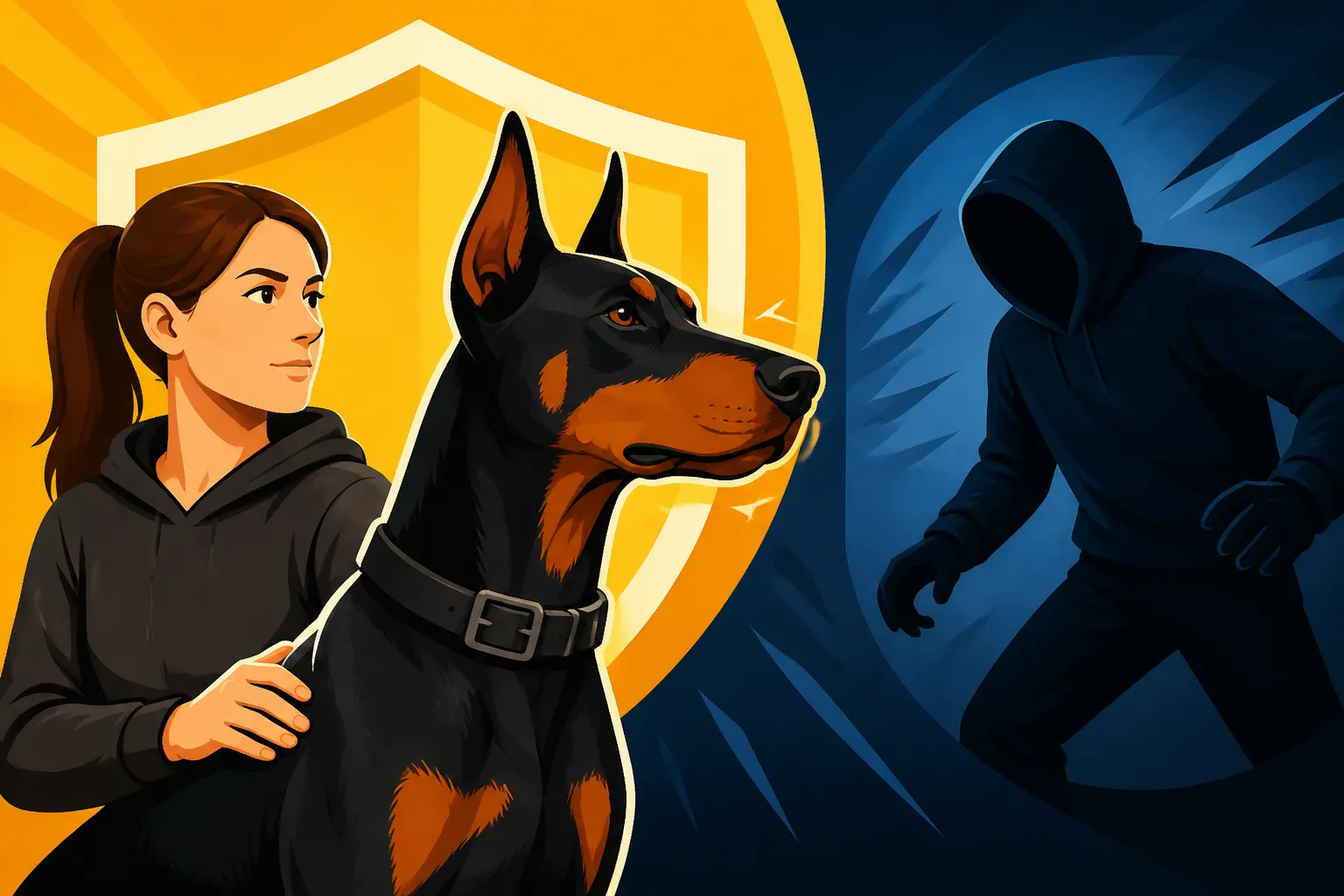
Think of it this way: a well-trained Doberman might position itself between you and a stranger who approaches too quickly, offering a deep, resonant bark that echoes with authority. It might stand tall, ears alert, its gaze unwavering, signaling to any potential threat that this family is guarded. This display of confidence and readiness often de-escalates situations before physical intervention is ever necessary. This is the cornerstone of effective protection – preventing the incident rather than just reacting to it. An owner must understand this distinction, recognizing the fine line where Doberman Guarding Instinct and Where It Tips Over.
The Doberman's Role as a Personal Guardian
Dobermans were originally bred by Karl Friedrich Louis Dobermann to be personal protection dogs. They were developed to be fearless, intelligent, and fiercely loyal companions capable of guarding their owner on night rounds. This history has instilled in the breed a deep-seated instinct to be acutely aware of their surroundings and to be highly attuned to their human's emotional state. Your Doberman is constantly observing you, your body language, and your interactions with the world.
This means that if you're truly in distress or danger, a Doberman is likely to notice and respond. Their protection isn't just about a stranger entering your home; it's about being your shadow, your confidant, your watchful eye in every situation. They are often called "Velcro dogs" for a reason – they want to be close, involved, and aware of everything happening around their beloved human. This constant proximity isn't just for affection; it's part of their guardian nature. They want to know what's going on, and if things go south, they want to be there. This inherent trait, when nurtured correctly, makes them unparalleled personal guardians.
The Doberman's Natural Instinct: More Guardian, Less Attacker
It's easy to look at a powerful Doberman and assume they're just waiting for an opportunity to be "tough." However, their true nature is far more nuanced. While they certainly possess the drive and physical presence, their default isn't aggression; it's awareness, observation, and a profound loyalty to their inner circle. They are, at their core, guardians, not mindless attackers.
Their Innate Alertness and Observation Skills
One of the most remarkable traits of a Doberman is their incredible situational awareness. They don't miss a beat. The slight shift in your posture, the unexpected sound from down the street, the person lingering a little too long – they process it all. This isn't just a casual observation; it's an inherent part of their protective instinct. They are constantly monitoring their environment, evaluating potential threats, and looking to you for cues.
Consider a walk in the park: while you might be engrossed in a podcast or a phone call, your Doberman is taking in every scent, every movement, every subtle change in the environment. If someone approaches suddenly, your Doberman will likely be the first to notice, often stiffening slightly, raising their head, and turning their focus entirely to the new presence. This immediate shift in attention is their way of alerting you and assessing the situation. They act as your early warning system, giving you precious moments to react and often deterring unwanted attention before it escalates.
The "Velcro" Trait and Its Connection to Protection
The term "Velcro Doberman" isn't just a cute nickname for their clingy nature; it's fundamentally tied to their protective instincts. A Doberman wants to be with you, near you, and aware of your every move. This constant companionship isn't just about love; it's about being in a position to guard. If they are always by your side, they can react instantly if a threat emerges. They form an incredibly strong bond, often singling out one or two primary caregivers as their "person" to guard above all others. A Doberman That Shadows One Family Member is not just seeking affection; it's also taking its job seriously.
This strong bond means they are highly sensitive to your emotions. If you are calm and confident, your Doberman will likely mirror that. If you become tense or fearful, they will pick up on it immediately and switch into an alert, potentially protective, mode. It's a two-way street: your leadership and demeanor directly influence how your Doberman perceives the world and whether they feel the need to intervene. A Doberman's protective nature is deeply intertwined with this profound connection and their desire to keep their beloved human safe from perceived harm.
How They Assess Threats
Dobermans don't just react blindly; they assess. They use a combination of their keen senses, their understanding of human body language, and their past experiences to determine if a situation truly warrants a defensive response. A Doberman might bark at a stranger at the door, but if you welcome that person in with a relaxed demeanor, your Doberman will likely relax too. They are looking to you for confirmation of what is and isn't a threat.
However, their assessment is also based on their inherent wiring. A Doberman is naturally suspicious of strangers and unfamiliar situations. This suspicion is a protective trait, not a flaw. They don't typically greet everyone with wagging tails. Instead, they observe, evaluate, and often keep a watchful distance until you signal that everything is alright. This discernment is crucial; it means they are less likely to overreact to non-threats, but also poised to act decisively if a genuine danger arises. This is why careful socialization and training are so vital: to teach them to differentiate between a harmless jogger and a genuine threat, without dulling their natural instincts.
Building a Truly Protective Doberman (The Right Way)
If you desire a Doberman that can genuinely protect you, it’s not about buying a dog with "bad blood" or encouraging aggression. It's about responsible ownership, dedicated training, and nurturing their natural instincts within a framework of control and confidence. A protective Doberman is a well-balanced Doberman, not an out-of-control one.
Early Socialization is Paramount
The foundation of a reliable protective Doberman is extensive and positive early socialization. A puppy that is exposed to a wide variety of sights, sounds, people, and appropriate dog interactions during its crucial early weeks (The Sixteen Weeks That Set a Doberman Up are key!) will grow into a confident, stable adult. Without this, you risk developing a fearful or reactive Doberman, whose "protection" may be rooted in anxiety and escalate to aggression, which is never safe or truly protective.
Take your Doberman puppy everywhere safe: pet-friendly stores (after vaccinations are complete), quiet parks, friends' homes. Let them meet different types of people – men with hats, children, people with mobility aids – and experience various environments in a controlled, positive manner. The goal isn't for them to love everyone, but to learn that most new experiences are neutral or positive. This builds a dog that can differentiate between normal life and actual danger. Online puppy classes, like those offered by BAXTER & Bella, can provide structured guidance and support for this critical phase, helping you navigate the complexities of socialization from the comfort of your home.
Foundation Obedience and Control
A protective Doberman is a dog under control. Without rock-solid obedience, their protective instincts can become a liability. Imagine a scenario where your Doberman perceives a threat and reacts, but you can't recall them or get them to cease their behavior. That's a dangerous situation for everyone involved. Your Doberman must understand and respond instantly to commands like "sit," "stay," "come," and especially a reliable "leave it" or "out."
This level of obedience requires consistent, positive reinforcement training from a very young age. Utilize high-value treats and praise to reward desired behaviors. Long training sessions aren't always necessary; short, frequent bursts throughout the day are often more effective for a Doberman, who is incredibly intelligent but can get bored with repetition. Look for trainers who specialize in positive methods and have experience with working breeds, as Finding a Trainer Who Has Worked With Dobermans can make all the difference. Equipment purchased from retailers like Amazon, such as durable leashes and comfortable harnesses, can aid in keeping your dog secure and focused during training sessions. The goal is a dog that is confident in its abilities but always looks to you for direction and permission.
Understanding Responsible "Protection" Training
This is where things can get dicey. True "protection training" (often called "sport protection" or "personal protection" with reputable trainers) is a highly specialized field. It is not about teaching a dog to bite on command or be aggressive. Instead, it hones a dog's natural protective instincts, drive, and discernment, teaching them when and how to engage and, crucially, when and how to disengage. It's about control, confidence, and precision.
Most pet Dobermans do not need formal protection training to be protective. Their natural instincts, combined with good socialization and obedience, are often more than enough for home and personal defense. In fact, Why Bite Work Is Wrong for a Pet Doberman is a critical piece of advice. Inexperienced or unethical "protection" trainers can ruin a Doberman, creating a dog that is unstable, dangerous, and a legal nightmare. If you are truly considering advanced training, seek out highly reputable, certified professionals who prioritize control, temperament, and safety above all else, and who emphasize off-leash obedience as the absolute foundation. They should be able to clearly articulate their methods and demonstrate the control they have over their own trained dogs.
When a Doberman's "Defense" Can Go Wrong
While the Doberman's protective nature is one of its most cherished traits, it's also the one that can lead to the most trouble if misunderstood or mishandled. The line between natural guardian and dangerous liability is thinner than many realize, and crossing it can have serious consequences for both you and your dog.
Misinterpreting Fear as Protection
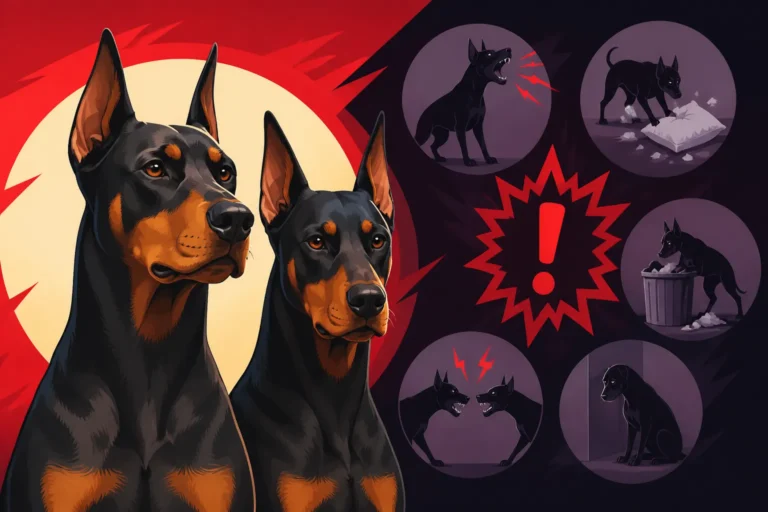
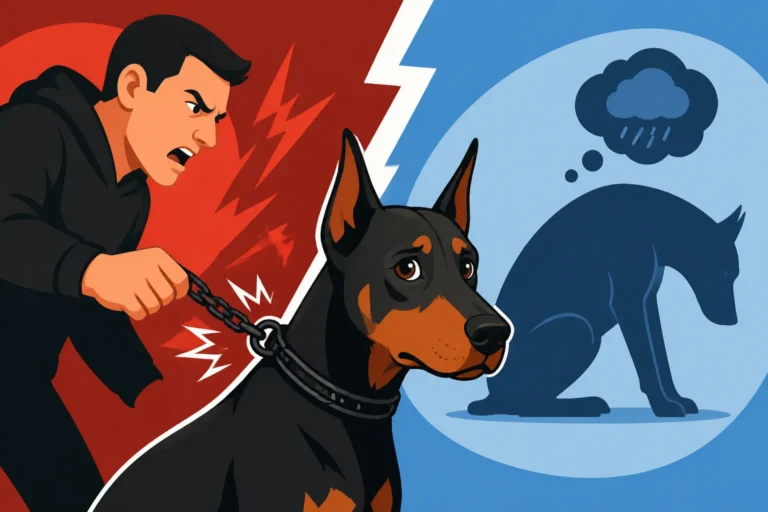
One of the most common and dangerous misconceptions is mistaking a Doberman's fear-based reactions for genuine protection. A Doberman that is unsocialized, insecure, or has been subjected to harsh training methods might react aggressively when frightened. This isn't courage; it's panic. This type of "defensive" behavior is unpredictable because it's driven by anxiety. A fearful dog might bite out of desperation, without clear signals or escalation, and might not back down even when the perceived threat is gone.
For example, a Doberman that growls and lunges at every stranger on a walk might be doing so because it's genuinely afraid, not because it's bravely protecting you. Its "protection" is a desperate attempt to create distance and make the scary thing go away. Such a dog is living under immense stress and poses a significant risk. Owners need to learn to read their Doberman's body language – A Doberman That Stiffens Before It Growls is giving you clear signals – and address underlying fear with positive reinforcement and professional help, rather than encouraging an aggressive display they mistakenly believe is "protection."
The Dangers of Inexperienced "Guard Training"
Many well-meaning owners, wanting a "guard dog," fall into the trap of seeking out trainers who promise to make their Doberman "tough" or teach them to "attack." These individuals often employ outdated, punishment-based methods, or worse, encourage aggression without control. This can create a Doberman that is selectively aggressive, unsure of who to trust, and prone to misinterpreting social cues. The results are often disastrous: dogs that are fear-aggressive, bite inappropriately, or become generally unstable.
True protection comes from a place of confidence, not fear or uncontrolled aggression. Encouraging your Doberman to be "mean" or isolating them to make them "harder" destroys their natural discernment and can lead to a dog that bites family members or harmless visitors. A Doberman needs to be a confident, well-adjusted member of society first and foremost. This means understanding that Why Bite Work Is Wrong for a Pet Doberman is usually true for pet dogs. Any training that encourages indiscriminate aggression or relies heavily on pain and intimidation should be avoided at all costs.
Legal and Ethical Considerations
Owning a powerful, protective breed like a Doberman comes with significant legal and ethical responsibilities. If your Doberman bites someone, even if you believe it was justified in defense, you could face severe legal consequences, including lawsuits, fines, and even the forced euthanasia of your dog. Many jurisdictions have "strict liability" laws for dog bites, meaning you are responsible regardless of your dog's previous behavior.
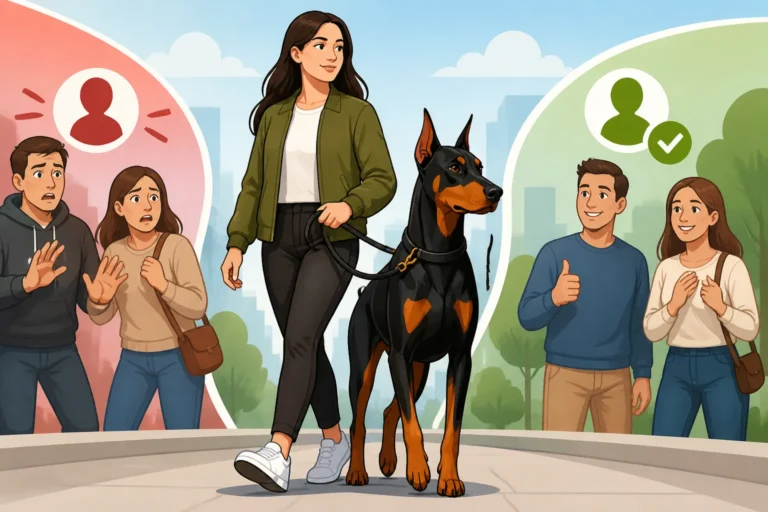
Ethically, it is your responsibility to ensure your Doberman is a safe and reliable member of the community. This means having them under control at all times, especially in public. It means understanding their protective instincts and managing them responsibly. It means prioritizing their mental and physical well-being through proper training, socialization, and a secure home environment. Remember, a Doberman's imposing presence is often enough of a deterrent. Cultivating a dog that is confident, well-behaved, and clearly bonded to you is the most effective and responsible form of "protection." Handling a Doberman in Public Without Alarming People is a skill every Doberman owner needs to master, ensuring your dog is seen as a well-managed companion, not a potential threat.
Here's a quick comparison of effective vs. ineffective approaches to Doberman protection:
| Aspect | Responsible/Effective Approach | Irresponsible/Ineffective Approach |
|---|---|---|
| Foundation | Extensive, positive socialization; stable temperament. | Isolation; encouraging fear or insecurity. |
| Training Focus | Rock-solid obedience, control, clear communication, positive reinforcement. | Harsh corrections, intimidation, "attack" commands without control. |
| Protective Display | Alert stance, deep bark, positioning between owner/threat, discernment of real threats. | Indiscriminate lunging, uncontrolled biting, fear-based aggression. |
| Owner Role | Calm, confident leader; guide and interpret situations for the dog. | Anxious, inconsistent, or aggressive; relying on the dog to make all decisions. |
| Outcome | Confident, reliable guardian; safe family and community member. | Unpredictable, dangerous liability; potential legal issues, rehoming, or euthanasia. |
| Tools/Resources | Positive reinforcement trainers, quality leashes/harnesses, educational materials (e.g., BAXTER & Bella, Amazon). | Prong collars/e-collars used improperly, "attack" sleeves for untrained dogs, fear-mongering trainers. |
Disclaimer
This article is for general informational purposes only and does not constitute professional advice. Laws, prices and regulations vary by location and change over time. Consult a qualified professional for guidance on your specific situation.