Whether Anyone Should Put a Prong on a Doberman
It’s a scenario many Doberman owners know all too well: you love your powerful, intelligent dog, but walks have become a battle. The pulling, the lunging, the sheer strength can leave you feeling frustrated, embarrassed, and even worried about safety. When conventional collars just aren't cutting it, the idea of a prong collar often enters the conversation, bringing with it a whirlwind of strong opinions and guilt. This guide is here to untangle the complicated discussion around prong collars, helping you understand their mechanics, the reasons people use them, their potential drawbacks, and effective alternatives, so you can make the best, most informed decision for your Doberman.
Understanding What a Prong Collar Actually Is and Isn't
Let's start by demystifying the prong collar itself. For many, just the sight of one can elicit gasps or angry glares, fueled by misconceptions and fear. It’s important to separate fact from fiction and understand how these tools are actually designed to work, versus how they are sometimes misused or misunderstood. This isn't about judgment, but about equipping you with accurate information.
How a Prong Collar Works
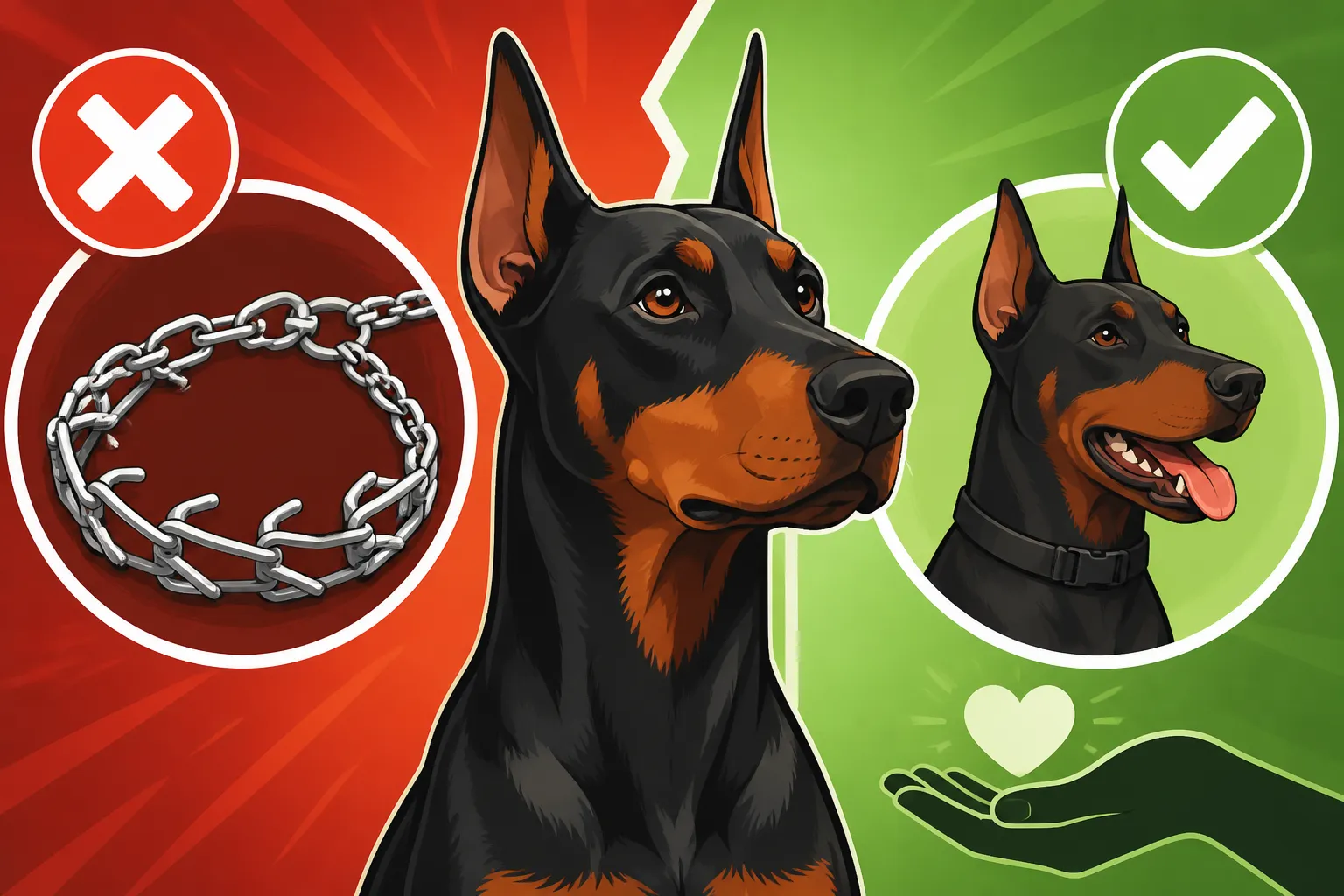
At its core, a prong collar, often called a pinch collar, is a training tool designed to apply pressure evenly around a dog's neck. Unlike a choke chain which constricts continuously, or a flat buckle collar which concentrates pressure on the front of the throat, a prong collar features dull, rounded prongs that are linked together. When tension is applied to the leash, these prongs pinch the skin around the neck, distributing the pressure more uniformly. The intent is not to puncture or inflict pain, but to create an uncomfortable, aversive sensation that mimics a correctional nip from a mother dog or another canine. The key is that the pressure is quickly released the moment the dog complies, providing immediate negative feedback for unwanted behavior (like pulling) and immediate relief for desired behavior (like walking politely).
The design includes a swivel ring where the leash attaches, which allows the collar to loosen immediately when the pressure is off. This quick release of pressure is critical to its intended effectiveness. If the collar is fitted correctly – typically high up on the neck, just behind the ears, and snug enough so it doesn't slide down – the prongs create pressure points rather than a continuous choke. The idea is that this sensation is clear and unmistakable, providing a strong communication signal to a dog that might otherwise ignore lighter pressure from other collars. When used correctly, the goal is often to create a clear "on-off" sensation that teaches a dog to avoid the pressure by not pulling.
The Debate: Why They're So Controversial
Few training tools spark as much heated debate as the prong collar. On one side, proponents often swear by their effectiveness, especially for large, powerful breeds like Dobermans. They argue that for some dogs, particularly those with a high pain threshold or strong prey drive, a prong collar can be the only tool that effectively communicates boundaries and stops dangerous pulling or lunging. Many trainers who use them emphasize that they are meant to be communication tools, not instruments of punishment, and that proper use involves quick, precise corrections followed by immediate slack in the leash. For owners struggling with a dog that pulls them off their feet or reacts aggressively to other dogs, the prong collar can seem like a last resort that restores control and allows for safer walks.
However, the opposition is equally passionate, raising significant concerns about animal welfare and the potential for harm. Critics argue that even when used "correctly," prong collars rely on pain and discomfort to suppress behavior. They worry about the psychological impact on the dog, potentially leading to fear, anxiety, or a breakdown in trust between dog and owner. The argument is that while a dog may stop pulling, it might be doing so out of fear of correction rather than understanding what is expected of it. There are also concerns about physical injury if the collar is poorly fitted, used too harshly, or if the dog pulls suddenly. The ethical considerations of using aversive tools in modern, humane dog training are at the heart of this controversy, leaving many Doberman owners caught in the middle, desperately seeking effective solutions without compromising their dog's well-being.
When Doberman Owners Consider a Prong Collar
It's rare for an owner to immediately reach for a prong collar without having tried other options first. Typically, the decision comes after a period of escalating frustration and a genuine concern for safety, both their own and their Doberman's. The sheer physical presence and drive of a Doberman can make managing them on a leash a formidable challenge.
Managing a Strong Doberman on Leash
Let's be honest, Dobermans are powerful dogs. An eighty-pound Doberman with a strong prey drive or simply an enthusiastic desire to greet the world can easily yank an unprepared handler off their feet. Standard flat buckle collars often prove ineffective; the dog just pulls right through the pressure, gasping or choking itself without changing its behavior. Even gentle leader head halters, while effective for many, aren't always accepted by all Dobermans, with some dogs trying relentlessly to rub them off, making the walk more stressful than before. This relentless pulling isn't just annoying; it's a safety hazard. A sudden lunge towards a squirrel, another dog, or a person could lead to serious injury for the handler, especially if they're elderly or have mobility issues.
This is often where the search for a more effective tool begins. Owners want to enjoy walks, not dread them. They want to be able to safely navigate public spaces, knowing they can control their dog in unpredictable situations. A Doberman that drags you down the street isn't just poorly behaved; it's a liability, and it limits the experiences you can share together. The frustration of trying to walk a strong, determined Doberman who just doesn't seem to "get it" with milder tools is a very real and valid struggle. Many feel like they've tried everything, from endless positive reinforcement sessions to various no-pull harnesses, only to be met with the same powerful tug. It's during these moments of desperation that a prong collar is often considered as a potential solution to regain control and safety. Stopping a Doberman From Pulling You Over can feel like an impossible task without the right tools.
Addressing Specific Behavioral Challenges
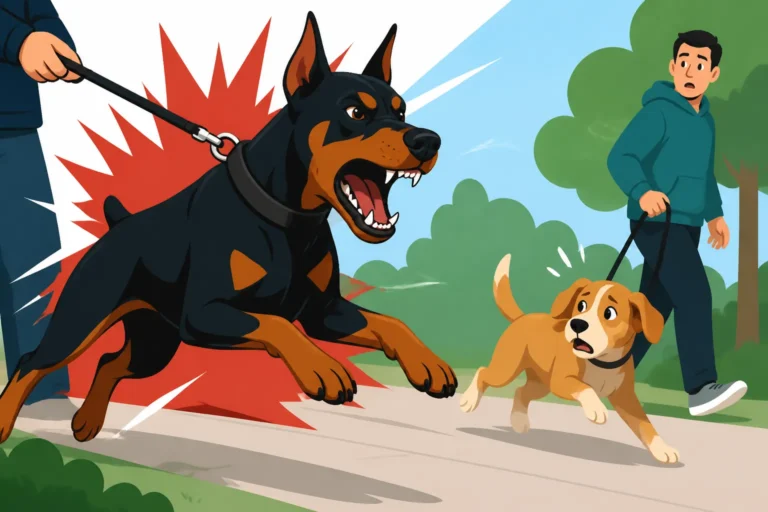
Beyond general pulling, Dobermans can present specific behavioral challenges on leash that lead owners to consider more direct training tools. Reactivity, for instance, is a common issue. A Doberman that barks, growls, or lunges at other dogs, cyclists, or even certain types of people can turn a routine walk into a high-stakes ordeal. This isn't always aggression; it can stem from fear, over-excitement, or frustration, but the end result is a dog that is difficult, if not impossible, to control with a standard collar. The instantaneous feedback of a prong collar is sometimes sought to interrupt these intense reactions, allowing the owner to redirect the dog's focus before the behavior escalates. A Doberman That Lunges at Passing Dogs is a significant safety concern.
Another scenario involves a Doberman's inherent guarding instincts or strong prey drive. While generally loyal and protective, these traits, if not properly managed, can translate into an intense focus on moving objects or perceived threats during a walk. A Doberman might suddenly fixate on a distant jogger or a rustling bush, and without a way to effectively break that focus, the situation can quickly become unmanageable. The feeling of being dragged uncontrollably by your dog can be incredibly disempowering and can lead owners to avoid walks altogether, which is detrimental to the Doberman's physical and mental health. For some, the prong collar offers a means to deliver a clear, immediate signal to "break" that focus and bring the dog back to the handler, enabling them to work on more appropriate responses.
The Potential Downsides and Risks for Dobermans
While proponents highlight the effectiveness of prong collars, it's crucial to acknowledge the very real risks and potential negative consequences associated with their use. These aren't just theoretical concerns; they are outcomes that many dogs and owners experience, often leading to more complex behavioral problems in the long run.
Physical Risks and Improper Use
One of the most immediate and tangible dangers of a prong collar is the potential for physical injury, particularly if it's used incorrectly or fitted improperly. If the collar is too loose, it can slide down the neck, putting direct pressure on the trachea and potentially causing damage to the windpipe, especially in a breed with a sensitive throat like the Doberman. The prongs, though blunt, can also cause skin irritation, chafing, or even minor abrasions if constantly rubbing or if the dog has very short, thin fur. In severe cases, particularly with extreme jerking or prolonged pulling, there's a risk of damage to the thyroid gland, the delicate structures of the neck, or even the eyes due to increased intraocular pressure.
Beyond the collar itself, improper handling by the owner is a major concern. A prong collar is not a "set it and forget it" tool, nor is it meant for constant, harsh jerks. It requires precise timing, a light hand, and an understanding of how and when to apply and release pressure. If an owner is constantly yanking, holding continuous tension, or using the collar out of frustration, they risk not only physical injury but also eroding any trust the dog might have. The goal, if one chooses to use this tool, is communication, not punishment, and continuous discomfort breaks that rule entirely. Therefore, if you are considering one, professional guidance on fitting and technique is absolutely paramount to minimize these risks.
Behavioral Repercussions: Fear, Avoidance, and Aggression
The physical risks are only part of the story; the behavioral and psychological impacts can be far more insidious. Training through aversive tools like prong collars relies on negative reinforcement or punishment, meaning the dog learns to avoid an unpleasant sensation by performing a desired behavior, or it stops an undesired behavior to avoid the sensation. However, dogs don't always make the exact association we intend. A Doberman corrected with a prong collar for lunging at another dog might not learn "don't lunge at dogs." Instead, it might learn "other dogs predict pain/discomfort," leading to increased fear or anxiety around other dogs. This can actually exacerbate reactivity over time, as the dog tries to preemptively ward off the perceived threat (the other dog) or the unpleasant sensation (the collar correction).
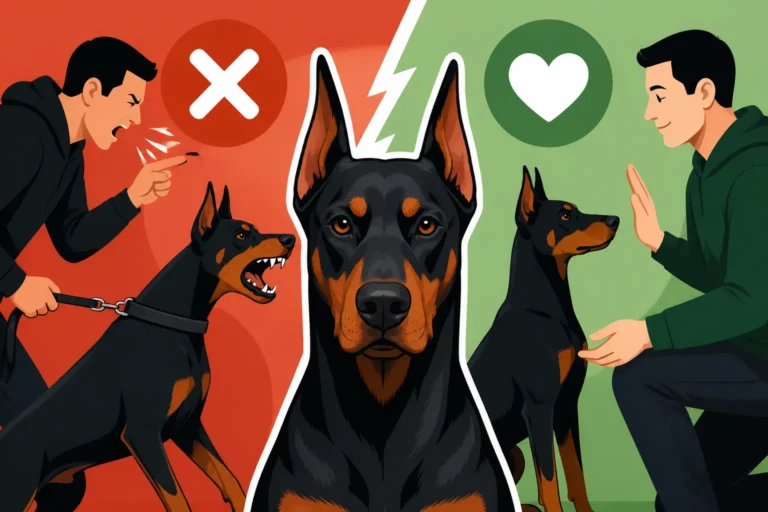
Furthermore, repeated corrections can lead to a general state of anxiety, fear, or learned helplessness. A Doberman that constantly feels unpredictable pressure might become shut down, hesitant, or even redirect its frustration into aggression towards the handler or other animals. The subtle signs of stress – lip licking, yawning, averting gaze – can be missed when the focus is on stopping the immediate unwanted behavior. This approach can severely damage the precious bond between you and your Doberman, turning what should be a relationship built on trust and cooperation into one based on avoiding punishment. Why Yelling Shuts a Doberman Down applies not just to vocal corrections, but to physical ones as well; harshness can make a sensitive Doberman retreat rather than learn. In the long term, this can necessitate Rebuilding Trust With a Harshly Handled Doberman.
The Ethical Considerations
Beyond the practical risks, there’s a significant ethical discussion surrounding the use of prong collars. Modern, force-free dog training philosophies advocate for methods that prioritize the dog's emotional well-being and strengthen the human-animal bond through positive reinforcement, reward-based learning, and understanding the root cause of behavior. From this perspective, using a tool that intentionally causes discomfort, even if momentary, is seen as outdated and unnecessary. The argument is that effective and humane training can always be achieved without resorting to aversive tools.
The ethical dilemma often boils down to this: should we choose a training method that might provide quicker results but potentially compromises our dog's emotional state and our relationship, or should we invest more time and patience in methods that build confidence, trust, and a genuine desire to cooperate? For many Doberman owners, this isn't a simple question. We want what's best for our dogs, but we also need practical solutions to manage a powerful animal safely in our homes and communities. It's a balance, and choosing to avoid tools that inflict discomfort is often seen as a fundamental aspect of responsible and compassionate Doberman ownership. It's similar to the considerations people have around Whether an E-Collar Belongs on a Doberman, as both tools involve applying an uncomfortable sensation to modify behavior.
Alternatives and Responsible Training Approaches for Dobermans
If the potential downsides of prong collars give you pause – and they certainly should – the good news is that there are many effective, humane alternatives and training approaches that can help you manage your Doberman's strength and address behavioral challenges without relying on discomfort or fear. The goal is to set your Doberman up for success, not just to suppress unwanted behaviors.
Harnesses That Hold a Strong Doberman
For many Doberman owners, the first step away from neck-based collars is to explore the world of harnesses. But not all harnesses are created equal. A standard back-clip harness can actually encourage pulling by engaging your Doberman's opposition reflex, which means they pull harder against pressure, much like a sled dog. Instead, look for a front-clip or "no-pull" harness. These harnesses typically feature a leash attachment point on the dog's chest. When your Doberman pulls, the leash redirects their momentum to the side, gently turning them around rather than allowing them to lean into the pull. This effectively interrupts the forward motion and makes it physically less rewarding and more awkward to pull.
There are several brands available, and you can find a wide variety on platforms like Amazon. When choosing one, ensure it's well-fitted and comfortable, allowing for a full range of motion in the shoulders and not rubbing in the armpits. Some popular options include the Easy Walk harness or the Freedom No-Pull Harness, which often features both a front and back clip for versatility. While they might take a little getting used to, a good front-clip harness can make an immediate and dramatic difference in leash manners, providing control without putting pressure on your Doberman's sensitive neck. This is often an essential first step for Leash Manners for an Eighty-Pound Doberman.
Positive Reinforcement and Relationship-Based Training
Ultimately, the most effective and humane approach to training a Doberman, or any dog, is through positive reinforcement and building a strong, trust-based relationship. This means teaching your Doberman what to do rather than constantly punishing them for what you don't want them to do. If your Doberman pulls, instead of correcting them with a prong, you teach them that walking politely earns rewards – whether that's tasty treats, verbal praise, or the opportunity to continue sniffing. Marker Training a Doberman From Scratch is a fantastic method that helps you precisely communicate to your Doberman what behavior you are rewarding, making learning clear and fun.
This approach requires patience and consistency, but the payoff is immense. You're not just suppressing a behavior; you're changing your Doberman's emotional response and building a dog who wants to work with you because it's a positive experience. For reactivity, this means working under threshold – meaning at a distance where your Doberman can notice the trigger (another dog, person, etc.) without reacting, and then rewarding them for calmly looking at you or the trigger. Resources like BAXTER & Bella offer comprehensive online training programs that are built on these positive reinforcement principles, guiding owners through various stages of puppy and adolescent training with kindness and effectiveness. It's about understanding your Doberman's motivations and providing them with clear, rewarding alternatives to unwanted behaviors.
Professional Guidance and Support
Sometimes, despite your best efforts, certain behavioral challenges can feel overwhelming. This is where professional help becomes invaluable. However, it's crucial to seek out trainers who align with humane, force-free, and positive reinforcement methodologies. Look for certified professional dog trainers (CPDT-KA, KPA CTP, or similar certifications) who specialize in behavior modification. A good trainer will help you understand why your Doberman is exhibiting certain behaviors, rather than just focusing on suppressing them. They can develop a tailored training plan that addresses the root cause of the issue, teaches you effective communication, and strengthens your bond.
When looking for a trainer, don't be afraid to ask about their methods and philosophy. A reputable force-free trainer will never recommend or use aversive tools like prong collars, choke chains, or e-collars. They will focus on reward-based techniques, environmental management, and teaching alternative behaviors. They'll also understand the unique characteristics of the Doberman breed and how to harness their intelligence and drive positively. Investing in a qualified trainer is an investment in a happier, more harmonious life with your Doberman, ensuring that both of you are learning and growing together in a respectful way. Finding a Trainer Who Has Worked With Dobermans is crucial, as their experience with the breed’s specific nuances can make all the difference. Sometimes, knowing What Doberman Owners Say They Were Not Ready For can also help guide you to the right professional for support.
| Collar/Harness Type | Primary Mechanism | Pros | Cons | Best Use Case |
|---|---|---|---|---|
| Flat Buckle Collar | Pressure around the neck when pulled | Comfortable, ideal for ID tags, easy on/off | No real pulling control, pressure on trachea, Dobermans can pull through | Basic identification, non-pulling dogs |
| Front-Clip Harness | Leash attaches to chest, redirects forward motion | Reduces pulling without neck pressure, humane | Can tangle legs if ill-fitting, dog might still try to pull, requires proper fitting | General walking, anti-pulling, especially for strong dogs |
| Head Halter (Gentle Leader) | Guides head, controls direction, similar to a horse halter | Excellent control, good for strong pullers/reactivity | Some dogs dislike the muzzle sensation, can be rubbed off, requires careful introduction | Strong pullers, reactive dogs, precise control |
| Back-Clip Harness | Leash attaches to back, distributes pressure across chest | Comfortable for dogs that don't pull, good for ID tags | Can encourage pulling (opposition reflex), less control for strong dogs | Dogs with good leash manners, short walks |
| Prong Collar | Evenly distributed pressure points around neck | Can provide immediate feedback, effective for strong pullers | Potential for physical/psychological harm, controversial, requires precise fitting/technique | Controversial – considered by some for severe pulling or reactivity when other methods fail, requires expert handling and should be a last resort |
Disclaimer
This article is for general informational purposes only and does not constitute professional advice. Laws, prices and regulations vary by location and change over time. Consult a qualified professional for guidance on your specific situation.