Teaching a Doberman to Go to a Mat for Guests
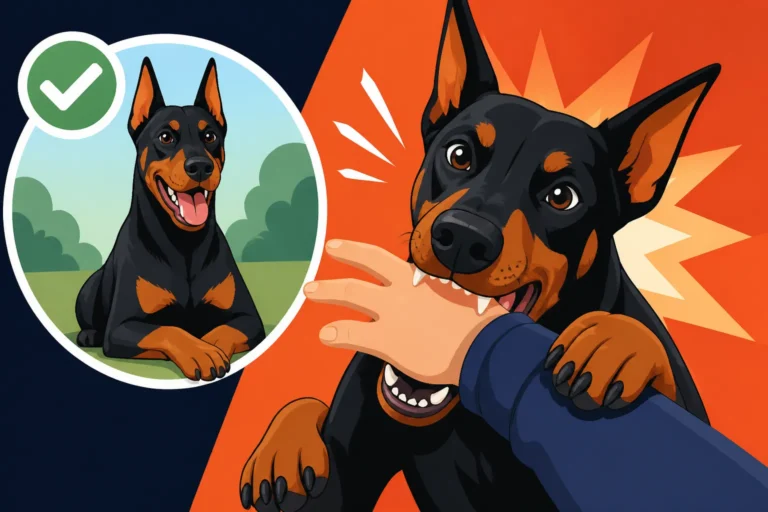
There's nothing quite like the heart-stopping moment when a friend or family member knocks on your door, and your beloved Doberman transforms from a calm companion into a barking, jumping, sometimes even pushy, furry missile. It's frustrating, often embarrassing, and can genuinely make you dread having people over. We love our Dobermans for their protective instincts, but when those instincts translate to an over-the-top greeting, it becomes a real problem. This guide will walk you through teaching your Doberman to calmly go to a designated "mat" or "place" when guests arrive, giving you back control of your front door and helping your Doberman feel secure and relaxed, rather than stressed by the chaos of visitors.
The Challenge of Dobermans and Guests: Why Mat Training is Your Secret Weapon
Let's be honest, living with a Doberman is a unique experience. They are intensely devoted, incredibly intelligent, and possess a natural guarding instinct that is both a blessing and, at times, a challenge. When the doorbell rings, all those traits can converge into a whirlwind of excitement and protectiveness. Many Doberman owners feel a pang of dread, knowing what's about to unfold. You might have tried everything – holding them back, yelling, or even putting them away, only to find the problem persists or worsens. This isn't just annoying; it can be genuinely stressful for both you and your dog.
Understanding the Doberman's Nature Around Strangers
Dobermans are often described as "Velcro dogs" for a reason. They bond deeply with their family, often choosing one or two primary people to shadow constantly. This intense attachment, combined with their inherent watchful nature, means they pay close attention to anything new entering their territory – especially people. For some Dobermans, a new visitor is a potential threat to be investigated and perhaps deterred. For others, it's an exciting opportunity for attention and interaction, which can manifest as exuberant jumping or barking. It’s important to remember that this isn't malicious behavior; it's often a mix of instinct, lack of clear guidance, and sometimes genuine anxiety about the unknown. Without a structured way to manage these greetings, your Doberman is left to figure it out on their own, often defaulting to behaviors that, while natural for a dog, aren't ideal for polite society. This is also why early, positive Exposing a Doberman Puppy to Strangers is so crucial.
The Problem with Unmanaged Guest Greetings
When your Doberman is allowed to rush the door, jump on guests, or bark incessantly, several issues arise. First, it can be intimidating for visitors, particularly those not familiar with large, powerful dogs. Even a friendly Doberman can accidentally knock someone over with their sheer enthusiasm. Second, it reinforces the undesirable behavior. Every time your Doberman jumps and gets any reaction – even a negative one like pushing them off – they've gotten attention, which can be a reward in their eyes. Third, it puts your Doberman in a state of high arousal. They're wired, stressed, and unable to relax, which isn't good for their mental well-being or your peace of mind. This high-energy state can even make them more prone to A Doberman That Growls at Delivery Drivers or other territorial displays. We want our Dobermans to be confident and calm, not constantly on edge.
The Transformative Power of a "Place" Command
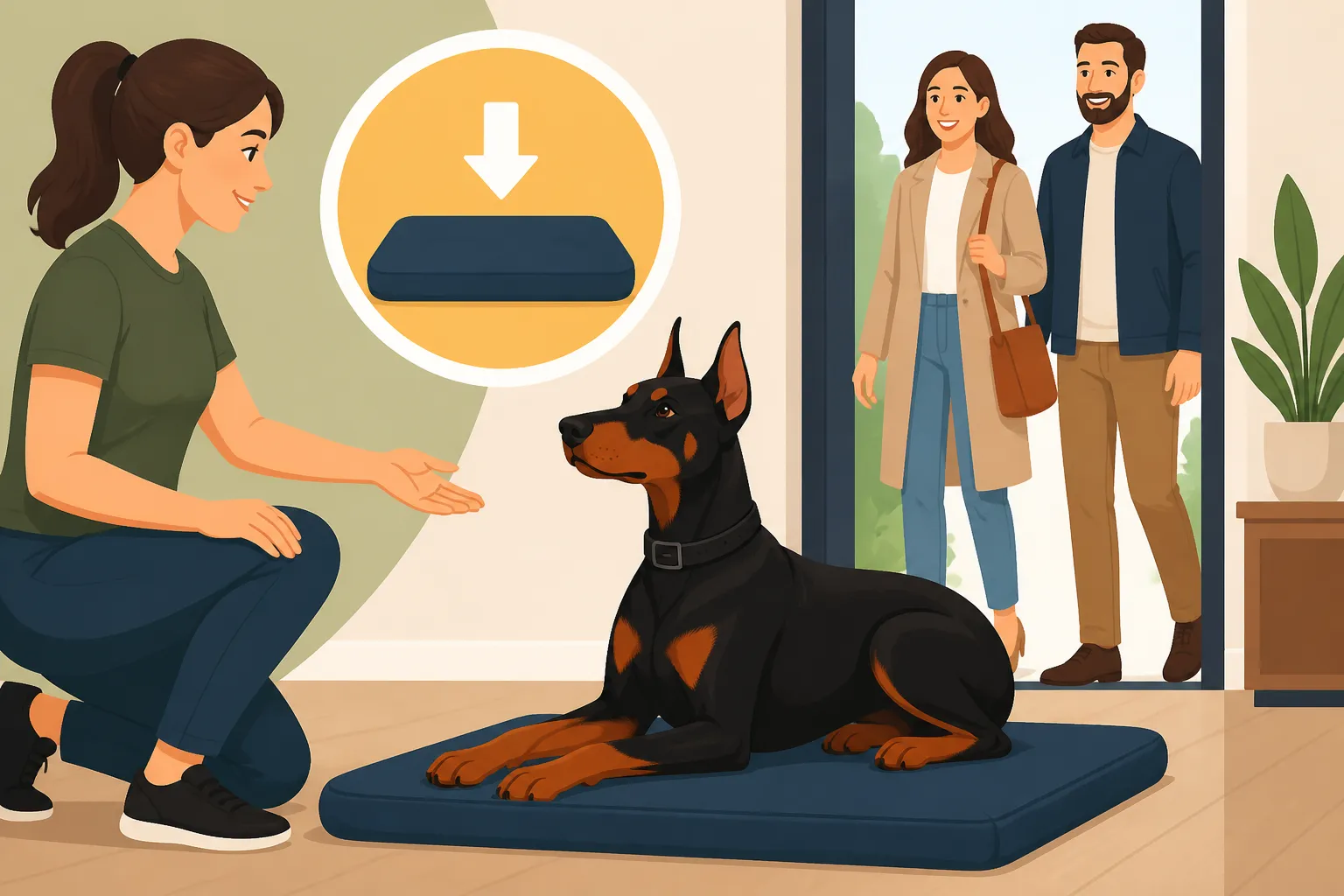
Enter "mat training," often taught through a "place" command. This simple concept is genuinely transformative. Instead of reacting to the doorbell, your Doberman learns that their job when a guest arrives is to calmly go to a designated spot – their mat, bed, or cot – and stay there until released. This gives them a clear, actionable task, which in turn reduces their anxiety and excitement. It reclaims your front entryway, allowing you to greet guests without a four-legged obstruction. More importantly, it teaches your Doberman self-control and allows them to observe the situation from a calm, safe distance. This isn't about punishment; it's about providing clear communication and empowering your dog with a job. Think of it as teaching your Doberman Teaching a Doberman to Settle in Another Room but specifically for guest interactions.
Laying the Foundation: Setting Up Your Doberman's "Place"
Success in mat training hinges on positive reinforcement and clear, consistent steps. You want your Doberman to love their mat, viewing it as their personal sanctuary, not a punishment zone. This process builds trust and makes them eager to comply. Remember, Dobermans are highly intelligent and thrive on having a job, so give them this one with enthusiasm!
Choosing the Right Mat or Bed
Before you start, you need the right "place." This should be something comfortable and clearly defined. It could be:
- A dog bed: A soft, comfortable bed your Doberman already loves can be a great starting point.
- A sturdy mat or rug: Something that won't slide around and is easy to identify as their spot.
- A raised cot: Many Dobermans enjoy these, as they offer a clear boundary and keep them off the cold floor. Look for durable options on sites like Amazon that can withstand a Doberman's weight and potential digging.
The key is consistency. Once you choose a mat, that's "the" mat for this exercise. Place it in a quiet area initially, maybe in the living room, but not directly in the path of the front door just yet. The goal is to make this spot intrinsically rewarding for your Doberman. If you're wondering about Choosing a Crate for a Doberman, a mat is similar in purpose but offers more freedom, making it ideal for supervised guest interactions.
Introducing the Mat Positively
This is where the real fun begins! You'll use high-value treats (think tiny pieces of chicken, cheese, or their absolute favorite kibble) and a clear marker word like "Yes!" or a clicker.
- Lure to the Mat: With your Doberman on a leash (even indoors, for initial control), toss a treat onto the mat. As they step onto it, say "Yes!" and give another treat. Repeat this a few times.
- Introduce the Cue: Once they're reliably stepping on the mat for a treat, start adding your verbal cue, "Place" or "Mat." Say the cue as they step onto the mat, then "Yes!" and treat.
- Stay on the Mat: Once they're on the mat, start rewarding them for simply being on the mat. Drop treats every few seconds. If they get off, gently guide them back with your lure, or start over. The moment all four paws are on the mat, say "Yes!" and treat.
- Release Cue: After a short duration, use a clear release cue like "Okay!" or "Free!" and toss a treat off the mat, encouraging them to leave. This teaches them the "game" has ended.
Practice these steps in short, frequent sessions (5-10 minutes) several times a day. You want this to be fun and effortless. A program like BAXTER & Bella’s online puppy training courses often introduces these foundational positive reinforcement techniques, which are perfect for Dobermans. Consistency is far more important than length of session.
Building Duration and Distance Gradually
Once your Doberman understands "Place" means "go to the mat," you'll build up two crucial elements: duration (how long they stay) and distance (how far you can be from them while they're on the mat).
- Duration: Start with just a second or two on the mat, then "Yes!" and treat. Slowly increase the time. One second, two seconds, five, ten, twenty. If they get off before you release them, simply reset without scolding. Make it easy for them to succeed. You might even occasionally reward them before they get off, to keep them guessing and motivated.
- Distance: Once they're staying for a solid 10-15 seconds, start taking a step back. Say "Place," they go to the mat, you step back one foot, say "Yes!" and return to treat. Gradually increase the distance until you can walk across the room, around them, and even out of sight briefly, always returning to reward their stay. If they break their stay, simply walk them back to the mat and restart with less distance or duration.
Remember, patience is key. Your Doberman is incredibly smart, but they need clear communication and many successful repetitions to truly master a new skill. Think of this as Training a Doberman That Is Smarter Than You Expect – they'll pick it up quickly if you're consistent and clear.
Integrating Guests: Practicing with Real-Life Scenarios
Now for the real test: bringing guests into the picture. This phase requires careful planning and realistic expectations. Don't expect perfection immediately, especially with such an inherently watchful breed. Start small and build up.
Starting with Low-Distraction Guests
Before you invite a whole party, practice with a "staged" guest. This could be a family member, a close friend, or even just you walking out the front door and coming back in.
- Leash Up: Even if your Doberman is good at "Place," keep them on a leash during initial guest training. This provides an extra layer of control and allows you to guide them back to the mat without physical struggle if they break.
- The "Pre-Bell" Place: Have your Doberman on their mat before the doorbell rings. Give them a high-value, long-lasting chew (like a bully stick or a puzzle toy filled with peanut butter, easily found on Amazon) on their mat. This provides a positive distraction.
- Controlled Entry: Have your helper knock or ring the bell. If your Doberman reacts, gently guide them back to the mat, ensuring they're calm before you proceed. Open the door only when your Doberman is settled on their mat, chewing quietly.
- Brief Interaction: Allow the "guest" to step inside. They should completely ignore your Doberman, which can be hard for dog lovers, but it's crucial. If your Doberman stays on the mat, periodically drop treats near them.
- Gradual Increase: Slowly increase the duration of the guest's stay and the level of distraction. Start with one person, then two. Start with a quiet entry, then a slightly more boisterous one. Always reward your Doberman for staying on their mat.
It's helpful to discuss the plan with your guests beforehand. Explain that you're working on training and ask for their cooperation in ignoring your dog until they are calm and released. Most dog-loving friends will be happy to help!
Managing Excitement and Re-directing
Despite your best efforts, your Doberman might still get over-excited or try to break their "place." It happens! The key is to manage it calmly and consistently.
- Gentle Re-direction: If your Doberman tries to get off the mat, simply say "Ah-ah" or "No," and immediately guide them back to the mat. Don't scold or get angry; keep your tone neutral. As soon as they are back on the mat, reward them. Repeat as necessary.
- Lower the Stakes: If they repeatedly fail, you've asked for too much too soon. Make it easier. Maybe the guest only steps barely inside, or you practice without a real guest, simply walking past the mat with a treat.
- Engage with a Chew: Always have a high-value chew ready. This gives your Doberman something positive and engaging to do on their mat, making it less likely they'll focus solely on the guest. The act of chewing is also naturally calming for dogs.
- Time and Patience: Building this level of self-control takes time. Every successful repetition builds the habit. Every time they choose to stay on their mat, even with a guest present, they're learning. Remember How a Doberman Behaves When You Come Home – that initial explosion of joy needs to be channeled.
Troubleshooting Common Setbacks
It’s completely normal to hit a few bumps in the road. Here are some common issues and how to approach them:
| Challenge | Common Reason | Solution |
|---|---|---|
| Breaking "Place" repeatedly | Too much distraction, duration, or distance too soon | Go back to basics: shorter stays, less distance, zero distractions. Ensure your treats are high-value. Practice 100% success in easy environments before adding difficulty. |
| Barking from the mat | Excitement, territorial instinct, seeking attention | Reward quiet moments on the mat. If they bark, wait for a brief silence, then mark and reward. If barking is excessive, move the mat further away from the door or guest, then slowly bring it closer as they succeed. Provide calming chews. |
| Whining/Panting on mat | Anxiety, over-arousal, frustration | This indicates stress. Try moving the mat further away, using a lower-value guest (someone they know well and are relaxed with), or having the guest stay for very short periods. Ensure the mat is a positive, calm space. |
| Refusing to go to mat | Negative association, insufficient motivation | Revisit the initial positive introduction phase. Use incredibly high-value treats. Make it a fun game with no pressure. Ensure the mat hasn't become a "punishment zone." |
| Guest engages dog too soon | Guest wasn't briefed, dog broke stay | Re-brief guests firmly: "Please completely ignore Doberman's Name for now." If your dog breaks, calmly return them to the mat. Only allow interaction after a sustained, calm "Place" and your release cue. |
Consistency is the ultimate troubleshooting tool. Every member of the household needs to be on the same page. If one person allows your Doberman to rush guests, it undermines all your hard work. Consider investing in a quality online program like BAXTER & Bella that can offer tailored advice for these common issues.
Beyond Guests: Expanding the "Place" Concept
Once your Doberman is a pro at "Place" for guests, you'll find this command becomes incredibly useful in many other situations, making your life together even smoother. It’s a wonderful tool for managing their "Velcro dog" tendencies and giving them an independent job to do.
Using the Mat in Different Environments
The beauty of the "Place" command is its versatility. It's not just for guests at the front door.
- Meal Prep: Do you find your Doberman underfoot while you're cooking? Send them to their mat! They learn to stay out of the kitchen chaos.
- Children Playing: If kids are running around and you want your Doberman to chill out and not interfere, "Place" is perfect. It gives them a safe space away from the commotion.
- Outdoor Gatherings: Bring a portable mat to outdoor patios or BBQ areas. Your Doberman can relax on their mat while you socialize, rather than constantly seeking attention or being disruptive. These portable mats are lightweight and easy to find, often with good reviews on Amazon.
- Working from Home: If your Doberman tends to demand attention during your workday, establish a "Place" near your desk where they can settle quietly. This can be a huge sanity saver.
- Vet Visits or Grooming: While not always feasible inside the clinic, the concept of waiting calmly in a designated spot can translate well. For example, waiting quietly in the lobby area on a mat can help reduce anxiety for both of you.
The more you use "Place" in various calm settings, the stronger and more reliable the command becomes. It reinforces the idea that the mat is a place for calm and relaxation, regardless of what else is happening around them. This helps immensely with their overall Keeping a Doberman Mentally Tired by giving them a cognitive task to complete.
Maintaining Consistency for Long-Term Success
Remember, training isn't a one-and-done event, especially with Dobermans. They are intelligent, but like all dogs, they benefit from consistent reinforcement and practice.
- Regular Refreshers: Even after your Doberman has mastered "Place," do short refresher sessions a few times a week. This keeps the skill sharp and ensures they don't forget it, especially as they get older.
- Vary the Rewards: Don't just use food. Sometimes, the reward for a successful "Place" might be a quiet ear scratch from a guest, a favorite toy, or even just your calm praise. This helps generalize the reward.
- Be Patient with Adolescence: Doberman adolescents can sometimes test boundaries. If your otherwise well-trained Doberman suddenly starts struggling with "Place" around 10-18 months, don't despair. Go back to basics, simplify the training, and be extra patient. This phase often passes with consistent, calm leadership. It's similar to needing to Retraining an Adult Doberman From Rescue – sometimes you need to re-establish the foundations.
- Advocate for Your Dog: Don't let well-meaning guests undermine your training. If someone tries to call your Doberman off their mat prematurely or encourages them to break their stay, politely but firmly explain that they need to remain on their mat. Your Doberman's well-being and consistent training are paramount.
Teaching your Doberman to go to their mat for guests is more than just a trick; it's a valuable life skill that fosters self-control, reduces stress for everyone, and strengthens the bond between you and your Doberman through clear communication. It allows their wonderful personality to shine through without the chaos of an uncontrolled greeting.
Disclaimer
This article is for general informational purposes only and does not constitute professional advice. Laws, prices and regulations vary by location and change over time. Consult a qualified professional for guidance on your specific situation.