Whether Agility Suits a Doberman’s Joints
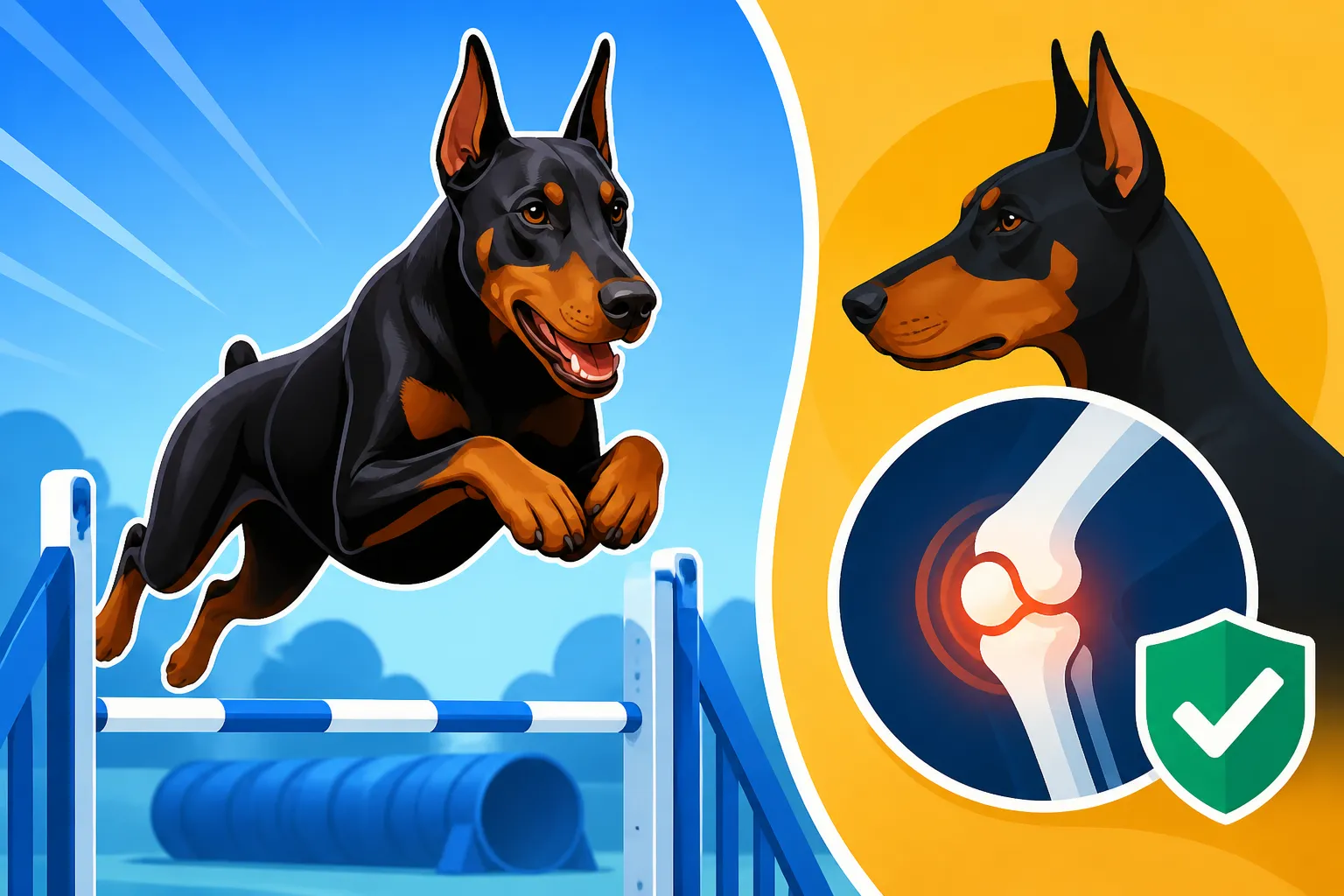
It's such a natural thought, isn't it? You look at your Doberman, all muscle and boundless energy, and think about all the amazing things you could do together. Agility often comes to mind as a fantastic way to bond, build confidence, and burn off some of that incredible Doberman drive. But then, a little voice of concern pops up: "Are those intense jumps and sharp turns really good for their joints?" It's a completely valid question that many Doberman owners grapple with, and it stems from a deep love and desire to protect our athletic companions. This guide will dive deep into the specific considerations for Dobermans in agility, helping you understand the risks and how to approach this exciting sport safely.
The Doberman's Unique Physique and Agility Demands
Dobermans are truly magnificent athletes, built for speed, power, and elegance. Their sleek, muscular bodies and confident gait command attention. However, this specialized physique, while perfect for certain tasks, also comes with specific considerations when it comes to high-impact activities like competitive agility. Understanding how their body is designed is the first step to knowing whether agility is the right fit.
The Doberman's Unique Build for Speed, Not Jumps
If you've spent any time watching your Doberman run, you'll notice their incredible stride. They cover ground with an almost effortless grace, their long legs propelling them forward with tremendous power. This build is characteristic of a trotting and galloping breed, designed for sustained speed and endurance. Their long, deep chest allows for impressive lung capacity, fueling those powerful bursts of energy.
However, this same structure means they aren't built in the same way as, say, a Border Collie or a Sheltie, breeds often seen excelling in agility. Dobermans have a relatively long back and a certain amount of angulation in their hindquarters that, while contributing to their powerful drive, can also put leverage on their spine and joints during repetitive jumping and tight turns. Imagine a long lever – it requires more careful management of forces than a shorter, more compact one. This isn't to say they can't jump or turn, but their mechanics are optimized for a different kind of movement. Their natural athleticism makes them eager to please and capable, but it's our job as owners to understand where their physical limits might lie.
High-Impact Movements in Agility
Agility courses are a blast, but they are also a dynamic challenge that demands a lot from a dog's body. Picture the sequence: a dog launching itself over a jump, landing with force, then immediately cutting sharply to navigate a weave pole entrance, followed by another jump or perhaps a scramble up and down an A-frame. These are not just casual movements; they involve significant impact and torsional forces on the joints, ligaments, and tendons.
Consider the act of jumping. A Doberman, with its substantial weight and powerful drive, generates considerable force upon landing. This force is absorbed by their shoulders, elbows, hips, and stifles (knees). Then there are the tight turns, which twist through the spine and hips, demanding quick shifts in weight and direction. Weave poles require a snaking motion that puts rotational stress on the spine and knees. Even contact obstacles, while not involving huge jumps, still require a certain amount of impact and careful balance. For a Doberman, whose frame is already carrying a good amount of weight, these repeated stresses can accumulate over time, potentially leading to wear and tear. It's not usually one big incident that causes an issue, but the cumulative effect of hundreds of jumps and turns over months or years of training and competition.
Common Doberman Joint Concerns and Agility's Influence
Dobermans, like many purebred dogs, are predisposed to certain health conditions, some of which directly impact their skeletal and joint health. It's crucial for Doberman owners to be aware of these potential vulnerabilities before committing to a demanding sport like agility. Ignoring these breed-specific tendencies would be like driving a sports car on a rough off-road track – possible, but not ideal for the vehicle's long-term health.
Spinal and Neck Vulnerabilities
One of the most concerning conditions for Dobermans, especially regarding agility, is Wobbler Syndrome, also known as Cervical Spondylomyelopathy (CSM). This condition involves compression of the spinal cord and/or nerve roots in the neck region. It often manifests as an unsteady gait, particularly in the hind limbs, and can progress to severe neurological deficits. Wobbler Syndrome in the Doberman is a difficult diagnosis, and living with a Doberman that starts to "wobble" on its back legs is heartbreaking.
The movements required in agility, particularly those involving extreme neck extension (looking up over a jump, or diving into a tunnel) or sharp turns that twist the neck, could theoretically exacerbate an existing, perhaps subclinical, Wobbler condition. Even without a formal diagnosis, the inherent pressure on the cervical spine from repeated impacts and quick head movements might contribute to disk degeneration or instability in a genetically predisposed individual. While agility itself doesn't cause Wobbler Syndrome, it's fair to ponder if the high-impact nature of the sport could hasten or worsen symptoms in a dog already on the knife-edge of showing signs. Regular check-ups that include feeling for neck pain or stiffness are vital, and if you ever notice your Doberman walking with its head down more than usual or a Doberman that walks with its head down, it’s time to see the vet before continuing any high-impact sport.
Hip and Elbow Health Considerations
While Dobermans aren't typically as infamous for hip dysplasia as some larger breeds like German Shepherds, it's still a condition that can affect them. Doberman Hip Dysplasia occurs when the hip joint doesn't form properly, leading to looseness and eventual degenerative joint disease. Elbow dysplasia is also a possibility, though perhaps less common. Both conditions can range from mild to severely debilitating, causing pain, lameness, and reduced mobility.
Agility training puts considerable strain on these major joints. Every jump, every landing, every tight turn, and every scramble over an A-frame involves powerful muscle contractions and impact forces that travel through the hips and elbows. If a Doberman has even mild, undiagnosed hip or elbow dysplasia, these repeated stresses can accelerate the progression of arthritis and discomfort. A dog with hip dysplasia might compensate by shifting weight, leading to further strain on other joints and muscles. For an athletic Doberman, whose zest for life might mask discomfort until it's quite advanced, this is a real concern. This is why proper screening, like X-rays to assess hip and elbow health, is so important, especially for dogs intended for performance sports. It’s part of the health testing a Doberman breeder must show for their breeding stock, and something to discuss with your vet before engaging in serious training.
Mitigating Risks and Responsible Agility Participation
The good news is that recognizing these potential risks doesn't mean agility is entirely off-limits for every Doberman. It simply means a more thoughtful, careful approach is needed. Responsible Doberman ownership and participation in any sport demand proactive steps to protect our dogs' long-term health and well-being.
Foundational Training and Conditioning
Before a Doberman ever sees an agility course, they need a strong foundation of obedience and physical conditioning. This isn't just about manners; it's about building their body to withstand the demands.
- Strength and Core Conditioning: Just like human athletes, dogs need core strength. Exercises like controlled cavaletti poles (walking over low obstacles), balance discs, targeted muscle-building exercises, and swimming can build strength in the core, hindquarters, and shoulders. These strengthen the muscles that support the joints, providing a natural "shock absorber." This kind of conditioning should be started early and built up slowly. Think of it as pre-agility training that focuses purely on physical readiness, not just learning obstacles. Online programs, such as those that might be found through BAXTER & Bella or other positive reinforcement platforms, can offer great guidance on these foundational exercises, focusing on proper form and gradual progression.
- Body Awareness and Proprioception: Dobermans are smart, but they need to learn where their body is in space, especially their long limbs and powerful rear. Exercises that involve walking over varied surfaces, stepping over low objects, and controlled weaving at a slow pace can enhance proprioception, which is the body's ability to sense its position and movement. This reduces clumsy movements and missteps that can lead to injury.
- Progressive Training: Never rush the training. Start with very low jumps (or even just ground bars), short tunnels, and slow weave poles. Gradually increase height, speed, and complexity. For a Doberman, whose growth plates close later than smaller breeds, it's crucial to delay high-impact jumping until they are fully mature, typically around 18-24 months. Even then, an emphasis on controlled, safe execution over speed records is paramount. Many trainers advocate for taking it slow to protect protecting a growing Doberman's joints.
Equipment Choices and Course Design
The right equipment and thoughtful course design can make a big difference in reducing strain on your Doberman's joints.
- Adjustable Equipment: Ensure all agility equipment is adjustable in height, especially jumps. Always start low and only increase the height gradually as your Doberman builds strength and confidence. For practice, keep jump heights lower than competition heights to reduce wear and tear.
- Proper Footing: The surface you train on matters immensely. Avoid hard, unforgiving surfaces like concrete or asphalt. Grass, rubber matting, or specially designed agility turf provide better shock absorption. If training outdoors, check for uneven ground, holes, or slippery spots. In some environments, dog boots might even be considered for added grip and pad protection, especially on varied or abrasive surfaces, which you can find a wide variety of on Amazon.
- Thoughtful Course Design: A good instructor will design courses that minimize tight, repetitive turns, especially those that force a dog to twist unnaturally. Look for courses with flowing lines that allow for natural acceleration and deceleration. If you're practicing at home, be mindful of how you're setting up obstacles to avoid creating scenarios that force extreme angles or sudden stops. For instance, avoid placing weave poles immediately after a high jump, which demands an abrupt change in movement.
Regular Veterinary Oversight and Screening
This is non-negotiable for any Doberman involved in active sports.
- Pre-Sport Health Checks: Before embarking on serious agility training, your Doberman should have a thorough veterinary check-up, including discussion of their breed predispositions. Talk openly with your vet about your agility aspirations and any concerns you have about their joints or scanning a Doberman for a compressed neck.
- Hip and Elbow X-rays: Even if your Doberman comes from health-tested parents, consider baseline hip and elbow X-rays once they are fully mature. While not a guarantee against future issues, they can identify any underlying structural abnormalities that might make agility particularly risky.
- Ongoing Monitoring: Schedule regular check-ups, even if your Doberman seems fine. Your vet can assess their gait, palpate joints, and listen to any concerns you might have. Pay attention to subtle changes: a slight stiffness after a run, reluctance to jump, a change in enthusiasm, or a Doberman that tires faster than it used to. These can be early indicators of joint discomfort.
- Supplements: Discuss joint supplements with your vet. Glucosamine, chondroitin, and Omega-3 fatty acids are often recommended for active dogs to support cartilage health and reduce inflammation. These aren't magic bullets, but they can be a helpful addition to a comprehensive joint care plan.
Alternatives and Modifications for Joint-Friendly Fun
If, after considering all factors, competitive agility seems too risky for your Doberman's specific build or health history, don't despair! There are many fantastic ways to engage their brilliant minds and powerful bodies that are much gentler on their joints. The goal is enriching their lives, not pushing them into discomfort.
Low-Impact Agility Modifications
You can still enjoy many aspects of agility without the high impact. Think of it as "recreational agility" tailored to your Doberman's needs.
- Lower Jumps, Wider Turns: Practice jumps at the lowest possible height, or even just ground poles. Emphasize broad, sweeping turns rather than sharp, tight ones. This allows them to use their powerful stride without wrenching their joints.
- No Weave Poles, or Wide Weaves: Weave poles, especially standard competition ones, put significant rotational stress on the spine and knees. You can skip them entirely or use "weave gates" that are much wider, allowing for a more natural, less strenuous weaving motion.
- Focus on Tunnels and Contacts: Tunnels and contact obstacles like A-frames and dog walks can be fantastic fun and provide mental and physical challenges with less impact than jumping. Ensure contact obstacles have anti-slip surfaces, and train slowly and carefully on them to build confidence and technique. Even when using these obstacles, avoid racing through them at full speed to reduce jarring.
- Ladder Work and Cavaletti: Incorporate more ladder work and cavaletti training. These involve stepping over evenly spaced ground poles, which builds proprioception, muscle strength, and coordination without any jumping impact. You can vary the spacing and height of the poles to increase difficulty. This kind of controlled movement is excellent for strengthening stabilizing muscles around the joints.
Other Brain and Body Sports for Dobermans
Dobermans thrive on having a job, and there are countless activities that can channel their energy and intelligence in joint-friendly ways.
- Nose Work/Scent Detection: This is a phenomenal sport for Dobermans! It taps into their natural scenting abilities, is mentally exhausting, and requires minimal physical impact. Your Doberman will use their brain to solve puzzles, moving at their own pace, following scents. It's incredibly rewarding and can be done anywhere. Nose Work as a Low-Impact Doberman Sport is highly recommended.
- Competitive Obedience/Rally Obedience: These sports demand precision, focus, and teamwork. While they involve some movement, it's generally controlled heeling, sits, downs, and stays, with very low impact. Dobermans excel at this, showcasing their intelligence and desire to work with their handler.
- Tracking/Trailing: Allowing your Doberman to use their nose to follow a human scent trail is immensely satisfying for them. It's a low-impact activity that engages their predatory drive in a constructive way, often over varied terrain but at a walking or trotting pace.
- Swimming: A fantastic full-body workout that's completely non-weight-bearing! Swimming builds muscle, improves cardiovascular health, and is incredibly gentle on the joints. Many Dobermans enjoy a good swim, especially on warmer days. Just be sure to supervise them closely and ensure safe entry and exit points.
- Canicross/Bikejoring (with caution): For a well-conditioned Doberman with no joint issues, pulling you while running (canicross) or biking (bikejoring) can be a great outlet. The key here is proper conditioning, appropriate equipment (like a well-fitting harness designed for pulling), and careful monitoring. The forward pulling motion can be less impactful than jumping, but it still requires a healthy dog and a gradual build-up of distance and speed. Always consult your vet first and stop immediately if you notice any signs of discomfort.
- Therapy Dog Work: If your Doberman has a stable, friendly temperament, becoming a therapy dog is a wonderful way to give back. This involves calm, controlled interactions and is very low-impact, focusing on their innate ability to connect with people. Whether Dobermans are accepted as service dogs or therapy dogs is a question worth exploring if this path appeals to you.
The most important thing is to find activities that you and your Doberman genuinely enjoy, that challenge them appropriately, and that prioritize their long-term health. A happy Doberman is one that gets to use both their brain and body, whatever the activity may be.
Here's a quick comparison of some activities and their joint impact:
| Activity | Joint Impact Level | Primary Skills Engaged | Doberman Suitability Factors |
|---|---|---|---|
| Competitive Agility | High | Speed, jumping, sharp turns, precision | High drive, athleticism; potential risk for spinal/joint issues. Requires careful screening. |
| Modified Agility (Low) | Moderate | Body awareness, coordination, focus | Excellent for mental and moderate physical challenge, reduced risk. |
| Nose Work/Scent Detection | Low | Scenting, problem-solving, focus | Excellent for mental stimulation; minimal physical impact. |
| Competitive Obedience | Low | Focus, precision, teamwork | Excellent for showcasing intelligence and willingness to work. |
| Tracking/Trailing | Low | Scenting, endurance, focus | Great for natural Doberman instincts, good physical exercise without high impact. |
| Swimming | Very Low | Full body conditioning, cardio | Excellent for muscle building and joint health; ideal cross-training. |
| Canicross/Bikejoring | Moderate | Endurance, pulling strength, teamwork | Good for high-energy dogs; requires excellent conditioning and proper equipment; vet clearance. |
| Therapy Dog Work | Very Low | Calmness, social interaction, focus | Excellent for Dobermans with suitable temperament; emphasis on gentle interaction. |
Ultimately, whether agility suits a Doberman's joints isn't a simple yes or no. It's a nuanced question that depends on your individual Doberman's genetics, structure, conditioning, and how thoughtfully you approach the sport. With careful consideration, proper preparation, and continuous veterinary oversight, some Dobermans can participate in agility safely and enjoyably. For others, exploring the many wonderful low-impact alternatives will be the wisest and kindest choice, ensuring a long, healthy, and happy life together.
Disclaimer
This article is for general informational purposes only and does not constitute professional advice. Laws, prices and regulations vary by location and change over time. Consult a qualified professional for guidance on your specific situation.