Taurine and Carnitine in a Doberman Diet
One of the most heart-wrenching concerns for any Doberman owner is the looming shadow of Dilated Cardiomyopathy, or DCM. While much attention rightly goes to genetic screening, many owners feel overwhelmed trying to understand how diet plays a role, especially regarding vital nutrients like taurine and carnitine. This guide aims to demystify these amino acids, explain their critical connection to your Doberman's heart health, and help you navigate dietary choices with confidence.
The Doberman's Unique Vulnerability to Dilated Cardiomyopathy (DCM)
For Doberman owners, the term "DCM" isn't just medical jargon; it's a stark reality that touches far too many families. This breed is disproportionately affected by a genetic predisposition to this severe heart condition, which weakens the heart muscle over time, making it less efficient at pumping blood. It’s a terrifying prospect, and it leads many of us to scrutinize every aspect of our Doberman’s care, including their diet.
Why Dobermans are Different
Dobermans carry specific genetic mutations, primarily DCM1 and DCM2, that make them uniquely susceptible to developing Dilated Cardiomyopathy. This isn't like other breeds where DCM might be an outlier; for Dobermans, it's a deeply ingrained genetic issue, often striking without warning. Many Dobermans live for years with a "silent" or "occult" phase of the disease, showing no outward symptoms until their heart is significantly compromised. This genetic lottery means that even dogs from carefully screened lines can develop the condition, leaving owners feeling helpless. The sheer prevalence of The Heart Disease That Reaches Most Dobermans makes us hyper-vigilant.
It’s truly a crushing blow when you learn that your otherwise vibrant Doberman could have a ticking time bomb in their chest. The reality of Sudden Death in a Young Doberman due to undiagnosed DCM is a fear that haunts the breed community. This deep genetic link is why comprehensive health testing, including regular echocardiograms and Holter monitoring, is so crucial for Dobermans, giving us a clearer picture of their heart health before symptoms even begin to show. But even with the best genetic and cardiac screening, diet still plays a foundational role in overall health, and its interaction with a genetically predisposed heart can be complex.
Beyond Genetics: The Role of Nutritional DCM
While Dobermans carry a strong genetic predisposition to DCM, it's important to understand that not all DCM is purely genetic. In recent years, veterinary cardiologists have identified a phenomenon known as "nutritional DCM," where dietary factors can lead to the same devastating heart condition, even in breeds not typically predisposed. While a Doberman's genetic lottery often overshadows other causes, it doesn't mean diet is irrelevant. In fact, a diet that might be problematic for a genetically normal dog could potentially exacerbate or even trigger issues in a genetically predisposed Doberman.
This distinction is crucial because it means we have a degree of influence, even if we can't change our Doberman's genes. Understanding nutritional DCM helps us make informed choices that support our Doberman's heart, rather than unknowingly undermining it. It’s about building a robust foundation of health to give them the best possible chance, especially when their genetic deck might be stacked against them. For Doberman owners, every little bit of proactive care feels like a lifeline in extending their precious time with us.
Understanding Taurine and Carnitine: Essential Heart Helpers
When we talk about nutritional support for heart health, taurine and carnitine are often at the forefront of the conversation. These aren't just obscure ingredients; they are essential amino acids that play critical roles in the function and maintenance of the heart muscle, and understanding them is key to truly supporting your Doberman's well-being.
What is Taurine and Why Does it Matter?
Taurine is an amino acid that isn't typically used to build proteins in the body, but it's absolutely vital for several physiological processes, especially in the heart and eyes. For canine heart health, taurine helps regulate the heartbeat, maintain proper heart muscle contraction, and offers antioxidant protection to cardiac cells. Think of it as a crucial spark plug for your Doberman's heart – without enough of it, the engine just can't run efficiently. Dogs can synthesize taurine from other amino acids like methionine and cysteine, but certain factors can interfere with this process, leading to a deficiency.
A deficiency in taurine can directly lead to DCM, particularly in breeds like Golden Retrievers and Cocker Spaniels that are known to have primary taurine deficiencies. While Dobermans are more prone to genetic DCM, a secondary taurine deficiency caused by diet could potentially contribute to or worsen their condition. It's why many cardiologists recommend checking taurine levels and considering supplementation for Dobermans, especially those on certain types of diets. It's a proactive step that can offer peace of mind, knowing you're providing a vital nutrient for their hardworking heart.
The Power of L-Carnitine
L-Carnitine is another amino acid derivative that acts as a vital transporter, moving fatty acids into the mitochondria of cells where they can be burned for energy. For the heart, which is a continuously working muscle, this energy production is absolutely critical. L-Carnitine ensures the heart muscle has the fuel it needs to keep beating strongly and efficiently. While dogs can synthesize L-carnitine, similar to taurine, dietary factors or certain health conditions can lead to deficiencies.
In some cases of DCM, particularly in breeds like Boxers, a primary L-carnitine deficiency has been identified as a cause. Supplementing with L-carnitine has shown positive results in some dogs with DCM, even improving heart function. For Dobermans, while genetic factors are primary, ensuring adequate L-carnitine through diet or supplementation can provide crucial support for their heart muscle, helping it function at its best. It's about giving their heart all the tools it needs to perform its essential job.
Natural Dietary Sources for Your Doberman
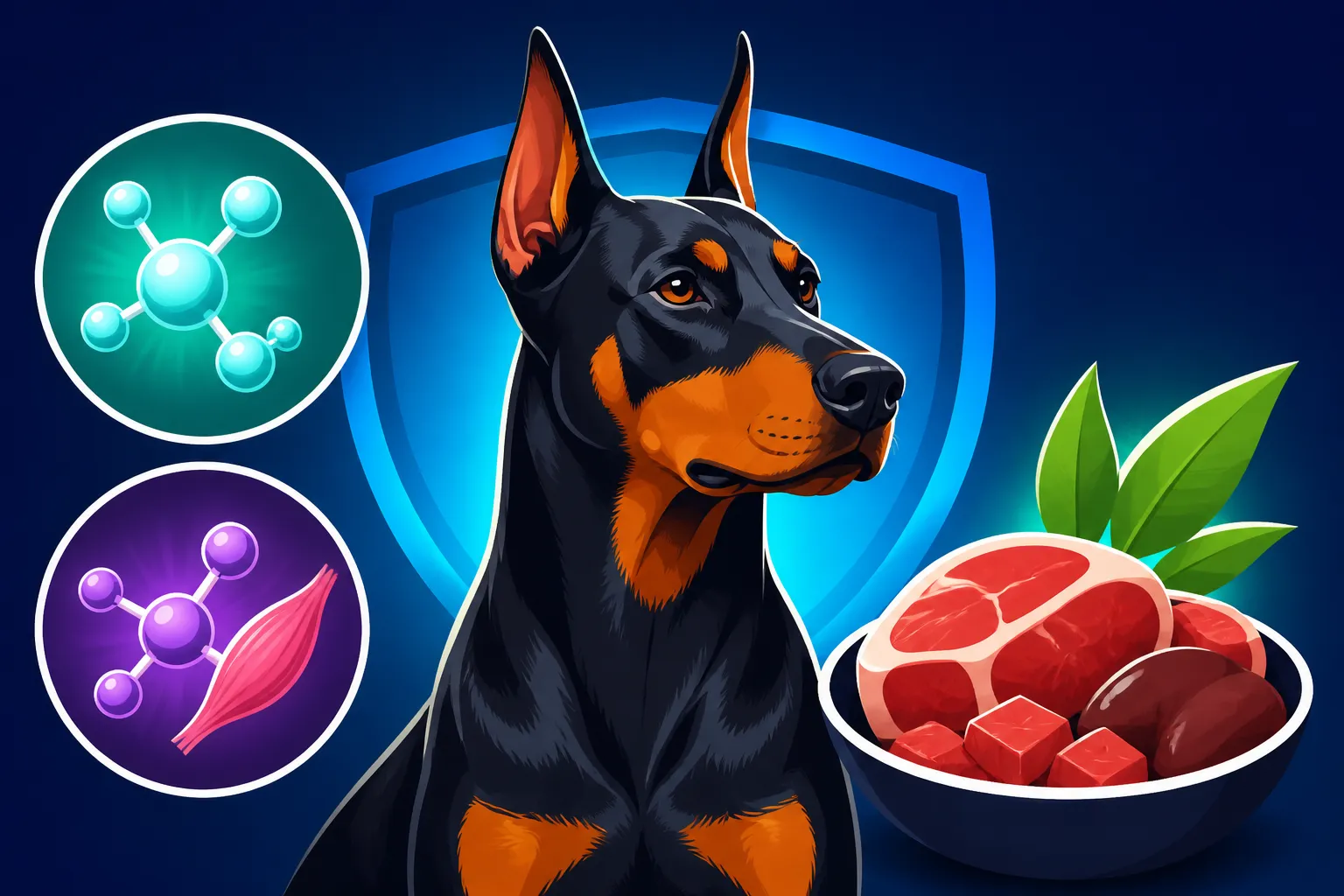
The best way for your Doberman to get adequate taurine and L-carnitine is through their diet, ideally from natural sources. Animal proteins are king when it comes to these amino acids. Muscle meat, organ meats (like heart and liver), and seafood are excellent natural sources. For example, beef, chicken, lamb, fish, and eggs are all great contributors.
When you're looking at dog food ingredients, you want to see named meat sources high up on the list. Many premium fresh food brands, like Ollie, emphasize whole, human-grade meats and organs, which naturally contain robust levels of these vital nutrients. Similarly, Chewy offers a wide selection of foods, and you can usually filter by ingredients or look for brands that prioritize high-quality animal proteins. Focusing on these ingredients ensures your Doberman is getting a strong foundation for heart health from their daily meals, supporting their overall vitality.
The Grain-Free Controversy and Its Impact on Dobermans
The world of dog food can be incredibly confusing, and perhaps no topic has caused more anxiety among Doberman owners than the "grain-free" trend and the subsequent concerns about its link to heart disease. It's a prime example of how well-intentioned dietary changes can sometimes have unforeseen consequences, especially for a breed like the Doberman that's already walking a tightrope with heart health.
The FDA Alert and Canine DCM
A few years ago, the veterinary community, spearheaded by the FDA, issued a major alert regarding a potential link between certain "boutique," "grain-free," and "exotic ingredient" (BGED) dog foods and cases of dilated cardiomyopathy in various breeds. This wasn't just about Dobermans, but it certainly sent shivers down our spines because DCM is already our breed's Achilles' heel. The alert highlighted an increase in DCM cases in breeds not typically predisposed to the disease, as well as an uptick in cases in predisposed breeds like Dobermans. The common thread seemed to be these specific types of diets.
The problem wasn't necessarily the absence of grains, but rather what was used to replace them. Many of these diets substituted traditional grains like rice or corn with high concentrations of legumes (peas, lentils), potatoes, and other novel ingredients. The exact mechanism is still being investigated, but one leading theory points to these ingredients interfering with taurine synthesis or bioavailability, essentially causing a secondary taurine deficiency that then leads to DCM. This is why the question of Whether Grain-Free Food Adds to Doberman DCM became such a critical and urgent discussion point for us. It’s a stark reminder that sometimes, what seems like a healthier choice can unexpectedly create problems.
Legumes and Ingredient Substitution
Let’s dig a little deeper into why these ingredient substitutions are a concern. When grains are removed from a dog food formula, they have to be replaced with something to provide carbohydrates and binding properties. Often, manufacturers turned to ingredients like peas, lentils, chickpeas, and potatoes. These aren't inherently "bad" ingredients, and in moderation, they can be part of a healthy diet. However, the issue arises when they become a primary component of the food, forming a significant percentage of the ingredient list.
The hypothesis is that high levels of these ingredients may either contain compounds that interfere with taurine metabolism, or they might simply displace other ingredients (like high-quality meats) that are naturally rich in taurine precursors. Some legumes also contain compounds that can affect nutrient absorption. Whatever the precise biochemical reason, the correlation between these high-legume diets and nutritional DCM was strong enough for veterinary cardiologists to issue strong warnings. It means that simply seeing "grain-free" on a bag isn't enough; you really need to read the entire ingredient list and understand what constitutes the bulk of your Doberman's meal. This situation has taught us that what's trendy isn't always what's best, especially for a breed with such specific health vulnerabilities.
Recognizing Potential Deficiencies and Heart Issues
As Doberman owners, we're already conditioned to be on high alert for any subtle sign of trouble, particularly when it comes to heart health. Recognizing potential deficiencies in taurine or carnitine, or the early stages of DCM itself, can be incredibly challenging because the signs are often vague or non-existent in the early stages. However, knowing what to look for and when to act is paramount.
Subtle Signs to Watch For
The cruel reality of DCM in Dobermans is that it often progresses silently, with very few outward symptoms until the disease is quite advanced. This "occult" phase can last for years, making it incredibly difficult to spot a problem without regular screening. However, if your Doberman does develop a taurine or carnitine deficiency, or if their DCM progresses, some subtle signs might start to emerge. You might notice your Doberman seems to have A Doberman That Tires Faster Than It Used To during walks or play, showing less enthusiasm for activities they once loved.
Other signs could include a mild, infrequent cough, particularly after exercise or when lying down, which can sometimes be dismissed as a minor irritation. In more advanced stages, you might notice Coughing and Breathlessness in a Doberman, which signifies fluid buildup or severe cardiac compromise. Swelling in the abdomen (ascites) or legs, loss of appetite, or even fainting episodes (syncope) can occur. But let me be clear: by the time these more obvious symptoms appear, the disease has usually progressed significantly. This is why regular screening, rather than symptom watching, is the true frontline defense for Doberman heart health. For more on the initial stages, you can read about The Silent Years Before a Doberman's Heart Shows.
Diagnostic Testing: Beyond Diet
Given the silent nature of DCM, relying solely on observing symptoms is a risky strategy for Doberman owners. This is where proactive diagnostic testing becomes absolutely non-negotiable. For heart health, this primarily involves two key tests: the echocardiogram and the Holter monitor. The echocardiogram is an ultrasound of the heart that allows a veterinary cardiologist to visualize the heart's structure and function, measuring chamber sizes, wall thickness, and blood flow. This test can detect early changes indicative of DCM, such as an enlarged heart or weakened pumping ability.
The Holter monitor is a wearable ECG device that records your Doberman's heart rhythm for 24 hours while they go about their normal activities. This is crucial for detecting arrhythmias (irregular heartbeats), particularly ventricular premature contractions (VPCs), which are a hallmark of Doberman DCM, often appearing long before any structural changes are visible on an echo. These two tests, performed annually, are the gold standard for early detection. Many Doberman owners find value in annual screening, asking their vets about Annual Echo and Holter Screening for a Doberman from a young age, typically starting around two years old, to catch issues around The Age Doberman Heart Disease Usually Starts. Don't be afraid to discuss what Reading a Doberman's Holter Result actually means with your cardiologist.
Beyond cardiac screening, if there's a concern about nutritional DCM, your veterinarian might recommend specific blood tests to measure taurine and carnitine levels. This can help identify a deficiency that might be contributing to, or even causing, DCM, especially if your Doberman has been on a diet implicated in nutritional DCM cases. These tests provide objective data that can guide dietary adjustments and supplementation strategies, offering a pathway to intervene before the disease progresses further.
Strategic Supplementation and Dietary Adjustments
Navigating the world of supplements and dietary changes for a Doberman with heart concerns or a predisposition to DCM can feel like walking a tightrope. It's crucial to approach this with careful consideration and, most importantly, under the guidance of a qualified veterinary professional. Self-prescribing supplements based on internet advice can be ineffective at best and harmful at worst.
When and How to Supplement
The decision to supplement with taurine or L-carnitine should always be made in consultation with your veterinarian, ideally a board-certified veterinary cardiologist. They will assess your Doberman's individual health status, review their diet, and consider the results of any diagnostic tests, such as taurine blood levels or echocardiograms. For Dobermans specifically, many cardiologists proactively recommend taurine supplementation, even without a confirmed deficiency, given the breed's high risk for DCM. The reasoning is that it’s a relatively safe supplement that supports heart health, and if there's an underlying deficiency contributing to their genetic predisposition, it can only help. You can read more about Taurine and Carnitine for a Doberman Heart in dedicated discussions.
Supplements are available in various forms, including capsules, powders, and chewable tablets. Dosages will vary significantly based on your Doberman’s weight and the specific product, so always adhere to your vet's recommendations. You can often find a wide array of supplements on platforms like Amazon or through online pet supply retailers like Chewy. Look for reputable brands that provide clear dosing information and third-party testing where possible. It's often easier to mix a powder into their food than to try and pill an uncooperative Doberman! Remember, supplementation is a long-term commitment, not a quick fix.
Choosing a Heart-Healthy Diet
Beyond individual supplements, the foundation of your Doberman's heart health lies in their daily diet. When choosing a food, prioritize those formulated by companies with a team of board-certified veterinary nutritionists and that adhere to rigorous quality control standards. These are often the larger, more established brands that conduct extensive feeding trials. The safest bet, especially for Dobermans, is typically a diet containing traditional ingredients, including named animal protein sources and common grains like rice, barley, or oats. Avoid diets that are heavily reliant on legumes (peas, lentils, chickpeas) or potatoes as their primary carbohydrate source.
Here’s a simple table to help you think about food components:
| Component Type | Preferred for Dobermans (Heart Health) | Avoid/Use with Caution |
|---|---|---|
| Protein Sources | Named animal proteins (chicken, beef, lamb, fish, eggs), especially muscle and organ meats. | Vague "meat meal," or plant-based proteins as primary source. |
| Carbohydrate Sources | Traditional grains (rice, oats, barley, corn), sweet potatoes in moderation. | High levels of legumes (peas, lentils, chickpeas), potatoes, or exotic ingredients. |
| Fats | Healthy fats from named animal sources, fish oil (Omega-3s). | Unspecified animal fats, excessive vegetable oils. |
| Taurine/Carnitine | Naturally present in high-quality animal proteins, potentially supplemented as advised by a vet. | Diets linked to nutritional DCM, heavily plant-based, or with high legume/potato content. |
| Overall Formulation | Formulated by board-certified veterinary nutritionists, undergoes feeding trials. | "Boutique," "grain-free," "exotic ingredient" (BGED) diets without veterinary nutritionist oversight. |
When you're feeding an energetic, powerful dog like ours, it's about more than just taste; it's about providing the specific nutritional building blocks they need. Feeding an Eighty-Pound Doberman Well means selecting a diet that supports their overall health, not just their palate.
Working with Your Veterinarian
The most crucial step in managing your Doberman’s diet and supplementation for heart health is maintaining an open, ongoing dialogue with your veterinarian. They are your primary resource, especially if you have access to a veterinary cardiologist. Don't hesitate to bring your dog's food bags, ingredient lists, and any supplement bottles to your appointments. Ask questions, voice your concerns, and seek their expert guidance.
Your vet can help you interpret ingredient labels, recommend specific brands or formulations, and provide tailored advice based on your Doberman's age, activity level, and health status. If your Doberman is already diagnosed with DCM, dietary management becomes even more critical, and your vet may recommend prescription cardiac diets in addition to specific supplements. This partnership is vital; think of your vet as an invaluable member of your Doberman's care team, helping you make the most informed decisions for their heart.
Disclaimer
This article is for general informational purposes only and does not constitute professional advice. Laws, prices and regulations vary by location and change over time. Consult a qualified professional for guidance on your specific situation.