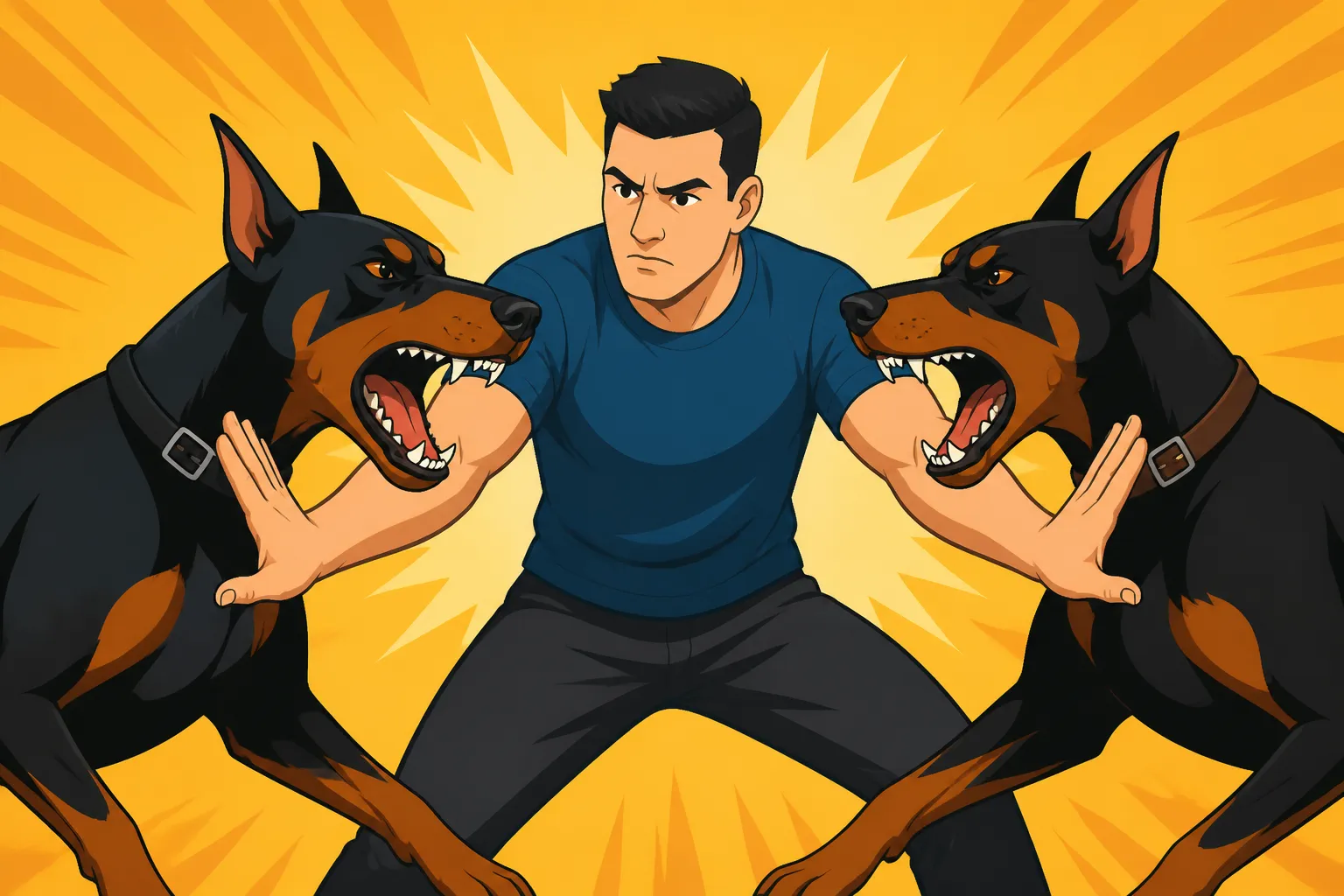
Breaking Up a Fight Between Dobermans
It’s a terrifying moment when the two Dobermans you love, the dogs who normally snooze nose-to-tail, suddenly erupt into a snarling, biting frenzy. Many Doberman owners have experienced this heart-stopping situation, leaving them shaken, with injured dogs, and a deep fear of it happening again. This guide is here to walk you through how to safely break up an active Doberman fight, understand why they happen, and most importantly, how to prevent future altercations to protect your beloved companions and your peace of mind.
Understanding Why Doberman Fights Erupt
Dobermans are powerful, intelligent, and often very confident dogs, but like any breed, they can get into conflicts. It’s a common misconception that if dogs fight, it's always because one is "dominant" or "bad." In reality, canine aggression, especially between housemates, is far more nuanced and often rooted in fear, resource guarding, or a mismatch in personalities and training. Understanding the underlying causes can be the first step towards prevention.
Recognizing the Precursors: Subtle Signs of Tension
One of the biggest frustrations for Doberman owners is that fights can seem to come out of nowhere. One minute they're fine, the next it's a whirlwind of teeth and fury. However, almost all dog fights are preceded by subtle signals that we, as humans, often miss. Dobermans, being quite stoic, might not give the dramatic "whale eye" or full-body tension you see in some other breeds. Instead, look for:
- Stiffening: A sudden rigidity in their posture, often accompanied by a hard stare. Their body might go completely still before an explosive movement.
- Lip Licking or Yawning (in inappropriate contexts): These can be displacement behaviors indicating stress or anxiety, not just hunger or tiredness.
- Subtle Blocking: One Doberman might subtly position themselves between the other dog and a valuable resource, or even between the other dog and you.
- Elevated Tail or Piloerection: A tail held higher than normal, or the hair along their spine raising, often called "hackles up," are clear signs of arousal and potential aggression.
- Avoidance or Cutting Off: One dog might try to avoid the other, or one dog might "cut off" the other, meaning they move between the other dog and a person or object.
It's crucial to learn to read these subtle cues, especially if you have Two Male Dobermans in One House or Two Female Dobermans and What Can Go Wrong, as same-sex aggression can be particularly intense in this breed. Missing these early warning signs means you're already behind when the actual fight starts.
Common Triggers for Doberman Altercations
While every Doberman is an individual, certain situations are notorious for sparking fights between housemates. These aren't exhaustive, but they cover many common scenarios:
- Resource Guarding: This is a big one. It could be over food bowls, high-value treats, favorite toys, a particular bed, or even prime real estate like a sunny spot on the couch, or access to your attention. If one Doberman guards you, the owner, from the other, that's often called "owner-directed resource guarding" and it's a serious issue.
- Territoriality: Protecting a specific area like the house, the yard, or even the car from perceived intruders—which, sadly, can sometimes be the other house dog if boundaries aren't clear.
- Fear and Insecurity: A fearful Doberman might lash out if they feel cornered, threatened, or unable to escape. This can manifest suddenly if they're startled or if another dog approaches them too intensely.
- Redirected Aggression: This often happens when a Doberman is highly aroused by something outside the house (e.g., a squirrel, a passing stranger, another dog on the street). If they can't get to the external trigger, they might turn and bite the closest thing – which is often their housemate. This is why A Doberman That Reacts to Every Dog It Sees can be problematic.
- Pain or Illness: Just like us, a dog in pain or feeling unwell might be irritable and have a lower tolerance for interaction. What might normally be a harmless nudge could provoke a snap or a fight. If your Doberman's behavior has suddenly changed, consider Whether Pain Explains a Doberman's Behavior Change.
- Lack of Structure or Clear Rules: In some multi-Doberman households, if there isn't a clear hierarchy (not in the outdated "alpha" sense, but more about clear expectations and fair leadership from you), dogs might feel compelled to sort things out themselves, often through conflict.
| Common Doberman Fight Triggers | Description | Example Scenario |
|---|---|---|
| Resource Guarding | Protecting valuable items (food, toys, space, owner attention) from other dogs. | One Doberman growls when the other approaches their chew toy. |
| Territoriality | Defending specific areas (house, yard) from perceived threats, even housemates. | A Doberman snaps when the other tries to walk past them near the front door. |
| Fear/Insecurity | Lashing out when feeling threatened, cornered, or overwhelmed. | A timid Doberman bites after being relentlessly pestered by a more confident housemate. |
| Redirected Aggression | Aggression directed at a housemate when the initial target (e.g., squirrel outside) is inaccessible. | Two Dobermans see a cat through the window; one turns and bites the other. |
| Pain/Illness | Reduced tolerance for interaction due to discomfort, leading to irritability. | An older Doberman with arthritis snaps when a younger dog bumps into them. |
Why Doberman Fights Can Be Particularly Intense
Dobermans were originally bred for protection, and they possess a unique combination of strength, speed, and intelligence. When a Doberman fight breaks out, it's rarely just a little squabble. They can escalate rapidly and become incredibly intense, with a potential for serious injury, not just to the dogs, but also to anyone attempting to intervene. Their powerful jaws, drive, and often quiet warning signs mean that by the time you realize what's happening, it's already a full-blown crisis. Unlike some breeds that might posture and make a lot of noise, a Doberman can go from zero to a hundred in a heartbeat, making quick, decisive action from you even more critical.
Immediate Steps During an Active Doberman Fight
When your Dobermans are locked in a fight, instinct might tell you to jump in and grab them. Do NOT do this. Your safety, as well as the safety of your dogs, depends on you intervening smartly, not recklessly. You could easily become a victim of redirected aggression, sustaining serious bites.
Prioritizing Your Safety: No Bare Hands!
The absolute first rule of breaking up a dog fight, especially with powerful breeds like Dobermans, is to protect yourself. A dog in the throes of a fight is operating on pure instinct, adrenaline, and often fear. They don't recognize you, and a bite intended for the other dog could easily be redirected to your hand, arm, or face.
- Never put your hands or face near their mouths. This sounds obvious, but in a panic, it’s often the first mistake people make.
- Create a Barrier: Look around for anything you can use as a physical barrier. A broom, a chair, a large piece of cardboard, a blanket, or even a heavy book can be used to push dogs apart or distract them. I like to keep a sturdy broom near common tension zones, just in case.
- Wear Protective Gear if Possible: If this is a recurring issue, consider having heavy-duty work gloves (like those for gardening or welding) readily accessible. While not always practical in an emergency, they can offer some protection if you absolutely must physically separate. A break stick, a small tapered tool that can be inserted into a dog's mouth if they have a strong bite hold, can be purchased on sites like Amazon. These are highly specialized tools, typically used by experienced dog handlers in working dog contexts, and require training to use safely.
Physical Intervention Techniques (with extreme caution)
If distractions aren't working and you absolutely must physically intervene, there are a couple of techniques that minimize your risk, but they are still inherently dangerous.
- The "Wheelbarrow" Method: This is often cited as one of the safer ways to break a fight, but it still carries significant risk.
- How to do it: Each person (you'll need one per dog) grabs the fighting dog by their hind legs, like pushing a wheelbarrow. Simultaneously, you lift their hindquarters off the ground and pull them backward away from the other dog.
- Why it works: Lifting their hind legs destabilizes them and prevents them from pushing forward or biting effectively. It also disrupts their balance and forces them to disengage to regain their footing.
- Crucial Safety Note: As you pull them back, keep their head pointed away from you and the other dog. Once separated, immediately lead them into a separate room or crate. The danger here is that a dog might spin around and bite the handler's leg.
- Using a Breaking Stick (for professional use primarily): As mentioned, this is a tool for trained individuals. It's a tapered wooden or plastic wedge designed to be inserted into a dog's mouth behind the molars to open their jaw when they have a bite hold. Attempting this without proper training can result in severe injury to both you and the dog. I cannot stress enough that this is not a general pet owner tool.
Distraction Methods: Often the First and Safest Approach
Before considering physical intervention, always try to use loud noises or other distractions to break their focus.
- Loud, Startling Noises: A sharp, piercing sound can sometimes disrupt a fight. Think about a loud air horn (again, available on Amazon), banging pots and pans, or even a sudden, very loud clap or shout. The goal isn't to scare them forever, but to momentarily break their concentration on the fight.
- Water Hose or Bucket of Water: A sudden dousing with water, especially from a powerful stream like a garden hose, can be very effective. It's disorienting and uncomfortable, often enough to make them disengage. Be careful not to use freezing cold water in winter, or water that's too hot.
- Throwing a Blanket/Towel: Throwing a heavy blanket or towel over one or both dogs can disorient them, block their vision, and give you a precious few seconds to separate them or usher one into another room. This can also prevent further biting if they're disoriented.
Remember, the moment they disengage, even for a split second, is your window of opportunity to separate them. Do not wait for them to "cool down" or "work it out." Immediately move them to separate, secure areas.
Post-Fight Protocol: After the Dust Settles
Once the fight is broken up and the dogs are separated, your immediate priorities shift to ensuring safety, assessing injuries, and calming the household. This period is crucial for preventing a re-escalation and for starting the recovery process.
Separating and Securing Both Dobermans
The absolute first thing you need to do once the dogs are disengaged is to get them into separate, secure spaces. This isn't just about preventing another immediate fight; it's about allowing everyone to decompress safely.
- Different Rooms or Crates: Guide each Doberman to a completely different room, ideally one where they can't see or hear the other dog. If you use crates, make sure they are sturdy and in separate areas. For Dobermans, who can be quite destructive when stressed, a robust, wire-gauge crate or a heavy-duty impact crate is essential.
- Leashes and Supervision: Keep one or both dogs on a leash, even indoors, for at least the next few minutes while you assess the situation. This gives you a measure of control if one tries to get back to the other. Do not leave either dog unsupervised until you are certain they have calmed down.
- Time Apart: They need time to decompress. Don't rush to reintroduce them. Depending on the intensity of the fight, this could mean hours or even a full day apart, only seeing each other through closed doors or visual barriers.
Remember, even after the fight, the dogs will likely be highly aroused, possibly shaking, panting, or showing residual aggression. Handling them carefully and calmly is paramount to avoid further stress or redirected nips.
Assessing Injuries: More Than Meets the Eye
Dobermans have tough skin, but their powerful bites can cause significant damage. What looks like a small scrape on the surface can hide deep puncture wounds, tearing muscle and tissue.
- Initial Visual Check: Once they're secured and calmer, do a quick visual check. Look for blood, matted fur, limping, or obvious punctures. Pay special attention to the ears, legs, neck, and chest—common targets in a fight.
- Gentle Palpation: Carefully run your hands over their bodies, feeling for swelling, tenderness, or heat. Dogs often hide pain, so a subtle flinch or whine can be your only clue.
- Hidden Wounds: Puncture wounds can be tiny on the surface but incredibly deep, creating pockets for infection. Sometimes, you won't see much until swelling or infection sets in days later.
- Monitor Behavior: Watch for any changes in behavior: reluctance to move, lethargy, loss of appetite, or increased irritability. These can all be signs of pain or internal injury.
Even if you don't see immediate signs of injury, it's always safer to assume there might be something hidden, especially with the force behind a Doberman bite.
When to Call the Vet: Don't Delay
It's better to be safe than sorry when it comes to dog fight injuries. A vet visit is almost always warranted after a Doberman fight, even if injuries seem minor.
- Any Puncture Wound: Absolutely call the vet immediately. Punctures often introduce bacteria deep into the tissue, leading to abscesses, cellulitis, and serious infections if not cleaned and treated promptly. They may require antibiotics, drainage, or even minor surgery.
- Excessive Bleeding: Obvious, uncontrolled bleeding requires emergency veterinary attention.
- Limping or Reluctance to Bear Weight: Could indicate a sprain, fracture, or deep muscle injury.
- Signs of Shock: Pale gums, rapid breathing, weakness, or collapse are emergency signs that need immediate attention.
- Changes in Demeanor: If your Doberman is unusually withdrawn, lethargic, or in obvious pain after the initial adrenaline wears off, get them checked out.
- Emotional Trauma: Beyond physical injuries, fights can cause significant emotional trauma. Your vet might be able to recommend calming supplements or advise on behavioral rehabilitation.
Always call your veterinarian, explain what happened, and follow their advice. They might want to see both dogs, even if only one appears injured.
Preventing Future Fights: Long-Term Strategies
Breaking up a fight is a reactive measure. The real solution lies in proactive prevention. This involves understanding the root causes, implementing strict management, and often, seeking professional training help.
Identifying the Root Cause: Behavioral Assessment
Without understanding why your Dobermans are fighting, you can't truly prevent it. This isn't always easy, and it often requires an objective eye.
- Keep a Journal: Document every incident, no matter how small. Note the time, location, what happened leading up to it, what object or interaction seemed to trigger it, which dogs were involved, and how it ended. This can reveal patterns. For instance, are they always fighting over the couch when you're watching TV? Or when you come home from work?
- Consider Professional Help: This is where a certified professional dog trainer or a veterinary behaviorist comes in. They are trained to observe canine body language and interactions you might miss. They can help identify specific triggers and underlying issues like anxiety, fear, or resource guarding. Search for Finding a Trainer Who Has Worked With Dobermans to ensure they understand the breed's unique traits. Online programs like BAXTER & Bella also offer resources and coaching that can help you learn to identify problematic behaviors before they escalate.
- Rule Out Medical Issues: A sudden increase in aggression or reactivity can sometimes be linked to pain, thyroid issues, or other medical conditions. Your vet can perform a thorough check-up to ensure there isn't an underlying health problem contributing to the behavior. This is why A Steady Doberman That Suddenly Turns Sharp often warrants a vet visit.
Management Strategies: Preventing Opportunities for Conflict
Until the root causes are addressed and training is underway, strict management is your best friend. This means structuring your household to eliminate or minimize situations that trigger fights.
- Separate Feeding: Always feed your Dobermans in separate rooms or crates, out of sight of each other. This eliminates food guarding entirely. Wait until both are finished before letting them out.
- Manage High-Value Resources: Do not leave high-value toys, chews, or bones lying around unsupervised. Give these items when dogs are separated, and remove them before reuniting.
- Supervised Interactions (or none at all): Never leave your Dobermans unsupervised, especially if they have a history of fighting. If you can't actively supervise them, they should be separated in crates or different rooms.
- Leash Management Indoors: If tension is high, consider keeping one or both dogs on a leash, even inside the house. This allows you to quickly intervene and redirect if you see any pre-fight signals, like those associated with Doberman Dog Reactivity on Leash.
- Crate Training: If your Dobermans aren't already crate trained, now is the time. Crates are invaluable tools for safe separation and de-escalation. Ensure crates are comfortable and positive spaces for them.
- Scheduled "Alone" Time with You: If one Doberman guards you, ensure each dog gets individual, quality time with you away from the other. This can help reduce competition for your attention.
- Clear Boundaries at Entryways: Entryways can be flashpoints. Teach both dogs to wait calmly behind a designated line or in a "place" command before going through doors, especially when visitors arrive.
Training and Desensitization: Building Better Habits
Management is crucial, but it's a band-aid. Long-term success comes from behavior modification and training, often with the help of a professional.
- Obedience Training Reinforcement: Ensure both Dobermans have a solid foundation of obedience commands like "sit," "stay," "come," and "leave it." These commands are vital for interrupting undesirable behaviors before they escalate. Consistent positive reinforcement training is key. BAXTER & Bella offers excellent online training programs that focus on building these foundational skills, which can be invaluable when managing multiple dogs.
- Counter-Conditioning and Desensitization: With the guidance of a professional, you can slowly and carefully reintroduce triggers in a controlled environment, pairing them with positive experiences. For example, if they fight over toys, you might start by having them in separate rooms with toys, then gradually move closer, always rewarding calm behavior.
- "Place" Command: Teaching your Dobermans to go to a designated "place" (a mat or bed) and stay there reliably, even amidst distractions, is incredibly helpful for managing multi-dog households. This allows you to control their proximity and keep them calm when guests arrive or when there's potential for conflict.
- Parallel Walks: If they have issues outside, try walking them side-by-side but far enough apart that they aren't reacting to each other. Gradually decrease the distance as they remain calm, always using positive reinforcement for relaxed behavior.
- Muzzle Training: This isn't a punishment; it's a safety tool. Muzzle Training a Doberman Before It Is Needed means that if you ever need to introduce them or have them in a situation where a fight is possible, you can do so safely. Choose a basket muzzle that allows them to pant and drink. Again, Amazon has many options, but ensure you measure correctly.
- Seek Experienced Professional Help: Do not try to "fix" serious inter-Doberman aggression on your own. A certified professional dog trainer (CPDT-KA) or a veterinary behaviorist can create a tailored behavior modification plan. Look for someone who uses positive reinforcement methods and has experience with Dobermans and multi-dog aggression. Asking about their Trainer Rates for a Reactive Doberman upfront can help you budget for the necessary professional support. This kind of investment is truly part of What Doberman Owners Wish They Had Started Earlier when addressing behavioral issues.
Breaking up a Doberman fight is a stressful, dangerous event. While immediate action is necessary, the long-term solution lies in deep understanding, consistent management, and dedicated training, often with expert guidance. Your Dobermans rely on you to create a safe, harmonious home environment, and by committing to these strategies, you can restore peace and prevent further serious incidents.
Disclaimer
This article is for general informational purposes only and does not constitute professional advice. Laws, prices and regulations vary by location and change over time. Consult a qualified professional for guidance on your specific situation.