How a Doberman Heart Enlarges Before Symptoms
It’s truly one of the most heartbreaking realities of Doberman ownership: your magnificent, athletic companion can appear perfectly healthy, full of life and vigor, yet quietly, relentlessly, a devastating disease is taking hold within their chest. We’re talking about Dilated Cardiomyopathy (DCM), a cruel condition where the Doberman’s heart can begin to enlarge and weaken long before you see a single outward sign of trouble. This guide will walk you through exactly what’s happening during this insidious silent phase, often called the "occult" phase, and what you, as a loving owner, need to know to potentially catch it early.
The Insidious Nature of Doberman DCM's Occult Phase
The term "occult" might sound mysterious, but in veterinary medicine, it simply means "hidden" or "asymptomatic." For Dobermans, this hidden phase of Dilated Cardiomyopathy is a critical period where significant changes are occurring in the heart without any outward symptoms to alert an owner. This can be incredibly frustrating and frightening because your dog looks and acts completely normal.
Understanding Dilated Cardiomyopathy in Dobermans
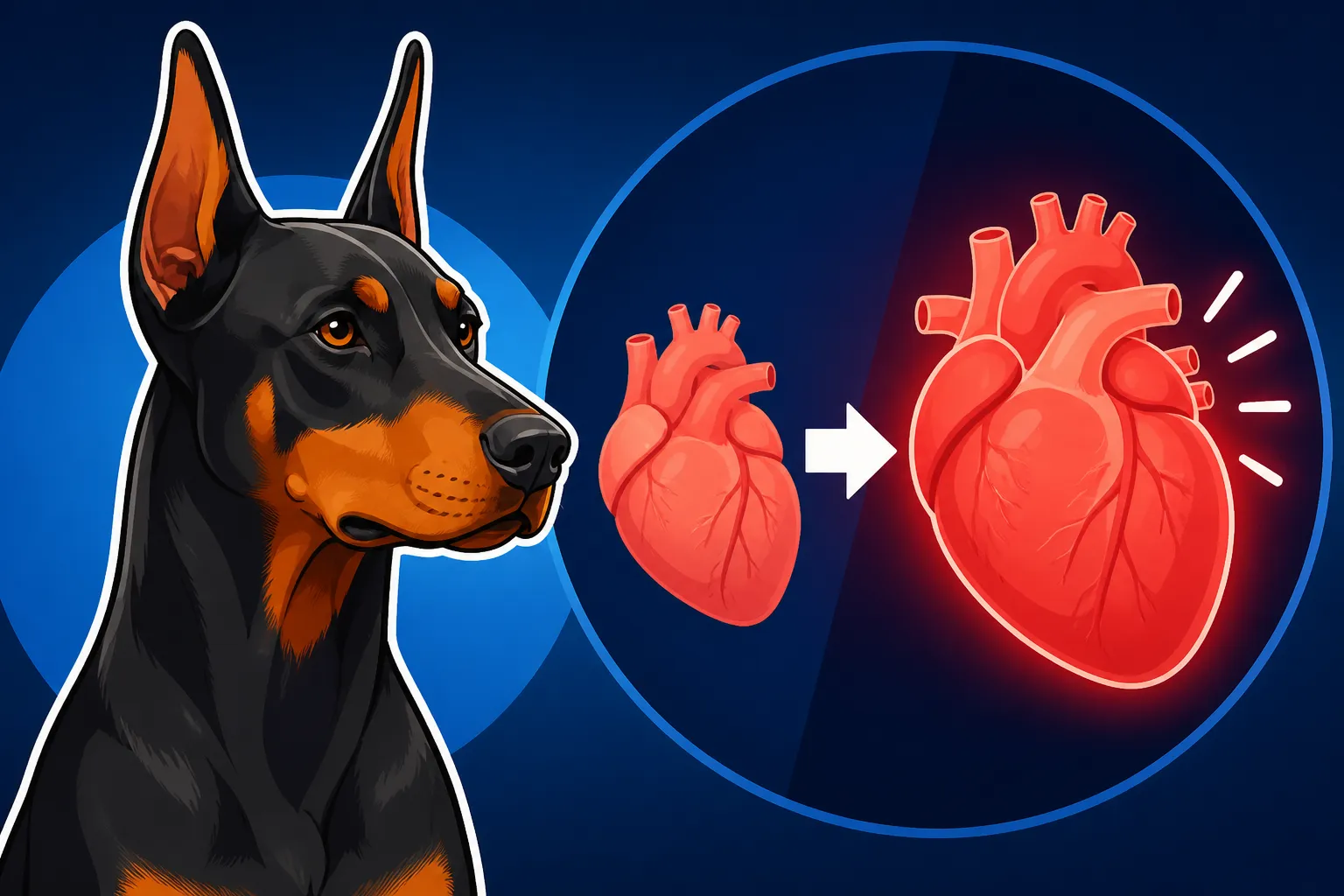
Dilated Cardiomyopathy is a primary disease of the heart muscle where the walls of the heart become thin and weak, and the chambers, particularly the left ventricle, become enlarged or "dilated." This dilation makes it incredibly difficult for the heart to pump blood effectively to the rest of the body. Dobermans, sadly, are disproportionately affected by this condition, more so than almost any other breed. In fact, it's often stated that over half of all Dobermans will develop DCM at some point in their lives, making it The Heart Disease That Reaches Most Dobermans. The breed's genetic predisposition is undeniable, with specific gene mutations, like the DCM1 and DCM2 variants, identified that increase a Doberman's risk.
Initially, the heart tries its best to compensate for the weakening muscle. It might beat faster, or the body might retain more fluid to try and increase blood volume, temporarily masking the underlying problem. This compensatory mechanism is precisely why the disease remains silent for so long, creating a false sense of security for owners.
Why the Heart Enlarges Without Obvious Signs
Imagine a balloon that you gradually inflate. It gets bigger and bigger, but until it's critically overinflated or bursts, it still looks like a functional balloon. Similarly, a Doberman's heart muscle weakens and the chambers enlarge very gradually over months, sometimes even years. During this time, the dog's body is incredibly adept at compensating for the reduced cardiac output. Their activity level might be slightly less than a younger Doberman, or they might seem to tire a little faster after a strenuous play session, but these subtle changes are easily dismissed as "just getting older" or normal variations in energy. It’s during these The Silent Years Before a Doberman's Heart Shows that the heart is quietly undergoing structural and functional deterioration.
The issue isn't that the Doberman isn't experiencing the effects; it's that those effects aren't yet severe enough to manifest as noticeable symptoms like coughing, breathing difficulties, or fainting. The heart might be working harder than it should, straining to maintain adequate blood flow, but your Doberman's strong will and inherent stoicism often mean they won't show discomfort until the disease is quite advanced. This can lead to the heartbreaking situation where Why a Doberman Can Look Fine and Be Ill.
The Silent Progression of Electrical Abnormalities
Beyond the physical enlargement of the heart chambers, another critical aspect of the occult phase in Doberman DCM is the silent development of electrical abnormalities. The heart's rhythm is controlled by electrical impulses, and when the muscle tissue is damaged or stretched, these impulses can go awry. Often, the earliest sign of DCM, even before significant structural changes are visible on an ultrasound, can be the presence of ventricular arrhythmias, specifically premature ventricular contractions (PVCs).
These PVCs are essentially extra, abnormal heartbeats originating from the lower chambers of the heart. In the early stages, your Doberman might have hundreds or even thousands of these PVCs in a 24-hour period, yet they won't cause any outward symptoms. The Doberman's body simply absorbs them. However, these arrhythmias are a clear indicator that the heart muscle is not healthy. They can exist alongside structural enlargement or, in some cases, even precede it, acting as an early alarm bell that something is amiss. This silent electrical chaos is a key reason why comprehensive heart screening is so vital for Dobermans, even when they appear perfectly well.
The Mechanics Behind Cardiac Enlargement
To fully grasp the seriousness of the occult phase, it helps to understand the physical changes occurring within your Doberman’s heart. This isn't just about the heart getting "bigger" in a healthy, stronger way, but rather a detrimental enlargement that diminishes its effectiveness.
The Dilating Chambers and Thinning Walls
When a Doberman develops DCM, the heart's main pumping chamber, the left ventricle, begins to stretch and enlarge. This is the "dilated" part of Dilated Cardiomyopathy. Imagine a strong, muscular balloon. When it's healthy, its walls are thick and elastic, allowing it to contract powerfully and efficiently pump fluid. Now, imagine stretching that balloon over and over again. Its walls become thinner and flimsier, and while it might hold more fluid, its ability to squeeze and expel that fluid diminishes significantly.
This is precisely what happens with the Doberman heart. The walls of the ventricles, particularly the left, thin out, becoming less capable of generating the force needed to push blood out into the body. While the chambers grow larger, the total volume of blood pumped with each beat (stroke volume) actually decreases because the weakened muscle can't contract properly. This leads to a vicious cycle: the heart dilates to try and accommodate more blood, but its weakened walls struggle even more to pump it out, causing further dilation.
Increased Pressure and Volume Overload
As the heart's pumping efficiency declines, blood starts to back up. The body's immediate response is to try and maintain normal blood pressure and ensure vital organs receive enough oxygen. It does this by activating various hormonal systems that increase fluid retention and narrow blood vessels. This might sound helpful, but it actually puts an even greater strain on an already failing heart.
With more fluid in the circulatory system and constricted blood vessels, the heart faces increased resistance and a greater volume of blood to pump. Think of a garden hose with a partially blocked nozzle – the pump has to work much harder to push water through. For a Doberman with DCM, this means the heart is constantly battling against elevated pressures and an overload of blood volume. This persistent stress further contributes to the enlargement of the chambers as they try to accommodate the excess, making them even less efficient over time. It’s a downward spiral where the body’s compensatory mechanisms, initially helpful, ultimately accelerate the progression of the disease.
Remodeling of the Myocardium
The physical changes in a Doberman's heart due to DCM aren't just about stretching and thinning; they involve complex "remodeling" at a cellular level. The heart muscle tissue, known as the myocardium, undergoes significant alterations. Healthy muscle cells can become damaged, and the body attempts to repair them, but often this repair results in the formation of fibrosis, which is essentially scar tissue.
Unlike healthy muscle tissue, scar tissue is rigid and cannot contract effectively. As more and more fibrous tissue replaces functional muscle, the heart's ability to contract and relax properly is further compromised. This remodeling also interferes with the heart's electrical pathways, exacerbating the arrhythmias mentioned earlier. This process is happening silently, beneath the surface, even as your Doberman is still chasing squirrels and greeting you at the door. Understanding these microscopic changes helps to explain Why a Doberman Heart Fails Before Anyone Notices, and underscores the critical need for proactive screening, especially during The Doberman Years When Everything Shows Up.
Detecting the Undetectable: Screening for Early DCM
Given the silent nature of the occult phase, early detection relies entirely on diligent and regular screening. You simply cannot wait for symptoms to appear, as by then, the disease is often advanced. This is where specialized cardiac tests become your Doberman's best friend.
The Critical Role of Regular Echocardiograms
An echocardiogram, often simply called an "echo," is a non-invasive ultrasound of the heart. It's truly the gold standard for assessing the physical structure and function of the heart. During an echo, a veterinary cardiologist can directly visualize the heart chambers, measure their size, assess the thickness of the walls, and critically, observe how efficiently the heart muscle is contracting. They can see if the left ventricle is starting to dilate and if the walls are thinning, even before these changes are severe enough to cause symptoms.
For Dobermans, annual or even semi-annual echocardiograms are absolutely vital. Many cardiologists recommend starting these screenings by age two or three, as DCM can manifest even in relatively young Dobermans. Regular echos allow for comparison over time, helping to detect subtle changes that might indicate the onset of the occult phase of DCM. Knowing What a Doberman Echo Actually Measures helps you understand why this test is so crucial in monitoring your dog's heart health.
Twenty-Four Hour Holter Monitoring for Arrhythmias
While an echocardiogram shows the heart's structure, a Holter monitor reveals its electrical activity over an extended period, typically 24 hours. A small, lightweight device is comfortably fitted to your Doberman, recording every single heartbeat as they go about their normal daily activities – sleeping, playing, eating, and walking. This is invaluable because cardiac arrhythmias, particularly PVCs, can be intermittent and might not be present during a brief snapshot like a vet visit or even an echo.
The Holter monitor captures the total number of abnormal beats, their patterns, and how they relate to the Doberman's activity level. A high number of PVCs can be an early indicator of DCM, sometimes even preceding noticeable structural changes on an echo. For Doberman owners, having a baseline Holter reading and then performing regular Annual Echo and Holter Screening for a Doberman is paramount. The cardiologist will analyze the results and determine How Many Abnormal Beats Worry a Doberman Cardiologist, guiding decisions on early intervention.
Biomarker Blood Tests as Early Warning Signs
In addition to imaging and electrical monitoring, certain blood tests, known as biomarkers, can offer supplementary information about heart health. The most common one used in conjunction with other diagnostics for Doberman DCM is NT-proBNP (N-terminal pro-B-type natriuretic peptide). When the heart muscle is stretched or stressed, it releases this peptide into the bloodstream. Elevated levels of NT-proBNP can indicate cardiac stress and damage, even if the dog is not yet showing symptoms.
While not a definitive diagnostic test for DCM on its own, an elevated proBNP level can serve as The Blood Test That Flags a Doberman Heart, prompting further investigation with an echocardiogram or Holter monitor. It can be a useful screening tool, especially for Dobermans who might be harder to schedule for regular specialist appointments, or as an initial check for puppies. These tests are part of a comprehensive approach to monitoring a Doberman's cardiac health, giving us more pieces of the puzzle to work with.
Implications of Silent Heart Enlargement
Understanding that your Doberman's heart can be silently enlarging is a heavy truth. It means that "normal" on the surface doesn't always translate to "healthy" underneath. This silent progression has profound implications for their well-being and longevity.
Impact on Doberman Health and Longevity
Even though your Doberman isn't coughing or collapsing, a heart in the occult phase of DCM is already compromised. It's working harder, less efficiently, and is inherently weaker. This isn't just a benign enlargement; it's a pathological process that steadily diminishes the heart's reserve capacity. The greatest, most terrifying risk during this occult phase is sudden cardiac death. A Doberman can appear completely fine one moment and suddenly collapse and pass away due to a catastrophic arrhythmia or acute heart failure. This is why the question of Whether the Heart Takes Most Dobermans often weighs heavily on owners.
Furthermore, the silent damage accumulates. The longer the heart goes untreated in this phase, the more extensive the remodeling and fibrosis become, making it harder for any future treatments to fully reverse the damage. While your dog might be enjoying life now, the clock is ticking, and the quality of that life, and its duration, are being impacted by this silent battle within.
When the Occult Phase Transitions to Symptomatic
The transition from the occult (asymptomatic) phase to the symptomatic phase of DCM can be abrupt and dramatic. One day your Doberman is fine, and the next, you might notice them Coughing and Breathlessness in a Doberman, or they might even A Doberman That Faints on a Walk. These are often signs that the heart’s compensatory mechanisms have finally failed. The heart can no longer keep up with the body's demands, and fluid starts to back up into the lungs (pulmonary edema) or into the abdomen, causing the visible signs of heart failure.
This rapid decline can be terrifying for owners, as it feels like it came out of nowhere. However, for most Dobermans, the disease has been progressing silently for a considerable period. Once symptoms appear, the prognosis generally worsens significantly, and emergency veterinary care is usually required to stabilize the dog. Understanding this rapid transition underscores why early screening is not just helpful but absolutely essential for this breed.
Management and Treatment Considerations
The good news is that detecting DCM in its occult phase opens the door to early intervention, which can significantly impact your Doberman's prognosis. Medications like Pimobendan Before a Doberman Shows Signs have been shown in studies to delay the onset of clinical symptoms and prolong quality of life in Dobermans diagnosed in the occult phase. This medication helps the heart muscle contract more effectively and also has vasodilatory properties, reducing the workload on the heart.
Other medications, such as ACE inhibitors, might also be introduced to manage blood pressure and fluid retention. The goal of early treatment is not to cure DCM, as it is a progressive disease, but to slow its progression, improve the heart's function, and postpone the onset of debilitating symptoms, hopefully buying your beloved Doberman more comfortable years.
However, it's crucial to consider the financial aspect of long-term cardiac care. Annual specialist visits, echocardiograms, Holter monitors, and daily medications can add up significantly. This is where pet insurance, like a comprehensive plan from Healthy Paws, can be an absolute lifesaver. Getting your Doberman covered for illness and accidents before any signs of heart disease appear is critical, as most insurance policies consider DCM a pre-existing condition once diagnosed. It's important to investigate Getting a Doberman Covered Before the First Echo because if a diagnosis is already on record, it can be challenging, or even impossible, to find coverage for the heart condition. Pet insurance options, such as those provided by Healthy Paws, often require you to enroll your Doberman before any symptoms or a diagnosis of DCM. This foresight can make all the difference in managing the ongoing costs of lifelong cardiac medication and follow-up care, allowing you to focus on your Doberman's health without the added financial strain. Many responsible Doberman owners rely on good pet insurance to help cover costs associated with chronic conditions, and companies like Healthy Paws are popular choices.
| Diagnostic Tool | What it Measures | Why it's Important for Dobermans |
|---|---|---|
| Echocardiogram (Echo) | Heart chamber size, wall thickness, muscle contraction | Direct visualization of structural changes and function, primary detection of occult DCM |
| Holter Monitor | 24-hour electrical activity (heart rhythm) | Detects silent arrhythmias (PVCs) that often precede or accompany structural changes |
| NT-proBNP Blood Test | Levels of cardiac stress hormones | Indicator of heart muscle stress; can flag issues for further investigation |
With careful monitoring and proactive medical management, Dobermans diagnosed in the occult phase can often live significantly longer, more comfortable lives than those where the disease is only detected once symptoms have fully developed.
Disclaimer
This article is for general informational purposes only and does not constitute professional advice. Laws, prices and regulations vary by location and change over time. Consult a qualified professional for guidance on your specific situation.