Whether a Doberman Puppy Should Run on Pavement
It’s an exciting time when you bring home a Doberman puppy, full of boundless energy and a desire to explore the world with you. Naturally, you might be eager to get out there and start exercising together, perhaps even thinking about runs to burn off some of that youthful exuberance. However, the question of whether a Doberman puppy should run on pavement is a really important one, and often, the answer isn't what new owners expect because it directly impacts their long-term health and joint integrity. This guide will walk you through why hard-surface running is a concern for growing Dobermans and offer plenty of safe, enriching ways to exercise your energetic companion.
The Growing Doberman Puppy and Its Delicate Joints
Dobermans are magnificent athletes, built for speed and power. But like many large, fast-growing breeds, their bodies go through significant developmental changes in their first year to year and a half. Understanding this process is crucial for making the best choices for their physical well-being.
Understanding Growth Plates
Imagine your puppy's bones aren't quite solid yet, especially at the ends. That's essentially what growth plates are: areas of cartilage near the ends of long bones in young, growing animals. This cartilage is softer and more vulnerable than mature bone. It's where new bone cells are produced, allowing the bones to lengthen as your puppy grows from that tiny, wobbly bundle of joy into a sleek, powerful adult.
These growth plates are present in all growing bones, from their legs to their spine. They are fundamental to how a Doberman puppy reaches its impressive height and build. They remain open and active until your puppy reaches skeletal maturity, which, for a Doberman, typically isn't until they are 12 to 18 months old, sometimes even a bit longer for very large males. Until these plates "close" and become fully ossified (hardened into bone), they are incredibly susceptible to injury. A hard knock, a twist, or repetitive concussive force can easily damage them, potentially leading to abnormal bone growth, pain, and arthritis down the road.
Impact of High-Impact Activities on Unclosed Plates
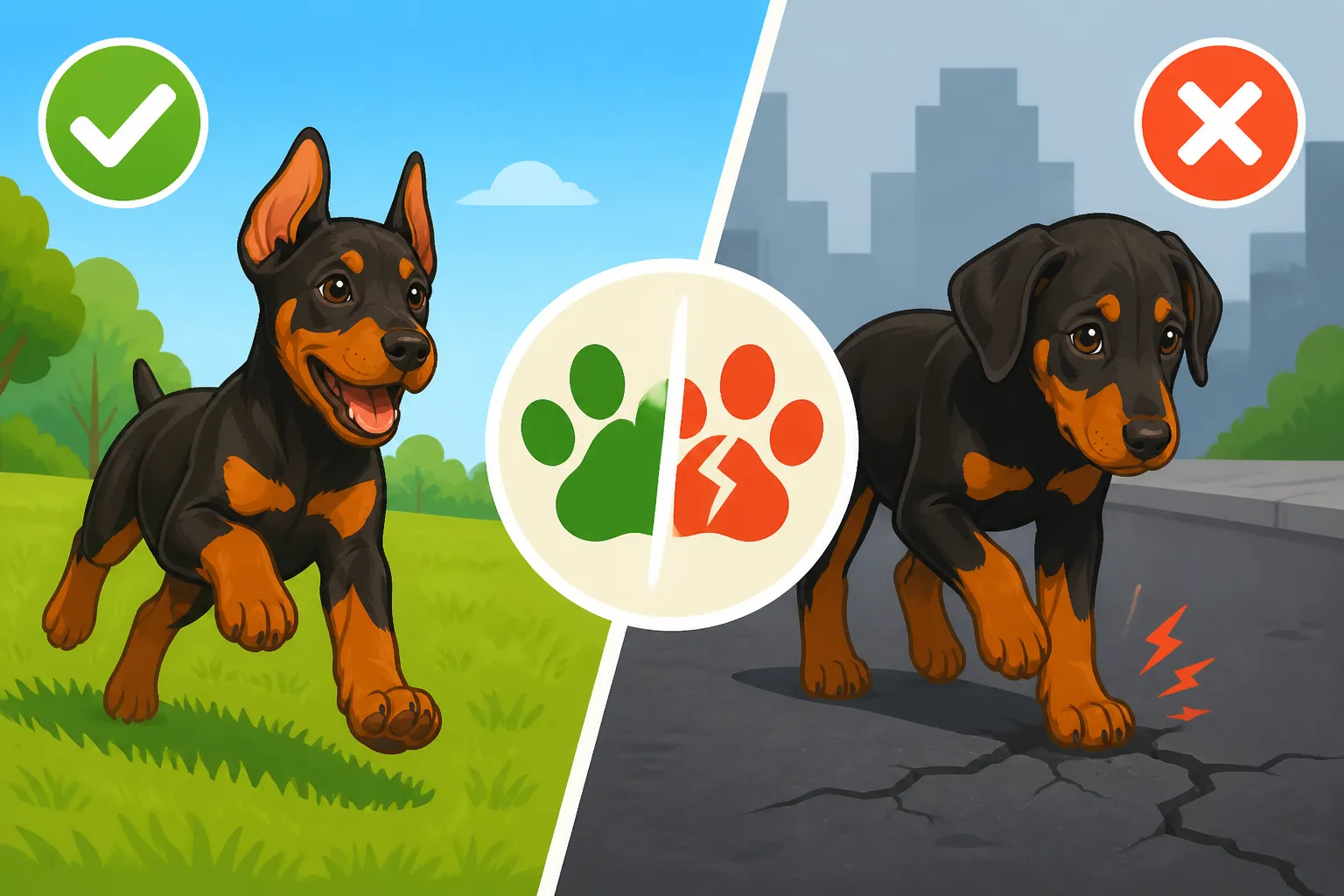
Now, think about what happens when you combine open, vulnerable growth plates with high-impact activities like running on hard surfaces. Pavement, concrete, and even asphalt offer very little give. Every stride your Doberman puppy takes sends a jarring shockwave up their legs, directly impacting those soft growth plates. It's like repeatedly hitting a delicate structure with a hammer – not a good idea for healthy development.
This isn't just about a single catastrophic injury, though those can certainly happen (a bad slip on wet pavement or a sudden stop during a sprint). More often, it's the cumulative micro-trauma from repeated concussions that causes the most damage. Over time, this consistent stress can inflame, misalign, or prematurely close growth plates. If a growth plate closes unevenly or too soon, one bone might stop growing while its partner continues, leading to angular limb deformities. Imagine one leg bone being shorter than the other, or an elbow joint that doesn't fit together quite right. These issues aren't just cosmetic; they can lead to chronic pain, lameness, and significantly increase the risk of debilitating conditions such as early-onset arthritis, even potentially contributing to issues like Doberman Hip Dysplasia down the line. It's a risk that's just not worth taking with a young Doberman.
Why Pavement Running is a No-Go for Young Dobermans
So, we've established that growth plates are delicate, but let's dive a bit deeper into why pavement specifically poses such a threat to a Doberman puppy's developing body. It's more than just the hardness; it's a combination of factors that can lead to serious, long-lasting problems.
The Repetitive Strain Factor
Think about how a Doberman moves. They are powerful, long-legged, and possess an incredible gait. On natural, varied terrain, their bodies are designed to absorb shock through their muscles, tendons, and the natural give of the earth. But pavement is relentless. It doesn't yield, it doesn't absorb. Every single step your Doberman puppy takes on a hard surface means their joints, bones, and soft tissues bear the full brunt of the impact.
Consider a typical run: hundreds, if not thousands, of repetitive impacts. Each one sends a jolt through the delicate structures of their developing body. This isn't just about the leg bones; it affects their wrists, elbows, shoulders, hips, and spine. Their tendons and ligaments, which are still strengthening and maturing, are constantly stretched and stressed without the benefit of a yielding surface. This constant, unmitigated jarring can lead to micro-tears, inflammation, and an accelerated breakdown of cartilage within the joints. For a breed that already has some predispositions to orthopedic issues due to their rapid growth and eventual size, adding this kind of stress during their formative months is like trying to build a skyscraper on a shaky foundation. You're setting them up for potential problems that could surface years later, well after those initial puppy runs.
Risk of Injury and Long-Term Damage
The immediate risks of running a Doberman puppy on pavement include acute injuries. A sudden turn, a quick stop, or even just slipping on a patch of wet pavement can lead to sprains, strains, or even fractures in those vulnerable growth plates. Imagine your puppy chasing a leaf, suddenly changing direction, and twisting a leg because the unyielding surface offered no forgiveness. It happens more often than you might think.
Beyond acute injury, the long-term consequences are even more concerning. The cumulative effect of repetitive impact can lead to a condition known as osteochondrosis dissecans (OCD), where cartilage fails to develop properly or separates from the underlying bone, often leading to painful joint issues. It also significantly increases the likelihood of developing painful conditions like arthritis years down the line. Arthritis, as we know, isn't just an "old dog problem." When joints are damaged as puppies, arthritis can set in much earlier, making their senior years uncomfortable and limiting their mobility. Stiffness in a Doberman That Used to Sprint could be a direct result of past joint trauma.
We want our Dobermans to be active and healthy throughout their lives, not just for a few short years. Making the right choices now about their exercise regimen can significantly impact their comfort and mobility as they mature. Skipping pavement running in their puppyhood is a small sacrifice for a lifetime of healthier joints.
Safe Exercise Alternatives for Your Doberman Puppy
Okay, so running on pavement is out for now. But your Doberman puppy is a ball of energy, right? How do you tire them out and build that strong, confident body without risking injury? Don't worry, there are plenty of fantastic, safe ways to exercise your growing Doberman.
Soft Surfaces are Your Best Friend
When it comes to physical activity for your Doberman puppy, think "soft." Natural, forgiving surfaces are absolutely paramount for protecting their developing joints and growth plates.
- Grass: Your backyard lawn, a local park (make sure it's safe and free of hazards), or grassy fields are ideal. The natural cushioning of grass absorbs impact, reducing stress on joints and providing better traction. Plus, the slightly uneven terrain helps build supporting muscles and proprioception (awareness of their body in space) without jarring impacts.
- Dirt Trails: Unpaved walking trails in parks or nature preserves are another excellent choice. The packed dirt offers enough firmness for good footing but still has a degree of give that pavement lacks. Exploring new smells and sights on a trail also provides valuable mental stimulation.
- Sand: If you're lucky enough to live near a dog-friendly beach or have access to sandy areas, this can be fantastic. Running and playing in sand provides excellent resistance for muscle development with very low impact. Just be mindful of heat on paws in summer and potential salt water ingestion.
- Snow: For those in colder climates, fresh, powdery snow can also offer a softer surface for play. Just ensure it's not too deep or icy, and always dress your Doberman in appropriate winter gear if they're out for extended periods, as they feel the cold easily due to their short coat. Winter Coats Sized for a Doberman are a must!
The key here is variety and moderation. Short, playful bursts on these surfaces are much better than long, sustained runs. Allow them to explore, sniff, and play naturally, rather than forcing a structured, high-intensity workout.
Controlled Exercise and Mental Stimulation
While Dobermans are energetic, their exercise shouldn't always be about pure physical exertion, especially when they're young. Controlled exercise and plenty of mental stimulation are equally, if not more, important for a well-rounded and healthy puppy.
- Short, Frequent Play Sessions: Instead of one long run, aim for several shorter play sessions throughout the day. Think 10-15 minutes of fetch on grass, a gentle game of tug, or a romp in the yard. This allows their bodies to rest and recover between bursts of activity, preventing overuse injuries.
- Structured Training: Obedience training is not only vital for good manners but also an excellent way to provide mental stimulation. Teaching new cues, practicing reliable recalls, and working on focus exercises can be surprisingly tiring for a puppy. A Doberman is Smarter Than You Expect, and they thrive on learning.
- Puzzle Toys and Interactive Feeders: These are lifesavers for channeling energy and engaging their brains without putting stress on their joints. Fill a KONG or a slow-feeder bowl with their meal, or invest in interactive puzzle toys that require them to figure out how to get treats. Brands like Chewy and Amazon offer a huge selection of these, and they can keep your Doberman happily occupied. This is particularly useful for teaching a Doberman to Settle in Another Room or for periods when you can't actively supervise them.
- Nose Work: Dobermans have incredible noses, and utilizing this sense is wonderfully enriching and low-impact. Hide treats around the house or yard and let them sniff them out. Enroll in a basic Nose Work as a Low-Impact Doberman Sport class; it's mentally exhausting and fantastic for building confidence.
- Socialization: Controlled, positive interactions with other well-behaved, vaccinated puppies or calm adult dogs on soft surfaces can also provide appropriate exercise and crucial socialization. Ensure play is supervised and appropriate for your puppy's size and temperament.
Remember, a tired mind is often just as effective as a tired body, and it's much safer for a growing Doberman.
Introducing Leash Walking Gradually
Leash walking is an essential skill for any Doberman, teaching them manners, focus, and allowing you to explore the world together. However, even leash walks need to be approached with care during puppyhood.
- Start Short and Sweet: Begin with very short walks, perhaps just 5-10 minutes, several times a day. The goal initially is exposure to new sights, sounds, and smells, not covering long distances. Let them sniff and explore.
- Focus on Varied Terrain: Seek out routes that include grass verges, dirt paths, or other soft surfaces. Try to avoid long stretches of unbroken pavement, especially in the early months. If pavement is unavoidable for short distances, keep the pace leisurely.
- Build Duration Slowly: As your puppy matures and their stamina increases, you can gradually extend the length of your walks. Even then, remember that structured "heeling" for long distances is much more tiring and potentially stressful than a meandering walk where they get to dictate some of the pace and sniff opportunities. For an eighty-pound Doberman, leash manners are vital, so start early and be consistent.
- Observe Your Puppy: Always pay attention to your puppy's cues. Are they lagging behind? Are they limping or showing signs of discomfort? Are they trying to sit down? If so, it's time to head home. Pushing a tired or sore puppy is never a good idea.
The journey of building a strong, healthy Doberman is a marathon, not a sprint. Patience and thoughtful exercise choices in their early months will pay dividends in their long-term health and happiness.
When Can Your Doberman Safely Run on Pavement?
It's natural to look forward to the day you can go on a proper run with your Doberman. They're such athletic dogs, and once mature, many absolutely love a good sprint! But the timing is everything to avoid injury.
Waiting for Growth Plate Closure
The absolute golden rule for high-impact activities like running on pavement is to wait until your Doberman's growth plates have fully closed. As we discussed, these vulnerable areas typically solidify into bone between 12 and 18 months of age, though larger, slower-maturing males might take a little longer. This isn't a hard and fast date you can mark on a calendar, as every dog is an individual.
The best way to confirm growth plate closure is through consultation with your veterinarian. They can assess your Doberman's overall development and, if there's any doubt or if you're planning on intense athletic pursuits, they might recommend X-rays to visually confirm that the growth plates have fused. While it might seem like a long wait, remember that this period of careful management is a small investment for a lifetime of soundness. Pushing them too early can lead to costly vet bills down the line for orthopedic issues and can significantly impact their quality of life. Be patient; their adult bodies will thank you.
Gradual Introduction and Conditioning
Once your veterinarian has given the green light that your Doberman has reached skeletal maturity, you still shouldn't jump straight into a 5K on concrete. Their bodies need to be gradually conditioned for the increased demands of pavement running, just like a human athlete would ease back into training after a long break.
Here's how to approach it:
- Start with Short Bursts: Begin with very short segments of pavement running integrated into your walks. Maybe a block or two, then switch back to grass or dirt paths. The goal is to let their muscles, tendons, ligaments, and mature bones adapt to the new stresses.
- Increase Duration and Intensity Slowly: Over several weeks or even months, gradually increase the distance and speed on pavement. A good rule of thumb is to increase the duration or distance by no more than 10-15% each week. This slow progression allows their body to build strength and resilience without being overloaded.
- Warm-Up and Cool-Down: Just like us, Dobermans benefit from a warm-up before intense exercise and a cool-down afterward. A brisk walk for 5-10 minutes before a run and another gentle walk at the end will help prepare their muscles and prevent soreness.
- Listen to Your Doberman: Pay close attention to any signs of discomfort, lameness, stiffness after exercise, or changes in gait. If you notice anything unusual, dial back the intensity or duration immediately and consult your vet. A Doberman can be stoic, so subtle signs like A Doberman That Tires Faster Than It Used To or reluctance to play might be indicators of underlying issues.
- Varied Surfaces Still Reign Supreme: Even after full maturity, it's always best to incorporate a variety of surfaces into your Doberman's exercise routine. Running exclusively on pavement can still be hard on their joints over the long term. Mix in trails, grass, and other natural terrain to keep their bodies well-rounded and minimize repetitive stress.
By following these guidelines, you can ensure your Doberman transitions safely into being your running partner, enjoying a long, active life with strong, healthy joints.
Safe Surfaces and Activities for Your Doberman Puppy
To give you a clear overview, here’s a quick comparison of what’s generally safe and what should be avoided for your growing Doberman puppy.
| Activity/Surface Type | Safe for Doberman Puppy? | Why / Considerations |
|---|---|---|
| Running on Pavement | NO | High-impact, causes repetitive jarring, damages vulnerable growth plates and developing joints, leads to long-term orthopedic issues. |
| Running on Grass | YES (Controlled) | Provides natural cushioning, absorbs impact, builds supporting muscles. Keep sessions short and playful. |
| Running on Dirt Trails | YES (Controlled) | Offers more give than pavement, good for muscle development. Be mindful of uneven terrain; avoid aggressive downhill running. |
| Running on Sand | YES (Controlled) | Excellent low-impact resistance for muscle building. Monitor for paw pad irritation or excessive salt ingestion. |
| Hiking | YES (Moderate) | Great for varied terrain and mental stimulation. Keep distances short, avoid steep inclines/declines. |
| Fetch | YES (Soft Surface) | Fun and energy-burning on grass. Avoid sudden stops/starts on hard surfaces, keep sessions brief. |
| Agility Training | NO | High-impact jumps and turns are too risky for developing joints. Wait until full maturity. |
| Swimming | YES (Supervised) | Fantastic low-impact exercise, builds strength without joint stress. Always supervise; Dobermans aren't natural water dogs. |
| Controlled Leash Walks | YES | Essential for socialization and manners. Keep early walks short, focus on exploration, use varied terrain. |
| Puzzle Toys | YES | Excellent for mental stimulation, low physical impact. Great for channeling energy indoors. (Brands like Chewy and Amazon offer many options) |
This table should serve as a quick reference point for making daily decisions about your Doberman puppy's exercise routine. Focusing on low-impact, varied activities will build a stronger foundation for their future health.
Disclaimer
This article is for general informational purposes only and does not constitute professional advice. Laws, prices and regulations vary by location and change over time. Consult a qualified professional for guidance on your specific situation.