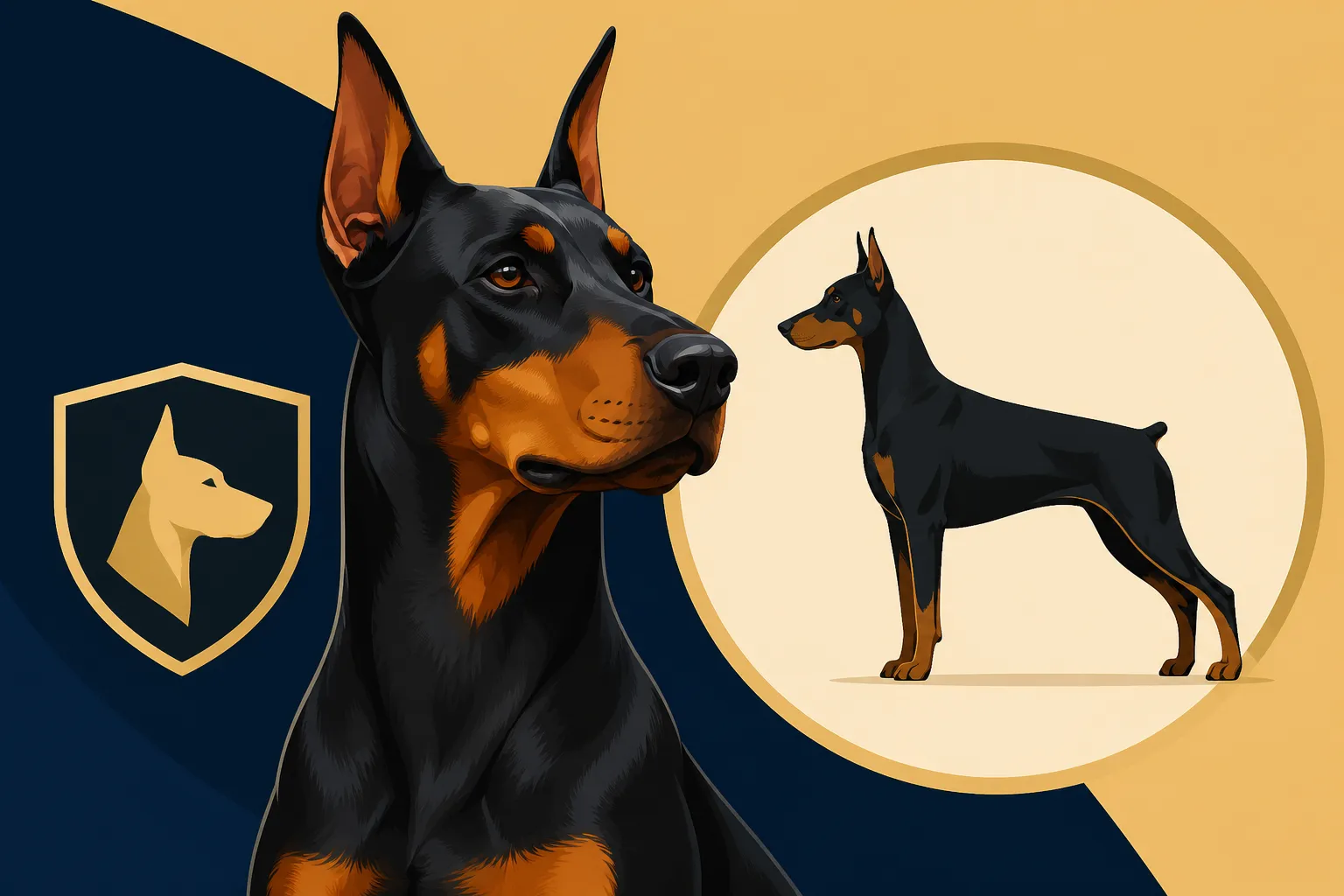
The Doberman the AKC Standard Describes
If you've ever looked at two Dobermans and wondered why they seem so different, or tried to understand what a "well-bred" Doberman actually means, you're not alone. The world of dog breed standards can feel like a secret language, especially when it comes to a breed as iconic and often misunderstood as the Doberman. This comprehensive guide will demystify the official blueprint for the Doberman Pinscher, as laid out by the American Kennel Club (AKC), helping you understand the ideal characteristics that define this magnificent breed.
The Genesis of a Guardian: History Reflected in the Standard
Understanding the Doberman's breed standard isn't just about memorizing physical traits; it's about appreciating the historical purpose that shaped every line, curve, and characteristic. When Karl Friedrich Louis Dobermann, a tax collector from Apolda, Germany, set out to create his ideal companion in the late 19th century, he wasn't looking for a lapdog. He needed a fearless, intelligent, and physically capable protector to accompany him on his rounds, often through less-than-safe areas. This intention is etched into the very essence of the breed standard.
Karl Dobermann's Vision and Its Lasting Impact
Karl Dobermann's motivation was deeply practical. He needed a dog that was equal parts bodyguard and loyal companion, a deterrent to those who might consider him an easy target. While the exact mix of breeds he used remains a bit of a historical mystery, it's widely accepted that he drew upon various local dogs known for their courage, strength, and intelligence, including early Rottweilers, German Pinschers, and possibly even Greyhounds for their speed. The urgency of his need for protection meant that traits like alertness, sharpness, and a commanding presence were paramount.
Imagine walking through dimly lit streets, carrying valuables, with only your dog for protection. You wouldn't want a dog that hesitated or appeared timid. This is why the AKC standard emphasizes the Doberman's "noble bearing" and "courage." It's not just about aesthetics; it's about the psychological impact a Doberman is meant to have. A Doberman that shrinks from new situations or lacks confidence would betray its very origins. Owners often report their Dobermans are keen observers, noticing every new sound or movement, a direct echo of this protective past. This constant vigilance, while sometimes needing careful management in a modern home, is a hallmark of the breed's historical role.
The Evolution of the Breed and Its Role
As the Doberman Pinscher gained popularity beyond its initial working role, the breed evolved, but its core function remained a guiding principle for breeders. Early Dobermans were reputedly sharper and more intensely driven than many modern examples. Over time, as companion animals became more prevalent, there was a concerted effort to refine the temperament, maintaining the guardian instinct without excessive aggression or nerviness. The standard reflects this balance, calling for a dog that is "fearless, courageous, and loyal" but also "obedient" and "friendly toward familiar people."
This balance is a delicate one, and it's why proper socialization and training are so critical for any Doberman owner. You're not just getting a dog; you're getting a canine security system with a heart of gold, provided you put in the work. A Doberman who isn't properly introduced to the world can easily become overly suspicious or reactive, which goes against the ideal of a stable, confident guardian. When considering a Doberman puppy, looking at Whether a Doberman Puppy Must Meet the World Early is essential for setting them up for success. The breed's history dictates that they need to understand their world to protect it appropriately, not react out of fear.
General Appearance: The Doberman's Striking Silhouette
The first thing most people notice about a Doberman is its distinctive silhouette: sleek, powerful, and undeniably elegant. The AKC standard aims to capture this ideal form, describing a dog that exudes both athletic prowess and refined grace. Every aspect of its general appearance contributes to this overall impression, from its size to the texture of its coat.
Size, Substance, and Proportion
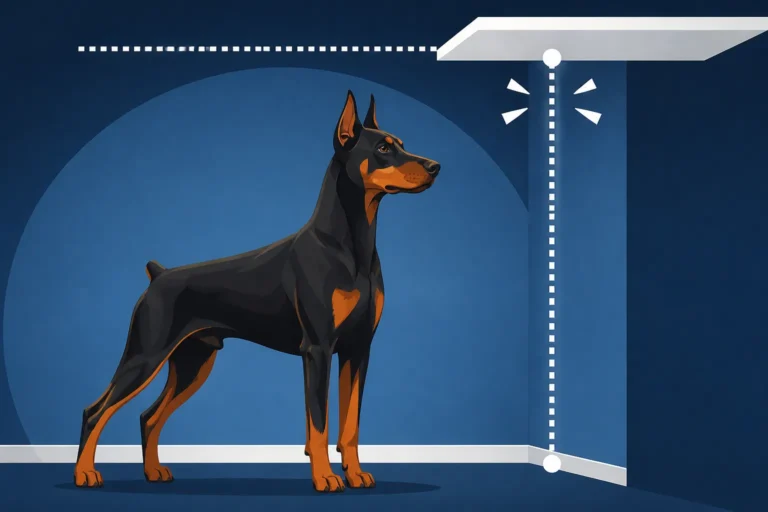
The Doberman is classified as a medium-large dog, and the standard provides specific guidelines for height and weight to ensure a balanced, athletic build. For male Dobermans, the ideal height at the withers (the highest point of the shoulder blades) is between 26 to 28 inches, with 27.5 inches being the preference. Females are slightly smaller, typically ranging from 24 to 26 inches, with 25.5 inches preferred. These aren't just arbitrary numbers; they reflect the optimal size for agility, speed, and strength, without being overly bulky or too slight.
When you see a Doberman that looks like a lean, finely tuned athlete, that's what the standard is aiming for. The "substance" refers to the dog's bone structure and muscle mass. A Doberman should be substantial enough to be powerful, but never coarse or heavy-boned like some mastiff breeds. Conversely, it shouldn't be too refined or whippet-like, as this would compromise its protective capabilities. The proportions are also key: the length of the body from the breastbone to the rear projection of the upper thigh should ideally equal the height at the withers, creating a square profile. A Doberman that is significantly longer than it is tall, or vice versa, deviates from this athletic ideal. This balanced proportion contributes to its effortless gait, allowing for both powerful sprints and graceful turns, crucial for a dog that might need to move quickly in a variety of situations.
Coat and Color
The Doberman's coat is one of its most recognizable features: short, hard, thick, and lying close to the body. It should be smooth to the touch, without any undercoat in most climates, which contributes to its sleek appearance. This type of coat is practical; it offers some protection from the elements but is easy to maintain, a boon for active owners. However, it's also why Dobermans are often thought of as feeling the cold easily, a point discussed in Why a Doberman Feels the Cold Before Other Dogs.
Regarding color, the AKC standard recognizes four primary colors, all with rust markings:
- Black: The most common and classic Doberman color, a deep, rich black.
- Red: Ranging from a dark, rich brown to a lighter red, often described as chocolate.
- Blue: A dilute of black, appearing as a dark grey or slate color. This color is associated with Color Dilution Alopecia in Blue and Fawn Dobermans.
- Fawn (Isabella): A dilute of red, appearing as a light tan or beige. This color can also be prone to coat issues.
The rust markings are an integral part of the Doberman's aesthetic, clearly defined and appearing above each eye, on the muzzle, throat, and forechest, on all legs and feet, and below the tail. These markings should be sharply defined, providing a striking contrast to the base coat color. The standard explicitly states that white patches anywhere on the dog, exceeding a small patch on the chest, are disqualifying faults. This strict adherence to color and markings reflects a long-standing commitment to the breed's established appearance, ensuring visual consistency across the breed.
Here's a quick look at the recognized Doberman colors and common associated concerns:
| AKC Recognized Color | Base Color Dilution Of | Appearance Description | Common Associated Health Concerns |
|---|---|---|---|
| Black & Rust | N/A | Deep, rich black with rust points | Generally fewer coat-specific issues |
| Red & Rust | N/A | Dark brown to lighter red with rust points | Generally fewer coat-specific issues |
| Blue & Rust | Black | Dark grey or slate with rust points | Color Dilution Alopecia (CDA), skin issues |
| Fawn & Rust | Red | Light tan or beige with rust points | Color Dilution Alopecia (CDA), skin issues |
Head and Expression: The Noble Intelligence
The Doberman's head is often described as noble, intelligent, and finely chiseled, playing a huge role in its overall impression. It's not just about the shape; it's about the combination of skull, muzzle, eyes, and ears creating an expression that speaks volumes about the breed's character.
Skull and Muzzle
The AKC standard calls for a head that is "long and dry" (meaning without loose skin or excess flesh). The top of the skull should be flat, and it should taper slightly from the ears to the nose. When viewed from the side, the top of the skull and the bridge of the muzzle should be parallel planes, connected by a moderate but defined stop (the indentation between the eyes). This parallel-plane structure is a key identifying feature of a correctly structured Doberman head.
The muzzle itself should be well-filled under the eyes and continue to a blunt wedge shape when viewed from above. It should never be snipey or dish-faced. The jaws should be strong and full, with teeth meeting in a complete scissors bite. Any deviation, such as an overshot or undershot bite, is considered a fault. The strength of the jaw and the correct bite are functional requirements, harking back to the dog's protective role, where a strong grip was essential. A weak jaw or misaligned teeth could compromise its ability to defend, a crucial aspect of Karl Dobermann's original vision.
Eyes and Ears
The eyes of a Doberman are incredibly expressive and contribute significantly to its intelligent and alert look. They should be almond-shaped, moderately deep-set, and dark in color, with a keen, energetic, and commanding expression. The darker the eye color, the better, as light eyes can give a softer, less intense look, which is generally not preferred in the standard. This isn't just aesthetic; dark eyes are less sensitive to bright light, which can be an advantage for a working dog.
Traditionally, Dobermans have their ears cropped and tails docked, a practice rooted in their working history to minimize injury in confrontations. While docking the tail is still standard and often done shortly after birth, ear cropping is a more complex procedure that requires significant aftercare and posting over several months to achieve the desired erect carriage. The standard describes the cropped ear as "erect and trimmed to a length proportionate to the head." However, it also states that natural (uncropped) ears are acceptable. A Doberman with natural ears will typically have medium-sized ears that lie close to the cheeks. Whether cropped or natural, the ears should be set high on the head, which contributes to the breed's alert expression. Choosing to crop or not is a personal decision, but it's important to understand the commitment involved if you opt for cropped ears. You can learn more about Doberman Ear Cropping From Surgery to Last Posting if you choose that route.
Expression
The Doberman's expression is perhaps one of its most captivating features. The AKC standard describes it as "alert, intelligent, determined, and full of courage." This isn't a meek or shy expression. When a Doberman looks at you, you should feel a sense of awareness, a discerning gaze. This is the look of a dog that is constantly evaluating its surroundings, ready to act if necessary, but not prone to impulsive or uncontrolled reactions.
This characteristic expression is a blend of all the features mentioned above: the parallel planes of the head, the dark almond eyes, and the high-set, attentive ears (whether cropped or natural). A Doberman with a timid or blank expression, or one that constantly averts its gaze, would be considered atypical of the breed's desired temperament and appearance. It's the visual manifestation of its inherent nature as a vigilant guardian. Many Doberman owners find their dogs maintain this intense, questioning gaze even when relaxing at home, reflecting their deep bond and constant awareness of their family.
Body and Structure: Built for Function
Beyond the head, the Doberman's body is a marvel of functional design, engineered for power, agility, and endurance. Every component, from its arched neck to its well-muscled hindquarters, contributes to its ability to perform its historical role as a protector and its modern role as an athletic companion.
Neck, Topline, and Tail
The Doberman's neck is a prime example of form meeting function. The standard describes it as "proudly carried, well muscled and dry, without dewlap." It should arch gracefully, widening gradually to blend smoothly into the body. This strong, elegant neck provides leverage for the head and contributes to the Doberman's noble silhouette. A short, thick neck or a weak, thin neck would compromise its balance and overall athleticism.
The topline, when the dog is standing naturally, should appear firm and muscular, sloping gently from the withers to the slightly rounded croup (the part of the back just above the tail). The back itself should be short, firm, and broad, indicating powerful musculature. A Doberman's back is designed for strength and flexibility, enabling quick turns and powerful leaps. A dipped or roached back would be considered a structural fault. The tail is traditionally docked short and carried in continuation of the topline. While tail docking is a contentious issue in some regions, it remains the standard for exhibition in the AKC. An undocked tail, while not disqualifying, will alter the dog's overall silhouette in the show ring, but for a pet Doberman, a natural tail is perfectly healthy. It's worth noting that breeders often have puppies' tails docked young, a detail often included in discussions like Docking and Dewclaws Billed on a Doberman Litter.
Forequarters
A Doberman's forequarters are built for powerful forward motion and elegant reach. The shoulders should be well laid back, forming an approximate 90-degree angle with the upper arm. This angulation is crucial for achieving the desired reach in gait. The standard calls for the shoulders to be "sloping and well muscled, with the blades lying flat and close to the chest." This allows for a wide range of motion and contributes to the dog's powerful stride.
The legs themselves should be perfectly straight and parallel from elbow to paw, with strong bone. The elbows should be close to the body, neither turning in nor out. The pasterns (the part between the wrist and the paw) should be firm and almost perpendicular to the ground, providing shock absorption. Weak or angled pasterns can predispose a Doberman to injury, especially in an active dog. Finally, the feet should be well-arched, compact, and cat-like, with thick, tough pads. This foot structure provides excellent traction and durability, essential for a dog bred for diverse terrains and active work. Ensuring your Doberman's nails are trimmed regularly, as explored in Nail Trims on a Doberman With All-Black Nails, helps maintain proper foot health and gait.
Hindquarters
Just as important as the forequarters for powerful movement are the Doberman's hindquarters. The standard requires them to be "well muscled and broad, with the upper and lower thigh forming broad, flat, but powerful muscles." Correct angulation in the hindquarters provides the necessary drive and propulsion for a Doberman's athletic gait. The stifles (knees) should be well-bent, and the hocks (ankles) should be clearly defined and turn neither in nor out. When viewed from the rear, the legs should be straight and parallel, providing stability and strength.
A Doberman's powerful hindquarters enable it to jump, spring, and propel itself with remarkable speed and agility. Dogs with insufficient angulation or weak musculature in the rear will lack the powerful drive characteristic of the breed and may struggle with certain movements or show ring requirements. This strong rear assembly also contributes to the Doberman's balanced appearance. For owners looking to feed a Doberman that maintains this lean, athletic build, resources like Feeding an Eighty-Pound Doberman Well can provide valuable insights into proper nutrition to support muscle and joint health, ensuring those powerful hindquarters stay in top condition.
Gait: The Effortless, Powerful Stride
A Doberman's movement is a critical component of its standard, as it directly reflects its athleticism, balance, and functional purpose. A Doberman should move with grace, power, and efficiency, covering ground with minimal wasted effort. This is not just about looking good in the show ring; it's about a dog built to move with purpose.
Reach and Drive
The AKC standard describes the Doberman's gait as "free, balanced, and vigorous, with good reach in the forequarters and good driving power in the hindquarters." What does this really mean? "Reach" refers to how far forward the front legs extend without lifting the front feet unnecessarily high. A Doberman with good reach will seem to glide over the ground, extending its forelegs with purpose. This is enabled by the correct angulation of the shoulder and upper arm, allowing the legs to swing forward efficiently.
"Drive" comes from the powerful push-off of the hindquarters. A Doberman's strong, well-angulated rear should propel the dog forward with significant force. This combined reach and drive results in a long, efficient stride that covers a lot of ground quickly. When watching a Doberman move, you shouldn't see any choppiness or stumbling. Instead, there should be a fluid, rhythmic quality to its steps. Imagine a marathon runner: they don't waste energy on high leg lifts; they move efficiently forward. That's the Doberman's ideal gait. It’s a testament to the breed's design for endurance and speed, whether chasing down a runaway suspect in its historical role or enjoying a vigorous hike with its family today.
Overall Impression of Movement
Beyond individual components, the overall impression of a Doberman's movement should be one of coordination, elegance, and power. The dog should move with a confident, purposeful stride that indicates both physical capability and mental focus. When viewed from the side, the topline should remain firm and steady, with no rolling or excessive up-and-down motion, indicating a strong back and core. From the front and rear, the legs should track straight and true, without paddling, weaving, or crabbing.
A Doberman that exhibits a clumsy, unbalanced, or hesitant gait would be considered faulty, as it detracts from the breed's functional ideal. This harmonious movement is a direct reflection of correct structure and condition. A Doberman that can effortlessly switch from a trot to a gallop, maintaining its balance and powerful stride, embodies the essence of the breed's athletic nature. This efficiency of movement is also vital for the breed’s long-term joint health; a Doberman whose gait is off due to poor structure might suffer more wear and tear over its lifespan. Regular exercise that supports this natural movement, along with appropriate nutrition, is key to maintaining this elegant athleticism. For those looking at athletic pursuits with their Doberman, considering Agility With a Doberman's Long Frame can be a great way to utilize their natural gait.
Temperament: The Heart of the Doberman
While physical traits are important for identification and function, the Doberman's temperament is arguably its most critical characteristic. The AKC standard describes a personality that is as striking as its physical appearance: a loyal, fearless, and intelligent companion with a strong protective instinct.
Desirable Traits
The standard describes the Doberman as "energetic, watchful, determined, alert, fearless, loyal and obedient." These are the hallmarks of a well-bred Doberman. They are known for their profound loyalty to their families, often earning them the nickname "Velcro Dobermans" for their tendency to stick close to their chosen people. This intense bond means they thrive on interaction and being part of the family unit, as discussed in Where the Velcro Doberman Nickname Comes From.
A Doberman should be naturally alert and watchful, a direct carryover from its guardian roots. They are quick to notice anything out of the ordinary, and their determined nature means they will investigate and act if they perceive a threat. However, this natural guarding instinct should be tempered with good judgment and obedience. A Doberman should be fearless but not reckless, courageous but not aggressive without cause. Their intelligence means they are highly trainable and eager to please, making them capable of learning complex commands and tasks. When properly socialized and trained, a Doberman should be confident, steady, and approachable with familiar people, embodying the ideal of a devoted, protective family member.
Undesirable Traits
Just as important as outlining desirable traits, the AKC standard identifies characteristics that are considered serious faults or disqualifications, especially concerning temperament. Foremost among these are shyness and viciousness. A Doberman that exhibits extreme shyness (cowering, freezing, attempting to flee) or unprovoked viciousness (snapping, lunging, biting without clear provocation) is considered atypical and highly undesirable. The standard states: "The Doberman Pinscher must be… fearless, but not vicious. A dog that is shy or vicious is a disqualification."
This is crucial because while the Doberman is a protector, it should be a discerning one, not a danger to society or its own family. A truly sound Doberman possesses a stable temperament, capable of assessing situations and reacting appropriately. Overly aggressive or timid dogs are not just problematic pets; they undermine the breed's reputation and its foundational purpose. Responsible breeders meticulously screen for stable temperaments in their breeding stock, understanding that temperament is largely inherited. If you are ever encountering a Doberman that shows signs of excessive fear or unwarranted aggression, it's vital to seek professional help from a trainer experienced with the breed, as explored in Finding a Trainer Who Has Worked With Dobermans. Early socialization and consistent, fair training are paramount to nurturing the desired confident and stable Doberman temperament.
Faults and Disqualifications: What a Judge Cannot Overlook
The AKC Doberman standard isn't just a list of ideal traits; it also clearly delineates what constitutes a fault and what leads to disqualification in the show ring. These specifications are crucial for maintaining the breed's integrity, health, and functional purpose. For the average owner, understanding these helps in recognizing what makes a Doberman a true representative of its breed.
Minor and Major Faults
Faults are deviations from the ideal standard that detract from the dog's overall quality. They can range from minor issues that slightly reduce a dog's placement in the ring to major faults that significantly impact its show career. Examples of minor structural faults might include slightly less-than-ideal angulation in the shoulders or hindquarters, which could subtly affect gait. A minor fault might also be a coat that is a bit too soft or sparse, or rust markings that are not as sharply defined as preferred. These don't necessarily impact the dog's health or ability to function as a pet, but they prevent it from achieving the highest levels of conformation.
Major faults, however, are more serious deviations that significantly impair the dog's function or appearance. Examples include an undershot or overshot bite (affecting chewing and biting ability), extremely light eyes (detracting from the alert expression), or a body proportion that is too long or too short (compromising athleticism). A very soft or woolly coat, or a significant deviation in gait, would also be considered major faults. While a dog with major faults might still be a beloved family pet, it would likely not succeed in the conformation ring. These faults highlight the importance of careful breeding and selecting a puppy from a reputable breeder who prioritizes the standard. When Reading a Doberman Puppy's Test Certificates, you're often looking at health, but a good breeder will also explain how their dogs adhere to the physical standard.
Disqualifications
Disqualifications are serious deviations from the standard that prevent a dog from being registered or shown. These are not just aesthetic preferences; they often relate to the breed's fundamental health, temperament, or identity. The most critical disqualifications relate to temperament: "Shyness or viciousness" will immediately disqualify a Doberman. This underscores the paramount importance of a stable and confident temperament in the breed.
Other disqualifications include:
- Albinism: Referred to as "white Dobermans," these dogs lack pigment entirely, resulting in white coats and blue eyes. Albinism is explicitly stated as a disqualification and is linked to serious health issues, including extreme light sensitivity and an increased risk of skin cancers. You can explore The White Doberman and Where It Came From to understand more about this.
- Presence of white patches exceeding a small patch on the chest: Any significant white markings outside of the specified rust points are disqualifying.
- Missing more than four teeth: This is a serious fault reflecting poor dental structure.
- Cryptorchidism: Failure of one or both testicles to descend in male dogs is a disqualification.
These strict disqualifications serve to protect the Doberman breed's health, temperament, and genetic purity. They prevent traits detrimental to the breed's well-being or its defining characteristics from being propagated. For potential owners, knowing these disqualifications helps in identifying responsible breeders who adhere to ethical breeding practices and in understanding what makes a Doberman truly representative of its noble heritage.
Understanding American vs. European Dobermans Through the AKC Lens
While the AKC standard focuses solely on the American interpretation of the Doberman Pinscher, it's virtually impossible to discuss the breed today without acknowledging the distinctions often drawn between "American" and "European" Dobermans. These differences, while not explicitly part of the AKC standard, heavily influence how the standard is interpreted and what traits are emphasized by breeders and enthusiasts.
Nuances in Interpretation and Emphasis
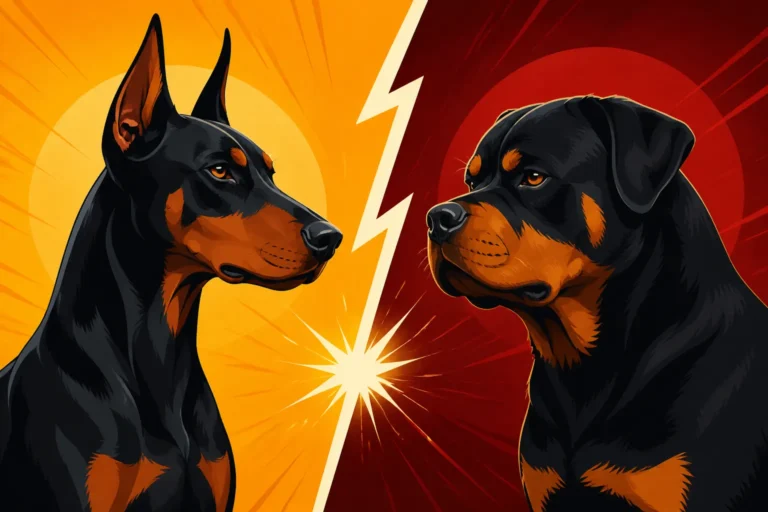
The AKC standard describes a Doberman that is elegant, balanced, and athletic, without being overly heavy or coarse. American breeders, generally speaking, tend to emphasize refinement, sleek lines, and a more pronounced elegance in their dogs. They often strive for a Doberman that exemplifies grace in motion and a more "chiseled" look in the head. This has led to a reputation for American Dobermans being somewhat lighter-boned and often possessing a more reserved or "softer" temperament compared to their European counterparts. This isn't to say they lack substance or courage, but the emphasis shifts more towards companionability and a smoother integration into family life, while still retaining their protective instincts.
The way American Dobermans move in the show ring often showcases this elegance, with a strong emphasis on fluid, ground-covering gaits that are both powerful and graceful. When judging for the AKC, every aspect of the standard is considered, but the overall picture of a noble, refined athlete is key. Owners who appreciate this lighter, more agile build and a temperament that is often described as highly sensitive and emotionally intelligent tend to gravitate towards American lines. Products from retailers like Chewy often cater to this refined athleticism, offering performance diets and joint supplements suitable for dogs maintaining a leaner build.
How American and European Lines Diverge
European Dobermans, while still adhering to their respective breed standards (such as the FCI standard), often present a visibly different picture from AKC-standard American Dobermans. Generally, European Dobermans are bred to be more robust, heavier-boned, and with a stronger, more substantial head. The emphasis in European breeding often leans heavily into working ability, drive, and a more formidable presence, reflecting a continued strong tradition of using Dobermans in police, military, and protection sports like IPO (International Prüfungsordnung). This focus on working ability means that certain physical traits that enhance strength, bite work, and resilience might be prioritized.
This isn't a judgment of one type over the other, but rather a recognition of differing priorities and interpretations of the breed's foundational purpose. An American Doberman bred to the AKC standard is still a highly capable and intelligent dog with strong protective instincts. However, a "European" Doberman might be more physically imposing and possess a higher drive, requiring an owner with extensive experience in training and managing working breeds. It's crucial for prospective owners to understand these subtle but significant differences when choosing a Doberman, as the look and temperament can vary. Resources like Why European and American Doberman Rates Differ further elaborate on the distinctions in various aspects of the breed's health and characteristics. Regardless of lineage, a well-bred Doberman, whether American or European, should always exhibit a stable, confident, and balanced temperament.
Responsible Ownership: Beyond the Standard
Understanding the AKC Doberman standard is a foundational step, but responsible ownership extends far beyond knowing the ideal physical and temperament traits. It’s about providing a lifetime of care, training, and enrichment that allows your Doberman to thrive as a healthy, well-adjusted member of your family.
Health and Longevity
One of the most pressing concerns for Doberman owners is the breed's propensity for certain health conditions. The elegant Doberman, for all its athleticism, is unfortunately prone to several serious genetic health issues. Dilated Cardiomyopathy (DCM) is notoriously prevalent, often striking without warning and significantly shortening their lives. This is why annual cardiac screening, including Holter monitoring and echocardiograms, is absolutely non-negotiable for Doberman owners. Discussions like Annual Echo and Holter Screening for a Doberman highlight the importance of these preventative measures, which, while costly, are crucial for early detection. Other common health issues include Von Willebrand's Disease (a bleeding disorder), Wobbler Syndrome (a cervical spinal cord compression), and hypothyroidism.
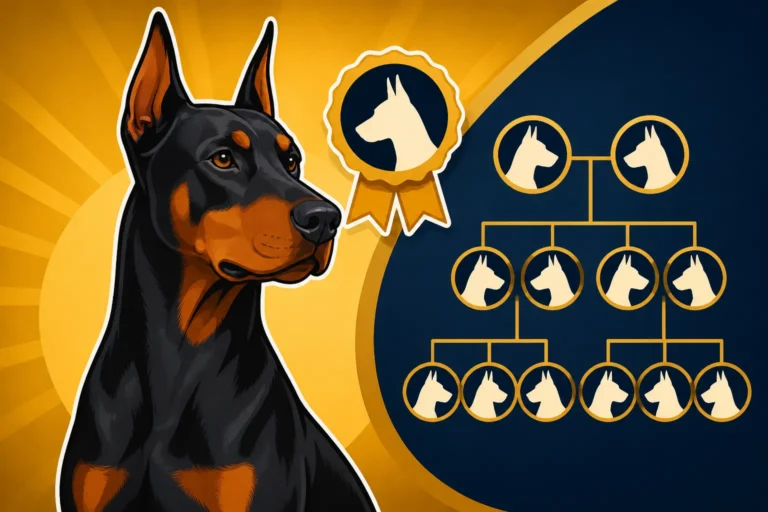
Responsible breeders are diligent about health testing their breeding stock for these conditions, and it’s critical for prospective puppy buyers to inquire about these tests. A Doberman is not a cheap dog to own, especially when you factor in ongoing health screening and potential treatment for these conditions. Setting aside funds for this, or securing good pet insurance before any pre-existing conditions are diagnosed, is a smart move. Insuring a Doberman Before the Heart Turns is a topic every Doberman owner should educate themselves on, because once a heart condition is diagnosed, coverage becomes much harder to secure. Maintaining a healthy diet, managing weight, and providing appropriate exercise are all part of supporting a Doberman's overall health and aiming for the longest possible lifespan, which is tragically shorter than many other breeds.
Training and Socialization Imperatives
The Doberman's intelligent, watchful, and determined temperament, as described in the AKC standard, means they are not a breed for passive owners. They thrive on clear structure, consistent training, and extensive socialization from a young age. Without these, their protective instincts can become overwhelming, or their intelligence can lead to boredom and destructive behaviors. This is why Training a Doberman That Is Smarter Than You Expect is often a humbling but rewarding experience. Early puppy classes, ongoing obedience training, and exposure to a wide variety of people, places, and other animals are essential to building a confident, well-adjusted Doberman who understands how to navigate the world appropriately.
Many Dobermans excel in dog sports like obedience, agility, rally, and nose work, which provide an excellent outlet for their energy and mental capabilities. These activities not only strengthen the bond between dog and owner but also channel their natural drives into productive and enjoyable pursuits. Even for a beloved family pet, continuous engagement and mental stimulation are vital. Consider regular puzzle toys, new tricks, or even advanced obedience classes. Remember, a Doberman's loyalty and protectiveness are best nurtured through trust and leadership, not through harsh methods that can break their spirit or create fear-based reactions. The investment in training pays dividends in a lifetime of companionship. Chewy and similar retailers offer a fantastic range of enrichment toys and training aids that can help keep your Doberman's sharp mind engaged.
Living with a Doberman in the Modern World
Despite their noble appearance and devoted nature, Dobermans still carry a certain reputation, sometimes unfairly. This can lead to challenges in housing, insurance, and public perception. Many rental properties or homeowner's insurance policies have breed restrictions that list Dobermans. As a responsible owner, it's often up to you to advocate for your dog, demonstrating its excellent training and stable temperament. This is a topic that resonates with many, and Handling a Doberman in Public Without Alarming People directly addresses these concerns.
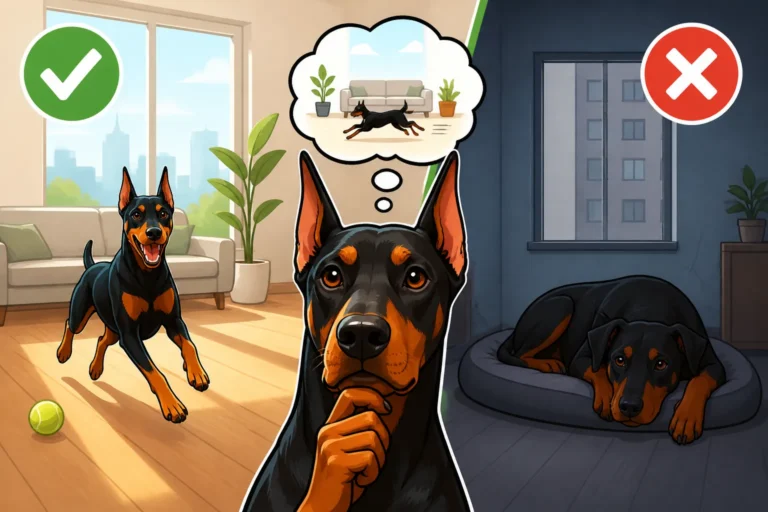
Living with a Doberman means committing to daily exercise, mental stimulation, and constant companionship. They are not dogs that do well left alone for long periods or confined to a backyard. They want to be with their people, participating in family life, whether that's lounging on the sofa while you read or accompanying you on a run. Their short coats mean they are sensitive to extreme weather, requiring coats in winter and protection from harsh sun in summer. Bedding should be thick and supportive to cushion their bony frames. In short, owning a Doberman is a lifestyle commitment. But for those who are ready for the challenge, the rewards are immense: an intelligent, loyal, and incredibly devoted companion who will guard your home and heart fiercely.
Disclaimer
This article is for general informational purposes only and does not constitute professional advice. Laws, prices and regulations vary by location and change over time. Consult a qualified professional for guidance on your specific situation.