The Doberman’s War Record
The Doberman's formidable reputation as a guardian and loyal companion is well-known, but many people don't realize just how deeply this breed's history is intertwined with military service, particularly in some of the most harrowing conflicts of the 20th century. This guide will take you through the incredible and often overlooked war record of the Doberman, exploring their pivotal roles, rigorous training, and the indelible mark they left on canine military history.
The Historical Context: Dobermans and Their Reputation
When we think of a Doberman, images of a sleek, powerful, and intelligent dog often come to mind. This perception isn't accidental; it's a direct result of the breed's origins and the specific traits that early breeders sought to cultivate. These traits, initially developed for civilian protection, proved to be remarkably well-suited for the demanding and dangerous world of military service.
From Tax Collector's Companion to Guard Dog
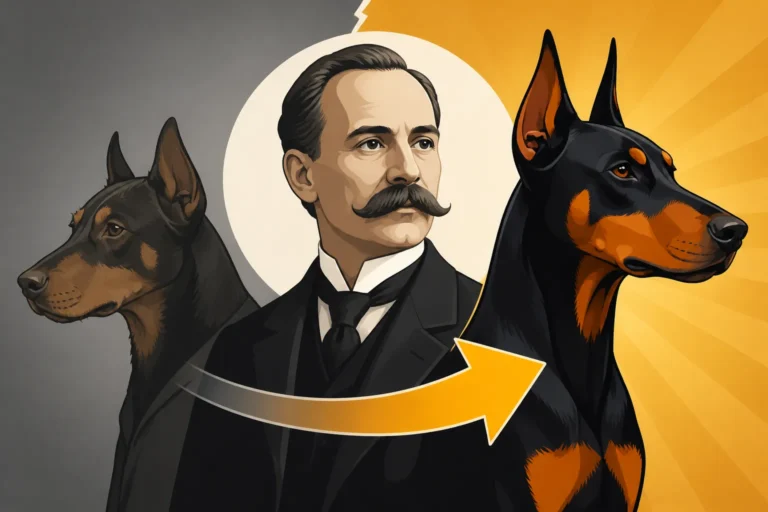
The Doberman Pinscher owes its existence to Karl Friedrich Louis Dobermann, a tax collector from Apolda, Germany, in the late 19th century. His dangerous profession often required him to travel through unsafe areas, leading him to desire a dog that could provide unwavering protection. He selectively bred dogs known for their intelligence, courage, and protective instincts, though the exact breeds he used remain a subject of historical debate. It's believed that various local breeds, including Rottweilers, German Pinschers, and possibly Greyhounds or Weimaraners, contributed to the Doberman's genetic makeup. The result was a dog that was fearless, agile, and fiercely loyal to its handler. This early history established the Doberman as the ultimate personal protection dog, a reputation that quickly spread beyond Apolda. The Tax Collector Who Invented the Doberman delves deeper into Dobermann's motivations and the nascent stages of the breed.
As the breed developed, its reputation as an uncompromising protector solidified. Breeders like Otto Goeller, a key figure in the Doberman's early development, further refined the breed, emphasizing not just physical prowess but also mental stability and trainability. These characteristics were paramount, as a truly effective guard dog needs to be discerning, knowing when to act and when to hold back, rather than being indiscriminately aggressive. This careful cultivation laid the groundwork for the Doberman's future roles, both in civilian life and, eventually, on the battlefield. The dogs were bred to be constantly alert, observant, and capable of quick, decisive action when their charge was threatened, making them natural sentries.
The foundation of the Doberman's temperament, as described in the breed standard, highlights traits like being "determined" and "alert," with an "intense expression." These aren't just pretty words; they reflect the core essence of a breed designed for vigilance and protection. This innate drive to observe and react, coupled with their formidable presence, meant they didn't just look like protectors; they were protectors. It's easy to see how these qualities would attract the attention of military strategists looking for a four-legged ally.
The Breed's Innate Traits Suited for Military Work
The physical and mental attributes of the Doberman Pinscher made them uniquely suited for military operations. Their sleek, muscular build provided them with both speed and endurance, allowing them to cover ground quickly and maintain stamina over long patrols. They were powerful enough to take down an intruder if necessary, yet agile enough to navigate difficult terrain. This combination of strength and grace was a huge advantage in dynamic combat environments.
Beyond their physical capabilities, the Doberman's intelligence truly set them apart. They are consistently ranked among the most intelligent dog breeds, capable of understanding and executing complex commands with remarkable precision. This intelligence meant they could be trained for a wide array of specialized tasks, adapting to new situations and learning quickly. Military training requires a dog that can process information, make decisions in high-stress situations, and work independently when needed, all while maintaining unwavering loyalty to their handler. A Doberman's sharp mind was perfectly tailored for such demands.
Furthermore, their keen senses – particularly their hearing and scent – were invaluable assets. A Doberman could detect an enemy approach long before a human soldier, providing crucial early warning. Their ability to track and differentiate scents in challenging environments made them excellent scouts. Coupled with their inherent courage and protective instincts, these sensory advantages transformed them from mere dogs into highly effective military assets. Doberman Temperament as the Standard Describes It provides a deeper understanding of these intrinsic traits. These dogs weren't just following orders; they were using their natural abilities to contribute meaningfully to tactical operations.
Dobermans in World War I and II: The Canine Combatants
While dogs have served alongside soldiers for centuries, the Doberman truly carved out its legend during the major global conflicts of the 20th century. Their deployment marked a significant evolution in the role of military working dogs, particularly in environments where their unique combination of traits proved indispensable.
Early Roles and Adaptations
In World War I, dogs, including Dobermans, began to be formally integrated into military units, primarily in Europe. Their roles were often varied but centered around their natural abilities. They served as messengers, carrying vital dispatches across dangerous battlefields where human couriers faced immense risk. Their speed, loyalty, and low profile made them ideal for this task, often being the only means of communication between isolated units. Imagine a Doberman, weaving through shell-pocked terrain, a critical message tucked securely in a pouch, delivering it to its intended recipient under fire. This was a testament to their unwavering dedication.
Dobermans also took on roles as sentry dogs, guarding supply depots, command posts, and trench lines. Their acute senses meant they could detect enemy movements or infiltration attempts long before a human guard might, often silently alerting their handlers to impending danger. This early warning system was invaluable in preventing surprise attacks and protecting vital assets. The psychological impact of a Doberman's presence was also significant; their reputation alone could deter enemy scouts or saboteurs. Training for these roles involved intense obedience and specialized scent work, often pushing the boundaries of what was thought possible for canine intelligence.
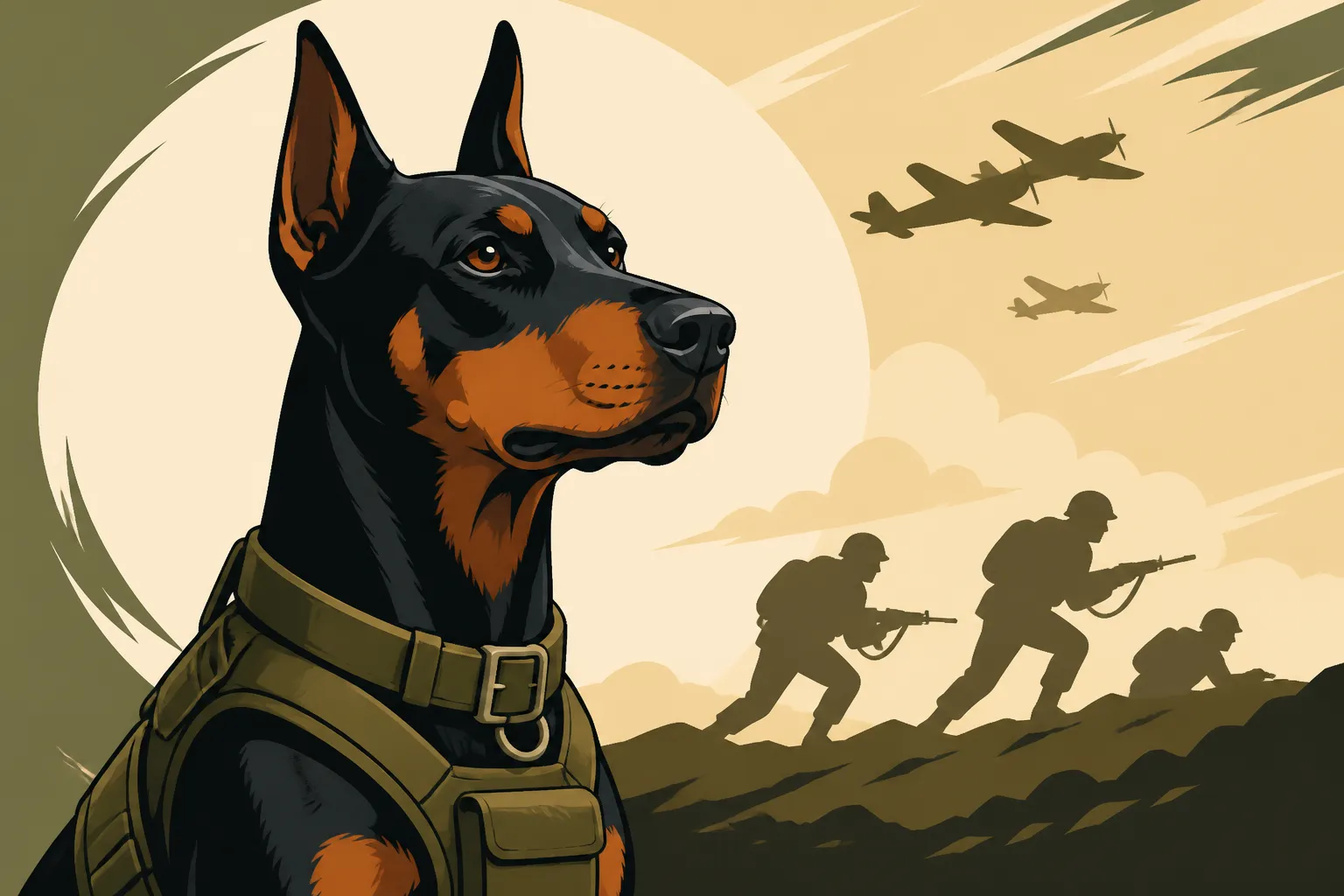
By World War II, the capabilities of military working dogs, and Dobermans specifically, were even better understood and utilized. The United States Marine Corps, recognizing the need for highly effective scout and sentry dogs in the Pacific Theater, established its "Dogs for Defense" program. Dobermans were among the primary breeds chosen for this rigorous program, selected for their intelligence, courage, and adaptability to harsh conditions. They were trained alongside their human handlers, forging an unbreakable bond that would be tested in the crucible of combat. The breed adapted remarkably well to these evolving demands, proving their versatility.
The Pacific Theater: Devil Dogs of Tarawa
It was during the brutal campaigns of the Pacific Theater in World War II that the Doberman Pinscher earned its most iconic and heroic reputation. The Marines, facing unimaginable conditions on islands like Guam, Okinawa, and particularly Tarawa, found an invaluable ally in their Doberman "Devil Dogs." These dogs weren't just mascots; they were integral members of the fighting force, performing life-saving duties in some of the most hellish environments imaginable. The Marine Corps Dobermans of the Pacific explores this crucial chapter in detail.
The terrain in the Pacific was dense jungle, riddled with hidden enemy bunkers, booby traps, and snipers. Conventional scouting methods were often too slow and exposed soldiers to unnecessary risk. This is where the Dobermans excelled. Their superior senses allowed them to detect concealed Japanese soldiers, tripwires, and landmines, effectively acting as an early warning system. Many times, a Doberman's silent alert or sudden change in behavior saved an entire patrol from ambush or injury. They moved stealthily through the undergrowth, their keen noses and ears picking up dangers that human eyes and ears would miss until it was too late. This critical role often meant the difference between life and death for their human comrades.
On the island of Tarawa, for instance, the fighting was particularly fierce and unforgiving. The Dobermans deployed there faced intense combat, noise, and constant danger. Yet, they performed their duties with unwavering courage. They accompanied patrols, leading the way to sniff out danger, and stood guard against nighttime infiltrations, often saving lives by alerting handlers to lurking enemy forces. The term "Devil Dogs" was already associated with the Marines, but the Dobermans adopted the moniker with distinction, proving themselves equally fierce and loyal in the face of overwhelming odds. Their contributions were so profound that a memorial was later erected on Guam, dedicated to the Dobermans who served and sacrificed in the Pacific.
Specific Accounts and Heroic Actions
The Doberman's war record is not just a collection of general facts; it is punctuated by countless individual acts of heroism that underscore their bravery and dedication. These stories, though sometimes passed down orally or in military records, illustrate the profound impact these dogs had on the lives of their handlers and the outcomes of specific engagements.
One of the most famous Dobermans of WWII was a dog named Cappy (full name Sergeant Cappy), who served with the U.S. Marine Corps on Guam. Cappy was instrumental in locating hidden Japanese soldiers and tunnels, often under direct fire. His handler, Private First Class William W. Putney, credited Cappy with saving his life and the lives of his patrol numerous times. Cappy's incredible tracking ability and unwavering focus in chaotic combat situations made him a legend among the Marines. He was known for his calm demeanor even amidst explosions and gunfire, a testament to his rigorous training and inherent courage. His story exemplifies the invaluable contribution of these canine warriors.
Another notable Doberman, Caesar, also served with distinction in the Pacific. Caesar’s handler often spoke of the dog’s uncanny ability to sense danger, freezing in his tracks or subtly nudging his handler just moments before an enemy position was revealed. These nuanced behaviors, born from intense training and the deep bond with their human partners, were critical for silent communication in dangerous environments. Imagine the trust a Marine placed in their Doberman, knowing that a slight twitch of an ear or a change in scent could mean the difference between survival and disaster. This level of trust is the bedrock of successful military dog teams.
Many Dobermans gave their lives in service, acting as living shields or falling victim to enemy fire while performing their duties. The Doberman Memorial on Guam, known as "Always Faithful," commemorates the 25 Dobermans who died liberating the island. This powerful statue depicts a Doberman standing guard, a poignant reminder of their sacrifice and loyalty. These dogs were not merely tools of war; they were partners, friends, and heroes, forever etched into the annals of military history. Their stories underscore that the Doberman is more than just a beautiful dog; it possesses a spirit of courage and dedication that few breeds can match.
| Role in WWII Pacific Theater | Description of Duties | Key Doberman Traits Utilized | Impact on Operations |
|---|---|---|---|
| Sentry Dog | Guarded perimeters, supply depots, and sleeping troops. Alerted handlers to approaching enemy presence, often silently. | Acute hearing, keen sense of smell, natural territorial instinct, silence, courage. | Prevented surprise attacks, protected vital assets, boosted troop morale by providing security. |
| Scout Dog | Led patrols, detecting hidden enemy soldiers, snipers, booby traps, and landmines in dense jungle. | Intelligence, stealth, keen senses (smell, hearing), ability to work off-leash, obedience. | Saved countless lives by providing early warning of ambushes and hazards, accelerated patrol movement. |
| Messenger Dog | Carried vital messages between units, often across dangerous, contested terrain. | Speed, agility, endurance, unwavering loyalty to handler, ability to navigate under fire. | Ensured critical communications in areas where human couriers faced extreme risk, maintained operational coordination. |
| Attack Dog | Engaged enemy combatants when necessary, protecting handlers and fellow Marines. | Strength, powerful bite, fearlessness, protective instinct, handler-focused aggression. | Deterred enemy infiltrators, provided direct defense in close-quarters combat. |
Training Regimens for Military Dobermans
The incredible feats performed by Dobermans in wartime were not simply a matter of instinct; they were the result of meticulous and demanding training programs. These regimens transformed already capable dogs into highly specialized and disciplined military assets, forging an unbreakable bond with their human handlers.
Selection and Early Socialization
The journey of a military Doberman began long before they ever saw a battlefield, with a rigorous selection process. Not just any Doberman puppy would do. Trainers looked for specific temperament traits: courage, intelligence, strong nerves, and a high drive to work and please. Puppies that were overly timid, aggressive without control, or lacked focus were typically screened out. The goal was to find dogs with the innate potential to withstand the immense pressures of combat and to learn complex tasks. Breeders played a crucial role, often donating their finest dogs to the war effort, understanding the gravity of the mission.
Once selected, early socialization was paramount. Unlike pet dogs, military Dobermans needed to be exposed to a wide variety of sights, sounds, and environments, often simulating battlefield conditions, but in a controlled manner. This included loud noises, flashing lights, different terrains, and interactions with multiple people in uniform. The aim was to habituate them to potential stressors, ensuring they wouldn't panic or become unreliable under pressure. This comprehensive exposure, managed by experienced trainers, built a foundation of confidence and adaptability. A well-socialized Doberman could distinguish between a training scenario and a real threat, reacting appropriately rather than just instinctually. This initial phase was critical for shaping a resilient and effective working dog.
Beyond just environmental exposure, the early stages focused on building a strong bond with their first trainers and then, crucially, with their assigned military handler. This relationship was the cornerstone of their future performance. A Doberman is known for its intense loyalty, often described as A Doberman That Shadows One Family Member. This natural inclination to bond deeply was channeled and nurtured, ensuring that the dog would trust and obey its handler implicitly, even in the most chaotic circumstances. This emotional connection wasn't just about affection; it was a tactical necessity, allowing for fluid communication and mutual reliance in life-threatening situations.
Specialized Combat Training: Sentry, Messenger, Scout
With the foundational work complete, Dobermans moved into highly specialized combat training. This phase honed their natural abilities into precise military skills, tailored for specific roles on the front lines. The training was intense, repetitive, and often designed to mimic the unpredictable nature of war.
For sentry duties, Dobermans were trained to remain silent and still, alerting their handler to intruders with subtle cues rather than barking. They learned to differentiate between friendly and enemy scents, and to discern between natural sounds of the environment and suspicious movements. This required immense self-control and focus, as a single bark at the wrong moment could compromise an entire operation or draw enemy fire. They were taught to hold their ground, standing as silent guardians, their vigilance an invisible shield. This level of discipline transformed them into living, breathing alarm systems.
Messenger training focused on speed, endurance, and unwavering direction. Dobermans were trained to run between two handlers, often over long distances and through complex obstacles, carrying messages in secure pouches. They had to ignore distractions, loud noises, and even simulated attacks, delivering their cargo without fail. The importance of these messages, often containing critical intelligence or orders, meant that the dogs had to be absolutely reliable. Their ability to cover ground quickly and with minimal visibility made them ideal for navigating treacherous battle zones, sometimes the only viable option for communication. Where Dobermans Still Work in Uniform explores how some of these skills are still relevant today.
Scout training was perhaps the most complex, demanding the highest level of intelligence and adaptability. Dobermans were taught to detect hidden enemies, booby traps, and tripwires silently. They learned to "point" or indicate danger without making a sound, using body language to communicate with their handler. This involved sophisticated scent discrimination, tracking skills, and the ability to navigate varied terrain. They also had to be comfortable moving ahead of their human patrol, often alone, trusting their senses and training to lead the way through unseen dangers. A good scout dog was priceless, potentially saving dozens of lives in a single patrol. Many of the tools used for training, from durable tugs to specialized leads, can be found even today for working dogs, for instance, on platforms like Chewy, adapted for civilian sport and training.
The Bond Between Handler and Doberman
Perhaps the most crucial, yet often underestimated, aspect of military Doberman training was the profound bond forged between the dog and its handler. This wasn't merely a professional relationship; it was a deep, emotional connection built on trust, respect, and mutual reliance. In the chaos and terror of war, this bond was often the only constant, a source of comfort and unwavering support for both man and dog.
Handlers spent countless hours with their Dobermans, from initial training to deployment. They ate together, slept together, and faced danger together. This constant proximity and shared experience cultivated an almost telepathic understanding. A handler learned to read every subtle cue from their dog – a shift in weight, a flick of an ear, a slight change in breathing – knowing it could signal an imminent threat. Likewise, the Doberman learned to trust its handler completely, following commands without hesitation even when instincts screamed otherwise. This deep connection made them an incredibly effective unit.
The Doberman's inherent loyalty, often described as the "Velcro Doberman" tendency to stay close to its person, was intensely amplified in this environment. For a Doberman, its handler was its world, the center of its universe. This intense devotion fueled their courage and determination in combat. They weren't just obeying orders; they were protecting their beloved human, an instinct that ran deeper than any training. This bond meant that the Doberman fought not just for country, but for the man walking beside them, a testament to the powerful connection between species. This deep connection continues to be a hallmark of the breed, a crucial consideration for What a First Doberman Demands of Its Owner.
Equipment and Support for War Dogs
Just like their human counterparts, military Dobermans required specialized equipment and logistical support to operate effectively in combat zones. From protective gear to medical supplies, ensuring the well-being and operational readiness of these canine soldiers was a complex but vital undertaking.
Protective Gear and Field Care
While Dobermans were incredibly resilient, the hazards of war necessitated certain protective measures. In some instances, dogs were outfitted with custom-made vests or harnesses designed to offer a degree of protection against shrapnel or minor injuries. These weren't bulletproof, but they provided an extra layer of defense in unpredictable environments. More commonly, harnesses were used to facilitate handling, especially in rough terrain, allowing handlers to guide or lift their dogs over obstacles, ensuring both safety and efficiency of movement.
Field care was a constant priority. Military dog teams always carried specialized first-aid kits for their canine partners. These kits included bandages, antiseptic solutions, pain relief, and even specific veterinary medications for common combat-related injuries such as cuts, abrasions, or even minor bullet wounds. Handlers were trained in basic canine first aid, capable of stabilizing an injured dog until professional veterinary support could be reached. This immediate care was crucial, as even small injuries could become life-threatening in the harsh conditions of the battlefield. The ability to administer immediate care meant that many Dobermans, though wounded, were able to recover and sometimes even return to duty.
Beyond immediate injury care, basic hygiene and comfort were also considered, albeit under extreme circumstances. Regular checks for parasites, cleaning of wounds, and providing as much clean water and appropriate nutrition as possible were essential to maintain the dogs' health and stamina. While luxury was nonexistent, every effort was made to ensure the Dobermans remained as fit and healthy as possible to perform their demanding duties. Specialized rations for working dogs, designed for high energy output, were part of their supplies, sometimes even sourced from civilian suppliers like what might be offered at Chewy for highly active pets today.
Logistics of Deploying Canine Units
Deploying canine units to active war zones presented a unique set of logistical challenges. It wasn't just about moving soldiers; it was about moving soldiers and their highly trained dogs, along with all their necessary supplies, into often remote and dangerous locations. This required careful planning and coordination.
Transportation of Dobermans varied depending on the distance and danger. They traveled by ship, plane, and land vehicles, often sharing space with their handlers and other troops. Special provisions had to be made for their comfort and safety during transit, especially on long voyages. This included ensuring adequate ventilation, access to water, and space for them to rest without being overly confined. The dogs were considered vital personnel, and their transport was treated with the same seriousness as that of any other soldier.
Once in the combat zone, maintaining a steady supply chain for the canine units was crucial. This included not just their specialized food rations, but also medical supplies, grooming tools, and replacement equipment. Veterinarians and veterinary technicians were often deployed alongside the troops, providing essential medical support and care for the dogs on the front lines. Their expertise was invaluable for managing illnesses, treating injuries, and ensuring the overall health of the canine forces. Without this robust logistical support, the effectiveness and survival of the Doberman war dogs would have been severely compromised. This complex logistical network was a testament to the growing recognition of dogs as indispensable members of the military team.
Life After Service: The Transition Home
While the heroism of military Dobermans on the battlefield is well-documented, their transition back to civilian life was often a complex and challenging journey. The intense experiences of war left an indelible mark, and the understanding of canine post-traumatic stress or the needs of retired working dogs was still in its infancy.
Rehabilitation Challenges for Veteran Dobermans
The Dobermans who survived their tours of duty often returned home with physical and psychological scars, much like their human counterparts. Some suffered from injuries sustained in combat, requiring extensive veterinary care and rehabilitation. Others, though physically sound, carried the invisible burdens of prolonged stress, exposure to trauma, and the constant hyper-vigilance demanded by their roles. These dogs had been trained to be alert to every sound, every scent, every movement, and switching off that ingrained response was incredibly difficult.
Many veteran Dobermans struggled to adjust to the quiet, predictable routines of civilian life. What was once a life-saving trait on the battlefield – suspicion of strangers, protective aggression, an intense reaction to loud noises – could become a significant challenge in a domestic setting. A sudden loud noise, like a backfiring car or fireworks, could trigger a fear response or defensive aggression, as the dog associated it with the sounds of war. This behavior, while completely understandable given their experiences, often made it difficult for them to integrate into homes or public spaces.
Unfortunately, in the early post-war years, the understanding of canine psychology and the specific needs of returning military dogs was limited. While some dogs found loving homes with their former handlers or other compassionate families, others, deemed "unsuitable" for civilian life due to their training or trauma, faced tragic fates. The concept of post-traumatic stress disorder (PTSD) in dogs was not widely recognized, and resources for their rehabilitation were scarce. This often led to heartbreaking decisions for dogs who had given so much. The recognition of these challenges led to significant improvements in how military working dogs are treated and retired today, but it was a hard lesson learned from the sacrifices of breeds like the Doberman.
The Ongoing Legacy and Recognition
Despite the initial challenges, the incredible service of Dobermans in the war efforts left a lasting legacy that continues to resonate today. Their courage, loyalty, and effectiveness forever changed the perception of dogs in military roles, solidifying their place as invaluable members of the armed forces. The "Always Faithful" memorial on Guam stands as a permanent tribute to their sacrifice, ensuring that their contributions are not forgotten. This recognition was a crucial step in honoring their service.
Over time, there has been a growing understanding of the needs of military working dogs, both during and after their service. Programs have been developed to ensure that these heroic animals receive proper care, rehabilitation, and, most importantly, loving homes in their retirement. Many now live out their golden years with their former handlers or carefully selected adoptive families, receiving the peace and comfort they so richly deserve. The military now has dedicated veterinary care, retirement processes, and organizations that help facilitate adoptions for these canine veterans.
The stories of the Doberman war dogs continue to inspire, serving as powerful examples of the extraordinary bond between humans and animals and the profound impact dogs can have in the most challenging of circumstances. Their legacy is not just one of wartime heroism, but also of the evolving responsibility we have to those who serve, regardless of species. The Doberman's name is synonymous with courage and devotion, a reputation largely built on the battlefields where they proved their unwavering faithfulness.
The Modern Doberman and its Military Heritage
The shadow of the Doberman's impressive war record extends to the present day, influencing how we view the breed and even shaping ongoing discussions about its temperament and purpose. While few Dobermans today serve in direct combat roles, their historical contributions are a foundational part of their identity.
Echoes of the Past in Today's Breed Standard
The qualities that made Dobermans exceptional war dogs – their intelligence, courage, trainability, and unwavering loyalty – are precisely the qualities still prized in the breed standard today. When you read descriptions of the ideal Doberman temperament, you'll find references to their alertness, determination, and fearless nature. These aren't just abstract ideals; they are direct echoes of the traits that allowed them to excel in the most demanding military environments. The Doberman the AKC Standard Describes clarifies these specific traits.
Breeders of modern Dobermans often strive to maintain these working characteristics, even if their puppies are destined for pet homes rather than police or military service. There's a strong emphasis on stable temperaments, high intelligence, and a willingness to work, ensuring that the Doberman remains a capable and versatile companion. This means that even a Doberman lounging on your sofa still possesses the genetic blueprint for vigilance and protection, a direct link to its brave ancestors who patrolled jungles and guarded camps. Their physical conformation also reflects a working heritage, built for speed, strength, and endurance.
Furthermore, the Doberman's protective instincts, honed over generations, remain a defining feature. While a well-trained pet Doberman should be discerning and friendly with welcomed guests, their innate guarding ability is always present. This characteristic, which was so crucial for military sentry duties, is what makes them such effective personal and family protectors in civilian life today. It's a reminder that beneath the elegant exterior lies a deeply capable and loyal guardian, ready to stand by its family, much like its predecessors stood by their Marines.
Dobermans in Contemporary Service and Civilian Roles
While other breeds like the Belgian Malinois have largely taken over front-line military roles in recent decades due to factors like handler preference and specialized needs, Dobermans still find significant service in various capacities. You might see them in police K9 units, performing patrol, detection, or apprehension duties. Their intimidating presence, combined with their intelligence and trainability, makes them excellent deterrents and effective working partners for law enforcement. Dobermans as Police Dogs Then and Now details this continuing legacy in police work.
Beyond uniformed service, the Doberman's working heritage shines brightly in a variety of civilian dog sports and activities. Many Doberman owners engage their dogs in competitive obedience, agility, tracking, and protection sports like Schutzhund or IPO. These sports tap directly into the breed's innate drives – their intelligence for complex obedience routines, their scenting ability for tracking, and their protective instincts for bite work, all in a controlled and sporting environment. Participation in these sports is a way for owners to honor the breed's history and provide their Dobermans with the mental and physical stimulation they thrive on. Resources from retailers like Chewy often cater to these active and working breeds, offering specialized foods, durable toys, and training equipment for dogs with high drives.
Moreover, Dobermans continue to serve as exceptional personal protection dogs for civilians. Their ability to assess threats, their courage, and their absolute loyalty to their families make them superb guardians. This role is a direct continuation of their foundational purpose, from Karl Dobermann's initial vision to their service in wartime. The modern Doberman, though often a beloved family pet, carries the genetic and historical echoes of a warrior, a testament to its enduring legacy as a courageous and faithful companion.
Lessons Learned from Doberman War Service
The extensive use of Dobermans in global conflicts provided invaluable insights into the capabilities of military working dogs, shaping modern canine programs and deepening our understanding of the human-animal bond under extreme duress. Their contributions weren't just about specific missions; they were about proving the indispensable value of dogs in combat.
The Importance of Breed-Specific Aptitudes
The Doberman's war record emphatically demonstrated the critical importance of selecting breeds with specific aptitudes for particular military roles. While many breeds possess admirable qualities, the Doberman's unique combination of high intelligence, acute senses, powerful build, and fierce loyalty made them supremely effective in roles requiring vigilance, speed, and courage. Their natural inclination to bond strongly with a single handler was also a significant advantage in maintaining cohesive and effective dog-handler teams. This wasn't a "one size fits all" approach; it was about matching the right dog to the right job.
The successes of the Doberman in scouting and sentry duties, particularly in the challenging environments of the Pacific, highlighted how a breed's innate characteristics, when properly trained, could outperform human capabilities in certain areas. Their ability to detect hidden enemies through scent or subtle sounds, or to navigate treacherous terrain with natural agility, provided a tactical edge that human soldiers could not replicate alone. This realization underscored the value of dogs not just as aids, but as genuine force multipliers. The experiences with Dobermans led to a more systematic approach to breed selection for military working dogs, carefully considering what each breed naturally brings to the table.
This lesson continues to inform military and police K9 programs today. While the Doberman's prominence in direct combat roles has waned, the principle of selecting specific breeds for specific tasks remains central. For example, breeds known for intense prey drive and bite work are often chosen for apprehension roles, while others known for scent discrimination excel in detection. The Doberman's legacy is a testament to the fact that understanding and leveraging breed-specific aptitudes leads to the most effective and successful working dog partnerships. How a European Doberman Is Built Differently and Working Titles on a European Doberman Pedigree touch upon the continued focus on working traits in certain Doberman lines.
The Enduring Partnership Between Humans and Dogs
Beyond the tactical advantages, the Doberman's war service reinforced, perhaps more profoundly than ever before, the enduring and unbreakable partnership between humans and dogs. In the isolation and terror of war, the bond between a Doberman and its handler often became the strongest connection either possessed. This mutual reliance, trust, and unwavering loyalty transcended species, proving to be a powerful force on the battlefield.
Handlers often spoke of their Dobermans not just as tools or assets, but as comrades, friends, and even family. The dogs offered emotional support, a silent presence that understood, and a fierce dedication that never wavered. For a soldier facing the horrors of combat, the consistent, loving presence of their Doberman could be a lifeline, a reminder of the simple, good things in a world turned upside down. This deep emotional connection was not a weakness but a strength, fueling the effectiveness of the team. Doberman Guarding Instinct and Where It Tips Over shows how these innate loyalties translate to protection.
The sacrifices made by Dobermans in service, and the unwavering dedication of their handlers to them, cemented the understanding that military working dogs are not just animals, but heroic veterans deserving of honor, respect, and comprehensive care. This legacy has led to better support systems for all military working dogs, from advanced veterinary medicine to dedicated retirement and adoption programs. The Doberman's war record stands as a powerful testament to the profound and invaluable partnership between humans and dogs, a bond forged in the crucible of war and celebrated for generations to come. Their story is a reminder that the loyalty of a Doberman knows no bounds, making them truly "Always Faithful."
Disclaimer
This article is for general informational purposes only and does not constitute professional advice. Laws, prices and regulations vary by location and change over time. Consult a qualified professional for guidance on your specific situation.