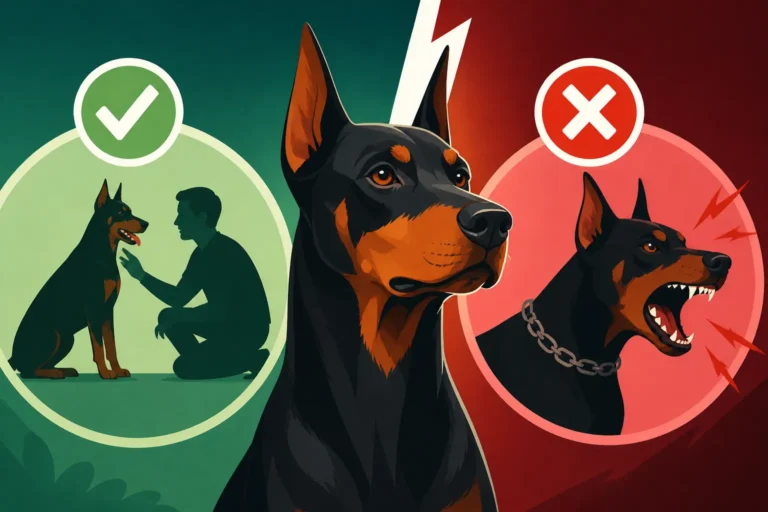
Doberman Temperament as the Standard Describes It
It’s a common frustration for Doberman owners: you mention your beloved companion, and you’re met with wide eyes or a hesitant step back. The truth is, there’s a lot of misunderstanding floating around about Doberman temperament. This guide will dive deep into what the official breed standard actually describes, helping you understand the true nature of this magnificent dog and how to foster their best qualities.
Understanding the Breed Standard: More Than Just Looks
When we talk about the Doberman’s temperament, it’s not just about opinions or anecdotes. There’s an official document, a blueprint really, created by breed clubs to describe the ideal characteristics of the Doberman. This is called the breed standard, and it covers everything from their physical appearance to their movement, and crucially, their personality. Ignoring this document means missing out on the core essence of what a Doberman is truly meant to be.
Why Standards Exist
Breed standards aren't just for show rings or elite breeders; they serve as a critical guide for preserving the integrity and health of a breed. Imagine trying to bake a cake without a recipe – you might end up with something edible, but it likely won't be the cake you intended. Similarly, the breed standard ensures that Dobermans consistently embody the traits that define them, both physically and mentally. Without a standard, breeders could introduce undesirable traits, leading to unpredictable temperaments or health issues that stray far from the breed's original purpose. It’s a historical document, too, reflecting the intentions of Karl Dobermann himself and the subsequent breeders who shaped the breed.
These standards provide a shared vision for what a Doberman should be, helping potential owners understand what to expect. It's a way of saying, "This is the Doberman we are striving for." While individual dogs will always have their unique quirks, the standard outlines the foundational characteristics. It’s about more than just ensuring a Doberman looks like a Doberman; it’s about ensuring they act like one too, in the best possible way. This guidance helps responsible breeders maintain the qualities that make the Doberman such a distinctive and often misunderstood companion.
Deciphering the Temperament Clause
For the Doberman, the temperament clause in the standard is often boiled down to key phrases like "energetic, watchful, determined, alert, fearless, loyal, and obedient." It’s a lot to unpack, isn't it? These aren't just buzzwords; each adjective carries significant weight, painting a picture of a dog that is far from the mindless aggressor sometimes portrayed in media. "Watchful" means they are observant of their surroundings, not necessarily suspicious of everyone they see. "Determined" speaks to their drive and focus, which is a fantastic asset in training, but can also be a challenge if not channeled correctly.
The standard aims for a dog that is intelligent and easily trainable, yet also steadfast and courageous when needed. It explicitly discourages shyness or viciousness, emphasizing that any tendency towards these extremes is a serious fault. This is crucial because it directly addresses the common misconception that Dobermans are inherently aggressive. A true Doberman, according to the standard, is confident and self-assured, not fearful or prone to unprovoked attacks. Understanding these nuances helps differentiate a well-bred Doberman from one that might have temperament issues due to poor breeding or lack of socialization.
Beyond Physical Description
While the Doberman standard goes into great detail about the ideal head shape, coat color (like The Black and Rust Doberman or The Red Doberman), and gait, the temperament section is arguably the most vital for day-to-day living. A Doberman with perfect conformation but a faulty temperament is not a true representation of the breed. This emphasis on character highlights that the Doberman is, first and foremost, a working dog and a companion. Their physical attributes were developed to support their function, not just for aesthetics.
A Doberman's mental makeup dictates how they interact with their family, strangers, and other animals. It affects their ability to be trained, their adaptability to different environments, and ultimately, their quality of life with you. A beautiful dog that is constantly anxious or fearfully aggressive is a tragic outcome, regardless of how perfectly they meet the physical measurements. Therefore, when looking for a Doberman, whether from a breeder or a rescue, understanding and prioritizing the temperament described in the standard is paramount. It ensures you're bringing home a dog that aligns with the breed's intended nature, not just its striking looks.
Defining "Determined and Alert": The Core Doberman Spirit
The terms "determined" and "alert" are perhaps the most frequently cited descriptors of the Doberman temperament in the breed standard, and they genuinely encapsulate much of what makes these dogs so special. It’s not just about being awake; it's about a state of constant, intelligent engagement with their world. This combination shapes their readiness to learn, their capacity for protection, and their deep connection with their human companions.
Alertness in Action
An alert Doberman isn’t just paying attention; they’re processing information at a rapid pace, constantly scanning their environment. This means they are often the first to notice a change, whether it's a distant rustle in the bushes, an unfamiliar car pulling up the driveway, or even a subtle shift in your mood. For owners, this can manifest as your Doberman lifting their head from a nap a full minute before you hear the doorbell ring, or turning their ears towards a sound you hadn't even registered. They are, in essence, highly tuned instruments, always receptive to stimuli.
This constant state of awareness is a double-edged sword. While it makes them excellent guardians and incredibly responsive to training, it also means they can be prone to overstimulation if not properly managed. A Doberman puppy needs Exposing a Doberman Puppy to Strangers and to different environments to learn what is normal and what truly warrants their attention. Without this foundational exposure, their natural alertness can sometimes morph into unwarranted suspicion or reactivity. Providing outlets for this mental energy, like puzzle toys or scent work, can be incredibly beneficial, and you can find a great selection of these on sites like Chewy.
The Meaning of Determination
"Determined" for a Doberman isn't about stubbornness, though they can certainly have a strong will! Instead, it speaks to their incredible drive and perseverance. When a Doberman sets its mind to something, whether it's retrieving a toy, mastering a new obedience command, or even just getting that last crumb off the kitchen floor, they approach it with unwavering focus. This characteristic makes them exceptionally trainable, as they possess an innate desire to succeed and complete tasks.
However, this determination also means that if they learn an undesirable behavior, they can be equally determined in performing it. For example, if a Doberman decides digging in the garden is a fun activity, they will pursue it with gusto until a more compelling alternative is presented. This is why Training a Doberman That Is Smarter Than You Expect is so crucial from a young age. Their determination, combined with their intelligence, demands consistent, clear, and fair guidance. They need to understand the 'why' behind the rules, and they will keep trying until they figure it out or are successfully redirected.
Steady and Fearless
The standard also describes the Doberman as "fearless," which is often misconstrued as aggressive. A truly fearless dog is one that possesses confidence and self-assurance, not one that lunges out of insecurity or ill intent. A Doberman exhibiting true fearlessness will stand its ground when appropriate, assess a situation calmly, and act with measured courage rather than panic or rash aggression. This is the hallmark of a stable temperament.
A Doberman that is genuinely "steady" will not be easily spooked by novel sights or sounds, and it will approach new experiences with a composed curiosity. This doesn't mean they're oblivious; their alertness is always engaged. But their fearlessness means they won't typically cower or become overly reactive unless genuinely threatened. This combination of steadiness and fearlessness makes them reliable companions and capable guardians, able to discern real threats from everyday occurrences. Any Doberman that consistently displays extreme shyness or unprovoked aggression is deviating from the ideal temperament described in the breed standard and likely warrants a deeper look into their breeding and upbringing.
Intelligence and Trainability: A Double-Edged Sword
The Doberman is consistently ranked among the most intelligent dog breeds, a trait that makes them incredibly capable but also presents unique challenges for their owners. Their sharp minds are a core part of The Doberman the AKC Standard Describes, and understanding this intellectual capacity is key to a successful partnership.
A Quick Learner
Dobermans pick up new commands and routines with astonishing speed. They seem to absorb information like sponges, often understanding a new cue after just a few repetitions. This makes them a joy to train for anyone who appreciates a dog that "gets it" quickly. From basic obedience like sit, stay, and come, to more complex tasks, their capacity for learning seems almost limitless. This is part of what makes them so successful in working roles, such as police or military dogs, where rapid assimilation of commands and problem-solving are essential.
This eagerness to learn means they thrive on consistent training and positive reinforcement. They enjoy engaging their brains, and they genuinely want to please their people. When teaching a Doberman, you’ll find that they respond well to clear communication, short and engaging sessions, and high-value rewards. Thinking about their potential, it's easy to see why they excel in competitive obedience or dog sports. Many Doberman owners find themselves exploring advanced training simply because their dog learns so fast and needs that continued mental engagement.
The Challenge of a Smart Dog
However, a highly intelligent dog can be a true challenge for an inexperienced or inconsistent owner. Why a Clever Doberman Is Harder to Train is a common topic in Doberman circles. If a Doberman isn't given clear boundaries and consistent training, they will use their intelligence to figure out their own rules. They can quickly learn to manipulate situations, test limits, and outsmart their owners to get what they want. This isn't out of malice, but simply because their brains are always working, always problem-solving.
This intellectual capacity means they get bored easily. A bored Doberman is often a destructive Doberman, or one that develops nuisance behaviors like excessive barking, digging, or even creating escape routes from your yard. They require mental stimulation just as much as physical exercise. Leaving a Doberman with nothing to do is like asking a genius to sit in an empty room – they will find something to occupy themselves, and it might not be something you appreciate! This highlights the importance of an owner who can commit to ongoing training and enrichment.
Mental Stimulation is Key
To keep a Doberman happy and well-behaved, mental stimulation isn't just a suggestion; it's a requirement. This goes beyond daily walks and basic obedience. Think about incorporating puzzle toys, which can be found in abundance on Chewy, or engaging in scent work, where they use their noses to find hidden treats. Learning new tricks, participating in dog sports like agility or Nose Work as a Low-Impact Doberman Sport, or even just varied training sessions that challenge their intellect can make a huge difference.
Even daily walks can become opportunities for mental exercise by varying routes, practicing obedience cues in distracting environments, or allowing them to sniff and explore different scents. The goal is to make them think and problem-solve. A mentally tired Doberman is a much calmer and more content Doberman. Owners who recognize and embrace their Doberman's need for intellectual engagement will find their dog to be a loyal, well-adjusted, and incredibly rewarding companion, rather than a handful.
Loyalty and the "Velcro" Doberman: A Deep Connection
One of the most endearing and well-known traits of the Doberman, deeply rooted in their standard-described temperament, is their intense loyalty and propensity to form incredibly strong bonds with their human families. This characteristic has earned them the affectionate nickname "Velcro Doberman."
The Shadow Dog Phenomenon
If you own a Doberman, you quickly learn what it means to have a true "shadow." They will follow you from room to room, often settling at your feet, leaning against your leg, or watching your every move. It's not uncommon for a Doberman to even accompany you to the bathroom – they just want to be with you, always. Where the Velcro Doberman Nickname Comes From is obvious to anyone who shares their home with one of these dedicated dogs. This isn't just random attachment; it stems from their deep desire to be an integral part of their human pack and to protect them.
This constant companionship can be incredibly comforting, making you feel truly loved and never alone. They thrive on interaction and being involved in family activities, no matter how mundane. Whether you’re cooking dinner, watching TV, or working in the garden, your Doberman will likely be nearby, content simply to exist in your presence. This closeness means they are highly attuned to your emotions and can often sense when you're feeling down or upset, offering quiet comfort without being asked.
Bonding with the Family
While a Doberman might form a particularly strong bond with one primary caretaker, they are generally devoted to their entire immediate family. They see their human family as their pack, and their protective instincts extend to all its members. This doesn’t mean they’re aloof with others; a well-socialized Doberman can be polite and even friendly with trusted friends and extended family. However, their primary loyalty and affection will always be reserved for those they live with day in and day out.
This strong family bond is why early socialization is so critical. Building a Doberman Puppy That Is Confident, Not Sharp means introducing them to a wide variety of people, sights, and sounds when they are young. This helps them learn to differentiate between those who belong to their inner circle and those who are benign visitors, without becoming overly suspicious or fearful. A Doberman’s loyalty is a beautiful thing, but it needs to be nurtured with thoughtful exposure to the world to ensure it manifests as confidence, not insecurity.
Separation Considerations
The flip side of this intense loyalty and desire for companionship is that Dobermans can be prone to separation anxiety if not properly prepared for alone time. They genuinely miss their people and can become distressed when left by themselves for extended periods. This isn't just about destructive behavior (though that can certainly happen); it's about genuine emotional distress for the dog. Owners must proactively teach their Doberman to Get a Doberman to Rest in a Crate and to be comfortable and secure when alone.
This might involve gradually increasing the duration of alone time, providing high-value chew toys or puzzle feeders before you leave, and ensuring they have had ample exercise and mental stimulation before solitude. Some Dobermans simply cannot cope with being left Hours a Doberman Can Be Left Alone without careful management. It’s a significant commitment, and potential owners need to honestly assess if their lifestyle can accommodate a dog that thrives on constant companionship. Ignoring this need can lead to significant stress for both the dog and the owner.
Protective Instincts: Natural Guardian, Not Aggressor
The Doberman was originally bred to be a guardian, and this instinct is deeply ingrained in their temperament as described by the breed standard. They are inherently watchful and protective of their family and home, but it's crucial to understand that this is distinct from unprovoked aggression. A well-bred, well-socialized Doberman provides security through their presence and discernment, not through indiscriminate hostility.
Natural Guardian, Not Aggressor
The breed standard emphasizes that a Doberman should be "fearless" and "courageous," traits essential for a guardian, but it equally stresses that they should not be "vicious" or "shy." A true Doberman guardian assesses situations with intelligence. They are capable of differentiating between a friend arriving for dinner and an actual threat. Their protective nature usually manifests as a strong, confident presence, an alert posture, and perhaps a deep, resonant bark to announce a stranger's arrival. They are a deterrent simply by existing.
They operate on a "ready but reserved" principle. They are always aware, always observing, but they don't typically react impulsively. Instead, they will observe your cues and respond accordingly. This means they look to you for guidance on how to perceive and interact with new people or situations. When a Doberman's guarding instinct tips over into inappropriate aggression, it's often a sign of poor breeding, lack of socialization, or mismanagement by the owner, rather than an inherent flaw in the breed itself.
Teaching Appropriate Responses
Because of their strong protective instincts, it is vital to teach a Doberman appropriate responses to visitors and novel situations from a very young age. Socialization is paramount, ensuring they meet a wide variety of people in different contexts, always ensuring positive experiences. This helps them build confidence and learn that not every stranger is a threat. Training them to Teaching a Doberman to Accept Visitors is a key life skill. This might involve having them go to their mat or crate when guests arrive, or waiting patiently for your signal before greeting someone new.
Structured training also helps channel their natural protective drive. Obedience training builds a foundation of control, allowing you to manage their reactions. For example, teaching a solid "leave it" or "stay" command can prevent them from rushing the door or becoming overly reactive to passersby during walks. Without this guidance, their strong instincts can become a liability, making it difficult to safely manage them in public or even at home. Early and consistent training helps them understand when and how to use their guarding tendencies responsibly.
When Instincts Go Too Far
Sometimes, a Doberman's guarding instincts can escalate beyond what is healthy or safe. This often happens when owners misunderstand the breed, attempting to "train" their Doberman to be aggressive or failing to provide adequate socialization and boundaries. A Doberman that lunges, growls without provocation, or acts fearfully aggressive is not exhibiting the ideal temperament described in the standard. This kind of behavior is dangerous and indicates a serious problem. Doberman Guarding Instinct and Where It Tips Over is a crucial point for owners to recognize.
Such behaviors can stem from a variety of issues: genetics from poorly bred lines, a lack of early socialization, negative experiences, or even underlying pain or health issues. If a Doberman displays inappropriate aggression, it’s imperative to seek help from a qualified professional dog trainer or veterinary behaviorist. Their expertise can help identify the root cause and implement a management and modification plan. The goal is always a confident, stable Doberman whose protective instincts are a blessing, not a burden, and who is a safe member of both your family and society.
Energy and Exercise Needs: More Than a Couch Potato
The Doberman is an athletic and energetic breed, and their temperament is intrinsically linked to their physical activity levels. The breed standard describes them as "energetic," which is an understatement for many! Simply put, a Doberman that doesn't get enough physical and mental exercise is a Doberman prone to behavioral issues.
More Than a Couch Potato
While a Doberman loves to cuddle on the couch with their family, they are not content to be a permanent fixture there. Their lean, muscular build and keen intelligence were developed for active work. They possess remarkable stamina and require significant daily exercise to be healthy and well-adjusted. Think long, brisk walks, active play sessions, or even running alongside a bicycle. Just letting them out into a yard, even a large one, is usually not enough to meet their needs.
Many owners underestimate the sheer volume of exercise a Doberman truly needs. This isn't just about preventing destructive behaviors; it's about their overall well-being. A physically drained Doberman is a calm and receptive Doberman. Conversely, an under-exercised Doberman will have pent-up energy that often manifests as restlessness, destructive chewing, excessive barking, or even an inability to focus during training. Their bodies and minds are built for action, and denying them that outlet is a recipe for trouble.
Physical Outlets for a Doberman
Meeting a Doberman's exercise needs requires creativity and commitment. Daily walks are a start, but aim for longer durations and a faster pace than you might with a less athletic breed. Fetch, flirt poles, and vigorous games in a secure, fenced area are excellent ways to burn off energy. Dobermans often excel in dog sports like agility, flyball, or Tracking Work With a Doberman which combine physical exertion with mental engagement. Running, hiking, or even swimming can be fantastic outlets, provided your Doberman is old enough and physically conditioned.
It's also important to remember that physical exercise alone is often not enough. Their intelligent minds need to be worked too. A good exercise routine should ideally combine both physical activity and mental challenges. Perhaps a long run followed by a puzzle toy session from Chewy, or a brisk walk where you practice obedience commands along the way. Varying their activities keeps them engaged and prevents boredom, making their exercise routine more effective and enjoyable for both of you.
The Importance of Consistency
Consistency is absolutely vital when it comes to a Doberman's exercise routine. They thrive on predictability and a regular schedule. Random, infrequent bursts of activity won't cut it. They need a consistent outlet for their energy every single day, regardless of the weather or your schedule. This demands a significant commitment from their owner, but the payoff is a happier, healthier, and far more manageable dog.
A Doberman knows its routine, and if its daily walk or play session is missed, they will let you know! It's better to establish a realistic routine you can stick to, rather than aiming for an unsustainable ideal. Factor in their exercise needs when planning your day, and be prepared for some enthusiastic reminders if you fall behind. Understanding that this high energy is an intrinsic part of their temperament, and providing consistent outlets for it, is a foundational aspect of responsible Doberman ownership.
Socialization: Building a Confident, Balanced Companion
The Doberman's inherent alertness and protective instincts, while desirable, necessitate careful and thorough socialization from a very young age. Without it, these traits can easily lead to a dog that is overly suspicious, fearful, or even reactive, which is a far cry from the confident, stable temperament described in the breed standard.
Early Exposure is Crucial
The period between 8 and 16 weeks is often called the "critical socialization period" for puppies, and for a Doberman, this time is absolutely non-negotiable. This is when puppies are most open to new experiences and form lasting impressions. During this window, a Doberman puppy needs to be safely exposed to a wide variety of sights, sounds, smells, people, and appropriate dogs. This isn't about overwhelming them, but about positive, controlled introductions.
Imagine bringing home a Doberman puppy and only letting it see your family and your yard. When it grows up and suddenly encounters a child on a skateboard, a man with a beard, or a bustling city street, its natural guarding instincts, combined with a lack of positive early exposure, can manifest as fear or aggression. The Sixteen Weeks That Set a Doberman Up are truly foundational. Puppy classes are an excellent way to provide structured socialization in a safe environment, helping them learn appropriate social skills with other dogs and people.
Meeting New People and Places
A well-socialized Doberman should be confident and discerning, not indiscriminately friendly with everyone, but certainly not fearful or aggressive. They should learn to tolerate polite strangers and be comfortable in various public settings. This means taking your Doberman puppy to different places: a quiet park, a pet-friendly store (like Chewy's physical locations if available, or just a general pet store), walking near a school playground (from a safe distance), and even just sitting outside a coffee shop to observe the world go by.
Each interaction should be positive and low-pressure. Always advocate for your puppy; don't force interactions if they seem overwhelmed. Use treats and praise to create positive associations. The goal is to build a dog that understands the world is generally safe and that most people mean no harm. This prevents their natural alertness from turning into constant suspicion and allows them to relax in appropriate situations. Without this broad exposure, even the most well-intentioned Doberman can become a liability in public.
Encountering Other Animals
Beyond people and places, a Doberman also needs careful introduction to other animals. While some Dobermans can live harmoniously with other dogs and even cats, their strong prey drive and natural guarding instincts mean these introductions must be handled thoughtfully and carefully. For puppies, positive interactions with calm, vaccinated adult dogs can teach them canine social cues. However, it's also important to recognize that some Dobermans, especially same-sex pairings, might not always be suited to multi-dog households. Same-Sex Doberman Households can sometimes pose challenges that require careful management.
If you have other pets, like cats or smaller dogs, Raising a Doberman Puppy With a Cat requires patience and supervision. Start with controlled, positive introductions, always ensuring the safety and comfort of all animals involved. The aim is not necessarily for them to be best friends with every dog they meet, but for them to be neutral and calm in the presence of other animals. The outcome of these interactions is heavily influenced by early, positive experiences, consistent training, and the innate temperament of the individual Doberman.
Living with a Doberman: A Life of Partnership
Bringing a Doberman into your life is a commitment to a deep, often intense, partnership. Their temperament dictates much of this experience, promising a loyal, intelligent, and active companion, but one that requires an equally dedicated owner.
The Doberman as a Family Member
More than just a pet, a Doberman truly becomes a family member, often deeply integrated into daily life. Their "Velcro" nature means they crave involvement and thrive on being close to their humans. They will want to be wherever you are, participating in whatever you're doing, even if it's just supervising from a respectful distance. This level of attachment means they flourish in homes where they are treated as an integral part of the family, not simply left to their own devices in a backyard.
This deep connection is one of the most rewarding aspects of Doberman ownership. They are incredibly loving and affectionate with their family, often enjoying cuddles and physical closeness. They are sensitive to your moods and quick to offer comfort or solicit play, depending on the situation. For families with older, respectful children, a Doberman can be a wonderful, protective companion, though constant supervision is always necessary, especially with very young children due to the Doberman's size and energy. Whether a Doberman Is Safe Around Children often depends more on the child's behavior and the dog's training than on the breed itself.
Public Perception vs. Reality
One of the ongoing frustrations for Doberman owners is the breed's often unfair public perception. Despite the breed standard's emphasis on a stable, fearless, yet non-vicious temperament, many people still view Dobermans with fear or apprehension. This stereotype often stems from media portrayals and isolated incidents, rather than the reality of the breed when well-bred and properly raised. It can mean strangers crossing the street, avoiding eye contact, or making negative comments when you're out with your Doberman.
This is where the owner's responsibility shines through. A well-trained, confident Doberman that exhibits excellent manners in public can be the best ambassador for the breed. Your Doberman's behavior, especially when out and about, directly challenges these misconceptions. It's a testament to good breeding, thorough socialization, and dedicated training that a Doberman can walk calmly through a crowded street, ignoring distractions and demonstrating their true, balanced temperament. For a good read on how much an owner's input matters, check out What a First Doberman Demands of Its Owner.
Long-Term Commitment
Owning a Doberman is a long-term commitment, not just for the 9-12 years of their lifespan, but for the daily dedication required to manage their unique blend of intelligence, energy, and loyalty. They are not a "set it and forget it" dog; they require ongoing training, consistent exercise, and abundant mental stimulation throughout their lives. As they mature, their needs may shift, but their fundamental temperament remains, demanding engagement and companionship.
| Temperament Trait | Standard Description | Common Misconception | Owner's Reality |
|---|---|---|---|
| Alertness | Highly aware, observant of surroundings. | Overly suspicious, easily reactive. | First to notice things, requires careful socialization to prevent overreaction. |
| Determination | Strong drive, persistent, focused on tasks. | Stubborn, difficult to control. | Excellent for training & sports, needs consistent guidance to channel drive positively. |
| Fearlessness | Confident, courageous, self-assured. | Aggressive, prone to attacking. | Stable, discerning guardian; acts with measured courage, not unprovoked hostility. |
| Loyalty | Deeply devoted to family, strong bonds. | Clingy, separation anxiety guaranteed. | Craves companionship; prone to separation distress if not taught independence. |
| Energy | Energetic, athletic, requires activity. | Destructive if bored, hyperactive. | Needs significant daily physical & mental exercise to be calm and well-behaved. |
| Intelligence | Quick learner, problem-solver, astute. | Manipulative, too smart for owners. | Thrives on mental challenges; can outsmart inconsistent owners, needs engagement. |
Ultimately, a Doberman offers a profound partnership. For those willing to invest the time and effort into understanding and nurturing their temperament, the rewards are immense: an intelligent, devoted, and truly unforgettable companion. They embody a noble spirit, always ready for action, yet equally content to be a steadfast presence by your side.
Disclaimer
This article is for general informational purposes only and does not constitute professional advice. Laws, prices and regulations vary by location and change over time. Consult a qualified professional for guidance on your specific situation.