Leash Manners for an Eighty-Pound Doberman
Walking an eighty-pound Doberman can feel like a daily wrestling match. That powerful surge of muscle and instinct can pull you off balance, yank your arm, or send you skidding across the pavement, making what should be a pleasant outing into a source of constant frustration and even embarrassment. But it doesn't have to be this way; this guide will walk you through practical strategies and positive reinforcement techniques to transform those strained walks into enjoyable, controlled experiences for both you and your Doberman.
Understanding the Doberman's Drive to Pull
It’s easy to feel like your Doberman is just being stubborn when they pull, but there's usually more to it than simple defiance. Dobermans are powerful, intelligent dogs bred with a strong working drive. When you combine their physical strength with their keen senses and natural curiosity, you have a recipe for a dog that wants to be everywhere at once, often dragging you along for the ride. Understanding these underlying motivations is the first step toward addressing the pulling.
Why Dobermans Pull on Leash
First and foremost, Dobermans are incredibly strong. An eighty-pound Doberman isn't just a big dog; it's a canine athlete with a low center of gravity and immense forward momentum. Their original purpose, conceived by Karl Dobermann, involved guarding and working alongside their owner, which required a fearless and determined temperament. This inherent drive translates into a dog that often moves with purpose and confidence, and if that purpose involves getting to something exciting faster than you're walking, they will lean into that leash with all their might. They also have an incredible sense of smell and sight, picking up on scents and movements long before you do. To them, pulling means getting closer to that intriguing squirrel, that fascinating patch of grass, or that distant dog they've spotted. It's not malicious; it's simply efficient from their perspective.
Moreover, if pulling has ever resulted in them reaching their desired destination faster, they’ve learned that it works. Every time they tug and get to sniff that lamppost, or greet that person, or investigate that rustling bush, they’re being reinforced for the pulling behavior. It’s a classic case of operant conditioning: behavior that is rewarded will be repeated. It can be incredibly difficult to counteract years of this learned behavior, especially if previous owners or even you, inadvertently, allowed it to continue.
The Physical Mechanics of Pulling: Leverage and Physics
When your Doberman pulls, they're using basic physics to their advantage. Imagine a small child trying to pull a grown adult forward – it wouldn't work, right? But if that child gets a low stance and truly leans into their weight, they can create significant leverage. Your Doberman does the same thing. Their powerful neck and shoulder muscles, combined with their dense bone structure and often low-slung head carriage when focused on a scent trail, make them incredibly effective at generating force. A Doberman on a standard flat collar or even a back-clip harness can easily throw their weight into the leash, distributing the pressure across their chest and shoulders, allowing them to pull with minimal discomfort, while you bear the brunt of the force on your arm and shoulder.
This isn't just uncomfortable for you; it can also be detrimental to your Doberman's physical well-being. Constant pulling against a flat collar puts immense pressure on their trachea, potentially causing damage or discomfort. Even harnesses that clip on the back can encourage pulling by allowing them to use their full body strength, much like a sled dog. Understanding this mechanical disadvantage is crucial for choosing the right equipment and training methods that work with their anatomy, rather than against it, to encourage a loose leash.
Essential Equipment for an Eighty-Pound Doberman
Choosing the right equipment is absolutely foundational for teaching a Doberman good leash manners. It’s not about finding a magic bullet, but rather selecting tools that give you more control and make it easier to communicate what you want, without causing pain or fear. What works for a Chihuahua certainly won't cut it for an eighty-pound Doberman.
Leashes: Length, Material, and Type
For a Doberman, a sturdy, well-made leash is non-negotiable. Forget the thin, flimsy nylon leashes you might grab at a big box store – these won't stand up to the strength and determination of a Doberman, and they can be incredibly uncomfortable to hold if your dog decides to lunge.
- Length: A standard six-foot leash is often ideal for training loose-leash walking. It provides enough slack for your Doberman to walk comfortably beside you without feeling tethered, but it’s not so long that you lose control or they wander too far ahead. For dedicated heel work or in very busy areas, a four-foot leash might offer more immediate control, but it can feel restrictive during casual walks. Avoid retractable leashes entirely; they teach dogs that pulling extends their range and offer very little control when you need it most.
- Material: Leather leashes are a fantastic investment for Doberman owners. They are incredibly durable, soften beautifully over time, and provide an excellent grip, even when wet. Nylon leashes can also work, but opt for thicker, high-quality webbing with reinforced stitching. Make sure the clasp is heavy-duty and secure. You're looking for something that won't snap under sudden pressure.
- Flat vs. Round: This often comes down to personal preference. Flat leashes are common and comfortable to hold. Round leashes can feel nice in the hand, but ensure they are well-constructed and not prone to slipping.
When choosing, always consider the strength of your Doberman. You need a leash that can withstand their powerful bursts of energy, keeping both of you safe.
Collars and Harnesses: Navigating the Options
This is where things get a bit more nuanced, as different tools offer different levels of control and suit different training philosophies. The goal is to find something that helps you guide your Doberman without resorting to force.
- Flat Buckle Collar: This is the basic, everyday collar for ID tags, but it offers very little leverage or control for a pulling Doberman. The pressure is applied directly to the trachea, which is not only ineffective for stopping pulling but can also cause coughing, choking, and even long-term damage if your Doberman is a consistent puller. While every Doberman should wear one for identification, it's generally not recommended as the primary tool for leash training an eighty-pound dog.
- Martingale Collar: Often called a "limited slip" collar, martingales are designed for dogs with narrower heads, like Dobermans, sighthounds, or collies, to prevent them from backing out of their collar. When tension is applied, the collar tightens only to a certain point, preventing escape without choking the dog. They provide a bit more control than a flat collar, as the tightening action creates a gentle, brief pressure cue. However, a determined Doberman can still pull quite effectively on a martingale if not paired with proper training. It's a good "safety" collar but not always the best training tool for strong pullers.
- Head Halters (e.g., Gentle Leader, Halti): These devices wrap around your Doberman's muzzle and behind their ears, attaching the leash under their chin. The principle is that where the head goes, the body follows. If your Doberman tries to pull, their head is gently turned to the side, making it uncomfortable to pull forward. Many Doberman owners find these incredibly effective because they work on redirection rather than brute force. They allow even smaller individuals to comfortably walk a powerful Doberman. It takes time for a dog to get used to a head halter, as some Dobermans initially dislike the feeling on their muzzle, rubbing their face on the ground or trying to paw it off. Introduce it slowly with positive reinforcement and short wear times indoors before attempting walks. Whether a Doberman's Long Nose Fits a Head Halter is a common question, and yes, they are generally well-suited for a Doberman's refined head shape.
- Front-Clip Harnesses (e.g., Easy Walk, Freedom No-Pull Harness): Unlike traditional back-clip harnesses that actually encourage pulling by distributing pressure like a sled harness, front-clip harnesses have the leash attachment ring on the dog's chest. When your Doberman pulls, the leash redirects their forward momentum, gently turning them to the side. This makes it difficult for them to continue pulling in a straight line and gives you much more leverage without putting pressure on their throat. They are generally comfortable for the dog and widely recommended by positive reinforcement trainers. Some Doberman owners find them less effective if their dog is particularly determined and can still lunge, but for consistent pullers, they are a great starting point. Harnesses That Hold a Strong Doberman explores various options.
Table: Comparing Leash-Walking Equipment for Dobermans
| Equipment Type | Description | Pros for an Eighty-Pound Doberman | Cons for an Eighty-Pound Doberman |
|---|---|---|---|
| Flat Buckle Collar | Standard collar around the neck. | Good for ID tags; comfortable for well-trained dogs. | Minimal control for pulling; risk of tracheal damage; easy to slip out of. |
| Martingale Collar | Tightens slightly under tension to prevent escape. | Prevents escape; gentle corrective feedback; safer than choke. | Can still allow pulling; pressure on throat if constant tension. |
| Head Halter | Fits over muzzle and behind ears; leash attaches under chin. | Excellent control; redirects head (and body); reduces pulling power significantly. | Some dogs initially resist; requires desensitization; can look like a muzzle. |
| Front-Clip Harness | Leash attachment on the chest. | Redirects forward momentum; no pressure on throat; comfortable. | Can still allow some pulling; may tangle legs if not fitted well; might not deter lunging completely. |
Avoiding Harmful or Counterproductive Equipment
As a veteran lifestyle blogger for Dobermans, I've seen a lot of trends come and go, and I've witnessed the damage that certain tools can inflict, both physically and psychologically. While opinions on training tools can be incredibly polarizing, my advice leans towards methods that build trust and clear communication, not fear or pain.
- Choke Chains (Slip Chains): These metal chains tighten around your Doberman's neck when tension is applied, designed to create an aversive stimulus. The problem is that many owners use them improperly, or they are just too powerful for a Doberman to safely wear without risk of serious injury to the trachea, larynx, and esophagus. Constant pressure or sudden corrections can cause irreversible damage. They work by creating discomfort, which often leads to fear or resentment rather than a desire to cooperate.
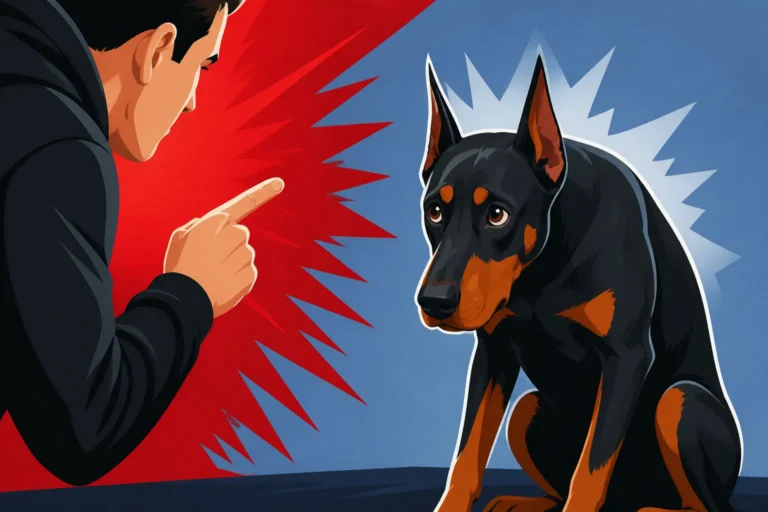
- Prong Collars (Pinch Collars): These collars have metal prongs that pinch the skin around your Doberman's neck when tension is applied. Proponents argue they mimic a mother dog's correction, but in reality, they deliver sharp, painful jabs. While they can be very effective at stopping pulling immediately, they do so through pain and aversion. This can lead to a Doberman associating the discomfort with the environment (other dogs, people, new places) rather than just the pulling itself. This can increase anxiety, fear, and even aggression, especially in a sensitive breed like the Doberman. Why Yelling Shuts a Doberman Down touches on how Dobermans can react poorly to harsh corrections.
- Electronic Collars (E-collars): These collars deliver a static shock or vibration as a correction. While modern e-collars have varying levels and are often marketed as "communication tools," they are still fundamentally based on aversion. The timing and application must be absolutely flawless to avoid confusing or frightening your Doberman, and even then, the risk of creating a fearful or anxious dog is significant. For loose-leash walking, they introduce an element of discomfort that can overshadow the learning process and damage your bond.
My philosophy is always to teach, not to punish. You want your Doberman to choose to walk politely because it's rewarding, not because they're afraid of pain. While these tools might offer quick fixes, they often come with hidden costs to your Doberman's emotional well-being and your relationship.
Building a Foundation: Early Training Principles
Once you have the right equipment, the real work begins: training. This isn't just about walks; it's about building a language of cooperation and trust. Even if your Doberman is an adult with established pulling habits, it's never too late to go back to basics and rebuild their understanding of leash manners.
Starting Young and Rebuilding Basics with Adults
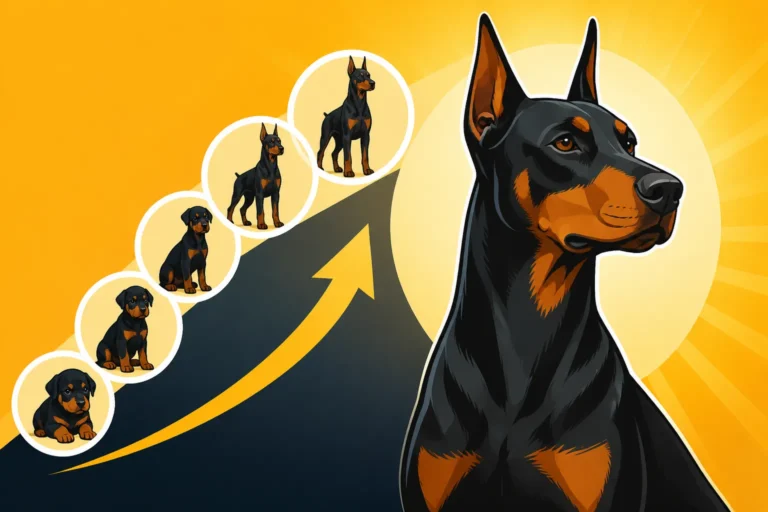
It’s often said that the best time to teach a Doberman loose-leash walking is when they’re a puppy. A small Doberman puppy, even one who's going to be eighty pounds later, is much easier to manage physically. You can establish those good habits of walking politely by your side before their strength becomes a significant factor. Short, frequent training sessions, lots of praise, and high-value treats can make a huge difference in those crucial early months. Doberman Puppies and Their First Heart Check is also a good reminder to get their health checked as they grow, as proper development influences training.
However, if you've adopted an adult Doberman, or if your current Doberman has developed a habit of pulling, don't despair! It simply means you need to approach the training with a bit more patience and consistency, essentially going back to square one. Forget everything your Doberman thinks they know about walks. You are now going to teach them a new, rewarding way to move with you. This might mean starting in a low-distraction environment, like your backyard or a quiet room, and gradually increasing the challenge. Think of it like learning a new dance; you start with the basic steps before moving to the ballroom floor.
Positive Reinforcement and High-Value Motivation
Positive reinforcement is key for Dobermans, who are incredibly intelligent and sensitive. Why a Clever Doberman Is Harder to Train if you resort to harsh methods; they learn quickly, but they also shut down quickly if they feel unfairly treated. Instead, you want to make walking politely the most rewarding thing they can do. This means using treats that your Doberman adores. Think cooked chicken, small pieces of cheese, hot dogs – not just their regular kibble. The higher the value of the reward, the more motivated they will be to earn it.
The process is simple: when your Doberman walks with a loose leash, even for a single step, mark that moment with a verbal cue like "Yes!" or a clicker, and immediately reward them with a high-value treat. The timing is critical; the reward needs to happen within 1-2 seconds of the desired behavior for your Doberman to make the connection. You are essentially telling them: "This is exactly what I want, and it leads to good things!" This creates a positive association with walking next to you and a loose leash. Rewards a Doberman Will Work For delves deeper into different motivators.
Consistency, Patience, and Realistic Expectations
Training a powerful eighty-pound Doberman requires incredible consistency and patience. You can't train for 10 minutes one day and then let them pull you for the rest of the week and expect progress. Every single time the leash is on, it's a training opportunity. This means that if you're not actively training loose-leash walking, and you know you'll be in a situation where your Doberman is likely to pull (e.g., a bustling street festival), use a head halter or front-clip harness to manage the situation safely, without reinforcing the pulling.
Be realistic with your expectations. You're not going to fix years of pulling in a week. There will be good days and bad days. Some walks will feel like a triumph, others like a total regression. That's normal. Celebrate the small victories – two loose steps, a moment of eye contact, a quick check-in. Don't get discouraged by setbacks. Every Doberman learns at their own pace, and what matters most is your consistent, calm, and positive approach. Remember, you're building a lifetime of good habits, not just fixing a walk today.
Techniques for Teaching Loose-Leash Walking
Now let's get into the nitty-gritty of the actual training techniques. These methods are designed to be clear, consistent, and rewarding, helping your Doberman understand what you want without resorting to force. The key is to make walking politely more appealing than pulling.
The "Stop and Go" Method
This is a classic and highly effective method for teaching loose-leash walking, especially with strong pullers. The premise is simple: the moment your Doberman puts tension on the leash, you stop dead in your tracks.
- Start Walking: Begin walking in a low-distraction area, like your living room or backyard.
- Feel the Tension: The instant you feel any tension on the leash (even a slight tightening before a full pull), stop. Don't say anything, don't yank the leash, just become a statue.
- Wait for Slack: Wait for your Doberman to relieve the tension. This might mean they turn to look at you, take a step back, or simply stand there until the leash goes slack.
- Reward and Resume: The moment the leash is loose, say "Yes!" and give a treat. Then immediately start walking again.
- Repeat: If they pull again, stop again. This teaches your Doberman that pulling gets them nowhere, but a loose leash means movement and rewards.
This method requires patience, especially in the beginning, as you might find yourself stopping every few steps. But your Doberman will quickly learn that forward momentum only happens when the leash is loose. Over time, you'll find the stops become less frequent.
Changing Direction
This technique builds on the "stop and go" method by adding an element of unpredictability, which encourages your Doberman to pay more attention to you.
- Walk with Slack: As you walk, try to keep the leash loose. Have treats ready.
- Unexpected Turns: Without warning, change direction. Turn left, turn right, do a U-turn.
- Reward for Following: The moment your Doberman reorients themselves to follow you and the leash remains loose, reward them. If they pull or get left behind, simply stop (using the stop and go method) and wait for them to catch up and create slack before rewarding and moving on.
- Engagement: The goal here is to make you the most interesting thing on the walk. By changing direction, your Doberman can't simply forge ahead on their own agenda; they have to keep an eye on you to know where they're going. This increases their engagement and focus on you.
This technique is particularly useful for dogs who are overly fixated on external stimuli, like other dogs or tempting smells. It helps them break that tunnel vision and check in with you more frequently.
Lure and Reward: Guiding Your Doberman
The lure and reward technique is fantastic for initially showing your Doberman where you want them to be and then reinforcing that position.
- Start with a Treat: Hold a high-value treat in your hand, close to your Doberman's nose, at your side where you want them to walk (usually your left, but consistency is key).
- Take a Step: Take one step forward. If your Doberman stays by your side with a loose leash, immediately mark and reward.
- Gradually Increase Steps: Slowly increase the number of steps you take before rewarding. Go for two steps, then three, then five, always rewarding for a loose leash and their position beside you.
- Fade the Lure: As your Doberman starts to understand, begin to "fade" the lure. Instead of holding the treat right at their nose, move your hand slightly away, gesturing to the desired position. Eventually, you'll be able to walk a few steps with an empty hand, then reward from your treat pouch.
- Introduce a Cue: Once your Doberman is consistently walking nicely by your side for several steps, you can introduce a verbal cue like "Heel" or "Let's Go!" just as you start walking. Over time, this cue will prompt them into the desired loose-leash walking position.
This method is great for puppies and for re-training adult Dobermans who have never had clear guidance on where to walk. It makes the desired behavior easy and highly rewarding for them.
Introducing the Heel Command (Formal vs. Informal)
The "heel" command typically refers to a more formal, precise walking position where your Doberman walks directly beside your leg, shoulder aligned with your hip, paying close attention to you. This is often taught for competitive obedience, but a less formal "companion heel" can be incredibly useful for polite walking.
- Formal Heel: For this, your Doberman should be focused entirely on you, with no sniffing or looking around. You'll use very specific hand placements for luring, and often incorporate a high-value toy or food as a primary reward held close to your body. This level of precision requires intense focus from both of you and is best practiced in distraction-free environments before slowly introducing more challenging settings. This is often the starting point for those interested in Competitive Obedience and the Doberman Temperament.
- Informal Heel (Loose-Leash Walking): This is what most pet owners are aiming for: a Doberman walking comfortably by your side, with a loose leash, generally staying within an arm's length, and not pulling. They can still sniff around a bit, observe their surroundings, but the emphasis is on the lack of tension on the leash and maintaining a reasonable proximity to you. The "stop and go" and "changing direction" methods, along with lure and reward, are all part of teaching this informal heel.
Regardless of whether you aim for formal precision or comfortable companionship, the underlying principle is the same: reward your Doberman heavily for being in the desired position with a loose leash, and remove the reward (or stop movement) when they aren't. Your voice, clear hand signals, and consistent rewards are your most powerful tools.
Dealing with Distractions and Reactivity
Once your Doberman is doing well with loose-leash walking in a quiet environment, the real world will throw its challenges at you. Other dogs, squirrels, bicycles, children, and loud noises can all break your Doberman's focus and send them back to pulling or even lunging. Managing these distractions is crucial for success on everyday walks.
Managing Environmental Triggers
The key to managing distractions is to understand your Doberman's threshold. This is the point at which a distraction becomes too overwhelming for them to respond to your cues. Pushing them past this point is counterproductive; they won't learn, and the undesirable behavior (pulling, lunging, barking) will be reinforced.
- Identify Triggers: Pay attention to what sets your Doberman off. Is it other dogs? Certain types of people? Moving vehicles? Specific smells? Knowing their triggers helps you anticipate and prepare.
- Work Below Threshold: Start by practicing loose-leash walking at a distance where your Doberman notices the trigger but isn't reacting strongly to it. For example, if other dogs are a trigger, practice across the street from a park where dogs are playing, not right next to the fence.
- Increase Distance, Decrease Intensity: If your Doberman is pulling or reacting, you're too close or the distraction is too intense. Increase the distance, or try again at a less busy time of day.
- Change Your Route: Don't feel obligated to walk past every trigger. Sometimes, the best strategy is to simply turn around, cross the street, or find a quieter path to avoid overwhelming your Doberman. Your goal is successful, calm walks, not to 'conquer' every distraction immediately.
Remember, a Doberman is designed to be alert. Their focus can shift to external stimuli in a heartbeat. Your job is to make you more interesting than the environment, even with distractions present.
The "Look at That" Game (LAT)
This is a fantastic counter-conditioning game for Dobermans who get fixated on distractions, especially other dogs or people. It changes their emotional response to the trigger from excitement/fear/frustration to anticipation of a reward from you.
- Spot the Trigger: When your Doberman notices a trigger (e.g., another dog) but before they start to react strongly, say "Look at that!"
- Mark and Reward: The moment your Doberman looks at the trigger, mark (with a clicker or "Yes!") and immediately give them a high-value treat.
- Repeat: Keep repeating this. Your Doberman looks at the trigger, you mark and reward. They learn that "trigger = treat from human."
- Redirect Focus: Eventually, your Doberman will start to look at the trigger and then immediately look back at you in anticipation of the treat. When they do this, you've succeeded! You've shifted their focus from the trigger to you.
- Gradually Decrease Distance: Once they're reliably looking at the trigger and then at you for a treat, you can slowly, incrementally, decrease the distance to the trigger, always ensuring you stay below their threshold.
This game, championed by trainers like Leslie McDevitt in her Control Unleashed program, is powerful for building calm focus in distracting environments. It helps your Doberman see triggers as cues for good things from you, rather than something to pull towards or react to. A Doberman That Lunges at Passing Dogs can benefit greatly from this technique.
Engaging Your Doberman's Focus and Attention
Ultimately, good leash manners come down to your Doberman being engaged with you on the walk, rather than being solely focused on the environment. This means being an active and interesting partner.
- Be a Treat Dispenser: Always have high-value treats on you and dispense them frequently for any moment of loose-leash walking, eye contact, or checking in with you. Don't wait for them to do something wrong; reward them for doing things right.
- Random Rewards: Don't make your rewards predictable. Sometimes give one treat, sometimes a jackpot of three. Sometimes reward every step, sometimes every few steps. This keeps your Doberman guessing and engaged, wondering when the next goodie will appear.
- Verbal Praise: Use an upbeat, happy tone of voice. "Good job!", "Yes!", "That's it!" can all be very motivating for a Doberman who values your approval.
- Play Short Games: Occasionally, during a walk, stop and play a quick game of "find it" by tossing a few treats in the grass, or a short tug game if your Doberman enjoys it. This breaks up the monotony of walking and reinforces your bond.
- Practice Focus Cues: Regularly practice "Watch Me" or "Look" commands in varying environments. Reward heavily when your Doberman makes eye contact. This builds their ability to disengage from distractions and focus on you when needed.
- Utilize Online Training: Resources like BAXTER & Bella offer comprehensive online training programs that can help you build strong foundational behaviors and engagement games that transfer well to outdoor walks. Their step-by-step approach ensures you're building a solid understanding.
- Be Present: Put your phone away. Don't let your mind wander. Be attentive to your Doberman's body language and the environment. Your Doberman will pick up on your focus and be more likely to offer theirs in return.
Remember Keeping a Doberman Mentally Tired is just as important as physical exercise. Engaging their brain on walks through focus games and consistent communication will make them less likely to pull and more likely to walk politely by your side.
Troubleshooting Common Loose-Leash Walking Challenges
Even with the best intentions and consistent training, you're bound to run into bumps in the road. An eighty-pound Doberman has a mind of its own, and sometimes, those instincts and habits are tough to break. Let's tackle some common challenges and how to navigate them.
When Your Doberman Still Pulls Despite Training
It can be incredibly disheartening when you've been consistent, you've used all the right techniques, and your Doberman still pulls like a freight train. Don't give up! This usually means one of a few things:
- You're Pushing Too Fast: Are you trying to train in environments that are too distracting for your Doberman? Go back to basics in a quieter area. If they can't walk nicely in your backyard, they certainly won't on a busy street.
- Your Rewards Aren't High-Value Enough: Is your Doberman truly motivated by the treats you're offering? Sometimes we need to up our game, especially in distracting environments. A piece of kibble might work indoors, but out in the world, they might need something truly irresistible like liverwurst or cheese.
- Inconsistency is Creeping In: Are you always enforcing the loose-leash rule? If you sometimes let them pull "just this once" to get somewhere, you're accidentally teaching them that pulling sometimes works. Every moment on leash is a training moment.
- Equipment Check: Is your equipment still the best choice for your Doberman? If they're still pulling hard on a front-clip harness, perhaps a head halter needs to be introduced for more control. Re-evaluate what you're using. Stopping a Doberman From Pulling You Over is a serious concern, and adjusting equipment might be the immediate safety measure needed.
- Underlying Excitement/Anxiety: Is the pulling stemming from sheer excitement or perhaps a touch of anxiety about the environment? Sometimes, more structured exercise before the walk (like a game of fetch in the yard or some indoor enrichment) can help burn off excess energy, making them calmer and more receptive to training on the walk itself.
If you're truly stuck, consider reaching out to a certified professional dog trainer who specializes in positive reinforcement and has experience with Dobermans. They can provide personalized guidance and spot subtle cues you might be missing.
Handling Sudden Lunges
A sudden lunge can be terrifying, especially from a large Doberman. Whether it's at a squirrel darting across the path, another dog, or a person, a lunge can pull you off your feet and potentially lead to dangerous situations.
- Safety First: If lunging is an issue, ensure you are wearing appropriate footwear and have a firm grip on the leash. Using a head halter or front-clip harness can provide much more control and reduce the impact of a lunge on your body.
- Anticipate and React: The best way to handle a lunge is to prevent it. Be constantly aware of your surroundings. If you see a potential trigger ahead, increase distance, create space, or even turn around if necessary.
- Redirection: If you anticipate a lunge, try to interrupt your Doberman before they act. Use your "Watch Me" command, offer a high-value treat, or change direction sharply. The goal is to get their focus back on you before they can fixate on the trigger.
- After the Lunge: If a lunge happens, don't yank or punish. Simply stop all forward movement. Wait for your Doberman to calm down, even if it's just for a second. Once they're a bit more composed, quietly try to redirect them or move away from the trigger. You want to avoid reinforcing the lunge (e.g., by immediately continuing forward after they lunge at another dog).
- Professional Help for Reactivity: If lunging is a frequent or aggressive behavior, especially towards other dogs or people, please seek help from a qualified force-free behavior consultant. This is beyond simple leash manners and often indicates underlying reactivity or fear that needs a specialized approach. A Doberman That Reacts to Every Dog It Sees and Doberman Dog Reactivity on Leash offer further insights into this complex topic.
Maintaining Progress Over Time
Consistency isn't just about the initial training; it's about maintaining good habits for your Doberman's entire life. Like any skill, loose-leash walking can deteriorate if not regularly reinforced.
- Continue Random Rewards: Even when your Doberman is a pro, occasionally surprise them with a high-value treat for a perfect loose-leash moment. This keeps the behavior strong and prevents it from fading.
- Vary Your Walks: Don't get stuck in a rut walking the same route every day. Explore new places, as new environments offer new challenges and opportunities for practice. This also helps with Keeping a Doberman Mentally Tired.
- Short Training Bursts: Dedicate a few minutes of each walk to active training. Practice turns, sudden stops, and changes in pace, rewarding your Doberman for staying with you.
- Address Setbacks Promptly: If you notice your Doberman starting to pull more frequently, don't ignore it. Go back to basics, increase your reward rate, and practice in quieter areas until the behavior improves. It's much easier to nip regressions in the bud than to let them become ingrained again.
- The Power of Your Presence: Your Doberman looks to you for guidance and security. Your calm, confident, and consistent presence on walks reinforces their good behavior. Enjoy the time together, and celebrate the partnership you've built. An eighty-pound Doberman walking politely by your side is a testament to your dedication and their intelligence.
Disclaimer
This article is for general informational purposes only and does not constitute professional advice. Laws, prices and regulations vary by location and change over time. Consult a qualified professional for guidance on your specific situation.