What a Doberman Yawn Actually Means
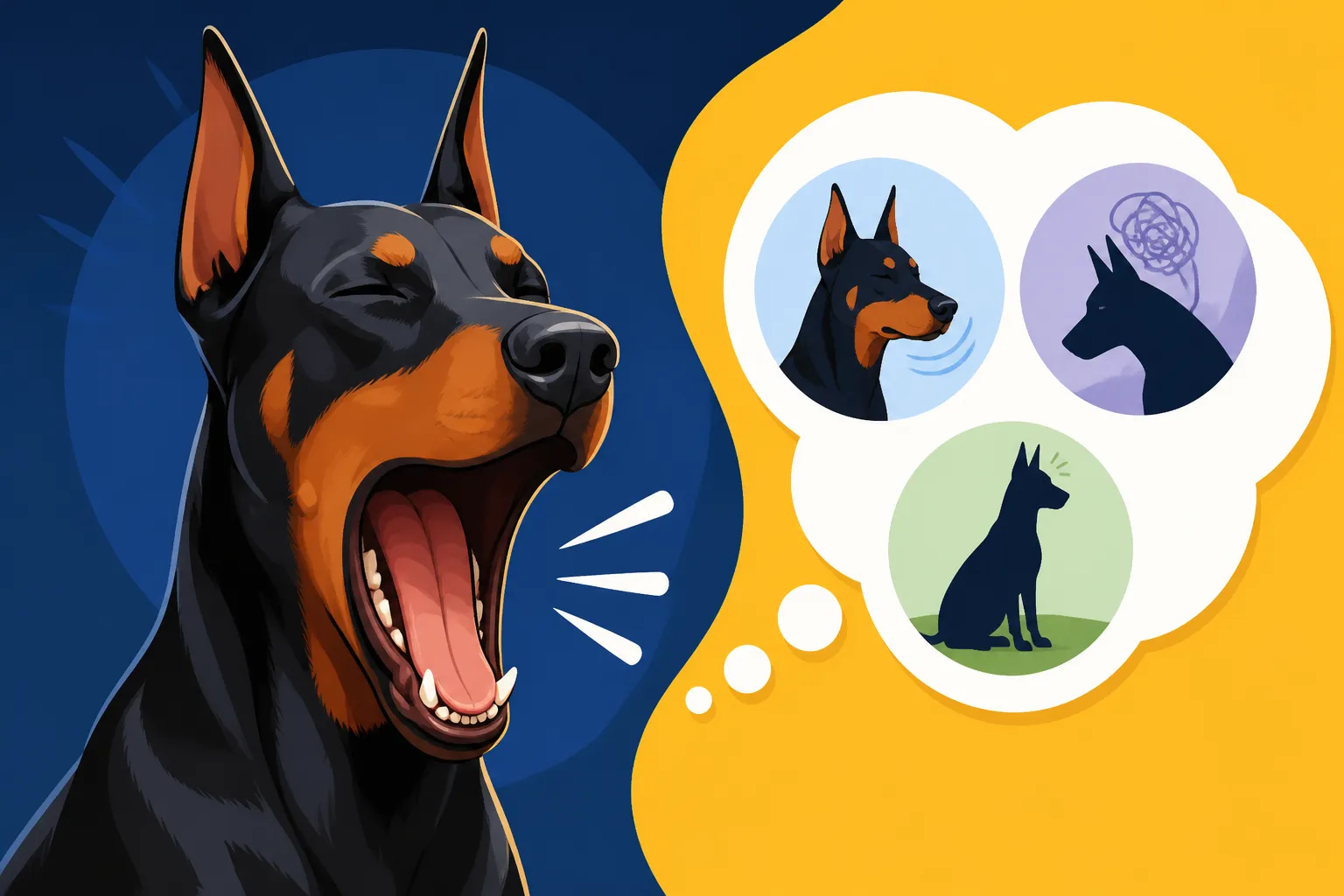
It’s a common sight: your Doberman stretches out, lets out a big, wide yawn, and you might think, "Aw, my big dog is tired," or perhaps, "Is he bored with me?" But with Dobermans, as with so many aspects of their complex personalities, a yawn isn't always as simple as it seems. This guide will help you understand the deeper meanings behind your Doberman's yawns, differentiating between a simple stretch and a subtle signal of stress or discomfort.
The Misconceptions Around a Doberman's Yawn
We humans are naturally inclined to interpret canine behavior through our own lens, and a yawn is one of the biggest culprits for misunderstanding. When we yawn, it usually means we’re sleepy, or maybe a little bored. So, it's perfectly natural to assume the same for our Dobermans. But this breed, with its keen intelligence and sensitive nature, communicates in far more nuanced ways than just a wagging tail or a bark.
Why We Often Get It Wrong
Our tendency to anthropomorphize can sometimes do our dogs a disservice. We see a behavior, and we quickly assign it a human emotion or intention. For a Doberman, who is often stoic and doesn’t always broadcast their feelings with exaggerated movements, these subtle cues become even more critical to understand. If we miss the real message behind a yawn, we might unknowingly be missing a plea for comfort, a sign of anxiety, or even an attempt to de-escalate a tense situation. It’s like trying to understand a complex novel by only reading the first sentence of each chapter—you'll get some gist, but you'll miss all the rich detail.
Beyond Simple Tiredness
While sometimes a yawn is, indeed, just a yawn — a physiological response to waking up or a change in oxygen levels — it's often much more. Think about it: have you ever seen your Doberman yawn intensely right before a vet injection, or when a new, boisterous dog enters the room? That’s not a tired yawn. That’s a behavioral yawn, a form of communication. This breed's sleek, often athletic build means they are always taking in their environment, and their body language is a constant stream of information, if we only know how to read it. Understanding these signals is a huge step in building a truly strong bond with your Doberman, one based on mutual understanding and trust.
Understanding Stress and Anxiety Yawns in Dobermans
This is where the Doberman's yawn truly sets itself apart from a simple human "I need coffee" moment. For such a powerful and sometimes intimidating-looking breed, Dobermans can be incredibly sensitive, and they often express their internal discomfort through seemingly innocuous actions like yawning. Ignoring these signs can lead to escalation of stress, so recognizing them is paramount.
The Tell-Tale Signs of a Stress Yawn
A stress yawn in a Doberman usually looks different from a relaxed, sleepy yawn. It's often more exaggerated, prolonged, and can appear quite "stiff." The jaw might open wider than usual, and the dog might hold the yawn for a second or two longer. You might notice their body language tensing up, even subtly. Their ears, especially if cropped, might be pulled back slightly, and their eyes might look a bit wide, showing the whites (often called "whale eye"). A lip lick might accompany it, or a quick head turn away from the perceived stressor.
Imagine you've taken your Doberman to the vet. The waiting room is bustling, there are strange smells, and a noisy terrier is barking nearby. Your Doberman might be standing close to you, perhaps leaning in, then lets out a big, deliberate yawn, followed by a quick lip lick. This isn't because they find the vet's decor boring. This is a clear signal that they are feeling overwhelmed or anxious. Another common scenario might be during a training session where they're struggling with a new concept or feeling pressured. If you're working on something complex, like a multi-step retrieve, and your Doberman suddenly yawns, it might mean they're feeling a bit confused or overwhelmed, and perhaps it's time for a short break or a simpler task. This is a crucial moment to recognize Spotting the Moment a Doberman Is Uncomfortable. If you've ever had a Doberman "shut down" or freeze when corrected too harshly, you know how sensitive they can be, and a yawn can be a much earlier warning sign than that. A Doberman That Freezes When Corrected
Common Triggers for Anxiety Yawns
Dobermans, despite their protective instincts, are not always fearless. Many things can trigger an anxiety yawn:
- Unfamiliar Environments: A new park, a friend's house, or a busy store can be a lot for a sensitive Doberman to process.
- Loud Noises: Thunderstorms, fireworks, construction sounds, or even a sudden loud clap can cause unease.
- Unfamiliar Dogs or People: While many Dobermans are socialized well, new interactions can still be a source of stress, especially with overly exuberant dogs or strangers who approach too quickly. Exposing a Doberman Puppy to Strangers in a controlled manner is key from a young age.
- Handler Pressure: Sometimes, we are the source. If we’re stressed, tense on the leash, or giving too many commands too quickly, our Dobermans pick up on it. This can manifest as stress yawns, especially during training. Remember, Why Yelling Shuts a Doberman Down is a powerful lesson in understanding their sensitivity.
- Anticipation: Oddly enough, anticipation of something they dislike can also trigger yawns. For example, if they know a bath is coming, or it’s time for nail trims.
It's vital to remember that these yawns aren't attempts to manipulate you; they're genuine expressions of internal state. Your Doberman is trying to communicate. A resource like BAXTER & Bella’s online training programs often emphasizes reading your dog’s body language, which can be invaluable for Doberman owners trying to navigate these subtle signals.
Yawns as a Calming Signal
Beyond just indicating stress, a yawn can also be your Doberman's way of trying to reduce stress, both their own and in their environment. This falls under the umbrella of "calming signals," a term coined to describe a dog's natural body language intended to defuse tension or show peaceful intentions.
Dobermans and De-escalation
Think of a calming signal as a dog's way of saying, "Hey, let's take it easy," or "I mean no harm." Dobermans, with their strong personalities, benefit greatly from understanding and utilizing these signals. When your Doberman yawns in a tense situation, it might be:
- Self-Soothing: They're trying to calm themselves down. The act of yawning can have a physiological effect, much like a deep breath for a human.
- Appeasing Another Dog: If another dog is being pushy or overly excited, your Doberman might yawn, turn their head, or lick their lips to signal that they are not a threat and want to avoid conflict. This is often seen when two dogs meet on a leash and one is a bit too boisterous.
- Communicating with You: Your Doberman might yawn when you're giving them a stern look, or when you're visibly upset about something (even if it's not related to them). They're not being disrespectful; they're trying to appease you and communicate that they are not a threat. It’s a subtle olive branch.
Understanding these signals helps you respond appropriately. If your Doberman is giving calming signals, it's your cue to de-escalate the situation too. Maybe step away from the stressor, provide a comforting presence, or give them a moment to process. It’s all part of Building a Doberman Puppy That Is Confident, Not Sharp from a young age, by teaching them the world is a safe place, and their cues are heard.
Reading the Full Picture
One yawn in isolation can be misleading. The key to truly understanding your Doberman is to look at the whole picture – all their body language cues combined with the context of the situation. This is especially true for Dobermans with cropped ears, as those expressive ear movements that other dogs use can be lost. What Cropped Ears Hide About a Doberman's Mood means you need to pay extra attention to other signals.
When evaluating a yawn, consider these accompanying signals:
- Lip Licks: A quick flick of the tongue over the nose or lips often goes hand-in-hand with a stress yawn or calming signal.
- Head Turns/Averted Gaze: Looking away from a person or dog is another strong calming signal, indicating a desire to avoid confrontation or reduce tension.
- Body Posture: Is your Doberman stiff, low, or trying to make themselves smaller? Or are they loose and relaxed? A Doberman That Stiffens Before It Growls is a critical warning sign that is often preceded by more subtle signals like a yawn.
- Tail Carriage: A low, tucked, or stiff tail can indicate fear or anxiety, even if it's wagging slightly. A relaxed tail wag is usually loose and fluid.
- Piloerection (Hair standing up): If the hair on their back or neck is raised, it’s a clear sign of arousal, which can be fear, excitement, or aggression.
- Panting (without exertion): If your Doberman is panting heavily but hasn't been exercising, it can be a sign of stress or heat.
By combining all these observations, you get a much clearer understanding of your Doberman's emotional state. It’s like putting together pieces of a puzzle. The more pieces you have, the clearer the image.
Here's a quick reference table to help you distinguish between different types of yawns:
| Type of Yawn | Appearance & Duration | Common Accompanying Signals | Contextual Clues | Underlying Meaning |
|---|---|---|---|---|
| Relaxed | Slow, fluid, often brief | Loose body, soft eyes, stretching, relaxed tail | Waking up, settling down, comfortable environment | Tiredness, contentment, physiological need |
| Stress | Exaggerated, prolonged, sometimes stiff | Lip licking, wide eyes (whale eye), tense body, averted gaze, panting, tucked tail | Vet visits, loud noises, new/unfamiliar situations | Anxiety, fear, discomfort, feeling overwhelmed |
| Calming | Often deliberate, sometimes combined with a stretch | Lip licking, head turn, body shake-off, slow movements, averted gaze | Tense social interactions (with dogs or people), perceived pressure from owner | De-escalation, appeasement, self-soothing, "take it easy" |
| Boredom | Often quiet, sometimes frequent, might lack "oomph" | Disinterest in environment, pacing, seeking attention (poking), sighing, restlessness | During repetitive tasks, waiting, lack of mental stimulation | Lack of engagement, needing stimulation |
When a Yawn is Just a Yawn (Or Something Else Entirely)
After all this talk about nuanced communication, it’s important to remember that sometimes, a yawn is just a yawn. Not every wide-mouthed stretch is a secret message, but distinguishing between them requires a keen eye and an understanding of your Doberman's baseline behavior.
Truly Tired or Bored Yawns
These are the yawns you see first thing in the morning when your Doberman stretches languidly on their bed, or late at night as they settle down for the evening. Their body language will be completely relaxed: soft eyes, loose muscles, perhaps a satisfied sigh. These yawns are simply a natural part of being a mammal, regulating oxygen intake, or just shaking off sleep.
Boredom yawns are another category that can sometimes resemble stress yawns but often have a different context. If your Doberman is yawning repeatedly during a training session that's become too repetitive, or while waiting patiently for you in a quiet environment, it might just be their way of signaling, "Okay, I get it, can we do something else now?" or "I'm ready for some action!" Dobermans are incredibly intelligent and thrive on mental stimulation. Whether a Doberman Gets Bored of Repetition is a real concern for this breed, and if they're yawning from boredom, it's a sign they need a new challenge or more engagement. Puzzle toys, new tricks, or a walk in a different area can help alleviate this. You can find many enrichment toys on Amazon that can help keep a Doberman's mind active.
Health Considerations and Medical Yawns
While rare, excessive or unusual yawning could, in very isolated cases, be a symptom of an underlying health issue. This is far less common than behavioral yawning, but it's worth a mention for completeness. For example, some neurological conditions or even certain types of pain could potentially lead to atypical behaviors, including yawning. However, these would almost certainly be accompanied by other, more obvious symptoms like lethargy, changes in appetite, limping, or behavioral shifts.
If you ever notice your Doberman yawning excessively, consistently, and without any clear environmental or social trigger, and especially if it's paired with other concerning symptoms, a visit to your veterinarian is always the best course of action. This is about ruling out the unusual, not about panicking over every yawn. For a breed like the Doberman, who is prone to certain health conditions, maintaining regular vet check-ups is always wise. The Health Testing a Doberman Breeder Must Show is a critical piece of information for responsible Doberman ownership, emphasizing proactive health management.
Ultimately, becoming fluent in your Doberman's body language is one of the most rewarding parts of owning this incredible breed. A yawn, seemingly so simple, is just one small piece of a rich tapestry of communication. By observing your Doberman closely, taking note of the context, and looking at the full suite of their behaviors, you'll gain a deeper understanding of their inner world, fostering a relationship built on genuine connection and trust. Working with a good trainer who understands the Doberman temperament can also provide invaluable insights into their unique communication style. Finding a Trainer Who Has Worked With Dobermans is a key step for any Doberman owner.
Disclaimer
This article is for general informational purposes only and does not constitute professional advice. Laws, prices and regulations vary by location and change over time. Consult a qualified professional for guidance on your specific situation.