Raw Bones and a Doberman That Bleeds Easily
As Doberman owners, we're always looking for ways to give our beloved companions the best life, and sometimes that includes exploring popular trends like raw feeding and offering raw bones. It's easy to get swept up in the idea of natural dental cleaning and primal satisfaction. But for Doberman families, this seemingly straightforward choice comes with a unique and significant concern: the breed's predisposition to bleeding disorders. This guide will help you understand the specific risks associated with feeding raw bones to a Doberman, especially if they might bleed easily, and how to navigate these choices safely for your cherished companion.
The Allure and Inherited Risks of Raw Bones for Dobermans
There's a natural appeal to feeding raw bones. Many owners believe it's a way to connect their modern Doberman to its wild ancestors, providing a primal chewing experience that contributes to dental health and mental stimulation. You often hear about how raw bones can scrape away tartar, strengthen jaws, and keep a dog occupied for hours. And for many breeds, under strict supervision, this can be true.
However, our Dobermans aren't just "any dog." They are a breed with specific genetic predispositions that require us to think twice, or even three times, about certain practices, including bone feeding. While the general risks of raw bones—like choking, fractured teeth, or gastrointestinal upset from consuming too much bone—apply to all dogs, Dobermans face an additional layer of concern due to their higher incidence of inherited bleeding disorders. Ignoring this breed-specific vulnerability can lead to devastating consequences that are entirely preventable.
Many owners are rightfully enthusiastic about providing enriching chews, and the internet is full of anecdotal evidence about the benefits of raw bones. But it's crucial to filter this general advice through the lens of Doberman health. We want to give them the best, and sometimes, that means understanding when a seemingly good idea might actually pose a hidden danger for our particular dogs. For a Doberman owner, the thought of their dog bleeding uncontrollably from an injury, even a minor one, is a chilling prospect that underscores the need for careful consideration.
Understanding Von Willebrand Disease in Dobermans
When we talk about Dobermans bleeding easily, our minds almost immediately go to Von Willebrand Disease (VWD). It's a genetic bleeding disorder that affects a significant portion of the Doberman population, making it paramount for owners to be aware of its implications. VWD impairs the blood's ability to clot properly, meaning that even a small cut or internal abrasion can lead to prolonged and dangerous bleeding. You can learn more about The Bleeding Disorder Almost Every Doberman Line Carries.
What is Von Willebrand Disease?
Von Willebrand Disease is caused by a deficiency in von Willebrand factor (vWF), a protein crucial for normal blood clotting. This protein acts like a glue, helping platelets stick together and form a plug at the site of an injury, which is the first step in stopping bleeding. When vWF is deficient or dysfunctional, this initial plug formation is impaired, leading to a tendency for excessive bleeding.
In Dobermans, the most common form is Type I VWD, which is characterized by a quantitative deficiency, meaning there isn't enough vWF in the blood. The severity can vary greatly between individual dogs; some might show very mild signs, while others experience life-threatening hemorrhages from routine procedures or minor trauma. The insidious nature of VWD means that a Doberman can appear perfectly healthy for years, only for a bleeding episode to occur unexpectedly, often triggered by something seemingly innocuous.
How VWD Impacts Bone Chewing Risks
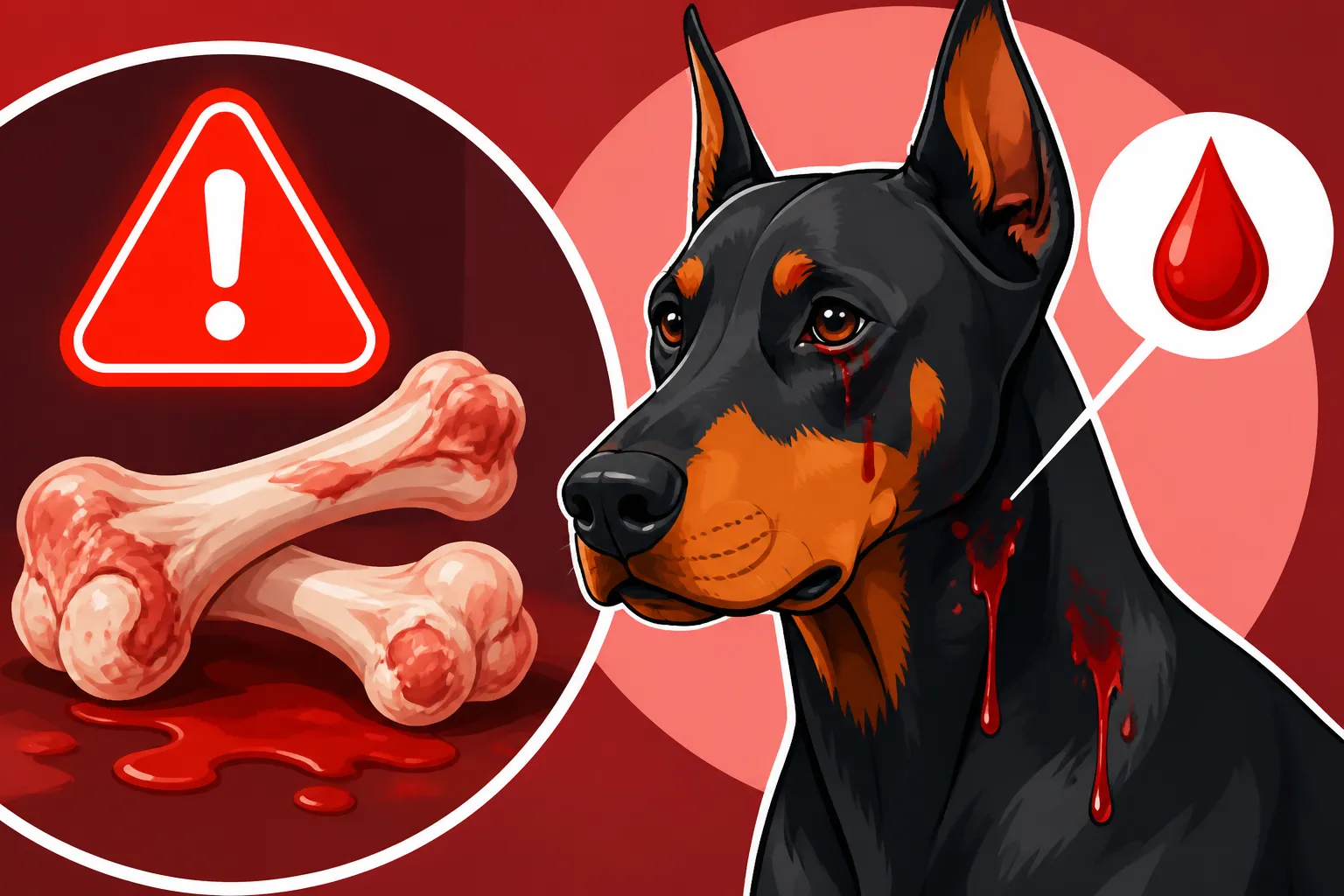
Now, let's connect this back to raw bones. Imagine your Doberman gnawing enthusiastically on a hard bone. Even a perfectly safe raw bone can have sharp edges or splinter in a way that creates tiny abrasions in the mouth, throat, or gastrointestinal tract. For a dog with normal clotting function, these minor injuries are usually no big deal; the blood quickly clots, and healing begins.
However, for a Doberman with VWD, even a tiny cut could turn into a significant bleeding event. Bleeding into the esophagus or stomach from internal abrasions caused by bone fragments can be extremely serious and difficult to detect until symptoms like vomiting blood or dark, tarry stools appear. Furthermore, larger bone fragments or splinters could cause more substantial internal trauma, leading to extensive internal hemorrhaging that could be fatal if not managed immediately. Even a seemingly sturdy recreational bone could rub a raw spot on their gums or tongue, and for a VWD-affected Doberman, that simple irritation could become a prolonged, messy, and frightening bleed. For this reason, many Doberman owners opt for entirely different chew options. You may have heard stories of Nosebleeds and Gum Bleeding in a Doberman, which gives you an idea of how easily these issues can arise.
Testing for Von Willebrand Disease
Given the high prevalence of VWD in Dobermans, it's absolutely crucial to know your dog's status before considering raw bones or any activity that carries a bleeding risk. Reputable Doberman breeders should have their breeding stock tested for VWD, and you should always ask to see the test results for both parents of a puppy you're considering. If you've adopted an adult Doberman or aren't sure of your dog's history, testing is highly recommended.
The good news is that there's a reliable DNA test for Type I VWD. This test can determine if your Doberman is "clear," a "carrier," or "affected."
- Clear: The dog does not carry the gene mutation and will not develop Type I VWD.
- Carrier: The dog carries one copy of the gene mutation but typically does not show clinical signs. However, they can pass the gene to their offspring.
- Affected: The dog carries two copies of the gene mutation and is at risk of developing clinical bleeding signs. The severity can still vary.
Knowing your Doberman's VWD status empowers you to make informed decisions about their care, including dietary choices and chews. If your Doberman is affected or even a carrier with a history of bruising or slow clotting, the risks associated with raw bones significantly increase. A simple The Von Willebrand DNA Test for Dobermans can provide invaluable peace of mind and guide your decisions. This information is also vital when planning any surgical procedure; vets will want to know your Doberman's VWD status before they consider Surgery on a Doberman With a Clotting Problem.
Safe Chewing Practices for Dobermans, Especially Those Prone to Bleeding
For Doberman owners, "safe chewing" means being acutely aware of the risks, particularly concerning VWD. If you have a Doberman that is VWD affected, or even if their status is unknown and you suspect they may be a carrier due to slow clotting from minor injuries, many experts would advise against raw bones entirely. The potential for internal bleeding is simply too great a risk to take. However, if your Doberman is confirmed VWD clear and you are still considering raw bones, or if you're seeking safer alternatives, here’s how to approach it.
The "No Cooked Bones" Rule and Why it Matters
First and foremost, let's reiterate a golden rule for all dogs: never, ever feed cooked bones. Cooked bones become brittle and can splinter easily into sharp shards that can cause devastating internal damage, choking hazards, or blockages. This rule is even more critical for a Doberman, where any internal trauma could lead to uncontrolled bleeding. Stick to raw if you're going to feed bones at all.
Recreational Bones vs. Edible Bones
There's a big difference between recreational bones and edible bones in the raw feeding world. Understanding this distinction is vital:
- Recreational Bones: These are typically large, hard marrow bones from beef or bison, meant for chewing on, scraping teeth, and providing mental stimulation. The idea is that the dog chews off bits of meat and connective tissue, but doesn't consume the bone itself.
- Pros: Good for dental hygiene, long-lasting mental engagement.
- Cons: Still carry risks of tooth fractures, choking if pieces break off, and for Dobermans, the sharp edges can cause oral or gastrointestinal abrasions leading to bleeding.
- Edible Bones: These are softer, non-weight-bearing bones, like chicken necks, wings, or carcasses, that are meant to be entirely consumed. They are typically part of a balanced raw diet, providing calcium and phosphorus.
- Pros: Contribute to nutritional balance, relatively softer.
- Cons: Still pose choking hazards if swallowed whole, and again, the risk of splintering or sharp edges causing internal trauma and bleeding in VWD-affected Dobermans.
For a Doberman, especially one with known or suspected VWD, both types of raw bones come with considerable risk. If you are determined to offer raw bones, even for a VWD-clear Doberman, extreme caution and constant supervision are non-negotiable.
Here’s a quick comparison:
| Bone Type | Purpose | Common Examples | Primary Risks (General) | Elevated Risks (Dobermans with VWD) |
|---|---|---|---|---|
| Recreational | Chewing, dental cleaning | Beef marrow bones, Knuckles | Tooth fractures, choking, impaction | Oral/GI abrasions -> serious internal bleeding, prolonged clotting |
| Edible (Raw) | Nutritional (calcium, phosphorus) | Chicken necks, wings, carcasses | Choking if swallowed whole, digestive upset | Splintering -> internal trauma -> severe internal bleeding |
Key Safety Practices (If You Choose to Offer Raw Bones to a VWD-Clear Doberman)
Even for a Doberman confirmed VWD-clear, providing raw bones should be done with immense care:
- Always Supervise: Never leave your Doberman alone with a bone, not even for a minute. Accidents happen quickly. Be ready to intervene if the bone splinters, a piece breaks off, or if your dog starts struggling.
- Size Matters: The bone should be large enough that your Doberman cannot swallow it whole, but not so large that it causes frustration or an awkward chewing angle that could lead to tooth injury. Avoid bones that could easily get stuck around their lower jaw.
- Choose Appropriate Bones: Opt for raw, defrosted bones. Weight-bearing bones (like femurs) are extremely dense and carry a higher risk of tooth fracture. Softer, non-weight-bearing bones from smaller animals (e.g., beef ribs, lamb necks for edible bones) are often considered safer, but still require caution.
- Limit Chewing Time: Don't let your Doberman chew indefinitely. A 15-20 minute session is usually plenty. Remove the bone before it becomes small enough to swallow or before your dog gets overly zealous and risks injury.
- Monitor Digestion: Keep an eye on your Doberman's stool. Too much bone can cause constipation, white, chalky stools, or even impaction.
- Oral Health Checks: Regularly inspect your Doberman's mouth for any cuts, abrasions, or chipped teeth after bone chewing.
Alternatives to Raw Bones for Dobermans with Bleeding Concerns
For Dobermans with VWD, or for owners who simply don't want to take the risk, there are many excellent and safer alternatives to satisfy their natural chewing instincts and support dental health.
- Dental Chews: There's a wide array of dental chews available on the market designed to help reduce plaque and tartar. Brands found on platforms like Chewy or Amazon offer options for large, strong chewers. Always choose products appropriate for your Doberman's size and chewing style. Look for VOHC (Veterinary Oral Health Council) approved products for proven efficacy.
- Durable Rubber Toys: High-quality rubber toys, like those from KONG, Nylabone (the harder, non-edible variety), or other robust brands, can provide hours of chewing satisfaction without the splintering risk of bones. Many can be stuffed with safe treats or peanut butter (check ingredients!) to increase engagement.
- Bully Sticks and Collagen Chews: These are digestible chews made from animal products. While generally safer than bones, they still require supervision to prevent choking if a piece becomes small. Always ensure they are sourced from reputable companies. The downside is they don't last as long as a hard bone, and the calories add up, but they are far less likely to cause a serious internal injury.
- Antlers or Horns: Some owners choose antlers, which are very hard and long-lasting. However, these still carry a risk of tooth fracture, similar to very dense bones. If you consider them, ensure they are naturally shed and inspect them for sharp points.
- Brushing and Professional Dental Care: The most effective way to maintain your Doberman's dental health is through regular brushing at home and professional cleanings under anesthesia at your vet's office. This eliminates the risks associated with chews altogether.
- Interactive Feeders and Puzzle Toys: For mental stimulation, puzzle toys that dispense kibble or treats are fantastic. They engage your Doberman's mind and satisfy their natural drive to "work" for food, without any chewing-related risks.
Ultimately, the decision of whether or not to feed raw bones to your Doberman comes down to a thorough understanding of their individual health, particularly their VWD status, and your willingness to manage the inherent risks. For many Doberman owners, especially those whose dogs are VWD-affected or of unknown status, the peace of mind offered by safer alternatives far outweighs the perceived benefits of raw bones. Prioritizing your Doberman's safety and well-being should always be the guiding principle.
Living with a Doberman and Managing Bleeding Tendencies
Beyond raw bones, understanding your Doberman's bleeding tendencies, particularly if they are VWD affected, informs many aspects of their daily life and care. It's not just about what they chew; it's about how you approach their overall health and safety.
Everyday Precautions and Awareness
Knowing your Doberman has VWD or a tendency to bleed easily means you'll naturally become more vigilant. This isn't about living in fear, but about being prepared and proactive. Even the most careful owner can't prevent every scrape or bump, but you can minimize risk and be ready to act if an injury occurs.
Simple things like playing fetch in areas free of sharp objects, using appropriate harnesses and leashes that don't chafe or pull too hard, and being mindful during grooming can make a difference. Some Dobermans are prone to Bruising and Bleeding in a Doberman from seemingly minor bumps, so a watchful eye is essential. You'll also want to be particularly careful with toys that can break into sharp pieces. Opt for softer, but still durable, rubber or plush toys instead of hard plastics.
Veterinary Care and Communication
Open and honest communication with your veterinarian is crucial if your Doberman has VWD. Always inform your vet about your Doberman's VWD status before any procedures, no matter how minor. This includes routine vaccinations, nail trims (as quicking can lead to prolonged bleeding), and especially any surgery. Your vet may recommend specific protocols, such as administering a dose of desmopressin acetate (DDAVP) before surgery or having blood products on hand, to minimize bleeding risks. Discussing Drugs a Doberman With Von Willebrand Should Avoid is also a critical conversation to have.
It's also a good idea to discuss an emergency plan for bleeding episodes. Knowing what signs to look for that indicate significant internal bleeding (e.g., extreme lethargy, pale gums, rapid breathing, distended abdomen, vomiting blood, tarry stools) and having an emergency vet's number on hand can be lifesaving. Your vet might advise on simple first-aid measures you can take at home to Managing a Doberman Bleed at Home for superficial wounds, but serious bleeding always requires professional intervention.
Considerations for Future Doberman Owners
If you're considering bringing a Doberman into your home, prioritize breeders who are committed to health testing, including VWD. A responsible breeder will be transparent about their dogs' health, genetic tests, and provide appropriate documentation. They understand the importance of passing on healthy genes and will actively work to reduce the incidence of VWD in their lines. Ask to see the VWD test results for both parents of the litter. This proactive approach ensures you're starting with the healthiest possible foundation for your new family member.
In conclusion, while raw bones might seem like a natural and beneficial chew for many dogs, the unique genetic predisposition of Dobermans to Von Willebrand Disease warrants extreme caution. For affected dogs, raw bones pose a significant and potentially life-threatening risk. For those confirmed VWD clear, diligent supervision and adherence to safety guidelines are still paramount. Thankfully, there's a wealth of safe and enriching alternatives available through stores like Chewy and Amazon that can keep your Doberman happy, healthy, and safe, without having to take on unnecessary risks.
Disclaimer
This article is for general informational purposes only and does not constitute professional advice. Laws, prices and regulations vary by location and change over time. Consult a qualified professional for guidance on your specific situation.