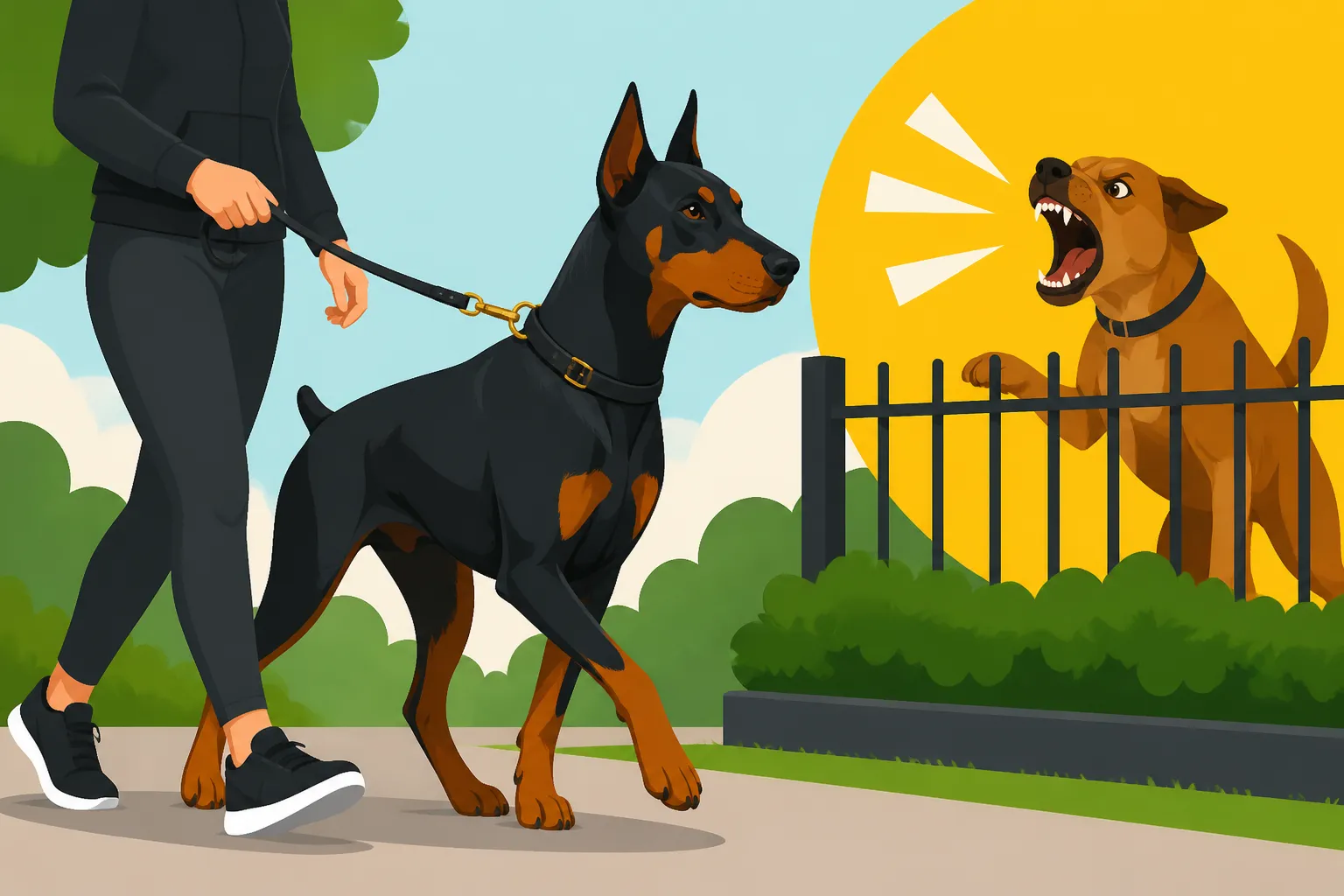
Walking a Doberman Past a Reactive Dog
Walking your Doberman should be a joyful experience, a chance to bond and enjoy the outdoors together. However, the sudden appearance of another dog who's barking, lunging, or displaying clear signs of distress can instantly turn that pleasant stroll into a stressful, anxiety-inducing ordeal for both you and your Doberman. This guide aims to equip you with practical strategies to calmly and confidently navigate these encounters, protecting your Doberman and easing the tension for everyone involved.
Understanding the Dynamics: Why Reactive Dogs React
It's easy to get frustrated, even angry, when another dog is screaming its head off at yours. We often take it personally, feeling like our Doberman is being unfairly targeted. But understanding why dogs react this way, and what their owners might be going through, can shift your perspective and help you respond more effectively. Remember, that reactive dog isn't usually trying to be mean; it's often genuinely scared, frustrated, or overstimulated, and its owner is likely feeling just as stressed as you are.
The Root Causes of Reactivity
Reactivity isn't always aggression, though it can certainly look and sound like it. Often, it's a dog's desperate attempt to create distance from something it finds overwhelming or threatening. Imagine if every time you saw a spider (if you have arachnophobia), you had to scream and jump to get it away. That's a bit like what's happening for some reactive dogs.
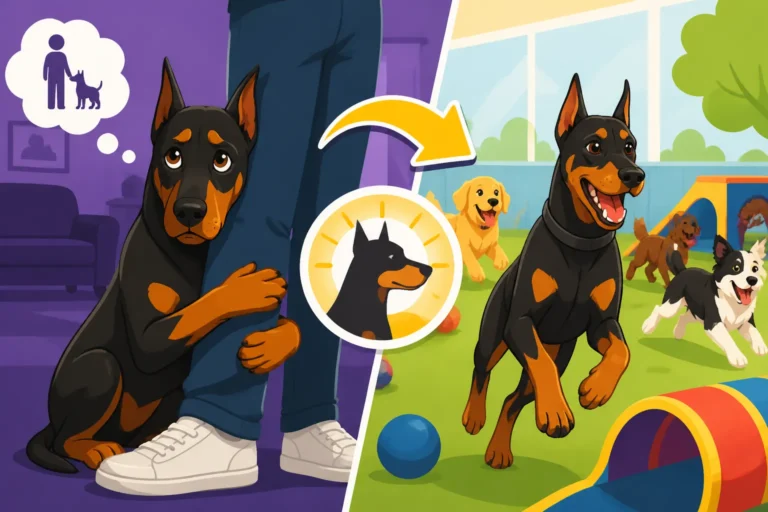
- Fear and Insecurity: This is perhaps the most common underlying cause. A dog might have had a bad experience, lacked proper socialization as a puppy, or simply be genetically predisposed to anxiety. Seeing another dog, especially one as confident and imposing as a Doberman, can trigger a "fight or flight" response, and often the "fight" (barking, lunging) is their way of saying, "Stay away!"
- Frustration: Some dogs desperately want to greet other dogs but are constantly held back by a leash. This builds up immense frustration, leading to outbursts. They might love other dogs off-leash but lose all composure when restrained.
- Overstimulation: A busy environment with too many sights, sounds, and smells can overwhelm some dogs, making them less tolerant of other dogs. They might be fine in quiet areas but become reactive in bustling parks or sidewalks.
- Lack of Socialization: If a dog didn't get enough positive exposure to various dogs, people, and environments during its critical puppy development period, it might struggle to interpret social cues and react out of uncertainty. This is why it's so important for Doberman puppies to meet the world early and broadly to build confidence, not sharpness, which we discuss in Building a Doberman Puppy That Is Confident, Not Sharp.
Empathy for the Reactive Dog's Owner
When you see a reactive dog, it's easy to judge the owner, assuming they haven't trained their dog. But trust me, most owners of reactive dogs are trying incredibly hard. They're often exhausted, embarrassed, and constantly on edge. They likely feel like they're walking on eggshells every time they step outside.
They're probably trying different harnesses, working with trainers, and carefully managing their dog's environment. They might be using high-value treats, seeking out quiet times, or even driving miles to specific locations just to avoid triggers. Your Doberman, with its striking presence and powerful build, can be an imposing sight to a nervous dog and a significant challenge for a reactive dog owner trying to maintain control and calm. Recognizing this shared struggle can foster a sense of understanding, making you less likely to escalate a situation with your own reactions.
Proactive Measures: Setting Your Doberman Up for Success
Before you even step out the door, there are things you can do to prepare both yourself and your Doberman for potentially stressful encounters. The goal isn't just to avoid reactive dogs, but to build your Doberman's focus on you, so they can remain calm and responsive no matter what's happening around them.
Equip Yourself Properly
Having the right gear makes a huge difference in your ability to control and guide your Doberman, especially if they are a strong, eighty-pound dog. You need equipment that provides control without causing discomfort or pain, which could inadvertently make your Doberman more reactive.
- Harnesses and Leashes: For a Doberman, a front-clip harness can be invaluable. It discourages pulling by redirecting their momentum sideways, making it much harder for them to lunge. Look for well-fitting, durable options on platforms like Amazon. Combine this with a comfortable, non-slip leash – a six-foot lead is usually ideal, giving your Doberman enough freedom while allowing you to keep them close when needed. Avoid retractable leashes, as they offer minimal control and can be dangerous in sudden situations. For more details on suitable equipment, check out Harnesses and Leads for a Strong Doberman.
- High-Value Treats: These are your secret weapon. Small, soft, incredibly tasty treats (think cooked chicken, cheese, or specialized training treats) are far more motivating than dry kibble. They need to be irresistible enough to break your Doberman's focus from a distraction.
- Treat Pouch: Keep your treats easily accessible in a treat pouch that clips to your waist. Fumbling for treats in your pockets delays reinforcement, which lessens its impact.
Building a Strong Foundation of Focus
The best defense against a reactive dog is a Doberman who is so tuned into you that external distractions fade into the background. This takes consistent training, starting in calm environments and gradually increasing difficulty.
- "Watch Me" and Name Recognition: Practice these cues constantly. "Watch Me" teaches your Doberman to make eye contact with you on command, which instantly shifts their focus. Strong name recognition means they'll snap their head to you when called, even with distractions. Start in your living room, then your backyard, then a quiet street, always rewarding heavily.
- Loose-Leash Walking Mastery: A Doberman pulling on the leash is already stressed and less responsive. Dedicate time to perfecting Leash Manners for an Eighty-Pound Doberman. A dog that walks calmly by your side is much easier to manage when a reactive dog appears. The online training programs from BAXTER & Bella can be a great resource for structured, positive reinforcement-based training to build these foundational skills.
- Desensitization to Distractions (from a distance): Find a quiet park or open area where you can spot other dogs from a significant distance. Practice your "Watch Me" and loose-leash walking as dogs pass far away. The goal is for your Doberman to notice the other dog, look at you, and get a treat, associating other dogs (from a distance) with good things. This is a subtle yet powerful form of counter-conditioning.
- Muzzle Training (Proactive Safety): While your Doberman may not be reactive, muzzle training is a responsible step for any large dog owner. It's a fantastic safety net, not a punishment. If an unforeseen incident occurs, or if you need to take your Doberman to a vet who is nervous around large breeds, a properly conditioned muzzle ensures everyone's safety and reduces stress. Plus, if you ever face a highly reactive dog and need to get past, a muzzle on your Doberman can reassure the other owner, even if it's completely unnecessary for your dog's temperament. Get started with Muzzle Training a Doberman Before It Is Needed well before you actually need it.
In the Moment: Navigating an Encounter
Even with the best preparation, encounters with reactive dogs will happen. The key is to respond quickly, calmly, and strategically to minimize stress for both dogs and keep everyone safe.
Spotting the Reactive Dog (and its Owner) Early
Your eyes are your best tool. Constantly scan your environment. Look for dogs on taut leashes, dogs whose owners are actively trying to manage them, or dogs who are already barking or lunging at something else. You'll often see the owner trying to quickly change direction or creating distance, which is a good clue.
- Body Language Cues: Learn to read canine body language, not just the obvious signs of aggression. A dog that is stiff, staring intently, has whale eye (showing the whites of their eyes), or is displaying a "hard" gaze might be heading towards reactivity. Your own Doberman will also give you signals if they're uncomfortable, like A Doberman That Stiffens Before It Growls or Spotting the Moment a Doberman Is Uncomfortable.
- Recognizing Early Warning Signs in Your Doberman: Pay attention to your Doberman's subtle signals. Are their ears flicking forward? Are they starting to get stiff? Is their tail raising slightly? Catching these early cues allows you to intervene before they get overstimulated or feel the need to react themselves. A simple check for What a Doberman Yawn Actually Means might surprise you as an early sign of stress, not just tiredness.
Your Action Plan: Creating Distance and Changing Associations
When you spot a reactive dog, your immediate goal is to create as much distance as possible, as quickly and calmly as possible, while positively engaging your Doberman.
- Increase Distance Immediately: This is the most crucial step.
- Cross the Street: If there's a street and it's safe, cross it. Don't hesitate.
- Turn and Walk the Other Way: If crossing isn't an option, do an abrupt about-face and walk in the opposite direction until you're out of sight or at a comfortable distance.
- Use Obstacles: If you're in a park, put a tree, a parked car, or a bush between your Doberman and the reactive dog.
- Find a "Safe Haven": Step into a driveway, behind a parked car, or into a quiet alcove if available.
- Engage Your Doberman Positively: As you move away, engage your Doberman with your "Watch Me" command and scatter high-value treats on the ground for them to sniff out. This is called a "treat scatter" and it achieves a few things:
- It lowers their head, breaking their visual focus on the other dog.
- It engages their powerful nose, distracting them.
- It creates a positive association with the presence of other dogs (even reactive ones) and getting treats.
- Keep Moving: Don't stop to stare or wait for the other dog to pass if you're close. Maintain your distance and keep your Doberman engaged with you. The longer you linger, the higher the chance of escalating the situation.
- Stay Calm: Dogs are incredibly adept at picking up on our emotions. If you tense up, grip the leash tightly, or start muttering under your breath, your Doberman will feel that anxiety and become more alert and potentially more reactive themselves. Take a deep breath. Speak in a calm, upbeat tone. Your calm demeanor is vital to helping your Doberman remain calm. Remember, Why Yelling Shuts a Doberman Down applies to these situations too; harsh corrections will only increase their stress.
What if You Can't Avoid Them?
Sometimes, you're cornered on a narrow sidewalk, or a reactive dog unexpectedly rounds a corner right in front of you.
- "U-Turn" or "Emergency Turn": This is a practiced maneuver. You quickly turn 180 degrees and walk briskly in the opposite direction. Your Doberman should be trained to follow your lead without question. You can teach your Doberman to Teaching a Doberman to Wait for Permission for many things, and this can extend to waiting for your direction in difficult situations.
- "Pocket Full of Sunshine" (Treat Bomb): If you're too close to make a clean escape, quickly engage your Doberman with rapid-fire treats. Shove several high-value treats into their mouth, one after another, as you calmly walk past. Keep their head turned away from the reactive dog if possible. Your goal is to make the experience of passing the reactive dog entirely about the delicious treats coming from you.
- Block Your Doberman's View: If you have to pass closely, use your body to create a visual barrier between your Doberman and the reactive dog. Walk between them, if safe to do so. This minimizes the visual stimulation and can de-escalate the tension.
- Communicate (Briefly and Kindly): A simple, calm "Just need some space, thanks!" to the other owner can work. Avoid confrontation or judgment. Most reactive dog owners will appreciate your effort to create distance.
Here's a quick comparison of proactive vs. in-the-moment strategies:
| Strategy Category | Goal | Key Actions |
|---|---|---|
| Proactive Training | Build Doberman's focus and confidence. | Teach "Watch Me," perfect loose-leash walking, desensitize from distance, condition muzzle. Use positive reinforcement methods, potentially with online courses like BAXTER & Bella, to reinforce good habits long before stress hits. |
| Preventative Gear | Ensure handler control and Doberman comfort. | Use a well-fitting front-clip harness and a 6-foot leash (e.g., from Amazon), carry high-value treats in an easily accessible pouch. |
| Early Detection | Identify threats before they escalate. | Constantly scan environment, learn dog body language (both reactive dog and your Doberman's subtle cues like lip licks or yawns), and watch for owners managing their dogs. |
| Distance Creation | Avoid triggering reactions. | Cross the street, make U-turns, put physical barriers between dogs, step into driveways. Maximize space. |
| Positive Engagement | Override negative associations with rewards. | Engage Doberman with "Watch Me" and high-value treats as you create distance. Scatter treats on the ground. Keep your Doberman's focus firmly on you and away from the trigger. |
| Self-Regulation | Maintain calm for your Doberman. | Breathe deeply, keep your voice calm and upbeat, avoid tightening the leash or showing your own anxiety. Your composure directly impacts your Doberman's ability to cope. |
Refining Your Approach: Learning and Adapting
Every walk is an opportunity to learn. After an encounter, take a moment to reflect. What worked? What didn't? How can you improve for next time? This continuous process of observation and adjustment will make you a more effective and confident Doberman handler.
Debriefing and Adjusting Your Strategy
Don't just shake off a stressful encounter and forget it. A brief mental debrief can provide valuable insights.
- Analyze the Encounter:
- How much distance was there when you first spotted the reactive dog? Could you have seen them sooner?
- What was your Doberman's reaction? Did they respond to your cues?
- What worked well? What felt clumsy or ineffective?
- Did your equipment feel adequate? If not, consider a different harness or leash.
- Adjust Your Route or Timing: If a particular route or time of day consistently brings encounters with reactive dogs, consider changing your walking habits. You might find quieter times or less busy paths that make walks more enjoyable for both of you. Sometimes, avoiding known hotspots is the kindest thing you can do for everyone involved, especially if your Doberman itself is still learning to ignore other dogs, which is a common challenge for Dobermans, as discussed in Doberman Dog Reactivity on Leash.
- Review Your Training: Did your Doberman ignore your "Watch Me" cue? Did they pull on the leash? Go back to basics in a low-distraction environment to reinforce those foundational skills. Consistent, positive training is always the answer.
Continuous Positive Reinforcement and Confidence Building
Your Doberman needs to associate good things with seeing other dogs, even from a distance. Every time you successfully navigate an encounter, you're building their confidence and strengthening your bond.
- Celebrate Successes: Even a small win, like your Doberman looking at you instead of the reactive dog, deserves a party! High-value treats, enthusiastic praise, and perhaps a quick game of tug can reinforce that positive choice.
- Practice in Controlled Environments: If possible, arrange walks with calm, known dogs from a distance. This allows you to practice your "look at me, get a treat" routine without the added stress of an unknown reactive dog. Some trainers offer "parallel walks" specifically for this purpose.
- Consider Professional Help: If you find yourself consistently struggling or if your Doberman starts to show signs of reactivity themselves (such as A Doberman That Lunges at Passing Dogs), don't hesitate to seek professional help. A certified professional dog trainer or veterinary behaviorist can offer tailored strategies and support. Online resources like BAXTER & Bella can also provide a structured framework for addressing various behavioral challenges, helping you implement effective training plans. The ultimate goal is to ensure your Doberman can handle public situations, so you don't face the challenge of Handling a Doberman in Public Without Alarming People.
Navigating encounters with reactive dogs is a challenge many Doberman owners face. By understanding the underlying reasons for reactivity, equipping yourself properly, staying vigilant, and responding calmly and strategically, you can transform potentially stressful situations into opportunities to strengthen your bond and reinforce good behavior in your Doberman. Every successful walk builds confidence, making future encounters easier for both of you.
Disclaimer
This article is for general informational purposes only and does not constitute professional advice. Laws, prices and regulations vary by location and change over time. Consult a qualified professional for guidance on your specific situation.