Why a Doberman at a Dog Park Gets Blamed First
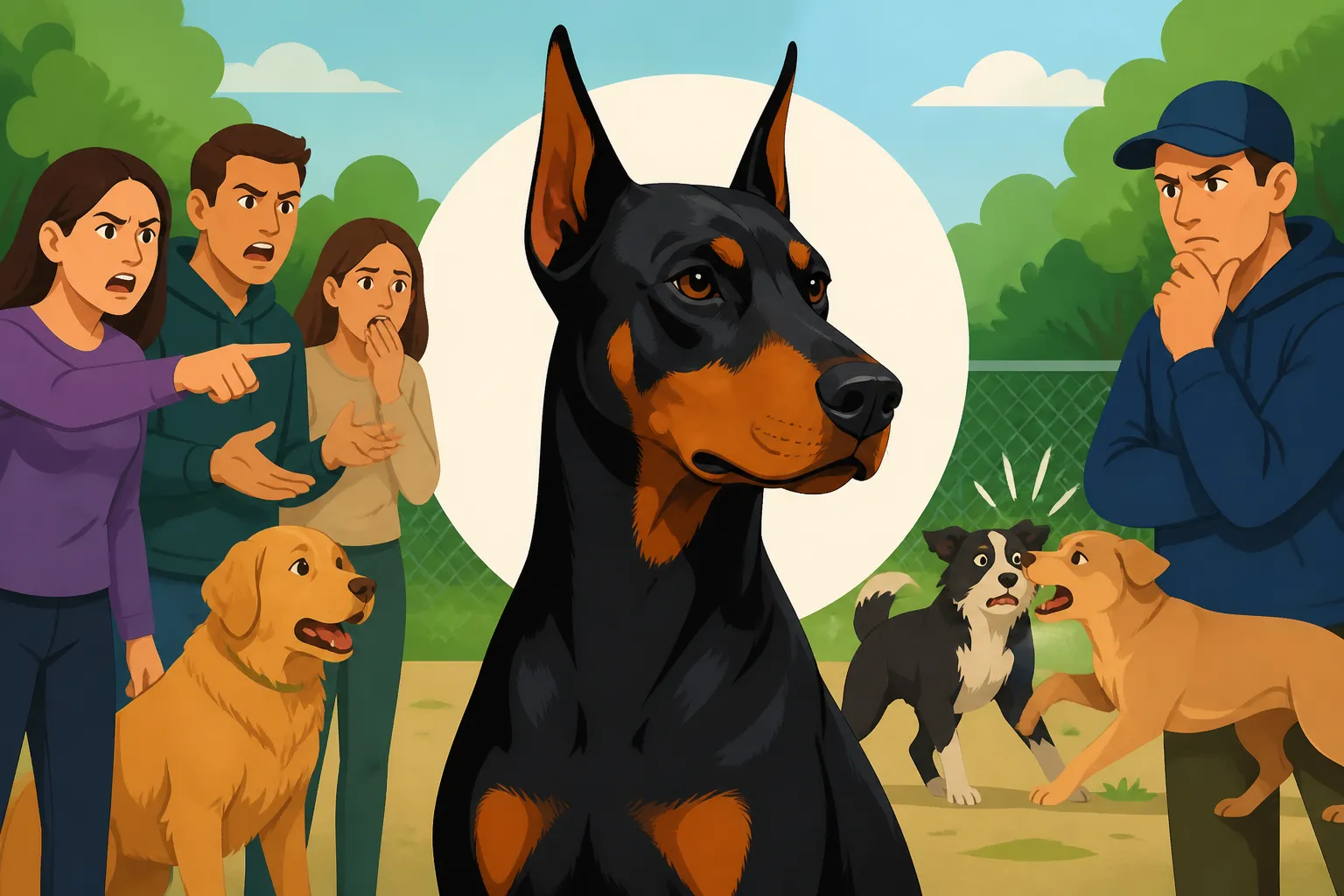
It's an unfortunate reality that when a Doberman is involved in an incident at a dog park, even a minor one, they often get branded as the instigator. As Doberman owners, we often feel this unspoken judgment from the moment we walk in, knowing that our beautiful, intelligent companions are often unfairly seen through the lens of old stereotypes rather than their individual personalities. This guide is here to shed light on why Dobermans so frequently shoulder the blame in these situations and how we can better navigate these social landscapes for our dogs and ourselves.
The Weight of Doberman Reputation at the Dog Park
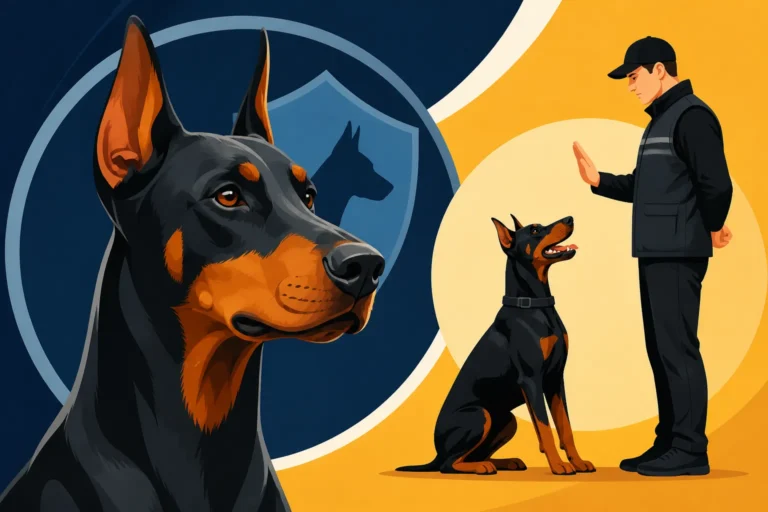
Let's be honest, the Doberman has a formidable presence. They're sleek, powerful, and carry themselves with an air of alertness that can be intimidating to those who don't understand the breed. This isn't just about their physical appearance; it's about centuries of breeding history and the public perception that has unfortunately clung to them.
The Visual Impact and Breed Stereotypes
When people see a Doberman, especially one with cropped ears and a docked tail, their minds often jump to a very specific image: the guard dog, the protector, the "intimidator." This visual cue alone can pre-dispose other dog owners to interpret a Doberman's actions differently than they would, say, a golden retriever. A growl from a smaller, fluffier dog might be dismissed as "just playing," but the exact same vocalization from a Doberman is immediately seen as aggressive. This bias is incredibly frustrating because it overlooks the individual temperament of our dogs.
Our Dobermans are often alert and observant, taking in their surroundings, but this can be misinterpreted as suspicious or confrontational. Their intense gaze, their athletic build, even the way they move with purpose, can all contribute to a perception of threat. It doesn't matter that your Doberman is a gentle giant at home, loves cuddles, and only wants to chase a ball. The moment they enter a public space like a dog park, they're often already battling preconceived notions. It's a heavy burden for them, and for us as their owners, to constantly feel like we're proving their innocence before anything has even happened. Many owners worry about how their dog is perceived, which is why understanding Why Dobermans Have a Frightening Reputation is so important.
Historical Baggage and Misinformation
The Doberman was originally bred by Karl Dobermann in Germany as a personal protection dog, and that history, while fascinating, has created a lasting stereotype. Movies, television shows, and even news headlines have often portrayed Dobermans as vicious, unthinking attack dogs. This persistent imagery, sometimes fueled by sensationalism, contributes to a widespread misunderstanding of the breed's true nature. Most modern Dobermans are bred to be loyal, intelligent, and deeply sensitive family companions, far removed from the snarling villains depicted in media.
Unfortunately, this historical baggage and misinformation mean that many people who aren't familiar with the breed tend to judge them by their reputation rather than their reality. They might not realize that a Doberman's "guarding" instinct is often expressed as intense loyalty to their family, not aggression towards every stranger. They don't know that Dobermans are highly intelligent and desire to please their owners, which makes them incredibly trainable when guided appropriately. The Owner a Doberman Actually Needs is someone who understands and respects this intelligence and sensitivity. When an incident occurs at a dog park, regardless of who initiated it, the Doberman’s historical reputation often makes them the immediate default suspect, and it can be incredibly hard to sway that opinion.
Understanding Doberman Play Styles and Social Cues
Dobermans, like all breeds, have their own unique way of interacting and playing. What might look boisterous or aggressive to an uninformed eye is often just typical Doberman exuberance. However, these natural behaviors can easily be misunderstood in the chaotic environment of a dog park.
Intensity and Body Language Misinterpretations
Dobermans are powerful, agile dogs built for speed and endurance. When they play, they often do so with an intensity that can surprise other dogs and their owners. Their play can involve body slams, hard chases, vocalizations, and mouthy wrestling that, while perfectly normal and appropriate for Dobermans, might be seen as overly rough or aggressive by owners of more sedate breeds. A Doberman's natural tendency to lean or "bump" other dogs during play, a common Doberman trait, can be misconstrued as an act of dominance or aggression, especially when directed at smaller dogs.
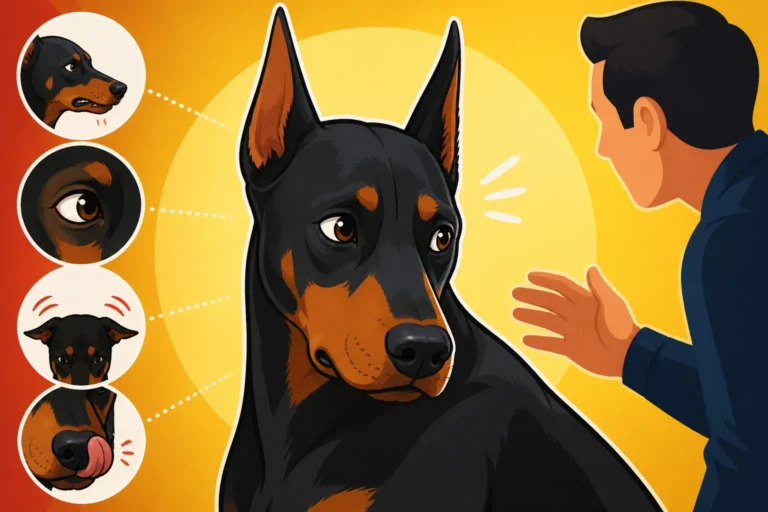
Furthermore, a Doberman's body language can sometimes be misinterpreted. For example, their natural stance is often alert and upright, which can appear stiff or challenging to other dogs that might be used to more relaxed, floppy play. Their short, sleek coat means their hackles, if raised, are much more visible than on a fluffy dog, immediately signaling "aggression" even if it's just excitement or a momentary startle. Even their cropped ears, while traditional for many, remove a significant visual cue for other dogs (and humans) to read their mood, making it harder to discern if they're happy, anxious, or truly agitated. This is one of the frustrations of having a cropped Doberman; What Cropped Ears Hide About a Doberman's Mood becomes a constant challenge.
It's vital for us as owners to be fluent in reading our own Doberman's subtle cues and to understand that other people, and even other dogs, might not be. What seems like a playful bow from your Doberman might look like a challenge to another dog whose play style is completely different.
Sensitivity and the "Correction" That Backfires
Beneath that strong exterior, Dobermans are remarkably sensitive and intelligent dogs. They thrive on clear communication and fair treatment. When they encounter rough play from other dogs that they don't understand, or when they receive unwarranted "corrections" from other owners or dogs, they can react. This reaction isn't usually aggression in the human sense, but often a natural self-defense or a confused response to perceived unfairness. They might snap or snarl to tell another dog to back off, which is a perfectly normal dog-to-dog communication, but again, because it's a Doberman, it's immediately magnified into an aggressive act.
Imagine your Doberman, innocently playing, suddenly gets bowled over by a boisterous Labrador, or perhaps another dog persistently nips at their heels. A Doberman, being sensitive, might respond with a quick, sharp bark or a growl to set boundaries. While this is normal canine communication, the Doberman's size and powerful appearance mean their entirely appropriate defensive response is often seen as escalation. People forget that dogs are allowed to say "no" to unwanted interactions. If a Doberman is unfairly corrected or targeted by another dog or person, their response, which could be anything from freezing to a quick verbal warning, is almost always seen as the primary offense. This can unfortunately be a self-fulfilling prophecy where the Doberman becomes stressed and reactive due to repeated negative experiences. Knowing how to recognize Spotting the Moment a Doberman Is Uncomfortable is critical for intervening before things escalate.
Here's a quick comparison of common Doberman play behaviors versus how they might be misinterpreted:
| Doberman Behavior (Often Playful) | Common Misinterpretation (Negative) | Owner's Perspective (Context) |
|---|---|---|
| Body Slamming / Bumping | Aggression, Dominance | Energetic, full-contact play; a way to initiate or re-engage |
| Deep Growls / Barking during play | Threat, Attack | Vocal expression of excitement, typical Doberman play sounds |
| Intense Staring / Alert Stance | Challenging, Suspicious | Focused, observant; Dobermans are naturally attentive |
| Open Mouth Wrestling / Mouthing | Biting, Aggression | Common play style, especially with other Dobermans or confident dogs |
| Rapid Chasing / Pinning | Predatory, Dangerous | High-speed, athletic play; can be misinterpreted if too rough |
Practical Steps for a Doberman Owner at the Dog Park
While we can't control everyone's perceptions, we can take proactive steps to manage our Doberman's experience at the dog park and advocate for them effectively. It's about being a responsible, vigilant owner.
Assessing the Environment and Your Doberman's Comfort
Before even stepping into the main off-leash area, take a moment to observe. What's the energy like? Are there many dogs? What breeds are present? Are there any dogs that seem overly pushy, anxious, or unmanaged? Your Doberman's safety and well-being come first, and sometimes that means deciding the dog park isn't the right place on a particular day. If your Doberman shows any signs of discomfort or anxiety, even subtle ones like lip-licking, yawning, or turning their head away, it’s a cue to either intervene or leave. Dogs give us so many subtle signals, and understanding What a Doberman Yawn Actually Means can make all the difference.
Consider your Doberman's individual personality. Is your Doberman a social butterfly who loves all dogs, or do they prefer a select few? Do they enjoy rough-and-tumble play, or are they more reserved? Not every dog, Doberman or otherwise, thrives in the free-for-all of a dog park. If your dog leans towards being selective, or if you're working on Doberman Dog Reactivity on Leash, a dog park might not be the best training ground. Opting for controlled playdates with known, compatible dogs can be a far more positive experience. Always remember that a happy Doberman is a well-managed Doberman, and sometimes managing means choosing a different activity. Early socialization using programs like BAXTER & Bella can help build confidence, but it doesn't guarantee a love for chaotic dog park environments.
Proactive Management and Advocating for Your Dog
Once inside, become a hawk-eyed observer. Don't scroll on your phone. Don't get lost in conversation. Your primary job is to watch your Doberman and the dogs interacting with them. Be ready to interrupt or redirect play that's getting too intense, either from your Doberman or another dog. A simple, cheerful "Come!" followed by a short break can reset the energy. Always carry high-value treats to reward calm behavior and successful recalls. Using a long line, available on platforms like Amazon, for a while can give you more control in less crowded areas without restricting movement entirely, allowing you to practice Leash Manners for an Eighty-Pound Doberman.
It’s also crucial to advocate for your dog. If another dog is being persistently rude, intrusive, or aggressive towards your Doberman, don't hesitate to step in and remove your dog from the situation. Politely ask the other owner to call their dog, or simply put a leash on your Doberman and move to a different area or leave. Many Doberman owners find themselves in a position where they constantly have to defend their dog, and while it's tiring, it's necessary. Sometimes, it means educating other owners, gently explaining your Doberman's play style. Other times, it means accepting that some people will never change their minds and simply removing your dog from a potentially negative encounter. Remember, your Doberman trusts you to keep them safe, and that includes protecting them from unfair judgments and potentially dangerous situations caused by other people's negligence or bias. Learning to Handle a Doberman in Public Without Alarming People is a skill you'll develop over time, and it often involves being prepared for these kinds of interactions.
When to Consider Alternatives to the Dog Park
Dog parks, while seemingly a great solution for exercise and socialization, aren't a one-size-fits-all answer, especially for a Doberman. There are times when the potential risks simply outweigh the benefits.
The Risks of Unsupervised or Incompatible Play
The biggest risk at a dog park isn't usually an inherently "bad" dog, but rather an accumulation of incompatible personalities and unsupervised play. Even the most well-meaning dog can have an off day, and when you combine that with dogs who haven't learned appropriate social manners, or owners who aren't paying attention, incidents are bound to happen. For a Doberman, whose actions are already under intense scrutiny, even a small misstep can lead to severe consequences, often unfairly placed solely on their shoulders. A Doberman is often quick to react to perceived threats, which means they need confident leadership from their owners, as discussed in Why Yelling Shuts a Doberman Down.
Moreover, not all "play" is healthy. Some dogs engage in bullying behavior, targeting nervous or submissive dogs. Others might play too rough without understanding boundaries. A Doberman, being powerful, might accidentally injure a smaller dog, even if playing playfully, simply due to size difference and momentum. These situations, accidental or not, almost always lead to the Doberman being blamed, reinforcing negative stereotypes. It's a lose-lose situation for us, so being selective about where and how our Dobermans socialize is paramount.
Structured Socialization and Exercise Options
Instead of relying solely on dog parks, consider a range of alternatives that offer more control and a safer environment for your Doberman. This could include enrolling in dog training classes, where supervised play is often a component, ensuring a trainer is present to mediate. Building a Doberman Puppy That Is Confident, Not Sharp through structured puppy classes and careful introductions is far more beneficial than random park encounters.
Another excellent option is setting up playdates with dogs you know are compatible with your Doberman. This allows for controlled interactions in a familiar environment. Hiking trails during off-peak hours, long walks in quiet neighborhoods, or even backyard games of fetch can provide ample physical and mental stimulation without the unpredictable nature of a dog park. Many Dobermans excel in working sports like competitive obedience or scent work, which offer fantastic outlets for their intelligence and energy in a structured setting. Even simple training sessions in new environments, focusing on engagement with you, can build confidence and reinforce good habits. Exposing a Doberman Puppy to Strangers in controlled, positive ways is far more effective than hoping for the best at a busy park.
Ultimately, while dog parks can offer great exercise, they also pose unique challenges for Doberman owners. Understanding the biases, knowing your dog's play style, and being prepared to advocate for them are key. Sometimes, the best thing you can do for your Doberman is to choose alternative, more structured, and safer avenues for their socialization and exercise.
Disclaimer
This article is for general informational purposes only and does not constitute professional advice. Laws, prices and regulations vary by location and change over time. Consult a qualified professional for guidance on your specific situation.