Why a Doberman Should Not Be Free Fed
It's so easy to fall into the trap of leaving food out all day for your Doberman. Life gets busy, our schedules are hectic, and sometimes it just feels like the most convenient option for everyone involved. You might think your Dobe is just grazing, eating when they’re truly hungry, but for a breed with such specific health and behavioral needs, free-feeding can quietly introduce a whole host of problems you might not even realize are bubbling beneath the surface. This guide is here to walk you through exactly why a structured, scheduled feeding routine is not just a preference, but a vital component of your Doberman’s overall well-being.
The Hidden Health Risks of Free-Feeding Your Doberman
When you leave food out all day for your Doberman, you might think you're giving them freedom, but you're actually creating a potential minefield of health issues. This isn't just about weight; it delves into serious, breed-specific concerns that every Doberman owner needs to understand.
The Ever-Present Threat of Bloat (GDV)
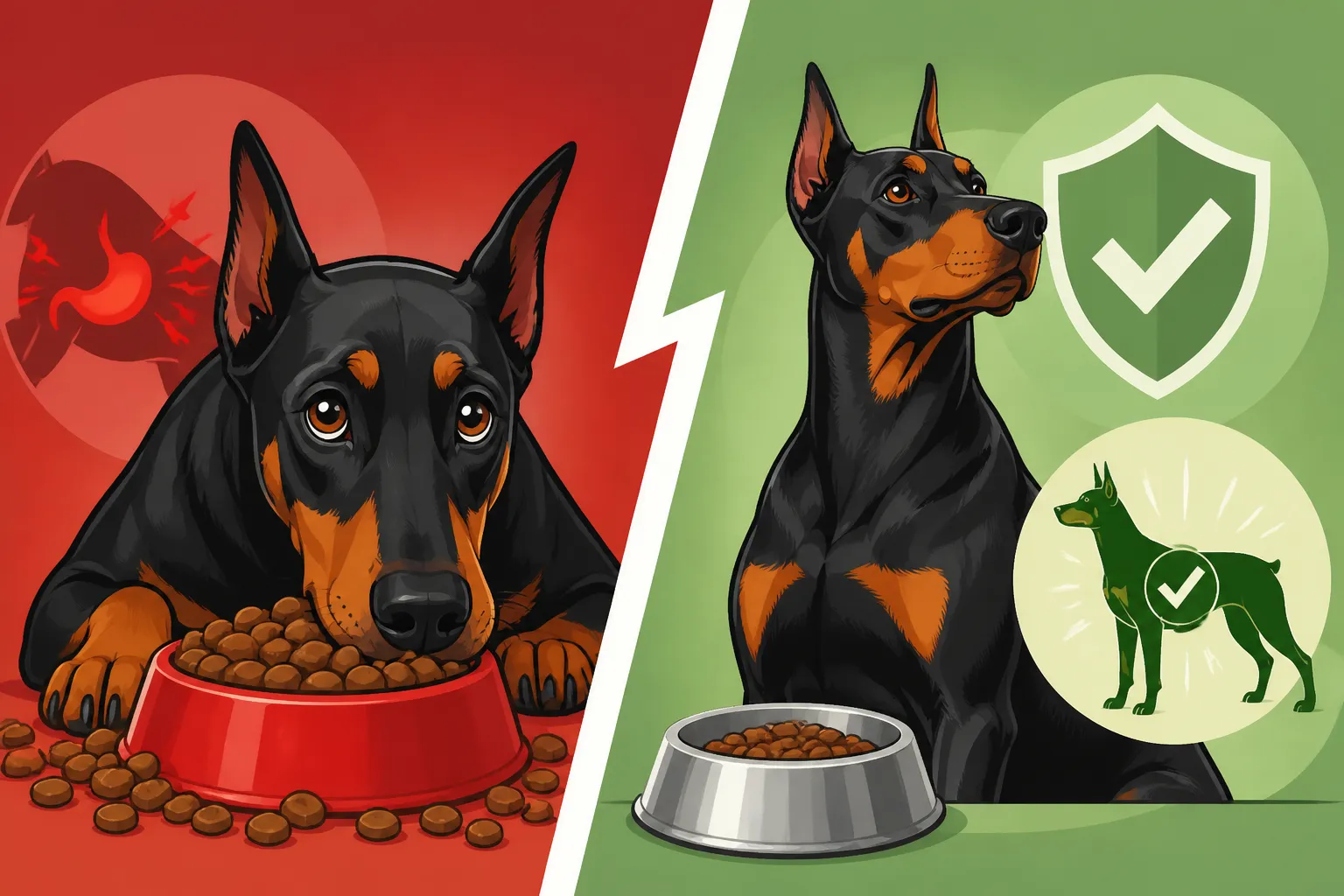
Dobermans, with their distinctive deep and narrow chests, are unfortunately at a higher risk for Gastric Dilatation-Volvulus (GDV), more commonly known as bloat. This isn't just a stomachache; it's a life-threatening condition where the stomach fills with gas and can twist, cutting off blood supply. It's an emergency that often requires immediate, expensive surgery. When food is always available, a Doberman might eat too quickly or gorge themselves after a period of not eating, especially if they are feeling stressed or overly hungry. This erratic eating, often coupled with drinking large amounts of water shortly after, significantly increases the risk of bloat.
Imagine your Doberman having a busy morning, maybe a long training session or an exciting walk, and then coming inside to an always-full bowl. They might be ravenous and gulp down a large quantity of food and water in a short burst. This rapid ingestion of air and food can cause the stomach to expand dangerously. It's a terrifying thought, and for many Doberman owners, the fear of bloat is a constant, nagging worry. Recognizing a Doberman Stomach Twist in Time is critical, and a huge part of prevention lies in how and when they eat.
Scheduled meals, conversely, allow you to control the pace of eating and ensure your Doberman isn't eating when overly excited or immediately before/after strenuous activity. By providing smaller, more frequent meals, you reduce the volume of food in the stomach at any one time, giving their digestive system a chance to work efficiently and reducing the sudden pressure buildup that can precede bloat. It's a simple change that can have profound implications for their safety.
Weight Management and Nutritional Balance
Dobermans are known for their lean, athletic build. Maintaining that ideal body condition is crucial for their joint health, heart health, and overall longevity. Free-feeding, however, makes it incredibly difficult to accurately monitor your Doberman’s caloric intake. Some Dobermans are prone to overeating when food is constantly available, leading to unhealthy weight gain that puts strain on their developing or aging joints and exacerbates other health issues. Conversely, some Dobermans might be picky eaters or burn through calories quickly, and with free-feeding, it's hard to tell if they're truly eating enough to maintain their lean muscle mass.
Consider a Doberman puppy going through a fast growth curve. They need precise nutrition to support healthy bone and muscle development, but too much or too little can lead to problems. Or an adult Doberman involved in working sports; their energy needs will fluctuate based on their activity levels. If their food is always out, you lose the ability to make these critical adjustments. Specific dietary needs, such as a low-copper diet for a Doberman with Copper Liver Disease in Doberman Females, demand meticulous portion control, which is impossible with free-feeding.
With scheduled meals, you measure out exactly how much food your Doberman receives at each meal. This precision allows you to adjust their diet based on their age, activity level, and any specific health requirements, ensuring they receive the right amount of nutrients without over or under-eating. It empowers you to keep them at their prime weight, helping them avoid issues like hip or elbow dysplasia, which can be compounded by carrying extra pounds. You can read up on Feeding an Eighty-Pound Doberman Well to get a better grasp on ideal caloric needs.
Spotting Illness and Changes in Appetite
One of the most immediate and telling signs of illness in a dog is a change in their appetite. A Doberman who suddenly refuses a meal or shows less interest in their food can be signaling anything from a minor upset stomach to a serious medical condition. When you free-feed, however, these subtle changes are easily missed. Your dog might just graze less, or pick at their food over a longer period, making it impossible for you to gauge whether their intake has truly decreased.
Imagine your Doberman, typically an eager eater, suddenly not finishing their morning meal. If you’re on a schedule, you notice this immediately. This prompt observation can lead to an earlier vet visit, potentially catching an issue like the onset of heart disease or another ailment during its early, more treatable stages. Many Dobermans suffer from conditions like DCM that can be silent for years, and noticing a drop in appetite could be one of the few initial clues. As a Doberman owner, you become attuned to your dog’s routine, and deviations become stark indicators that something isn't right.
Conversely, with a free-fed Doberman, that dropped appetite might go unnoticed for hours, or even days, by which point the underlying health issue could have worsened significantly. This delay in recognizing symptoms can be critical, especially for fast-moving conditions. A scheduled feeding routine provides a clear, daily check-in on your Doberman's health, giving you peace of mind that you're not missing any vital clues. It’s an easy way to stay on top of their well-being and quickly act if you notice A Doberman That Suddenly Stops Eating.
Behavioral Challenges Amplified by Free-Feeding
Beyond the physical health implications, free-feeding can also create or exacerbate a range of behavioral problems in Dobermans. These issues can impact their relationship with you, with other pets, and even their general demeanor.
Resource Guarding and Possessiveness
Dobermans are inherently protective and can develop strong guarding instincts. While this trait makes them excellent guardians for their families and homes, it can sometimes extend to resources like food bowls, toys, or even their favorite resting spots. When food is always available, it becomes a constant "high-value" resource that your Doberman might feel the need to defend. This can manifest as growling, snapping, or even biting if another animal or person (including you!) approaches their bowl while they are eating or even just near it. This can be particularly problematic in multi-pet households, leading to tension and potential fights over access to food.
Think about a scenario where you have more than one Doberman, or even a Doberman and another breed. If food is always present, it sets up a perpetual competition for that resource. The more dominant dog might continually eat, or prevent others from approaching, leading to under-eating for the less assertive dog. Even in a single-dog home, a Doberman might start to guard their bowl from humans, which can be unsettling and dangerous. This isn't because they are "bad" dogs; it's a natural instinct when a valuable resource is perceived to be under constant threat. Doberman Guarding Instinct and Where It Tips Over is a serious concern.
Scheduled meals, where food is presented for a specific period and then removed, drastically reduce the perceived need to guard. Your Doberman learns that food will always be provided at specific times, and then it goes away. This predictability fosters a sense of security around food, teaching them that they don't have to defend it constantly because it will return. It helps to teach them that you are the provider, and that their food is safe, leading to a much more relaxed mealtime experience for everyone.
Undermining Training and Structure
Dobermans are intelligent dogs, often ranking very high in canine intelligence, and they thrive on structure, routine, and clear expectations. Food is one of the most powerful motivators you have for training, whether it's teaching basic commands, reinforcing good behavior, or working on more advanced obedience. However, if food is always freely available, its value as a reward significantly diminishes. Why should your Doberman work for a treat or a portion of their meal if they can just wander over to their bowl and eat whenever they please?
Imagine trying to teach your Doberman a new trick or reinforce a "stay" command when they know a full bowl of kibble is just a few feet away, accessible at any moment. Their motivation to earn that reward from you plummets. This isn't just about treats; it impacts their overall engagement and responsiveness to your commands. Consistency is key to training a Doberman that is Training a Doberman That Is Smarter Than You Expect, and a lack of consistency in their feeding schedule can spill over into other areas of their learning.
Scheduled feeding transforms mealtime into a valuable training opportunity. Before each meal, you can ask your Doberman to perform commands like "sit," "stay," or "down" before placing the bowl down. This reinforces your role as the provider, enhances their impulse control, and makes them work for their food in a positive, predictable way. It strengthens your bond and establishes clear boundaries and expectations, which are vital for a well-behaved Doberman. Food becomes a tool, not a constant fixture, in their learning journey.
The Unquestionable Benefits of Structured Feeding for Your Doberman
Making the switch to scheduled feeding might seem like an extra chore, but the benefits for your Doberman's health, happiness, and your relationship with them are truly invaluable. It's about taking control and providing a routine that a Doberman naturally thrives on.
Promoting Digestive Health and Reducing Bloat Risk
One of the primary benefits of scheduled feeding is its significant role in mitigating the risk of bloat, a condition Doberman owners dread. By feeding two to three meals a day, you ensure that your Doberman isn't eating one massive meal that could overly distend their stomach. This consistent, smaller intake helps their digestive system work more smoothly and reduces the likelihood of rapid gas accumulation. For many Doberman owners, this alone is enough reason to embrace scheduled feeding, as it offers a tangible way to protect their beloved companion from a life-threatening emergency.
Furthermore, scheduled feeding allows you to ensure a proper resting period before and after meals. Experts often recommend a quiet period of 30-60 minutes before and after eating, free from strenuous exercise, excitement, or excessive water intake. This helps the stomach settle and food digest without unnecessary agitation, further decreasing the risk of GDV. You can also incorporate slow feeder bowls, easily found on platforms like Amazon, which physically prevent your Doberman from gulping down their food too quickly. These bowls have ridges or obstacles that force them to eat around them, making mealtime last longer and promoting slower ingestion.
This routine contributes to overall digestive wellness. Regular mealtimes help regulate your Doberman’s internal clock, leading to more predictable bowel movements and a healthier gut biome. It gives you insight into their digestion; if their stool changes, you can immediately connect it to their last meal or activity. Understanding Meal Timing on a Deep-Narrow Doberman Chest is paramount for prevention of a number of health issues.
Precise Nutritional Control and Weight Management
With scheduled feeding, you gain absolute control over your Doberman's diet, ensuring they receive the precise nutrients and calories they need. This means weighing or carefully measuring each meal, which is particularly important for a breed with specific needs for growth, energy, and joint health. If your Doberman is an active dog, their calorie intake can be adjusted upwards to fuel their adventures, or slightly reduced if they're having a lazier week or are getting older. This meticulous control is impossible when food is available 24/7.
Having this control also means you can easily implement specialized diets if needed. For instance, if your vet recommends a specific prescription diet for a health condition, or if you choose a fresh food option like those offered by Ollie, scheduled feeding ensures the exact portions are consumed. This is especially vital for puppies to ensure healthy, steady growth without overfeeding, which can lead to rapid bone growth and skeletal issues. You'll be confident that your Doberman is receiving optimal nutrition tailored to their individual needs, whether it's a high-quality kibble from a retailer like Chewy or a raw food diet.
By monitoring their weight and body condition regularly—checking to see if you can feel their ribs and hip points without seeing them—you can make informed adjustments to their food intake. This proactive approach to weight management helps prevent obesity-related diseases and ensures your Doberman stays agile and healthy throughout their life. It empowers you to respond to their changing needs, helping them maintain the ideal Daily Calories for an Adult Doberman for their current stage of life.
Enhancing the Bond and Training Opportunities
Mealtime becomes a powerful opportunity to strengthen the bond between you and your Doberman. Instead of a passive act, it becomes an interaction, a ritual where you are the provider of a highly anticipated resource. This daily routine reinforces your leadership role and builds trust, as your Doberman learns to rely on you for their sustenance. The excitement they show for mealtime can be channeled into positive training experiences, making them more engaged and responsive.
Before placing their bowl down, you can ask for a "sit," "stay," or "wait" command. This instills impulse control and teaches them patience. It’s a low-pressure, high-reward training moment that happens multiple times a day, building good habits and reinforcing obedience in a practical context. Your Doberman learns that good behavior leads to good things, solidifying their understanding of household rules and your expectations. This consistent, positive reinforcement is invaluable for a breed that thrives on knowing its place and having a job to do.
Beyond formal commands, the routine itself provides a sense of security and predictability for your Doberman. They learn when to expect food, reducing anxiety around meal scarcity and increasing their overall calmness. This structured approach helps satisfy their innate need for order, contributing to a more balanced and well-adjusted companion. It also makes food an even more effective reward in other training sessions, knowing that their Rewards a Doberman Will Work For are valuable.
Practical Steps to Implement a Scheduled Feeding Routine
Switching from free-feeding to scheduled meals might seem daunting, especially if your Doberman has been used to an open buffet, but it's a manageable transition that yields immense benefits. Here's how to make it happen smoothly and effectively.
Transitioning from Free-Feeding to Scheduled Meals
The key to a successful transition is gradual change and consistency. If your Doberman is accustomed to having food out all day, simply picking up the bowl permanently might cause anxiety or a hunger strike. Start by establishing specific meal times, perhaps twice a day (morning and evening), or even three times a day for puppies or dogs prone to bloat. Put the food down for a set period, say 15-20 minutes. If your Doberman doesn't eat it all within that time, pick up the bowl. Don't offer any more food until the next scheduled meal.
It might feel tough at first, especially if your Doberman is stubborn, but they will quickly learn the new routine. Don't worry, a healthy Doberman won't starve themselves. They'll adjust to eating at the designated times. It’s crucial to remain consistent, even on weekends or days off. Dobermans thrive on predictability, and sticking to the schedule will help them understand and adapt faster. Once they are consistently eating their full meal within the allotted time, you've successfully transitioned.
This transition period is also a great opportunity to start incorporating simple commands. Before you place the bowl down, ask for a "sit" or a "wait." This reinforces good manners and further solidifies the idea that you control the food resource, not them. It’s about building a positive association with the new routine and strengthening your bond through clear communication and expectations.
Choosing the Right Food and Portions
Once you've committed to scheduled feeding, the next step is to ensure you're feeding the right amount of the right food. This isn't a one-size-fits-all answer; it depends on your Doberman's age, activity level, metabolism, and any specific health concerns. The best first step is always to consult your veterinarian. They can help you determine your Doberman's ideal weight and daily caloric needs, taking into account all these factors. They might recommend a specific brand or type of food, or suggest adjustments if your Doberman is a puppy, a senior, or has medical issues.
Invest in a reliable measuring cup or, even better, a kitchen scale to accurately portion out your Doberman's meals. Eyeballing it can lead to unintentional over or underfeeding. Follow the feeding guidelines on your chosen food packaging, but remember these are just starting points. You'll need to monitor your Doberman's body condition – you should be able to easily feel their ribs, but not see them prominently, and they should have a discernible waist when viewed from above. Adjust portions as needed, typically in small increments, and give it a week or two to see the effect before making further changes.
For those interested in high-quality options, many premium kibble brands are available through online retailers like Chewy, offering convenient delivery to your door. If you're considering fresh food, services like Ollie provide pre-portioned, human-grade meals delivered on a schedule. Regardless of the food type, consistent and accurate portioning is key to maintaining your Doberman’s health and ideal weight. This diligence will pay off in their longevity and vitality. Maintaining your Doberman at their ideal weight means you’ll want to know Reading Ribs and Hip Points on a Doberman.
Incorporating Slow Feeders and Post-Meal Rest
Even with scheduled meals, a Doberman's enthusiasm can lead to eating too quickly, which, as we discussed, increases the risk of bloat. This is where slow feeder bowls become invaluable. These bowls are designed with various ridges, mazes, or pillars that force your Doberman to eat around obstacles, effectively slowing down their intake. You can find a wide variety of effective slow feeder bowls on online marketplaces like Amazon, ranging from simple plastic designs to more intricate puzzle feeders.
Puzzle feeders take this a step further, requiring your Doberman to "work" for their food by manipulating parts of the feeder to release kibble. This not only slows down eating but also provides mental stimulation, which is fantastic for intelligent breeds like Dobermans. It turns mealtime into an engaging activity, enriching their day and preventing boredom. Just ensure any slow feeder or puzzle toy is robust and made from safe, non-toxic materials.
Crucially, always enforce a strict rest period after your Doberman eats. Avoid any strenuous activity, running, jumping, or even highly exciting play for at least 30-60 minutes before and after meals. This allows their stomach to properly digest food without excessive movement or gas buildup. Make sure fresh water is always available, but discourage excessive gulping immediately after eating. This mindful approach to mealtime—combining scheduled feeding, slow feeders, and essential rest—is your best defense against bloat and ensures your Doberman enjoys a long, healthy life. Understanding Bowls That Stop a Doberman Swallowing Its Dinner is important.
Here's a quick comparison to help solidify the differences:
| Feature | Free-Feeding | Scheduled Feeding |
|---|---|---|
| Bloat Risk | Higher, due to potential gorging and erratic eating | Lower, with controlled portions and post-meal rest |
| Weight Management | Difficult to monitor, prone to over/under-eating | Precise control, easier to maintain ideal weight |
| Illness Detection | Delayed, changes in appetite often missed | Prompt, refusal of meals is an immediate red flag |
| Resource Guarding | Higher likelihood, constant defense of food | Lower, food is predictable and not always present |
| Training Effectiveness | Diminished, food has less motivational value | Enhanced, food is a powerful reward |
| Bonding Opportunity | Minimal, passive feeding | Stronger, interactive ritual, builds trust |
| Digestive Health | Less regulated, potential for upset stomach | Regulated, promotes consistent digestion |
| Mental Stimulation | None, often boredom-inducing | Can be high with puzzle feeders |
In summary, choosing to free-feed your Doberman might seem like the easy route, but it introduces unnecessary risks to their health and can complicate their behavior and training. By embracing a structured, scheduled feeding routine, you're not just providing meals; you're actively contributing to their longevity, safeguarding them from serious health issues like bloat, and strengthening the incredible bond you share. It's an investment in their well-being that truly pays dividends in a happier, healthier Doberman and a more harmonious home.
Disclaimer
This article is for general informational purposes only and does not constitute professional advice. Laws, prices and regulations vary by location and change over time. Consult a qualified professional for guidance on your specific situation.