Quicking a Black Doberman Nail
If you're a Doberman owner, you know the struggle of those perpetually dark nails. It’s not like having a dog with clear nails where you can easily spot the pink quick. With our Dobermans, every nail trim feels like a high-stakes guessing game, and the fear of cutting too deep – or "quicking" – is a very real source of anxiety. This guide is here to walk you through the nuances of safely trimming your black-nailed Doberman, giving you the confidence to manage this essential grooming task without causing your beloved companion discomfort or a bloody mess.
The Challenge of Black Nails on a Doberman
Let’s be honest, those sleek, dark nails on our Dobermans look fantastic, but they are a pain when it comes to grooming. The fear of making your Doberman yelp or bleed is enough to make many owners hand off the clippers to a professional or simply avoid the task for far too long. But letting nails get too long can lead to discomfort, splayed feet, and even long-term joint issues for our active dogs, so it's a battle we simply have to face.
Why Black Nails Are So Tricky
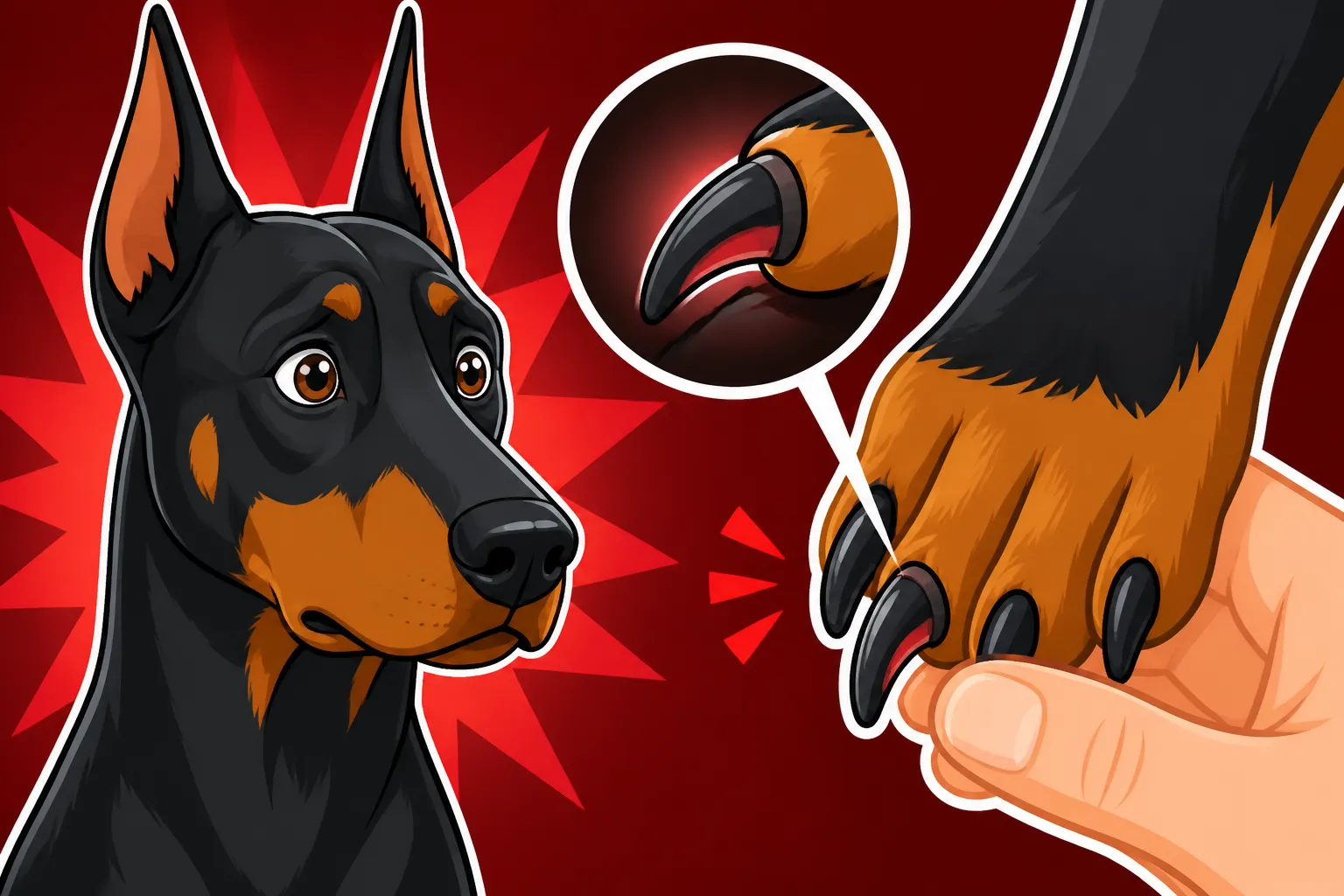
The primary reason black nails are such a challenge is simple: you can't see through them. In dogs with clear or white nails, the quick – the pink part containing blood vessels and nerves – is visible as a distinct pink line. You can easily identify where to stop your trim, usually just before that pink line. With black nails, however, that clear visual cue is completely absent. It's like trying to navigate a dark room blindfolded, and the consequences of misjudging can be painful for your Doberman and stressful for you. This lack of visibility means you have to rely on other methods, like making very small cuts or feeling for changes in nail texture, which takes practice and a steady hand. Many Doberman owners find themselves in this exact predicament, wondering how much longer to go, especially if their dog has been less than thrilled about past trims.
This isn't just about avoiding a little blood; quicking can be genuinely painful for your dog because you’re cutting into living tissue that contains nerves. A bad experience can make your Doberman resistant to future nail trims, turning an already difficult task into a full-blown wrestling match. This is why a methodical and gentle approach is crucial. It’s about building trust and making the experience as neutral, or even positive, as possible over time. Don't be too hard on yourself if you've struggled; it's a common issue that almost every Doberman owner faces.
The Anatomy of a Doberman's Nail
Understanding the basic structure of your Doberman’s nail is the first step towards a successful trim. Each nail consists of two main parts: the insensitive outer shell and the sensitive quick.
The outer shell is the hard, keratinized part that you're cutting. It's essentially dead tissue, much like our fingernails, and cutting this part doesn't cause any pain. However, it's the quick that demands our attention. The quick is a living tissue that contains a blood vessel and a nerve. It runs partway down the nail, and as the nail grows longer, the quick grows with it. This is a critical point: if your Doberman's nails have been allowed to grow very long, the quick will also be extended further down the nail. This makes it even easier to quick them during a trim, as the target zone for safe cutting becomes much smaller. The goal of regular trimming isn't just to shorten the nail, but to encourage the quick to recede, allowing you to gradually take more off the nail without hitting the sensitive part. It's a slow process, but an important one for long-term nail health.
When examining your Doberman’s black nails, you’ll notice they generally have a slightly hooked shape at the end. The quick typically ends before this hook begins. As you trim or grind, you’re aiming to remove the tip of that hook, working your way back. If you look at the underside of the nail, you'll often see a small, dark, or greyish dot appear in the center as you get closer to the quick. This is your warning sign, indicating you're getting very close to the sensitive area and should stop. It takes keen observation and good lighting to spot this, but it’s an invaluable cue for Grinding a Doberman Nail You Cannot See Through.
Preparing for a Successful Nail Trim
Preparation is half the battle when it comes to Doberman nail trims. A calm environment and the right tools can make all the difference, transforming a stressful chore into a manageable routine. Remember, our Dobermans are smart and pick up on our anxiety, so taking a deep breath and being prepared yourself goes a long way. This is also a great time to implement some of the early training advice you might have encountered, especially from resources like What Doberman Owners Wish They Had Started Earlier.
Essential Tools for Dark Nails
Having the correct tools on hand before you start is crucial. You don't want to be fumbling around mid-trim, especially if your Doberman is already a bit nervous. Here's what you'll need:
- Sharp, High-Quality Nail Clippers: For Dobermans, given their nail thickness, I highly recommend a scissor-style clipper, not the guillotine type. Brands like Safari or Resco make sturdy clippers designed for larger breeds. Make sure they are sharp. Dull clippers crush the nail rather than cut cleanly, which can be painful and lead to splintering. You can often find excellent options on Chewy or Amazon.
- Dog Nail Grinder (Dremel-style): Many Doberman owners find grinders to be a lifesaver for black nails. They remove small layers at a time, making it much harder to quick the dog. Plus, the vibration can sometimes be less alarming than the sudden snip of clippers. Look for a cordless model with multiple speed settings for ease of use. This is especially helpful if you're nervous about cutting too much.
- Styptic Powder: This is an absolute non-negotiable. Even with the best intentions, accidents happen. Styptic powder (like Kwik Stop) contains agents that quickly clot blood. Keep it within arm's reach every single time you trim nails. You can find this easily on Chewy or Amazon.
- High-Value Treats: Distraction is your friend. Think cooked chicken, cheese, peanut butter (xylitol-free!), or even a portion of their regular meal if they’re food-motivated. A lick mat smeared with peanut butter can be a great way to keep them occupied. Ollie, for example, offers fresh, palatable options that can be perfect for this kind of positive reinforcement.
- Good Lighting: A bright headlamp or a well-lit area is indispensable. The more light you have, the better your chances of spotting the subtle cues that indicate you’re approaching the quick.
- Non-Slip Mat or Surface: Dobermans are big, strong dogs. Ensure your Doberman has a stable surface to stand or lie on so they feel secure and don't slip during the process. This can reduce their anxiety and make them less likely to pull away.
Setting the Scene for Calm Trimming
The environment you choose for nail trims can significantly impact your Doberman's cooperation. It’s not just about the tools; it’s about the vibe.
First, choose a quiet time when your household is relaxed and there are minimal distractions. Avoid bustling periods when kids are playing or guests are over. Your Doberman will pick up on any chaos and become more anxious. Find a comfortable spot, perhaps on the floor with a soft blanket or a non-slip mat, where your Doberman can lie down or stand comfortably. If your Doberman has any joint stiffness, providing a comfortable, cushioned surface can be key, especially as they get older – a consideration often addressed in articles about Grooming a Doberman That Cannot Stand Long.
Second, desensitize your Doberman to paw handling from a young age. If you have a puppy, start early and often. Gently touch their paws, wiggle their toes, and tap their nails with the clippers or grinder (while it's off) for short periods. Pair this with immediate, high-value rewards. The goal is to make paw handling a normal, positive experience. Even with an adult Doberman, you can start this process. Spend a few minutes each day gently holding their paw, praising, and giving treats, gradually working up to brief touches with the clippers or grinder. This approach is similar to what you might do when Teaching a Doberman Puppy to Soften Its Mouth, where gentle handling builds positive associations.
Finally, manage your own stress levels. Our Dobermans are incredibly perceptive and will mirror our emotions. If you’re tense and anxious, they will be too. Take a few deep breaths before you start. If you’re having a particularly rough day, it might be better to postpone the trim or delegate it if possible. Short, positive sessions are always better than long, stressful ones. Even if you only manage to trim one or two nails in a session, celebrate that success and end on a good note. Over time, these small victories build confidence for both of you.
Step-by-Step Guide to Trimming Black Doberman Nails Without Quicking
Okay, you've got your tools, you've set the scene, and you're ready to tackle those intimidating black Doberman nails. The key here is patience and a methodical approach. Remember, it's better to take off too little than too much.
The "Small Snips" Method
This is my go-to strategy for black nails when using clippers, and it requires a bit of finesse and observation.
- Position Your Doberman: Have your Doberman lie down or stand, whichever is most comfortable for both of you. Ensure you have good access to their paws and clear visibility. Use a helper if needed to offer continuous treats or gentle reassurance. This is where those Rewards a Doberman Will Work For come in handy.
- Identify the Nail Tip: Hold the paw firmly but gently. Examine the nail. You're looking for the very tip, often where the nail starts to curve downwards, sometimes forming a slight hook. This is the oldest, most insensitive part of the nail.
- Take Tiny Shavings: Instead of one big cut, aim to take off tiny, thin slices of the nail at a time. Picture peeling a vegetable; you’re just shaving off the very end. Make one small snip from the bottom of the nail upwards, or from the side.
- Observe the Cross-Section: After each tiny snip, look at the freshly cut surface of the nail.
- Initially, you’ll see dry, flaky white or grey material. This is safe to continue trimming.
- As you get closer to the quick, the center of the nail will start to show a small, darker grey or black dot, almost like a tiny bullseye. This indicates you are very close to the quick. STOP HERE. Do not cut any further on that nail.
- The quick, if accidentally exposed, will look pinkish and immediately start to bleed.
- Repeat for Each Nail: Move to the next nail, applying the same "small snips" and careful observation. Don't feel pressured to do all nails in one session. If your Doberman gets stressed or fidgety, take a break. A positive association is more important than perfectly short nails in one go.
A common mistake is trying to get the nails as short as possible in one session. Resist this urge. Your primary goal is to maintain them and encourage the quick to recede over time. Consistent, gentle trims every 1-2 weeks will gradually shorten the quick, allowing you to eventually trim them shorter without risk. This careful, gradual approach also contributes to building a more confident Doberman, which is always a goal, akin to Building a Doberman Puppy That Is Confident, Not Sharp.
Grinding for Precision and Safety
For many Doberman owners, a grinder is the preferred tool for black nails precisely because it offers greater control and reduces the risk of quicking.
- Acclimate Your Doberman to the Grinder: If your Doberman isn’t used to the grinder, start by simply letting them hear the sound. Turn it on briefly in another room, then in the same room. Praise and give treats. Let them sniff the grinder while it’s off, then while it’s on low speed. Touch their paw with the off grinder, then with the on grinder (briefly, on a low setting). This desensitization process is vital to prevent fear.
- Prepare for Grinding: Ensure your Doberman is comfortable, either standing or lying down. Secure the paw you’re working on. Long hair around the toes should be held back or trimmed to avoid entanglement.
- Grind in Short Bursts: Turn the grinder on a low to medium speed. Touch the tip of the nail with the spinning head for just a second or two, then lift it off. Don't press hard or hold it in place for too long, as the friction can generate heat and become uncomfortable.
- Check the Progress: After each short burst, examine the nail as you would with clippers.
- You’ll see a white, dusty residue.
- As you get closer to the quick, the center of the nail will start to show a darker circle – the "bullseye." This is your cue to STOP. You've reached the point where the quick is just underneath.
- Be Aware of Heat: The friction from grinding can generate heat. Keep your bursts short to prevent the nail from getting too hot, which can be uncomfortable or even painful for your Doberman.
- Round the Edges: Grinders are excellent for smoothing and rounding the edges of the nail, which helps prevent sharp points that can scratch floors or people.
Grinding is often less traumatic for dogs who have had bad experiences with clippers because it’s a gradual process. It allows you to remove just enough nail to keep it short without stressing about hitting the quick. Consistency is still important, aiming for weekly or bi-weekly sessions to maintain length and encourage quick recession.
What to Do If You Do Quick Your Doberman
Even with the utmost care, quicking can happen. Don’t panic! It’s startling, but usually not serious, and your calm reaction will help your Doberman recover faster.
- Stay Calm: Your Doberman will likely yelp, pull away, and possibly even flinch or limp for a moment. Resist the urge to yell or show frustration. Your calm demeanor will help them calm down faster.
- Apply Styptic Powder: Immediately grab your styptic powder. Take a pinch of the powder and firmly press it onto the bleeding nail for 30-60 seconds. You can also dip the bleeding nail directly into the powder. The pressure combined with the clotting agents will usually stop the bleeding very quickly. If you don't have styptic powder, a clean cloth with cornstarch or flour can work in a pinch, but styptic powder is far more effective. Given that Dobermans can be susceptible to The Bleeding Disorder Almost Every Doberman Line Carries (Von Willebrand Disease), having styptic powder on hand is doubly important, although quicking a nail is typically a minor bleed.
- Reassure Your Doberman: Once the bleeding has stopped, offer comfort and praise. Give them a special treat. You might need to take a break or even stop the session entirely for that day, especially if they are very upset. The goal is to make the experience as positive as possible, even after a mishap.
- Monitor the Nail: Keep an eye on the quicked nail for the next hour or two to ensure the bleeding doesn't restart. Most quicks stop bleeding quickly and don't require further medical attention. However, if the bleeding is profuse and doesn't stop after several minutes of firm pressure with styptic powder, or if the nail appears badly damaged, it’s best to contact your vet. For information on wound care in general, you can look at Wound Healing in a Doberman With Thin Skin.
- Rebuild Trust: After a quick, your Doberman might be wary. Go back to basics with paw handling, positive reinforcement, and short, happy sessions, gradually reintroducing the clippers or grinder. It might take a few sessions to regain their full trust, but consistency and patience will get you there.
Maintaining Healthy Doberman Nails
Regular maintenance is key to keeping your Doberman's nails healthy, preventing discomfort, and making future trims easier. It's an ongoing commitment, but one that contributes significantly to their overall well-being.
Frequency and Consistency are Key
The single most important factor in managing black Doberman nails is consistency. Longer nails mean longer quicks, making every trim more challenging and risky. Short nails, however, mean shorter quicks, creating a wider margin of safety.
- Aim for Weekly or Bi-weekly Trims: For Dobermans, especially those with dark nails, I recommend trimming or grinding every 1-2 weeks. This frequency prevents the quick from extending too far down the nail and allows you to gradually push it back. Each tiny trim helps the quick recede a little, eventually allowing you to achieve that ideal short nail length where the nail doesn't touch the ground when your Doberman stands.
- Listen for Clicking: A good rule of thumb is that if you can hear your Doberman’s nails clicking on hard floors as they walk, they are too long. Their nails should ideally be short enough that they don't make contact with the floor when they're standing naturally.
- Incorporate into Routine: Try to make nail trims a part of your Doberman's regular grooming routine. Perhaps after a bath, when nails are slightly softer, or during a quiet evening cuddle session. The more routine it becomes, the less of a big deal it will feel for your Doberman. Regular handling as part of their Doberman Grooming on a Coat With No Undercoat routine will also help.
Think of it like brushing your teeth – it's not a once-a-month event. Regular, small efforts yield much better results and prevent bigger problems down the line. Consistency also builds your Doberman's tolerance and trust, making the experience less stressful for everyone involved.
Recognizing When Professional Help is Needed
There's absolutely no shame in seeking professional help for Doberman nail trims. Sometimes, despite our best efforts, it's just too difficult, or our dogs are simply too anxious for us to do it safely at home.
- Extreme Anxiety or Aggression: If your Doberman becomes severely anxious, panics, or shows signs of aggression (growling, snapping) during nail trims, it’s a sign that you need professional intervention. A qualified groomer or veterinary technician has experience and techniques to handle even the most reluctant dogs. They might be able to get the job done more quickly and safely, and can even offer tips for at-home desensitization.
- Overgrown or Ingrown Nails: If your Doberman’s nails are extremely long, curled, or worse, have started to grow into the paw pad, a vet visit is essential. These situations are painful and often require sedation to safely trim and treat any resulting infection.
- Underlying Health Conditions: For older Dobermans, or those with certain health issues, standing for a nail trim can be difficult. The Doberman Years When Everything Shows Up can bring along various physical challenges. If your Doberman struggles with balance, pain, or discomfort, a vet might be able to sedate them lightly for a stress-free trim or offer alternative solutions. Sometimes, a Doberman with a pre-existing condition, such as Von Willebrand Disease, requires extra caution, and a professional familiar with their medical history can provide that peace of mind. Surgery on a Doberman With a Clotting Problem for example, requires rigorous pre-screening and careful planning.
- Lack of Confidence: If you, the owner, are simply too nervous to perform the trims consistently, that's perfectly okay. Your anxiety transfers to your dog. Many vets and groomers offer "nail trim clinics" or can schedule regular appointments to keep your Doberman's nails in top shape. It might add a small recurring cost to your What a Doberman Costs Month to Month but the peace of mind and the benefit to your Doberman's health are well worth it.
Ultimately, the goal is your Doberman’s comfort and health. Whether you do it yourself or rely on professionals, ensuring their nails are properly maintained is a crucial part of responsible Doberman ownership. Don't let the black nails intimidate you; with the right approach and a little perseverance, you've got this!
Disclaimer
This article is for general informational purposes only and does not constitute professional advice. Laws, prices and regulations vary by location and change over time. Consult a qualified professional for guidance on your specific situation.