Why European Dobermans Have Heavier Heads
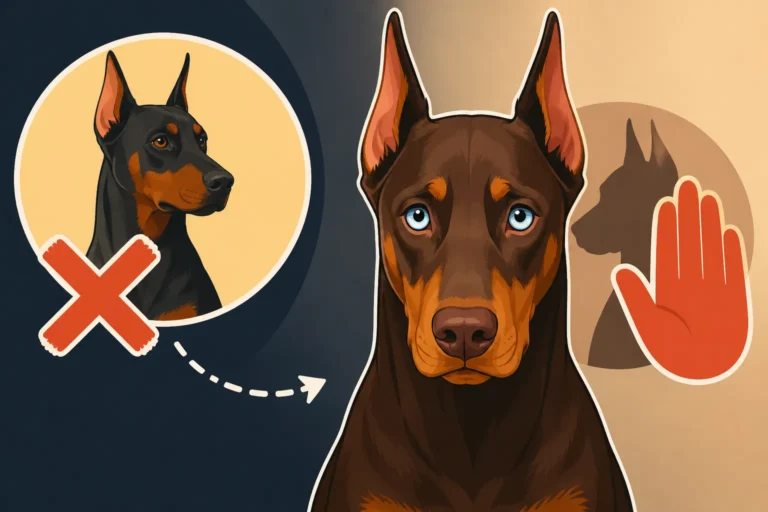
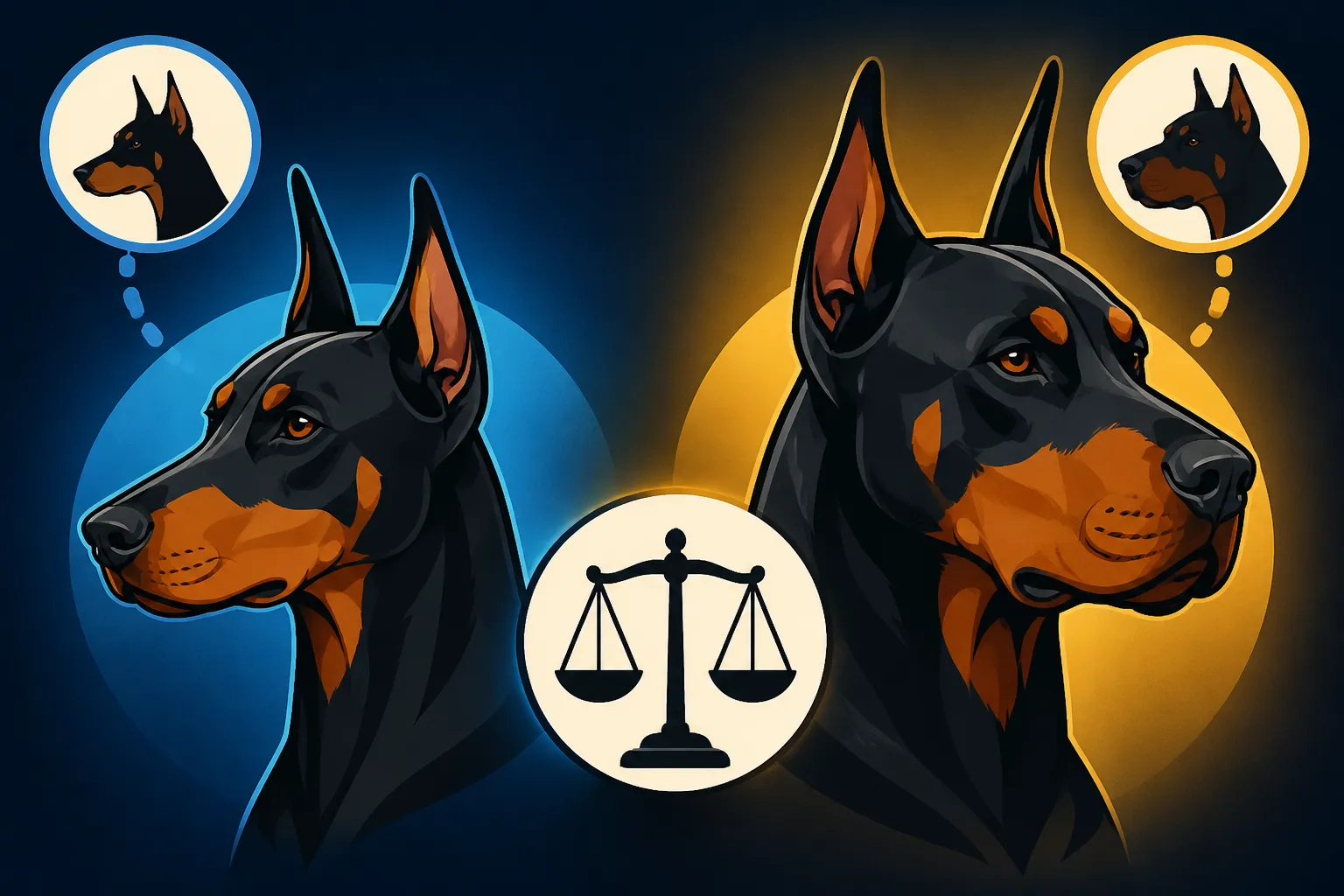
It's quite common to notice subtle, and sometimes not-so-subtle, differences in Dobermans, especially when comparing those from American lines to their European counterparts. One of the most frequently discussed distinctions is the head shape, with many remarking that European Dobermans tend to have a "heavier" head. This guide will delve into what contributes to this observation, exploring the breed standards, historical influences, and what these differences mean for owners like you.
Understanding the Doberman Head: A Look at Breed Standards
When you think about the ideal Doberman, a certain image probably springs to mind: elegant, powerful, and undeniably regal. However, that image can actually vary depending on which side of the Atlantic you're looking at. The way a Doberman's head is described and judged differs between the American Kennel Club (AKC) standard and the Fédération Cynologique Internationale (FCI) standard, which is widely adopted in Europe. These differences aren't just minor technicalities; they reflect distinct breeding philosophies and priorities that have evolved over decades.
The AKC Standard: Refinement and Elegance
In America, the Doberman Pinscher (as it's known here) has often been bred with a strong emphasis on elegance, refinement, and a sleek, athletic build. The AKC standard, for instance, calls for a head that is "long and dry" with "well-filled under the eyes." It describes a skull that, when viewed from the front, tapers moderately towards the nose. The muzzle is often described as parallel to the top of the skull, creating a clean, almost chiseled profile.
This emphasis on refinement contributes to the perception of a lighter, more streamlined head. Judges and breeders often look for a certain delicate balance, where strength is present, but not at the expense of grace. The stop, which is the indentation between the eyes, is typically moderate, not overly pronounced. This aesthetic preference has guided American breeding programs for generations, leading to a distinct "look" that many owners have come to associate with the breed. If you’re ever reading paperwork for a Doberman, understanding The Doberman the AKC Standard Describes helps clarify these ideals.
The FCI Standard: Robustness and Functionality
Across Europe, the Dobermann (without the "Pinscher" suffix) often adheres to the FCI standard, which historically placed a greater emphasis on working ability and a robust, powerful conformation. This often translates to a more substantial, almost more formidable, appearance, and the head is no exception. The FCI standard typically describes a head that is "strong" and "elongated," but also emphasizes a certain "dryness," meaning no loose skin. However, the interpretation often leads to a broader skull and a more pronounced stop.
This isn't to say European Dobermans are crude or lacking elegance; far from it. It's simply a different ideal of beauty and function. The overall impression is one of strength and power, befitting a dog that was originally bred for protection and still widely utilized in working sports today. For those interested in the breed's origins, exploring The 1900 German Doberman Standard provides fascinating insights into these foundational characteristics. These slight variations in interpretation are a key reason why European Dobermans often appear to have those "heavier heads" compared to their American cousins.
Deciphering the "Heavier Head" in European Dobermans
When we talk about a "heavier" head in European Dobermans, it’s not just a casual observation; it refers to a set of distinct anatomical features that contribute to a more substantial and powerful overall appearance. This isn't about one being "better" than the other, but rather recognizing the deliberate differences shaped by breeding goals. It’s part of the broader discussion on American Against European Dobermans and helps illustrate why these distinctions exist.
Broader Skull and More Pronounced Stop
One of the most noticeable aspects contributing to the "heavier" head is the skull itself. European Dobermans often exhibit a broader skull, particularly between the ears. This gives the top of the head a wider, more powerful appearance compared to the narrower, more refined skull often seen in American lines. This increased breadth is subtle but definitely noticeable when you compare the two types side-by-side.
Coupled with this, the stop—the indentation where the muzzle transitions to the forehead—is typically more pronounced in European Dobermans. While the AKC standard might call for a "moderate" stop, the FCI interpretation often leans towards a more distinct demarcation, giving the head a slightly more angular and less flowing profile. This combination of a broader skull and a more defined stop creates an impression of greater mass and strength in the cranial region, leading to that characteristic "heavier" look.
Stronger Muzzle and Jaw Musculature
Beyond the skull, the muzzle and jaw structure also play a significant role. European Dobermans often present with a more robust muzzle, which can appear slightly wider and sometimes a touch shorter in proportion to the overall head length than what is typically seen in American show lines. This isn't a short, bulldog-type muzzle, but rather one that maintains proper length while offering more substance. This gives the dog a powerful, capable look, reflecting its working heritage.
Furthermore, the musculature around the jaw and cheeks in European Dobermans tends to be more developed. This enhanced muscle definition contributes to a fuller, more substantial facial appearance, adding to the overall impression of a "heavier" head. This muscular development is directly related to the breed's historical role in protection and working tasks, where a strong bite and powerful grip were highly valued. When evaluating Doberman Head, Eye and Expression in the Standard, these nuanced differences become quite clear.
Overall Bone Structure and Substance
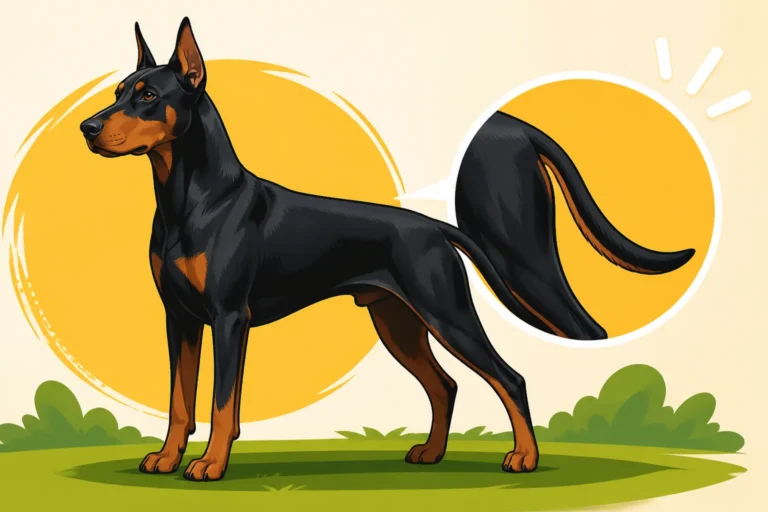
It's important to remember that the head isn't an isolated feature; it's part of the entire dog's conformation. European Dobermans, as a whole, are often characterized by a generally heavier bone structure and greater overall substance compared to their American counterparts. This means they often carry more muscle mass and have a more imposing build. This heavier bone and muscle naturally extend to the head, contributing to its more substantial appearance.
This goes hand-in-hand with their historical breeding for working roles, where a sturdy, durable physique was paramount. A dog with a heavier frame and powerful musculature naturally carries a more robust head to match. So, while the head itself has distinct features, it’s also a reflection of the entire dog's powerful and substantial build. When assessing How a European Doberman Is Built Differently, the head is truly just one piece of the puzzle that creates their distinct look and feel. It’s definitely something to consider if you're thinking about a European line Doberman.
Historical Purpose and Breeding Influences
The distinct head shapes we see today in American and European Dobermans aren't random; they are a direct result of differing historical breeding objectives and cultural preferences that have guided the breed's development on each continent. It's a fascinating look into how human priorities can shape the physical traits of a dog over generations.
Emphasis on Working Ability in Europe
From its very inception by Karl Dobermann in Germany, the Doberman was conceived as a working dog—a guardian, a protector, and a formidable companion. In Europe, especially in countries like Germany, the Czech Republic, and Holland, this emphasis on working ability has largely been maintained throughout the breed's history. Breeders have consistently prioritized traits that contribute to a Doberman's effectiveness in tasks such as protection work, tracking, and obedience.
A stronger, more substantial head, with powerful jaws and a robust skull, was seen as an asset for a dog expected to perform bite work, deter intruders, and withstand the rigors of demanding training. This focus wasn't just about aesthetics; it was about function. Dogs that excelled in these working trials and were proven to have the necessary physical and mental fortitude were often the ones chosen for breeding. This explains why you'll often see Working Titles on a European Doberman Pedigree, signifying their proven capabilities. Over time, this consistent selection pressure led to the evolution of the characteristic "heavier" head we observe in many European lines today.
Show Ring Preferences in America
In America, while the Doberman Pinscher is still recognized as a working breed, the evolution of the breed was heavily influenced by the show ring. The American Kennel Club (AKC) standard, while still demanding a powerful dog, often saw judges favoring a more elegant, refined, and aesthetically pleasing appearance. This led to a preference for a sleeker head with a more moderate stop and a drier, more chiseled muzzle.
The focus shifted slightly from raw functionality to a harmonious, balanced silhouette that excelled in conformation competitions. Breeders would select dogs that best embodied these specific aesthetic ideals, inadvertently (or intentionally) moving away from the more robust head typical of European working lines. This doesn't mean American Dobermans aren't capable or strong, but rather that the visual emphasis leaned towards grace and refinement. While the overall goal is still a healthy, sound dog, the "look" became a significant driving factor, creating a clear divergence from their European cousins. It’s worth noting that even within Europe, there can be subtle differences depending on specific country and breeding philosophies, but the overall trend towards a more substantial head remains. It's not uncommon to hear discussions about Whether a Big European Doberman Is Over Standard, but often these discussions miss the point that "standard" varies depending on the registry and its interpretation.
Practical Considerations for Owners
Understanding the differences in head shape between European and American Dobermans isn't just an interesting bit of trivia; it can have some practical implications for owners. From nutritional needs to finding the right equipment, these distinctions are part of the broader package of owning one of these magnificent dogs.
Feeding and Nutritional Needs
A Doberman with a heavier head and a more substantial overall build, typical of many European lines, often requires a different approach to feeding. These dogs tend to be larger, carry more muscle mass, and therefore have higher caloric demands to maintain their condition. You might find yourself measuring out significantly more food for your European Doberman compared to what an American-line Doberman of similar height might eat.
It's crucial to consult with your veterinarian to establish the appropriate caloric intake and ensure they're receiving a balanced diet. Look for high-quality kibble that supports a working dog's energy levels, with proper protein and fat percentages. When shopping for food, don't forget to check out reputable online retailers like Chewy, which offer a wide range of premium dog foods suitable for active, large breeds. For more specific guidance, our article on Daily Calories for an Adult Doberman can be very helpful. Remember, maintaining a lean, athletic physique is vital for Dobermans, regardless of their head type, to avoid unnecessary strain on their joints and heart.
Choosing the Right Equipment and Accessories
The "heavier head" can also influence your choice of certain accessories. For instance, finding a muzzle that fits correctly can be a bit more challenging. A muzzle designed for a more refined, narrower head might pinch or be too small for the broader skull and stronger jaw of a European Doberman. It’s important to measure your dog carefully and consider brands that offer different shapes or adjustable options.
Similarly, when it comes to things like elevated feeding bowls, which many Doberman owners prefer for comfort and to potentially reduce the risk of bloat, you'll want something sturdy and appropriately sized. A wider-based bowl might be more comfortable for a broader head, and elevated feeders available through retailers like Chewy come in various heights and widths. Even simple things like durable chew toys may need to be more robust to stand up to the stronger jaws often accompanying a heavier head. Always prioritize comfort and safety when selecting gear for your Doberman. Our post on Bowl Height for a Tall Doberman offers further tips on setting up a comfortable eating station.
Understanding Overall Type and Temperament (Breed Specific)
While head shape itself doesn't directly dictate temperament, it's often part of a broader "type" that is associated with certain breeding lines. European Dobermans, bred with a stronger emphasis on working ability, are often perceived as being more "driven," "harder," or having higher prey drives. This isn't universally true, and individual temperament varies wildly, but it's a generalization worth considering.
If you're looking for a dog to engage in protection sports or advanced obedience, a European-line Doberman with a more robust build (including that heavier head) might align more with your goals. However, if you're seeking a more laid-back family companion, either type can be wonderful, but understanding the general tendencies of each line can help you make an informed choice. Always choose a breeder who health tests extensively and prioritizes stable temperaments, regardless of whether you prefer a European or American look. A good breeder will match you with a puppy whose personality and drive are suitable for your lifestyle, rather than just focusing on physical appearance.
Comparing Doberman Head Features
To help clarify the differences, here's a quick comparison of general tendencies you might observe in American and European Doberman head types:
| Feature | American Doberman (General Tendency) | European Doberman (General Tendency) |
|---|---|---|
| Skull | More refined, narrower between ears | Broader, more substantial |
| Stop | Moderate, smoother transition | More pronounced, distinct indentation |
| Muzzle | Longer, leaner, more chiseled | Wider, often appears more robust/powerful |
| Jaw Musculature | Less pronounced, drier | More developed, stronger-looking |
| Overall Impression | Elegant, sleek, refined | Powerful, substantial, imposing |
This table provides a generalized view, and there's always overlap and individual variation within both lines. However, it helps illustrate why the "heavier head" observation is so common. Ultimately, whether you prefer the elegance of an American Doberman or the robust power of a European Dobermann, both are incredible dogs that deserve knowledgeable, committed owners. Finding a breeder who understands and tests for health, like The Health Testing a Doberman Breeder Must Show, is paramount, regardless of what type of Doberman you're bringing home.
Disclaimer
This article is for general informational purposes only and does not constitute professional advice. Laws, prices and regulations vary by location and change over time. Consult a qualified professional for guidance on your specific situation.