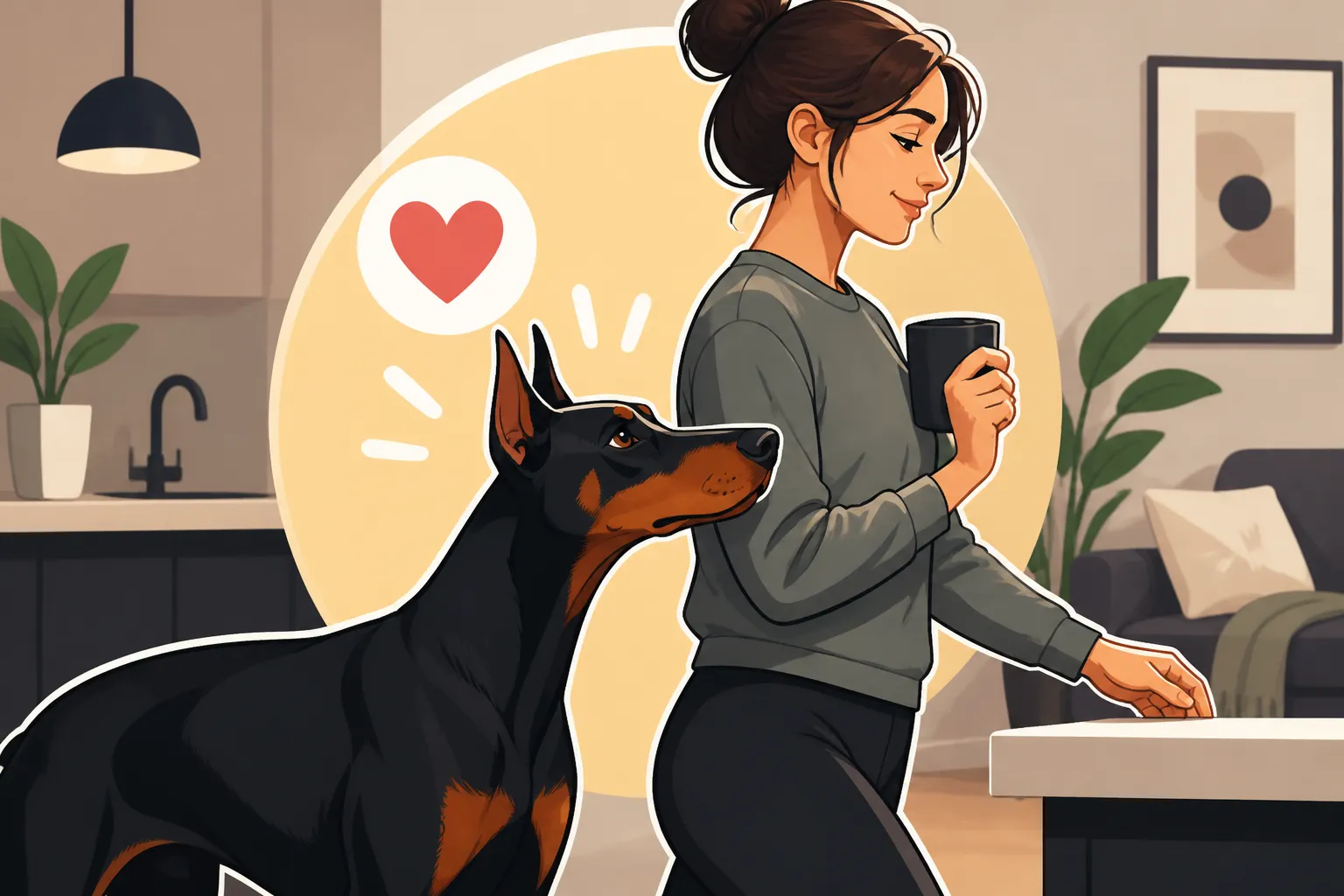
Living With a Doberman That Follows You Everywhere
If you're a Doberman owner, you've probably experienced it: you get up to grab a snack, and suddenly there's a warm, dark shadow trailing your every move. It's often endearing, sometimes amusing, but let's be honest, living with a Doberman that shadows you constantly can also feel a little overwhelming. This comprehensive guide will help you understand why your Doberman is so attached, distinguish normal "Velcro" behavior from genuine anxiety, and provide actionable strategies to foster a healthy balance of companionship and independence.
Understanding the "Velcro" Phenomenon in Dobermans
It’s no secret that Dobermans are known for their intense loyalty and desire to be close to their people. This isn't just a quirky trait; it's deeply ingrained in their genetic makeup and historical purpose. They're often called "Velcro Dobermans" for a reason – they stick to you like, well, Velcro! But what truly drives this constant companionship?
The Doberman's Innate Bonding Instinct
Dobermans were originally bred by Karl Dobermann in Germany during the late 19th century. His goal was to create a loyal, protective companion, and he certainly succeeded. This breed was developed to work closely with humans, often guarding their handlers and property. This close working relationship forged an incredibly strong bond between the dogs and their people. They thrive on interaction and being part of the "pack" which, for most modern Dobermans, means their human family. This isn't just about protection anymore; it's about connection, belonging, and feeling secure within their family unit. They see you as their whole world, and naturally, they want to be right there in it with you, every single moment. The intensity of this bond is part of what makes owning a Doberman so special, but it also means they often struggle with being apart from their favorite humans.
It's a testament to their breeding that they form such profound attachments. They aren't aloof dogs who are content to observe from a distance. Instead, they want to be actively involved in whatever you're doing, even if that means simply watching you fold laundry or type on your computer. This desire for proximity is a fundamental aspect of the Doberman temperament. They aren't trying to be intrusive; they're simply expressing their deep devotion and fulfilling their instinct to be near those they protect and cherish. Understanding this root cause can help shift your perspective from annoyance to appreciation, even as you work on managing the behavior.
Historical Roles and Modern Day Clinginess
Historically, Dobermans were not just guard dogs; they were personal bodyguards, walking alongside their owner on night rounds, always alert and ready to act. This constant proximity was a necessity for their job. They were bred to be acutely aware of their handler's movements, moods, and needs, ready to respond at a moment's notice. Fast forward to today, and while most Dobermans aren't patrolling city streets with a tax collector, that instinct to be constantly vigilant and near their person remains. They haven't had their "job description" updated, so to speak, in terms of their psychological needs.
This historical purpose translates into modern-day clinginess. When you move from the kitchen to the living room, your Doberman sees it not just as a casual stroll, but potentially as a shift in "patrol" area, and they need to be right there to ensure everything is secure and to stay connected to their leader. They find comfort and purpose in being by your side. For many Doberman owners, this means never going to the bathroom alone or finding a furry nose tucked under their arm when they least expect it. It's their way of staying engaged and confirming their place within your life. This deep understanding of their background helps you appreciate that their behavior isn't defiance, but rather an expression of their core nature. You might enjoy reading Where the Velcro Doberman Nickname Comes From for a deeper dive into this phenomenon.
Not Just Affection: The Guardian Mentality
While the Doberman's constant shadow is undoubtedly a sign of their affection, it's also intrinsically linked to their guardian instincts. They are wired to protect. Even if your home is the safest place on earth, their primal programming tells them that they need to be aware of their surroundings and, more importantly, your surroundings. If you move, they move, not just because they love you, but because they are constantly assessing the environment for potential threats or changes. They are your personal security detail, 24/7.
This guardian mentality can manifest as a subtle, almost imperceptible monitoring of your activities and interactions. They might position themselves in a doorway to observe multiple rooms, or rest their head on your lap while keeping one eye on the window. It's a quiet, ever-present vigilance. This is why proper socialization and training are so crucial from a young age. A Doberman with a strong guardian instinct needs to be taught who is welcome and what constitutes a threat, rather than being left to make those decisions entirely on their own. This foundational training helps them be confident, not sharp, in their role.
The Everyday Reality of a Shadowing Doberman
So, what does this "Velcro" life actually look like on a day-to-day basis? For many Doberman owners, it's a series of familiar scenarios that are both heartwarming and, at times, a little bit much. It's important to recognize these patterns to understand the extent of your Doberman's attachment.
Constant Proximity and Personal Space Invasion
One of the most immediate realities of living with a shadowing Doberman is the constant invasion of personal space. Whether you're cooking dinner, watching TV, or trying to read a book, your Doberman will likely be right there, often touching you. They aren't usually content to just be in the same room; they want to be within arm's reach, a paw on your foot, or their head on your lap. This isn't necessarily a bad thing, and for many, it's a huge part of the Doberman's charm. However, it can certainly make simple tasks feel a bit more complicated, especially if you're trying to carry a hot pan or navigate a small space.
This constant proximity is their comfort zone. They derive a sense of security from being physically connected to you. It's their way of reaffirming the bond and making sure they're not missing out on anything important. Think of it as a furry, four-legged extension of yourself. They are truly dedicated companions, but it can be a learning curve for owners who are used to more independent breeds. You'll quickly learn to step over them, navigate around them, and adjust your movements to accommodate their ever-present closeness.
Following from Room to Room, Even to the Bathroom
Ah, the "bathroom buddy" phenomenon. This is perhaps the most universally recognized trait of the Doberman. Need to use the restroom? Your Doberman will be right there, probably nudging the door open with their nose if you try to close it. Head to the kitchen for a drink? They're on your heels. Move from the couch to a different chair? They're already getting up to reposition themselves near you. This room-to-room following isn't just a habit; it's a deeply ingrained behavior that shows their commitment to always being with you.
This behavior highlights their intense desire for companionship and their fear of missing out. For them, every transition you make could be an opportunity for interaction, a potential walk, or simply a chance to receive some pets. It speaks to their intelligence and their ability to quickly pick up on your patterns. They anticipate your movements and adjust their own accordingly. While it can be amusing, it also underscores the challenge of teaching them independent time, as their default setting is always "on your person."
The Doberman Lean and Other Physical Manifestations
Beyond simply following, Dobermans have a distinctive way of physically expressing their bond: the "Doberman lean." They will often stand beside you and lean their entire body weight against your legs, sometimes pushing you gently. This isn't them trying to knock you over; it's another form of seeking physical contact and reassurance. It's a silent affirmation of their presence and their trust in you. You might find your Doberman doing this when you're standing still, or even while you're sitting on the couch, gently pressing into your side.
Other physical manifestations include placing a paw on your arm or lap, nudging your hand with their nose for attention, or resting their head on your feet. These are all subtle yet powerful ways your Doberman communicates their affection and desire for closeness. It's their way of saying, "I'm here, you're here, and everything is right with the world." Understanding these non-verbal cues is essential to appreciating the depth of their bond. If you have a Doberman that constantly seeks this kind of physical contact, you'll definitely relate to A Doberman That Leans on You Constantly.
When Clinginess Becomes a Problem: Spotting the Line
While the "Velcro" trait is part of the Doberman charm, there's a fine line between a deeply bonded companion and a dog suffering from unhealthy dependence. Recognizing where that line lies is crucial for your Doberman's well-being and your own sanity.
Signs of Separation Anxiety vs. "Velcro" Behavior
It's vital to differentiate normal Doberman clinginess from actual separation anxiety. A "Velcro" Doberman might follow you everywhere, but they generally remain calm and content when you do leave, as long as they know you're coming back. They might nap by the door or look out the window, but they won't typically destroy the house or injure themselves. Separation anxiety, on the other hand, involves true panic and distress when left alone. The signs can be quite destructive and heartbreaking.
Here’s a quick comparison to help you tell the difference:
| Behavior Trait | Normal "Velcro" Doberman | Separation Anxiety |
|---|---|---|
| When Owner Is Present | Follows closely, seeks physical contact, watchful. | May follow excessively, show signs of nervousness even when present (e.g., trembling, pacing). |
| When Owner Prepares to Leave | May observe, get excited if they think they're coming. | Becomes agitated, paces, trembles, whines, tries to block exit. |
| When Owner Leaves | Settles down, naps, waits by door/window, may vocalize briefly. | Panics, persistent barking/howling, destructive chewing (doors, walls), inappropriate urination/defecation, self-harm attempts (e.g., scratching at doors, jumping through windows). |
| Duration of Distress | Brief period of adjustment, then calms. | Continues for extended periods, often until the owner returns. |
| Nature of Behavior | Affectionate, attentive, seeks companionship. | Fear-based, panic, inability to self-soothe. |
If your Doberman is exhibiting severe distress, destruction, or self-harm behaviors when left alone, it's crucial to address it as a genuine anxiety disorder, not just extreme clinginess. This is where topics like A Doberman That Cannot Cope When You Go Out become incredibly relevant, and consulting with a professional behaviorist or vet becomes a priority.
The Impact on Your Daily Life and Your Doberman's Well-being
An overly clingy Doberman, especially one teetering on the edge of separation anxiety, can have a significant impact on your daily life. Simple errands become stressful, social engagements might be cut short, and you might even start avoiding leaving the house to prevent your dog's distress or potential damage. This can lead to resentment and a strained relationship, which is unfair to both you and your loyal companion. For your Doberman, constant anxiety when alone is a miserable existence. They can't relax or feel secure, leading to chronic stress which can impact their physical health over time.
It's not just about property damage; it's about the emotional toll on everyone involved. You might feel guilty, frustrated, or even trapped. Your Doberman, meanwhile, is experiencing genuine fear. This is why it's so important to intervene and help them build confidence and independence. A well-adjusted Doberman can enjoy your presence but also cope calmly when you're not there. It's about finding a healthy equilibrium where their devotion is celebrated, not endured.
Escalation of Behavior: From Following to Distress
The transition from affectionate following to genuine distress can be subtle and gradual. What starts as a cute shadow might escalate into whining and pacing when you pick up your keys. Then it might become barking when you step out the door, followed by destructive chewing if left alone for longer periods. It's a slippery slope, and often, owners don't realize the severity until the problem is quite advanced. This escalation often occurs because the dog never learns coping mechanisms for solitude and their anxiety builds with each unattended departure.
Early intervention is key. If you notice your Doberman starting to show more pronounced signs of anxiety when you're about to leave, or if their vocalizations become more intense and prolonged after you're gone, it's time to act. Don't dismiss it as "just being a Doberman." A Doberman might be "Velcro," but they should still be able to settle when you're absent. Recognizing and addressing these escalating behaviors promptly can prevent a full-blown separation anxiety disorder from taking hold, preserving both your peace of mind and your Doberman's emotional health.
Building Independence and Confidence in Your Doberman
The good news is that you can absolutely help your Doberman build more independence and confidence. It’s about teaching them that being alone isn't scary, and that your absence doesn't mean abandonment. This process requires patience, consistency, and a clear strategy.
Establishing Boundaries and "Place" Training
One of the most effective tools for fostering independence is "place" training. This involves teaching your Doberman to go to a designated spot – a dog bed, mat, or crate – and stay there calmly until released. This isn't a punishment; it's about teaching them to relax in a specific area, away from your immediate vicinity, and to be content with watching you from a distance. A brand like BAXTER & Bella, for example, offers online courses that often include "place" training as a core component, guiding you step-by-step through the process.
Start with short durations and gradually increase the time they spend on their "place." Reward them heavily for staying calm and quiet. Use high-value treats and praise. The goal is for them to associate their "place" with positive experiences and relaxation. This teaches them that they don't always need to be physically touching you to be secure or loved. It provides a clear boundary and a mental exercise that encourages self-control and quiet contentedness. This command is invaluable for helping a Doberman understand Teaching a Doberman to Settle in Another Room.
Controlled Alone Time and Gradual Desensitization
Helping your Doberman cope with being alone requires a systematic approach to controlled alone time. You can't just leave them for hours and expect them to be fine. Start with very short periods. Leave the room for a few seconds, then return before they show any signs of distress. As they remain calm, gradually increase the duration. This might mean starting with stepping out the front door for 10 seconds, then 30 seconds, then a minute, and so on. The key is to make your departures and arrivals low-key – no big goodbyes or overly enthusiastic hellos.
Practice "fake" departures too: pick up your keys, put on your coat, but then sit back down. This desensitizes them to your departure cues, breaking the association that these actions always lead to being left alone. Over time, your Doberman will learn that your leaving isn't a cause for panic, and that you always come back. This methodical desensitization is critical to rebuilding their confidence in your return and mitigating any underlying anxiety.
Enriching Their Environment for Solitary Engagement
A bored Doberman is often a clingy or destructive Doberman. Providing ample mental and physical enrichment is crucial for their overall well-being and can significantly reduce their need to constantly shadow you. Engage their brilliant minds with puzzle toys that dispense treats, long-lasting chews, or snuffle mats. You can find a wide variety of these items on platforms like Amazon, offering different levels of challenge to keep your Doberman engaged.
Make sure they're getting enough exercise before you need them to settle alone. A tired Doberman is a good Doberman! A good, brisk walk or a vigorous play session can make a world of difference. When you do leave, give them a special, high-value toy or treat that they only get when you're gone. This helps them associate your absence with something positive and provides a distraction. Puzzle Work That Actually Tires a Doberman offers great ideas for keeping their minds active. The goal is to make their solo time enjoyable and rewarding, rather than simply endured.
Training Techniques to Manage the Shadowing Instinct
Beyond general independence building, specific training techniques can directly address and manage the shadowing instinct. These methods focus on clear communication and rewarding desired behaviors.
"Stay" and "Wait" as Foundation Commands
"Stay" and "Wait" are indispensable commands when dealing with a Doberman that shadows your every move. "Wait" can be used at doorways or before entering a room, teaching them to pause and not barge ahead or follow immediately. "Stay" is more versatile, allowing you to ask your Doberman to remain in one spot while you move around, even out of sight. Start in a low-distraction environment and build up the duration and distance slowly. Practice these commands frequently throughout the day, not just when you're about to leave.
The beauty of these commands is that they empower your Doberman with self-control. They learn that they can be still and wait for your permission, rather than instinctively rushing to your side. This isn't about stifling their natural bond but about giving them a polite way to interact with your movements. Reinforce these commands with high-value treats and enthusiastic praise. A strong foundation in "stay" and "wait" will be a game-changer for managing their proximity and reinforcing the idea of Teaching a Doberman to Wait for Permission.
Rewarding Calmness and Independent Play
Often, we inadvertently reward clingy behavior by giving attention every time our Doberman nudges us or follows us. To shift this dynamic, consciously start rewarding moments of calmness and independent play. If your Doberman is lying quietly in another room, go over and offer a gentle pet and a treat. If they are chewing on a toy by themselves, praise them softly. The goal is to teach them that not being constantly attached to you can also lead to positive reinforcement.
It's about being proactive rather than reactive. Instead of only noticing them when they're underfoot, seek out those moments when they're demonstrating self-sufficiency. You can even strategically place toys in different rooms and encourage them to go play with them. This encourages them to explore and occupy themselves, breaking the habit of constantly needing your direct involvement. Consistency in rewarding these independent behaviors is key to reshaping their habits over time.
Utilizing Crates and Designated Safe Spaces
Crates, when introduced positively, can become an invaluable tool for Dobermans, especially those prone to anxiety or excessive clinginess. A crate should be a safe, comfortable den – not a punishment. Line it with soft bedding, offer high-value chew toys inside, and never use it for time-outs. A properly crate-trained Doberman learns to view their crate as a sanctuary where they can relax and feel secure when you're busy, or even when you leave the house. This can be especially helpful for Dobermans who are struggling with separation distress, as it limits their ability to be destructive and provides a contained space where they can feel safe.
Beyond crates, consider a designated dog bed or mat in a quiet corner of a room, separate from where you are. This "safe space" becomes their retreat, a place where they can chill out without needing to be right next to you. Encourage them to go there periodically, even when you're home. This helps them practice settling in a specific spot and understand that it's okay to be a little removed from the action. For tips on setting up the perfect cozy spot, explore Choosing a Crate for a Doberman.
Addressing Underlying Issues: Health and Temperament
While many Dobermans are naturally "Velcro," sometimes excessive clinginess or a sudden change in behavior can signal an underlying issue that needs to be addressed. It's always wise to rule out health concerns first.
When to Consult a Vet for Behavioral Changes
Any significant change in a Doberman's behavior, including an increase in clinginess or the onset of anxiety, warrants a visit to your veterinarian. Pain, discomfort, or an undiagnosed illness can cause a dog to become more anxious, insecure, and therefore more clingy. For example, a Doberman developing a thyroid issue might become more lethargic, anxious, or sensitive, which could manifest as increased neediness. The Doberman Years When Everything Shows Up highlights that many health issues start to appear in middle age, so don't dismiss behavioral shifts in an older dog.
Your vet can perform a thorough examination, including blood work, to rule out medical conditions that might be contributing to the behavioral changes. Things like hormonal imbalances, vision or hearing loss, or even chronic pain can make a dog seek more reassurance and proximity. It's always best to get a clean bill of health before diving deep into behavioral modification, ensuring you're treating the root cause.
Considering Temperament and Socialization History
A Doberman's individual temperament and their early socialization experiences play a huge role in how they cope with being alone or how intensely they bond. Some Dobermans are naturally more sensitive or prone to anxiety than others. If your Doberman had limited exposure to different people, places, and experiences as a puppy, they might be less confident and more prone to hyper-attachment. A crucial window for socialization is before 16 weeks of age, and a Doberman puppy needs to meet the world during this time. Building a Doberman Puppy That Is Confident, Not Sharp stresses the importance of this early exposure.
For rescue Dobermans, their past experiences (or lack thereof) can also contribute to their clinginess. They might have experienced neglect or abandonment, leading to a profound fear of being left alone again. Understanding their history, if possible, can provide context for their behavior. For these dogs, building trust and patiently working on independence is even more crucial. Sometimes, a professional trainer experienced with Dobermans can help assess temperament and tailor a plan. Finding a Trainer Who Has Worked With Dobermans can be an excellent resource here.
The Role of Consistent Leadership
Dobermans thrive on clear leadership and consistent routines. If there's inconsistency in rules, expectations, or how attention is given, a Doberman might become insecure and hyper-vigilant, leading to increased clinginess. They might feel they need to constantly monitor you to understand what's happening or to ensure they're not missing out on cues. Establishing yourself as a calm, confident, and consistent leader provides them with security and clarity.
This doesn't mean being harsh or dominant; it means being reliable and predictable. Your Doberman should know what's expected of them and what the boundaries are. Consistent training, clear commands, and a structured daily routine help build this sense of security. When a Doberman feels secure in their place within the pack and trusts your leadership, they are often better able to relax and be more independent.
Living Harmoniously with Your Doberman's Nature
Ultimately, while you can work to mitigate excessive clinginess, it's important to remember that the "Velcro" trait is a fundamental part of the Doberman breed. The goal isn't to eradicate it entirely but to find a harmonious balance where both you and your Doberman can thrive.
Adjusting Expectations and Your Routine
Part of living successfully with a Doberman is adjusting your own expectations. They are not independent dogs who will happily entertain themselves in another room for hours on end. They are deeply involved family members. This might mean dedicating specific times each day for focused interaction, play, and training, and then using those independent training techniques during other times. Schedule regular brain games, walks, and cuddle sessions into your day. Knowing when they'll get their dedicated attention can help them settle during other periods.
You might also need to adjust your routine slightly. For example, if you know your Doberman struggles when you shower, provide them with a high-value chew in their crate right before you step in. Or, if they get anxious when you leave for work, ensure they have a substantial walk and mental stimulation beforehand. These small adjustments can make a big difference in managing their natural inclination to shadow and reducing their anxiety about your absence.
Benefits of the Close Doberman Bond
Let's be honest, for all the challenges of a constantly shadowing Doberman, there are immense benefits to such a close bond. You have a companion who is utterly devoted to you, always by your side, and intensely aware of your moods and needs. This deep connection can be incredibly comforting and rewarding. They offer unwavering loyalty, unparalleled protection, and a constant source of affection. Who else is always genuinely thrilled to see you, even if you just left the room for two minutes?
This profound bond often translates into a Doberman who is highly trainable and eager to please, as they genuinely want to work with you. Their intelligence and desire for interaction make them excellent partners in dog sports, obedience, or simply as well-behaved family members. Embracing this unique aspect of the Doberman temperament allows you to fully appreciate the special relationship you have. After all, the intense bond is what makes them truly Dobermans. You might even find yourself wondering Whether a Doberman Bonds to One Person more intensely than others.
Finding Balance in a "Velcro" World
Finding balance means creating a life where your Doberman feels secure and loved, but also confident and capable of being alone when necessary. It's a continuous process of training, reinforcement, and understanding. It means celebrating their incredible loyalty while gently guiding them towards a healthy level of independence. It's about enriching their lives so they don't feel entirely dependent on your constant presence for their happiness.
This balance isn't always easy to achieve, but it's incredibly rewarding. A Doberman who trusts you implicitly, enjoys your company, but can also relax when you're busy or away, is a truly happy and well-adjusted companion. It’s about cultivating a relationship built on mutual respect, clear communication, and a deep understanding of what makes this magnificent breed so unique. With patience and consistency, you can navigate the "Velcro" world of the Doberman and enjoy a fulfilling life together.
Disclaimer
This article is for general informational purposes only and does not constitute professional advice. Laws, prices and regulations vary by location and change over time. Consult a qualified professional for guidance on your specific situation.