Whether Long Nails Alter How a Doberman Stands
It’s a common worry for Doberman owners, and rightly so: you look at your elegant, powerful dog, and then you glance down at their feet. Those long, dark nails seem to be making contact with the floor, or perhaps even pushing their toes up in a way that just doesn't look quite right. This guide will delve into exactly how overgrown nails can significantly alter your Doberman's natural standing posture and comfortable gait, causing discomfort and potentially leading to more serious issues down the line.
The Foundation: How a Doberman's Foot is Designed to Work
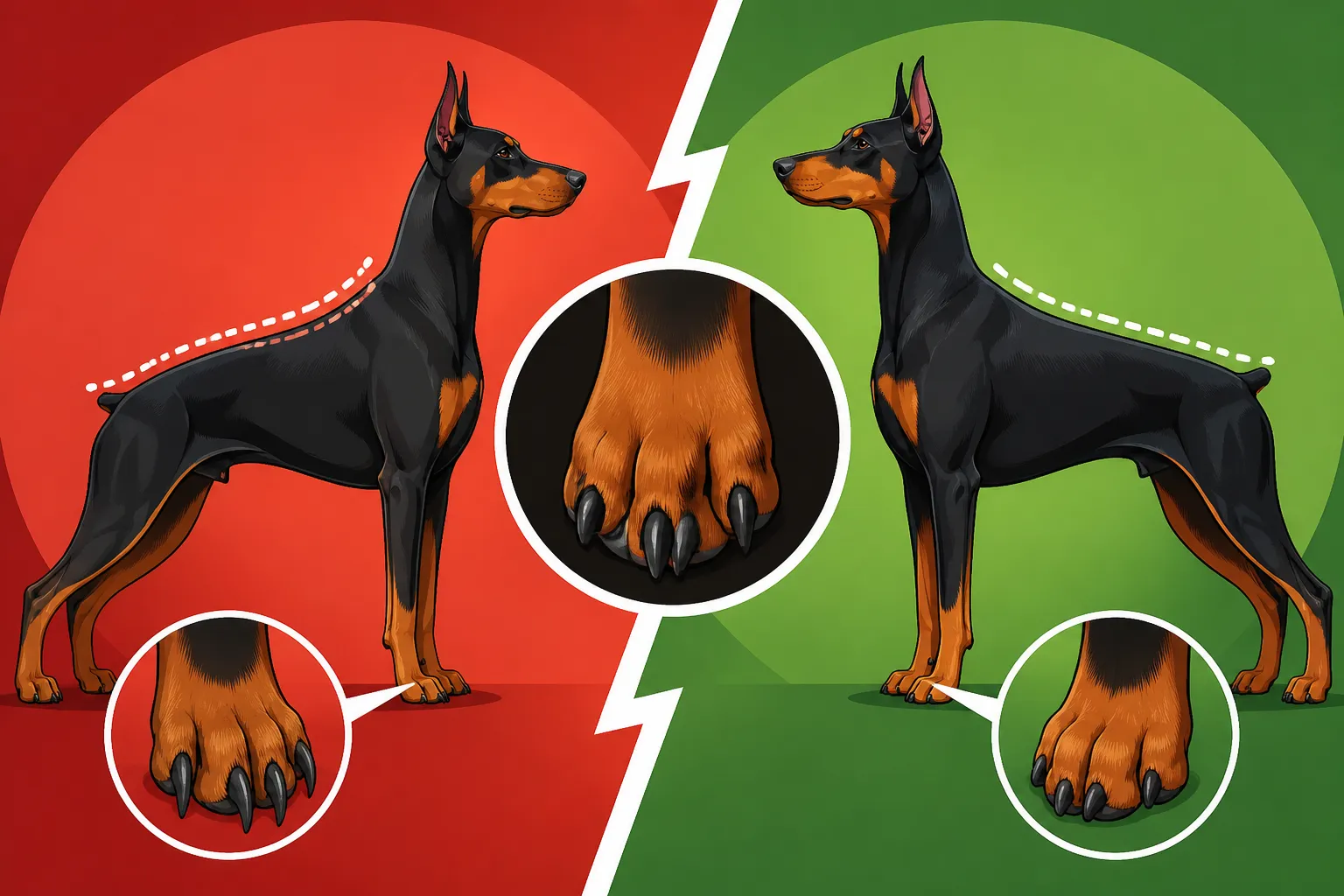
A Doberman's foot, like that of many athletic breeds, is a marvel of engineering. It's designed for speed, agility, and stability. When your Doberman stands naturally, their weight should be evenly distributed across their paw pads, with their toes slightly splayed and their nails ideally not touching the ground. Think of it like a perfectly balanced arch, absorbing shock and propelling them forward. The strong, muscular legs transfer power from their body through this sophisticated foot structure.
Each toe has a nail that, in a wild canine, would naturally wear down through constant digging, running on rough terrain, and general activity. But our domestic Dobermans, living comfortable lives in homes and walking on softer surfaces like grass, carpet, or even paved sidewalks, often don't get that natural wear and tear. Their nails grow steadily, just like human fingernails, and without regular maintenance, they will inevitably become too long. This seemingly small detail has a profound impact because those nails are connected directly to the bone structure of the toe, and the entire foot relies on a specific balance to function correctly. When that balance is thrown off, the entire kinetic chain can suffer.
The Cascade Effect: How Long Nails Impact Stance and Gait
When your Doberman's nails grow too long, they start to hit the ground before the paw pads do. Imagine wearing shoes that are too small, where your toes are constantly jammed against the front, or trying to walk with tiny stilts attached to your fingertips. It feels unnatural and quickly becomes uncomfortable. For a Doberman, this isn't just an annoyance; it forces their entire foot structure to compensate.
Instead of the paw pads bearing the primary weight, the nails are now pushing up, forcing the toes to jam backward and upwards into the foot. This changes the angle of the bones in the paw, puts strain on the delicate ligaments and tendons, and effectively flattens the natural arch of the foot. To avoid the constant pressure and discomfort, your Doberman will instinctively shift their weight backward onto their heels or outward onto the sides of their paws. This subtle shift, over time, becomes their new "normal" stance. You might notice them standing with their hocks (ankles) slightly further back or their entire posture looking a little 'off' when they're simply standing still.
When your Doberman walks or runs, the problem is compounded. The long nails act like anchors, preventing proper toe extension and retraction. Their gait becomes less efficient and more laborious. Instead of a smooth, powerful stride, they might develop a shuffling walk, a shortened stride, or even a subtle head bob as they try to shift their weight away from the painful pressure points. This constant, unnatural stress isn't just uncomfortable; it can lead to chronic pain in the paws, toes, and even higher up the leg, contributing to issues like Stiffness in a Doberman That Used to Sprint or exacerbating existing conditions like Doberman Hip Dysplasia. Over time, this poor biomechanics can significantly impact their overall mobility and quality of life.
Strain on Joints and Ligaments
The foot is the first point of contact with the ground, and any alteration there sends ripples up the entire leg and even into the spine. When long nails force a Doberman to stand and walk differently, the angle of their joints changes. Their toes are pushed back, increasing pressure on the joint capsules and ligaments that hold those tiny bones together. This can lead to inflammation and pain, much like a person wearing ill-fitting shoes develops bunions or foot pain.
Beyond the paw itself, this unnatural gait puts excessive strain on larger joints, including the pasterns (the equivalent of a human wrist), elbows, shoulders, hips, and knees. Think about the cruciate ligament in the knee, a common injury point in active dogs. An altered gait, even a slight one, can create abnormal forces across the knee joint, increasing the risk of a Cruciate Injury in an Athletic Doberman. This compensatory movement is an unconscious effort by your Doberman to alleviate discomfort, but it often creates new problems in other areas, manifesting as limping, reluctance to play, or even a general A Doberman That Tires Faster Than It Used To during walks.
Postural Changes and Muscle Imbalances
When a Doberman repeatedly shifts its weight to avoid paw discomfort, specific muscle groups become overused while others weaken. For instance, muscles in the back of the leg might tighten up, and those in the front might not be engaged correctly. This can lead to noticeable postural changes. A Doberman with chronically long nails might stand with a more "cow-hocked" appearance (hocks turning inward) or with their front paws splayed out.
You might observe a change in their topline – the way their back is held – as they try to compensate. They may carry their head and neck differently, perhaps adopting a posture reminiscent of A Doberman That Walks With Its Head Down to alleviate tension. These subtle shifts in posture are your Doberman's way of dealing with chronic discomfort, but they can create long-term muscle imbalances that are difficult to correct once established. These imbalances can lead to further pain and restrict their range of motion, making otherwise simple actions like getting up from a lying position or navigating stairs much harder, especially as they enter The Doberman Years When Everything Shows Up.
Recognizing the Signs of Overly Long Nails in Your Doberman
Sometimes, the signs are subtle, especially in a breed as stoic as the Doberman. They might not yelp or overtly limp until the problem is quite advanced. However, there are several key indicators that your Doberman's nails are too long and are affecting their standing and movement. Being vigilant and checking their paws regularly can save them a lot of discomfort down the line.
One of the most obvious signs is when their nails click on hard floors as they walk. If you can hear that distinctive "tap-tap-tap" sound on your kitchen tiles or hardwood floors, their nails are definitely too long. Ideally, a Doberman's nails should be short enough that they don't touch the ground when the dog is standing naturally.
Beyond the sound, observe their posture and gait. Do their toes appear splayed or pushed back? Does their stance look awkward, almost as if they're constantly trying to lift their toes off the ground? When they walk, do they shuffle their feet rather than stepping cleanly? You might even notice them tripping more often or hesitating before jumping into the car or onto furniture. Pay attention to how they get up after a rest; if they seem stiff or reluctant, long nails could be a contributing factor.
Visual and Physical Cues
Take a moment to truly look at your Doberman's paws while they are standing on a flat, level surface. The ideal length is when the nails do not make contact with the floor. If the nails are visibly touching or even pushing the toe back, they're too long. For many Dobermans, especially those with dark nails, this can be tricky to judge, but a good rule of thumb is that you should be able to slide a piece of paper under the nail when the dog is standing.
Physically inspecting their paws can also reveal issues. Gently pick up each paw and examine the nails. Are they curling under? Are they growing sideways? Are the quicks (the sensitive, blood-filled part of the nail) noticeably long, making it hard to trim them shorter without causing pain? You might also feel tenderness around the nail beds or observe swelling. Sometimes, the nails can even grow so long that they curl into the paw pad, causing painful ingrown nails – a truly excruciating problem that requires immediate veterinary attention. These visual and tactile cues are crucial for early detection.
| Indicator | Ideal Doberman Paw | Overgrown Nails in Doberman | Potential Impact |
|---|---|---|---|
| Nail-to-Ground Contact | Nails do not touch the ground | Nails touch or push against the ground | Toe compression, altered stance |
| Sound on Hard Floor | Silent or minimal sound | Clicking or tapping sounds | Indicates nails are too long, affecting gait |
| Toe Position | Toes slightly splayed, pads bear weight | Toes pushed back, cramped, less splay | Joint strain, discomfort |
| Paw Pad Pressure | Even distribution over all pads | Shifted weight to heel or outer paw | Uneven wear, pressure sores |
| Gait (Walk/Run) | Smooth, powerful, full stride | Shuffling, shortened stride, hesitant movement | Increased energy expenditure, joint stress, fatigue |
| Postural Alignment | Balanced, athletic stance | Hocks shifted back, splayed front paws, altered topline | Muscle imbalance, chronic pain |
| Reluctance to Move | Eager for activity | Hesitation to jump, run, or rise from resting | Pain signals, reduced quality of life |
Practical Solutions: Keeping Your Doberman's Nails at the Ideal Length
Maintaining your Doberman's nail length is not just a cosmetic chore; it's a fundamental part of their health and well-being. It prevents pain, promotes proper posture, and safeguards their joints. The good news is that with consistency and the right tools, it's a task you can master, even if your Doberman has dark, seemingly impenetrable nails.
Regularity is key. Aim to trim your Doberman's nails every 2-4 weeks, depending on how quickly they grow and how much natural wear they get. If you're new to this, or your Doberman is hesitant, start slow. Make it a positive experience with lots of praise and high-value treats. Even if you can only trim one nail per session initially, that's a start! The goal is to trim little and often, gradually encouraging the quick to recede, which then allows you to trim even shorter over time.
For many Doberman owners, especially those with dogs that have all-black nails, a nail grinder can be less intimidating than clippers. Brands like Dremel offer quiet, pet-friendly grinders that gently file the nail down. You can find these, along with a variety of clippers and styptic powder (just in case you trim a bit too close!), on online retailers like Amazon or Chewy. Remember, it’s not just about removing length; it’s about shaping the nail so it doesn't interfere with their natural footfall. This consistent care contributes to their overall wellness, just as much as feeding them a quality diet, whether it's traditional kibble or fresh options from a brand like Ollie.
Clippers vs. Grinders: Choosing Your Tool
Deciding between clippers and a grinder often comes down to personal preference and your Doberman's comfort level.
- Nail Clippers: These come in two main styles: guillotine and scissor-style. Scissor-style clippers are often preferred for larger, stronger nails like those of a Doberman. They offer good leverage and a clean cut. The advantage of clippers is speed – you can remove a good amount of length quickly. The challenge, especially with dark nails, is identifying the quick to avoid cutting too deep, which can be painful and cause bleeding. If you opt for clippers, always have styptic powder nearby to stop any accidental nicks. Learning Nail Trims on a Doberman With All-Black Nails takes practice and patience.
- Nail Grinders: These battery-operated tools have a rotating abrasive head that files the nail down. Grinders are often preferred for Dobermans who are fearful of clippers or whose quicks are very long. The grinding process is slower, allowing you to take off tiny bits at a time, making it easier to avoid the quick. The disadvantage can be the noise and vibration, which some dogs find unsettling. However, many modern grinders are designed to be quieter. The key is desensitization – gradually introduce the sound and feel to your Doberman, rewarding them for calm behavior. Many Doberman owners find success with grinders for Grinding a Doberman Nail You Cannot See Through.
Regardless of the tool you choose, the goal is the same: short, neat nails that allow your Doberman's paw pads to make full contact with the ground.
Building a Positive Nail Care Routine
The process of trimming or grinding nails should never be a battle. For a Doberman, who is intelligent and sensitive, creating a positive association is crucial.
- Start Early: If you have a Doberman puppy, start handling their paws and toes from day one. Gently touch their nails, mimic clipping motions (without actually clipping), and offer treats. This desensitization is invaluable. Doberman Puppies and Their First Heart Check is often a time when new owners are focused on health, but don't forget paw handling!
- Short, Frequent Sessions: Instead of one long, stressful session, aim for very short, frequent ones. Maybe just one paw, or even one nail, per day. This prevents your Doberman from becoming overwhelmed and helps build trust.
- High-Value Rewards: Have irresistible treats ready. Every time your Doberman tolerates a nail being touched, clipped, or ground, immediately follow with a treat and praise.
- Proper Positioning: Find a comfortable position for both of you. Some Dobermans do well lying on their side, others prefer sitting or standing. If you're struggling, consider enlisting a second person to help distract or hold your Doberman gently.
- Professional Help: Don't hesitate to seek professional help from your veterinarian or a professional groomer. They can demonstrate proper technique, help you get over the initial fear, and even do the trims for you if needed. It's a small investment in your Doberman's comfort and long-term health, and contributes to the overall What a Doberman Costs Month to Month for responsible care.
Remember, patience and consistency will pay off. A Doberman with well-maintained nails is a more comfortable, agile, and happier dog, ready to enjoy every run and every walk without the hidden discomfort of overgrown claws. This proactive care for their paws is just as important as Protecting a Growing Doberman's Joints during their developmental stages.
Disclaimer
This article is for general informational purposes only and does not constitute professional advice. Laws, prices and regulations vary by location and change over time. Consult a qualified professional for guidance on your specific situation.