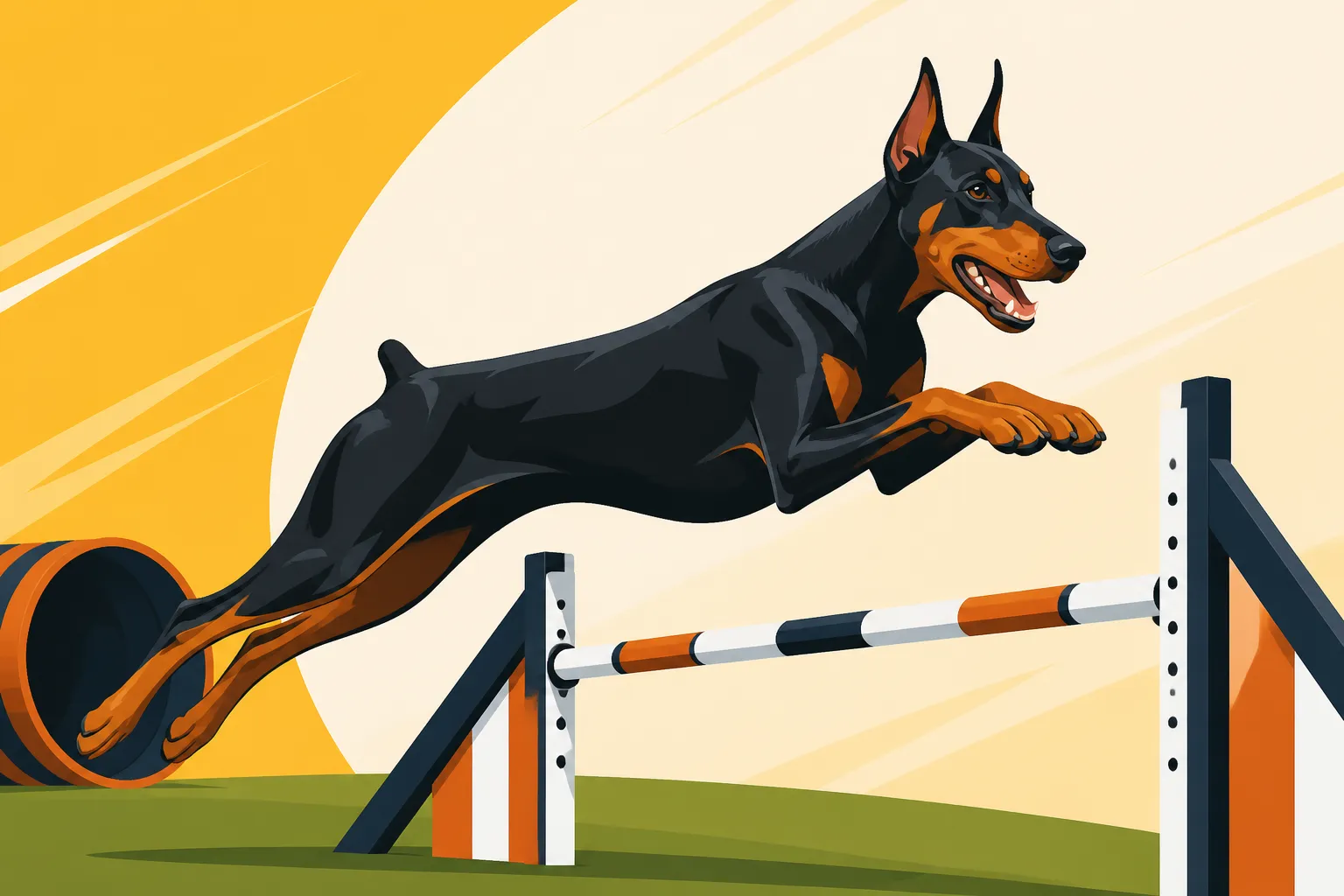
Agility With a Doberman’s Long Frame
Many Doberman owners look at their magnificent, powerful dogs and see a natural athlete, ready to tackle any challenge. But then the thought of complex agility courses, with their tight turns and high jumps, often brings a pause. You worry about that long back, those powerful but slender legs, and whether such intense activity is truly safe or even enjoyable for a breed known for some joint sensitivities. This guide aims to clear up those concerns, showing you how to approach agility with your Doberman thoughtfully, keeping their unique physique in mind every step of the way.
Understanding the Doberman's Unique Physique for Agility
The Doberman is, without a doubt, a picture of athleticism. They're built for speed, strength, and endurance. However, their specific conformation – that deep chest, relatively long back, and powerful, yet finely boned legs – means they approach agility differently than, say, a Border Collie or a Sheltie. It's not about being less capable, but about recognizing and working with their strengths and mitigating potential risks.
The Doberman's Strengths and Challenges on the Agility Course
Let's be honest, watching a Doberman fly over jumps can be breathtaking. Their natural drive and intelligence make them quick studies, eager to please, and incredibly focused when they're engaged. But their physique does present specific considerations.
For strengths, think about that incredible stride. They can cover ground astonishingly fast, which is a huge advantage on straightaways and for getting to obstacles quickly. Their intelligence means they pick up patterns and commands with remarkable ease; a Doberman that is Training a Doberman That Is Smarter Than You Expect will grasp complex sequences rapidly. They also possess immense power, making contacts and A-frames feel almost effortless. This breed often has an intrinsic desire to work with their handler, creating a beautiful partnership on the course.
However, the "long frame" part of the equation isn't just a turn of phrase. Their longer backs can be more susceptible to strain if proper conditioning and technique aren't prioritized. Tight turns, collected jumps, and repeated weaving can put pressure on the spine and joints. Unlike some more compact breeds, a Doberman might need a slightly wider turning radius or a more gradual approach to certain obstacles. Their high pain tolerance can also be a double-edged sword; they might push through discomfort, masking an injury until it becomes more severe. This is why careful observation and proactive conditioning are paramount. It’s also important to consider Whether Agility Suits a Doberman's Joints in the long run.
Potential Joint and Spinal Concerns
When we talk about Dobermans, health is always a critical topic, and joint health is no exception. While not typically plagued by severe hip dysplasia like some larger breeds, Dobermans can be prone to issues like Wobbler Syndrome in the Doberman, which affects the cervical spine. The impact and twisting motions of agility could potentially exacerbate or trigger underlying spinal sensitivities if not managed properly.
Moreover, repetitive stress on joints, especially the elbows and shoulders from landing, or the stifles (knees) from sharp turns, needs careful consideration. A young Doberman, particularly one still growing and not yet having reached The Age a Doberman Reaches Full Height, needs its training carefully managed to Protecting a Growing Doberman's Joints. High-impact activities should be limited until their growth plates have closed and their musculature is fully developed. Ignoring these foundational principles can lead to long-term orthopedic issues, which are costly in both money and quality of life for your beloved companion.
Here’s a quick overview of Doberman characteristics in agility:
| Feature | Agility Strength | Agility Challenge | Management Strategy |
|---|---|---|---|
| Speed | Excellent for covering distance quickly. | Can lead to overshooting turns, poor obstacle discrimination. | Focus on control, verbal cues, and precise handling. |
| Intelligence | Learns complex sequences and cues rapidly. | Can get bored with repetition, may "anticipate" handler. | Keep training varied, engage with Puzzle Work That Actually Tires a Doberman. |
| Power | Strong take-offs, effortless contact obstacles. | Hard landings can strain joints, especially on jumps. | Emphasize proper form, warm-ups, cool-downs, controlled landings. |
| Long Back | Graceful, extended stride. | Susceptible to strain from tight turns, weaving. | Promote core strength, teach wide turns, smooth transitions. |
| Thin Coat | Less prone to overheating in hot weather (relative). | Can get cold quickly, prone to scrapes/skin injury. | Ensure proper warm-up/cool-down gear; protective measures on rough surfaces. |
| High Drive | Enthusiastic, motivated worker. | Can become over-aroused, struggle with focus in competition. | Build calm focus, use appropriate Rewards a Doberman Will Work For, manage excitement. |
Getting Started: Foundation Training and Safety First
Agility is not something you just jump into. It requires a solid foundation of obedience, body awareness, and conditioning, especially for a Doberman. Rushing the process is a recipe for injury and frustration, both for you and your dog.
Essential Obedience and Engagement
Before your Doberman even sniffs a jump wing, they need rock-solid obedience. This isn't just about good manners; it's about communication and control on a fast-paced course. A reliable recall, a strong stay, and directional cues (left/right, go out) are paramount. Imagine your Doberman blasting through a tunnel and you need them to turn left to the next jump – without clear cues, you've got a dog on an independent adventure!
Programs like BAXTER & Bella can be incredibly helpful for laying down these fundamental obedience skills, even if you start with a young Doberman puppy. Their structured approach ensures you're building a strong bond and clear lines of communication from day one, which translates directly into better performance and safety on an agility course. Remember, an engaged Doberman that understands what you're asking is a joy to work with, while one that's confused or ignoring you can be a hazard.
Beyond basic commands, focus on engagement. Your Doberman needs to want to work with you, even with exciting distractions around. Play retrieve games, teach them to follow a target, and make training fun and rewarding. This builds the partnership crucial for navigating complex agility sequences.
Body Awareness and Conditioning Exercises
This is where you really protect your Doberman's long frame. Body awareness exercises teach your dog where their feet are in space, improving coordination and balance. Think about walking over cavaletti (low poles on the ground), stepping through ladders laid flat, or using wobble boards. These help build proprioception, reducing the likelihood of trips or awkward landings.
For conditioning, focus on core strength. A strong core supports the spine and helps your Doberman execute tight turns and explosive movements safely. Activities like walking uphill, swimming (if your Doberman enjoys it), or targeted exercises with canine fitness equipment can be beneficial. Always ensure exercises are low-impact initially and gradually increase intensity. Consider asking your vet about a veterinary rehabilitation specialist who can provide a tailored conditioning program specific to your Doberman's needs and structure. This specialized guidance can be invaluable in preventing injuries.
Overcoming Challenges: Handling the Doberman's Long Body on Course
Once your Doberman has a solid foundation, you can start introducing them to actual agility obstacles. The key is patience, proper technique, and always putting your dog's physical well-being first.
Mastering Jumps and Weave Poles
Jumps are often the first thing people think of with agility, but for a Doberman's long frame, the way they jump is critical. Start with very low jumps, focusing on form and a smooth arc over the bar, rather than height. Teach them to collect their stride before a jump and extend gracefully over it. As you increase height, watch for any awkwardness in their landing or reluctance. It's not about clearing the highest jump possible, but about doing it safely and repeatedly. Spreading jumps (two bars slightly apart) can encourage a longer, safer arc.
Weave poles are another challenge where the Doberman's length comes into play. The standard spacing of weave poles is designed for a generic dog, and a Doberman might initially struggle with the tight turns required. Start with channels or wide-gap weaves, gradually narrowing them. The goal is fluid, rhythmic motion, not brute force. Encourage your Doberman to use their entire body, including their hindquarters, to drive through the weaves rather than just bending their front end. Many handlers find that a slightly slower, more deliberate approach initially helps Dobermans develop the muscle memory and flexibility needed.
Tunnels, Contacts, and Turns
Tunnels are usually a Doberman favorite – they love to zoom through them! However, ensure your Doberman enters and exits smoothly, without scraping or twisting, especially in longer, curved tunnels. You might find a wide variety of starter equipment, like collapsible tunnels and practice jumps, available on platforms like Amazon, which can be great for home practice.
Contact obstacles (A-frame, dog walk, teeter-totter) require careful training to ensure your Doberman confidently hits the "contact zone" with at least one paw, which signals a safe descent. For Dobermans, emphasize controlled descents to avoid jarring their joints. Teach them a "two-on/two-off" contact position or a running contact, making sure they understand the importance of slowing down just enough to hit the designated area. The teeter-totter, with its sudden movement, needs especially gradual introduction. Some Dobermans might be wary of the moving plank, so plenty of positive reinforcement and gradual desensitization are key.
Tight turns are perhaps the biggest area where a Doberman's length can be a disadvantage. Instead of sharp, abrupt turns, aim for flowing, wider arcs. Use your body language and verbal cues to guide your Doberman around obstacles in a way that minimizes stress on their spine and joints. Practice drills that involve sweeping turns and S-curves. You want them to turn their whole body efficiently, not just pivot on their front end, which can be hard on shoulders and elbows.
Beyond the Course: Maintaining Your Doberman's Agility Health
Agility is a lifestyle, not just a weekend hobby. To keep your Doberman happy, healthy, and on the course for years to come, ongoing care and proactive management are crucial.
Nutrition and Supplementation for Active Dobermans
A working Doberman needs high-quality nutrition to fuel their muscles and support joint health. Choose a premium dog food appropriate for active, large breeds. Pay attention to protein and fat content to ensure they're getting adequate energy without becoming overweight, which adds unnecessary strain to joints. Daily Calories for an Adult Doberman will vary based on activity level.
Many agility handlers choose to supplement their Dobermans, especially with joint support products. Ingredients like glucosamine, chondroitin, MSM, and omega-3 fatty acids (fish oil) are commonly used to support cartilage health and reduce inflammation. However, always discuss any supplementation with your veterinarian first. They can advise on appropriate dosages and ensure there are no contraindications with other medications or existing health conditions. It's not a magic bullet, but it can be part of a comprehensive strategy. You might also want to look into Taurine and Carnitine in a Doberman Diet given the breed's predispositions.
Regular Vet Checks and Injury Prevention
Routine veterinary care is paramount for an agility Doberman. Beyond yearly check-ups, consider more frequent physical exams, especially focusing on musculoskeletal health. Your vet can assess gait, joint range of motion, and muscle soreness that you might not notice at home. Catching minor issues early can prevent them from becoming major injuries that sideline your dog.
Proactive injury prevention involves:
- Warm-ups and Cool-downs: Never skip these! A good warm-up prepares muscles and joints for activity, and a cool-down helps them recover.
- Proper Equipment: Use a well-fitting harness (not a collar) for agility work to avoid neck strain. Harnesses and Leads for a Strong Doberman are essential.
- Surface Awareness: Train and compete on appropriate surfaces – well-maintained grass or specialized agility mats. Avoid hard, uneven, or slippery ground that can lead to slips and falls.
- Listen to Your Dog: Watch for subtle signs of discomfort, lameness, or changes in behavior. A Doberman that suddenly hesitates on a jump or is less enthusiastic about weaves might be trying to tell you something. Don't push them if they're not feeling 100%. Rest and recovery are just as important as training.
- Cross-Training: Incorporate other activities like swimming, hiking, or even just long, varied walks to build different muscle groups and keep your Doberman physically balanced. Remember that A Doberman That Tires Faster Than It Used To needs immediate veterinary attention.
Agility with a Doberman is a truly rewarding experience, allowing them to showcase their incredible intelligence and athleticism. With careful consideration for their unique physique, a strong foundation in obedience, and a commitment to their ongoing health and conditioning, you and your Doberman can enjoy many thrilling years on the course together.
Disclaimer
This article is for general informational purposes only and does not constitute professional advice. Laws, prices and regulations vary by location and change over time. Consult a qualified professional for guidance on your specific situation.