Working Titles on a European Doberman Pedigree
It can feel a bit overwhelming when you first look at a European Doberman pedigree. All those letters and numbers tacked onto names, often in languages you don't recognize, can make you wonder what they all mean. This guide will help you decipher those crucial working titles, explaining their significance and why they are so vital to the European Doberman breeding philosophy.
Understanding the European Doberman Lineage
When you're looking at a European Doberman, you're not just looking at a beautiful dog; you're often seeing the result of generations of intentional breeding focused on both form and function. Unlike some lines where appearance has become the sole focus, the European approach traditionally places immense value on the Doberman's inherent working abilities. This isn't just about owning a pet; it's about preserving the breed's original purpose as a capable, intelligent working companion.
The Core Philosophy Behind European Breeding
The fundamental philosophy driving European Doberman breeding programs is rooted in maintaining the breed's original characteristics: intelligence, courage, trainability, and physical soundness. These aren't just abstract ideas; they are rigorously tested and proven through a series of demanding working trials. Breeders aim to produce dogs that not only conform to the physical standard but also possess the mental fortitude and physical endurance to perform real-world tasks. It's a holistic view, where a dog's temperament and working drive are considered just as important as its conformation. This contrasts sharply with some breeding practices where only the show ring matters, potentially leading to a dilution of the breed's original working essence. You'll often hear European breeders emphasize that a Doberman isn't truly complete without its working titles.
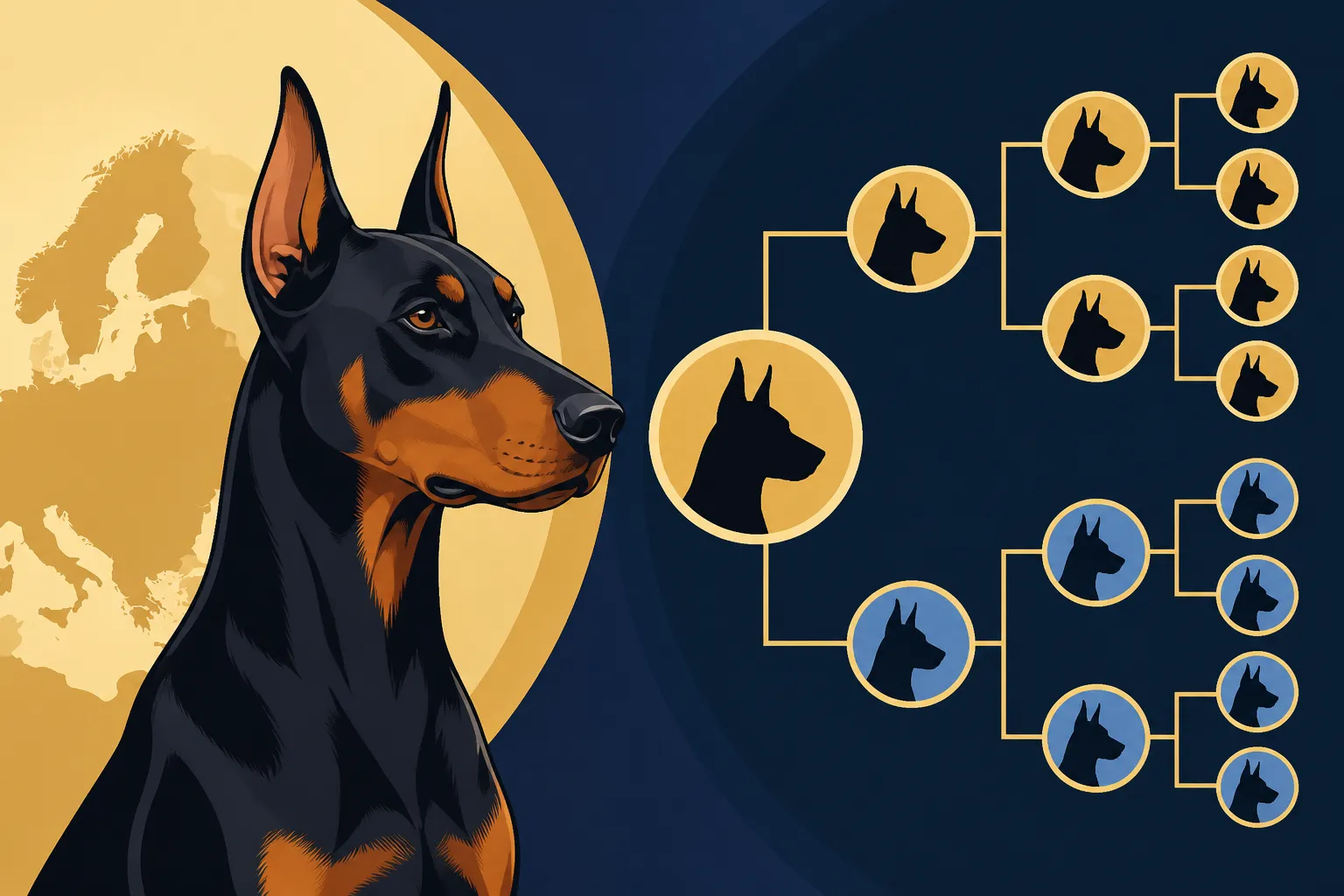
This philosophy extends beyond just individual dogs; it shapes entire breeding lines. A European breeder will meticulously study the working achievements of potential breeding pairs, looking for consistency in temperament, health, and working ability passed down through generations. They understand that these traits are hereditary, and by selecting dogs with proven working pedigrees, they increase the likelihood of producing offspring that embody the Doberman's quintessential characteristics. It’s a commitment to the integrity of the breed, ensuring that future generations remain true to the Doberman's heritage as a formidable and intelligent working dog.
The Role of Performance in European Standards
In many European countries, a Doberman cannot be officially bred or sometimes even registered without having achieved certain working titles. This isn't just a suggestion; it's often a mandatory requirement set by national breed clubs. These standards ensure that dogs entering the gene pool have demonstrated the necessary intelligence, nerve, and physical health to perform specific tasks. It’s a direct measure of whether a Doberman truly possesses the "Dobermann spirit" as envisioned by its creator, Karl Dobermann. If a dog can't pass these tests, it's typically excluded from breeding programs, regardless of how beautiful it might be.
Think about it: a Doberman might have the most stunning conformation, winning top awards in the show ring, but if it folds under pressure during a protection exercise or can't focus on a tracking task, it's deemed lacking in its core Doberman qualities. The performance tests are designed to reveal the true character of the dog, exposing any weaknesses in temperament, courage, or trainability. This rigorous approach helps prevent the propagation of undesirable traits, safeguarding the breed's reputation and ensuring that Dobermans remain capable working animals. It's a comprehensive evaluation that goes far beyond a quick vet check or a conformation assessment, providing a deeper insight into the dog's suitability for breeding. For more on the breed's original purpose, you might want to read Karl Dobermann and the Dogs He Needed.
Decoding Common Working Titles
Understanding the alphabet soup of working titles is key to appreciating a European Doberman's pedigree. These titles aren't just fancy letters; they represent specific achievements in highly structured and demanding disciplines. Each title signifies a different set of skills tested under pressure, proving the dog's intelligence, obedience, tracking ability, and protective instincts.
IGP/IPO Titles: The Foundation of Work
Perhaps the most recognized and foundational working titles in the European Doberman world are those associated with the IGP (Internationale Gebrauchshunde Prüfungsordnung), formerly known as IPO. This is a three-part sport that assesses a dog's abilities in tracking, obedience, and protection. Achieving even the basic IGP1 title is a significant accomplishment, demonstrating a well-rounded and highly trained Doberman. The higher levels, IGP2 and IGP3, demand even greater precision, speed, and intensity, pushing both dog and handler to their limits.
- Tracking ( Abteilung A – Fährtenhund): This phase tests the dog's ability to follow a human scent trail, locating small articles dropped along the way. The tracks can be long and aged, requiring intense focus and scenting discrimination. A Doberman with a strong tracking title shows patience, perseverance, and excellent problem-solving skills, proving its mental stamina. Imagine a Doberman meticulously working a track across a field, nose to the ground, ignoring all distractions – that's what this part of the test assesses.
- Obedience (Abteilung B – Gehorsam): This section evaluates the dog's willingness to obey complex commands, both on and off-leash, with precision and enthusiasm. Exercises include heeling, retrieves (on flat, over an A-frame, and over a jump), down-stays, and send-outs. The dog must perform these exercises with speed, accuracy, and strong attention to the handler, demonstrating excellent control and a joyful working attitude. This isn't just about sitting when told; it's about perfect execution under the watchful eye of a judge.
- Protection (Abteilung C – Schutzdienst): This is often the most visually impressive and misunderstood phase. It assesses the Doberman's courage, defensive instincts, and control in a simulated threat scenario with a "decoy" (a trained helper wearing protective equipment). The dog must demonstrate strong bite work, hold and guard the decoy, and release on command. Crucially, the test emphasizes control and temperament; an out-of-control or truly aggressive dog will fail. It's about a dog that can defend, but also switch off instantly when told, showcasing incredible nerve and handler communication. This phase truly highlights the Doberman's inherent guarding nature in a controlled environment.
ZTP: The Breed Suitability Test
Another critical title you'll frequently see on European Doberman pedigrees is the ZTP (Zuchttauglichkeitsprüfung), which translates to "Breed Suitability Test." This isn't a sport in the same way IGP is; rather, it's a comprehensive evaluation designed to assess a Doberman's physical conformation, health, and temperament against the breed standard for breeding purposes. It's a rigorous examination that involves multiple components, ensuring that only the most suitable dogs contribute to the future of the breed.
The ZTP typically involves a conformation critique, where a judge evaluates the dog's physical attributes against the Doberman breed standard, looking at everything from head shape to tail set. This includes checks for correct bite, eye color, and overall balance. Beyond physical appearance, the dog undergoes a temperament test, often including nerve tests in distracting environments (e.g., loud noises, sudden movements, interaction with strangers). The dog's reactions are carefully observed to ensure it is confident, stable, and resilient, without undue fear or aggression. A dog that is too shy, overly aggressive, or has weak nerves will not pass, thus preventing those undesirable traits from being passed down. It's a fundamental step in ensuring that breeding Dobermans possess stable and reliable temperaments. You can learn more about assessing breeding dogs by reading The Health Testing a Doberman Breeder Must Show.
Other Notable Working Certifications
While IGP and ZTP are paramount, European pedigrees might also feature other working certifications that showcase a Doberman's specific aptitudes or national achievements. These titles further underscore the dog's versatility and working capabilities, painting a more complete picture of its talents.
- BH (Begleithundprüfung): This is a prerequisite title for IGP and other advanced working sports. It's an introductory temperament and obedience test, proving that the dog is well-behaved in public, can walk on a leash, and has basic obedience commands under control. It assesses traffic soundness and social behavior, making it a foundation for any Doberman pursuing more intense working endeavors. Think of it as passing your driving permit before going for your full license.
- AD (Ausdauerprüfung): This is an endurance test, where the Doberman accompanies a cyclist for a considerable distance (often 12-15 miles) at a trot, followed by a short obedience and physical check. It demonstrates the dog's physical stamina, soundness, and mental willingness to work over an extended period. This title proves that a Doberman has the physical condition and drive for prolonged activity, something crucial for a breed originally bred for patrol and endurance.
- Herding Titles (e.g., HWT, HT): While less common for Dobermans, some individuals may earn herding titles, demonstrating their ability to control and move livestock. This highlights the breed's versatility and inherent working instincts, even if herding isn't their primary modern role.
- Tracking Titles (e.g., FH1, FH2): These are advanced tracking titles that go beyond the tracking portion of IGP. They involve much longer, older, and more complex tracks, often across varied terrain. A Doberman with an FH title possesses exceptional scenting ability and an unwavering focus.
Here’s a quick overview of some common European Doberman working titles:
| Title | Description | Key Skills Tested | Purpose |
|---|---|---|---|
| BH | Begleithundprüfung (Companion Dog Test) | Basic obedience, traffic soundness, social behavior | Prerequisite for higher working titles, proves good manners |
| AD | Ausdauerprüfung (Endurance Test) | Physical stamina, soundness, willingness to work over distance | Demonstrates fitness for sustained activity |
| ZTP | Zuchttauglichkeitsprüfung (Breed Suitability Test) | Conformation, temperament, nerve, health checks | Mandatory for breeding in many European countries |
| IGP1 | Internationale Gebrauchshunde Prüfungsordnung Level 1 (Working Dog Test) | Tracking, advanced obedience, protection (basic level) | Entry-level working title, shows foundational ability |
| IGP2 | Internationale Gebrauchshunde Prüfungsordnung Level 2 (Working Dog Test) | More advanced tracking, obedience, protection | Intermediate working title, higher demands on precision |
| IGP3 | Internationale Gebrauchshunde Prüfungsordnung Level 3 (Working Dog Test) | Highest level tracking, obedience, protection | Advanced working title, demonstrates elite capabilities |
| FH1 | Fährtenhund Level 1 (Tracking Dog) | Advanced tracking, longer and older tracks | Specialization in scent work |
| FH2 | Fährtenhund Level 2 (Tracking Dog) | Highest level tracking, most complex scenarios | Elite tracking ability |
Why Working Titles Matter for European Dobermans
For anyone serious about owning a European Doberman, understanding and appreciating working titles isn't just an academic exercise; it's fundamental to choosing a healthy, stable, and true-to-type companion. These titles serve as concrete proof of a dog's inherent qualities, qualities that are paramount for a breed like the Doberman. They tell you more about the dog than any blue ribbon from a beauty pageant ever could.
Assessing Temperament and Drive
One of the most crucial aspects that working titles confirm is a Doberman's temperament and drive. A Doberman, by its very nature, is meant to be alert, confident, fearless, and possess a strong protective instinct, yet be completely controllable by its handler. These aren't traits you can simply "see" in a static pose or measure with a tape. They are revealed under pressure, in dynamic environments, and through the performance of complex tasks.
When a Doberman earns an IGP title, it's demonstrating precisely these qualities. The tracking portion requires immense focus and mental stamina, showing the dog's ability to concentrate and problem-solve. The obedience phase demands a keen desire to please, sharp intelligence, and a high level of trainability, even amidst distractions. Most importantly, the protection work reveals the dog's courage, nerve, and defensive drive, all while maintaining perfect control. A Doberman that fails to show courage, or one that is easily spooked, will not pass. Conversely, a Doberman that is uncontrollably aggressive will also fail. These tests are designed to find the sweet spot: a dog that is powerful and protective, but also stable and biddable. This rigorous evaluation ensures that you are bringing a dog into your home with a proven, reliable temperament, which is incredibly important for such a powerful breed. For insights into developing confidence in puppies, you might find Building a Doberman Puppy That Is Confident, Not Sharp helpful.
Verifying Physical Soundness Under Stress
Beyond temperament, working titles also offer a powerful verification of a Doberman's physical soundness. It's one thing for a dog to look good standing still in a show ring; it's entirely another for it to perform explosive movements, sustain long periods of focused work, and navigate varied terrain without showing signs of lameness or discomfort. The physical demands of working titles, particularly IGP and AD, put a dog's body to the test.
Consider the endurance test (AD), where a Doberman trots alongside a bike for many miles. This isn't just a leisurely stroll; it's a sustained physical effort that requires strong joints, excellent cardiovascular health, and proper musculature. Any underlying issues like hip or elbow dysplasia, even mild ones, would likely manifest as lameness or fatigue during such a test. Similarly, the explosive movements, jumps, and tight turns required in the obedience and protection phases of IGP demand a robust physique and strong, healthy joints. A dog with structural weaknesses would struggle to perform these exercises correctly and repeatedly. Therefore, achieving these titles is a strong indicator that the Doberman possesses the physical integrity to withstand the rigors of an active life, minimizing the chances of debilitating orthopedic issues down the line. It's a real-world stress test for their entire skeletal and muscular system.
The Impact on Breeding Decisions
For responsible European Doberman breeders, working titles are not just bragging rights; they are indispensable tools for making informed breeding decisions. The data gleaned from these performance tests provides objective evidence of a dog's genetic contributions to temperament, drive, and physical health. It's a critical component in ensuring the longevity and integrity of the breed.
A breeder looking to produce top-quality Dobermans will prioritize pairing dogs with proven working titles. They understand that these titles signify a higher likelihood of passing on desirable traits such as courage, trainability, and robust health to the next generation. For example, if a breeding male has consistently produced offspring with strong IGP scores, that's a powerful endorsement of his genetic influence. Conversely, if a dog struggles with even basic working requirements, a responsible breeder would be hesitant to use it in their program, even if it has a beautiful head or coat. This commitment to working lines helps to filter out genetic predispositions to shyness, aggression, or structural faults, contributing to a healthier, more predictable Doberman population. It is a proactive approach to maintaining breed quality, ensuring that puppies born are not just pretty, but capable and stable individuals. Whether a Doberman Should Be Screened Before Breeding goes into more detail on how breeders make these decisions.
Contrasting Working Titles with Show Titles
It's easy to get confused by the different types of titles you see on a pedigree, especially when some Dobermans excel in the show ring while others are champions on the working field. While both are prestigious in their own right, they focus on very different aspects of the Doberman breed. Understanding this distinction is vital for appreciating the unique value of working titles.
Different Goals, Different Tests
Show titles (like "Champion" or "Ch.") are primarily focused on a Doberman's adherence to the breed standard in terms of physical appearance and gait. Judges evaluate the dog's structure, coat, proportions, and movement, comparing it to the ideal described in the written standard. The goal is to identify dogs that embody the breed's aesthetic blueprint. While temperament is briefly observed, it's typically within the confines of polite behavior in a ring, not under stress or in a working scenario.
Working titles, as we've discussed, have a completely different objective. Their goal is to evaluate the Doberman's inherent working abilities, temperament, intelligence, and physical stamina through active, demanding tasks. A Doberman earning an IGP title isn't being judged on how perfectly its ears are set, but on its courage, drive, focus, and obedience in tracking, complex obedience routines, and protection work. The physical appearance matters insofar as it supports the dog's ability to perform, but it's not the primary criterion for evaluation. It's about what the dog does, not just how it looks. This fundamental difference means that a Doberman can be a stunning show dog but lack the temperament or drive for working titles, and vice versa.
The Ideal: A Balance of Both
For many enthusiasts of the European Doberman, the truly ideal dog is one that can achieve success in both the show ring and the working field. This concept is often referred to as "form and function," or a "total dog." A Doberman that holds both a conformation championship and an IGP3 title is truly exceptional, demonstrating that it not only looks the part of a magnificent Doberman but also possesses the intelligence, temperament, and drive to perform its historical duties.
Achieving this balance is incredibly difficult for breeders and handlers alike. It requires careful selection of breeding stock that consistently produces offspring excelling in both areas. It also demands immense dedication in training and conditioning, as preparing a dog for both the precision of the show ring and the intensity of working trials is a huge undertaking. Such dogs embody the full potential of the Doberman breed, proving that beauty and brains, elegance and capability, can indeed coexist in one magnificent animal. These are the Dobermans that truly preserve the breed's heritage in its entirety.
Navigating a Pedigree with Mixed Titles
When you're scrutinizing a pedigree, you'll often see a mix of titles. Some dogs might only have conformation titles, especially if they are primarily from American show lines or European lines that focus heavily on conformation. Others might boast a long string of working titles, indicating a strong emphasis on performance. The most impressive pedigrees, particularly from top European kennels, will often feature a blend of both, demonstrating the breeder's commitment to producing well-rounded Dobermans.
For example, you might see "Int. Ch. Xantos von der Teufelsbrücke, IGP3, ZTP, AD." This tells you that Xantos is an International Conformation Champion, has achieved the highest level of the IGP working test, passed his breed suitability test, and completed an endurance test. This combination immediately signals a dog of exceptional quality, both structurally and in terms of working ability and temperament. If you're looking for a Doberman that is true to its working heritage, you'll want to prioritize pedigrees heavy with IGP, ZTP, and AD titles, especially in the immediate lineage of the puppy. A pedigree devoid of working titles, especially in European lines, should raise questions about the breeding program's commitment to the Doberman's original purpose.
What to Look for on a Pedigree Document
A Doberman pedigree isn't just a piece of paper; it's a detailed family history and a roadmap to understanding the genetic potential and proven qualities of your potential puppy. Knowing what to look for, especially regarding working titles, can guide you to a reputable breeder and a well-bred Doberman.
Identifying Legitimate Titles and Certifications
When examining a European Doberman pedigree, pay close attention to the specific abbreviations preceding or following the names of the ancestors. These are the working titles. They should be clearly listed and recognized within the working dog community. For instance, IGP1, IGP2, IGP3, BH, AD, ZTP, FH1, FH2 are common and legitimate working titles. You might also see titles from specific national organizations, but IGP is widely recognized internationally.
It's important to understand that not all titles are created equal. Be wary of ambiguous or made-up "titles" that don't correspond to a known and verifiable working sport or test. A responsible breeder will be transparent about the meaning of all titles on their pedigree and be able to explain the requirements for each. They should also be able to provide documentation or links to databases where these titles can be verified. Remember, a string of impressive letters means little if they aren't from legitimate, challenging competitions that truly test a Doberman's capabilities. Don't be shy about asking for clarification or proof, especially if a title seems unfamiliar or overly grand.
The Importance of Verified Results
The integrity of a pedigree, and the titles listed on it, hinges on verification. In the world of working dogs, results are meticulously recorded by national and international organizations. A reputable breeder will not only list the titles but also be able to back them up with official scorebooks, certificates, or verifiable online databases from organizations like the FCI (Fédération Cynologique Internationale) or national Doberman clubs.
For example, when looking at an IGP title, a breeder should be able to show you the dog's scorebook, which details the scores achieved in each of the three phases (tracking, obedience, protection) and confirms the judge and event date. This level of transparency provides assurance that the dog truly earned the title under challenging conditions. Without verifiable results, a listed title is merely a claim. A red flag should go up if a breeder is vague about where or when a title was earned, or if they can't provide any concrete evidence. This verification step is crucial for discerning a truly accomplished working Doberman from one whose pedigree might be embellished. You might find it useful to cross-reference information with Reading a Doberman Breeder's Heart Paperwork when checking health too.
Questions to Ask a Breeder About Working Lines
When you're speaking with a Doberman breeder, especially one claiming to breed working lines, don't hesitate to ask specific, probing questions about the working titles on their pedigrees. Their answers will tell you a lot about their breeding philosophy and commitment to the breed's working heritage.
Here are some key questions to consider:
- "Can you explain the significance of the IGP/IPO titles on the sire's/dam's pedigree?"
- "What does ZTP mean, and why is it important to your breeding program?"
- "Have the parents of this litter personally achieved any working titles, and can I see their scorebooks?"
- "What do you look for in terms of temperament and drive when selecting dogs for working titles?"
- "Do you actively train or compete in working sports with your own Dobermans?"
- "How do you ensure that the puppies you breed have the potential for working activities?"
- "Are there any video clips of the parents working in competition?"
A good breeder will welcome these questions and be eager to share their knowledge and the achievements of their dogs. They should be able to articulate why these titles are important to them and how they contribute to producing well-rounded, stable Dobermans. If a breeder dismisses working titles as "unnecessary" or focuses solely on conformation, it might indicate that their program doesn't prioritize the full spectrum of Doberman traits that European lines are known for. For information on costs associated with breeding and testing, check out What Doberman DNA Panels Cost.
The Commitment Behind Earning Working Titles
It's easy to see "IGP3" on a pedigree and appreciate its prestige, but what does it really take for a Doberman and its handler to achieve such a title? The reality is a journey of immense dedication, countless hours of training, and significant financial investment. It's a testament to the bond between dog and handler, and a deep understanding of the Doberman's capabilities.
Training Regimens and Dedication
Earning working titles, especially at the higher levels of IGP, involves an incredibly demanding training regimen. This isn't just about attending a weekly puppy class; it's a lifestyle commitment. Handlers and their Dobermans typically train multiple times a week, often for several hours at a time, across all three disciplines: tracking, obedience, and protection. Each phase requires specific skills, precision, and consistency.
- Tracking: This involves laying tracks in various terrains and weather conditions, teaching the dog to follow scent meticulously, and marking dropped articles. It requires patience from both dog and handler, often spending hours in fields, honing focus and scent discrimination. The Doberman must learn to ignore environmental distractions and concentrate solely on the faint human scent.
- Obedience: This goes far beyond basic commands. Dogs are trained for absolute precision, speed, and enthusiasm in complex routines. This includes perfectly executed heeling patterns, retrieves over obstacles, and long-distance recalls and send-outs. The dog must perform flawlessly under the pressure of competition, demonstrating a deep understanding of commands and a strong desire to work with its handler. It's about building a harmonious partnership where the dog responds almost intuitively.
- Protection: This phase is perhaps the most intensive, requiring careful development of the Doberman's natural protective instincts. Training involves working with experienced decoys to develop strong, full bites, controlled guarding, and instant releases on command. Safety and control are paramount, and any handler must learn to read their dog, understand timing, and guide them through scenarios that build confidence and control without fostering aggression. It’s a delicate balance of encouraging drive while maintaining absolute authority. Many Dobermans thrive on this type of mental and physical stimulation, but it requires a consistent and knowledgeable handler. For more on specific training techniques, see Finding a Trainer Who Has Worked With Dobermans.
Financial and Time Investment
The commitment to working titles isn't just about effort; it also involves substantial financial and time investments. This isn't a hobby for the faint of heart or light of wallet. The costs associated with training, equipment, travel, and competition can quickly add up, reflecting the specialized nature of these activities.
- Training Costs: High-quality working dog trainers and clubs specializing in IGP are often necessary. These professionals have the expertise to guide a Doberman and handler through the intricate demands of the sport. Fees for group classes, private lessons, and club memberships can be significant. Additionally, purchasing specialized equipment, like tracking lines, bite sleeves (for home use with a qualified trainer, of course), and agility equipment, adds to the expense. For example, ensuring your Doberman has durable, comfortable gear like a robust harness or a high-quality treat pouch can mean frequent trips to stores or online retailers like Chewy.
- Time Commitment: Beyond the training sessions themselves, there's the travel to different training locations, the time spent practicing at home, and the weekends dedicated to trials. It's not uncommon for handlers to spend 10-20 hours a week, or more, actively engaged in training or related activities. This doesn't even count the daily care, feeding, and exercise required for a high-drive Doberman. It's a full-time commitment that truly tests a person's dedication to their dog and the sport.
- Competition Fees and Travel: Entering IGP trials involves registration fees. Traveling to competitions, which might be regional, national, or even international, incurs costs for fuel, accommodation, and sometimes even specialized transport for the dog. These expenses are a recurring part of the journey for those serious about earning and maintaining working titles. Maintaining a healthy, strong Doberman for these rigorous activities also means investing in high-quality nutrition, perhaps from a brand like Chewy, to support their muscle and energy needs.
The Journey of a Working Doberman Handler
Embarking on the journey to earn working titles with a Doberman is a transformative experience for both dog and handler. It builds an unparalleled bond, deepens understanding, and fosters mutual respect. It's a challenging path, full of triumphs and setbacks, but ultimately incredibly rewarding.
A working Doberman handler learns patience, perseverance, and resilience. They learn to read their dog's body language, anticipate its needs, and motivate it through complex tasks. The failures are just as important as the successes, teaching both dog and handler how to overcome obstacles and refine their skills. There's an immense sense of pride that comes from seeing your Doberman perform with precision and power, knowing the hours of effort that went into that moment. Moreover, becoming part of the working dog community connects you with like-minded individuals who share a passion for these incredible animals, offering support, advice, and camaraderie. This shared experience creates a strong network, enriching the lives of both handlers and their Dobermans. It's a commitment that lasts the lifetime of the dog and beyond, shaping how you understand and interact with the Doberman breed. Many working Dobermans also benefit from specific joint supplements or performance foods, which you might source from retailers such as Chewy, to keep them in peak condition.
Disclaimer
This article is for general informational purposes only and does not constitute professional advice. Laws, prices and regulations vary by location and change over time. Consult a qualified professional for guidance on your specific situation.