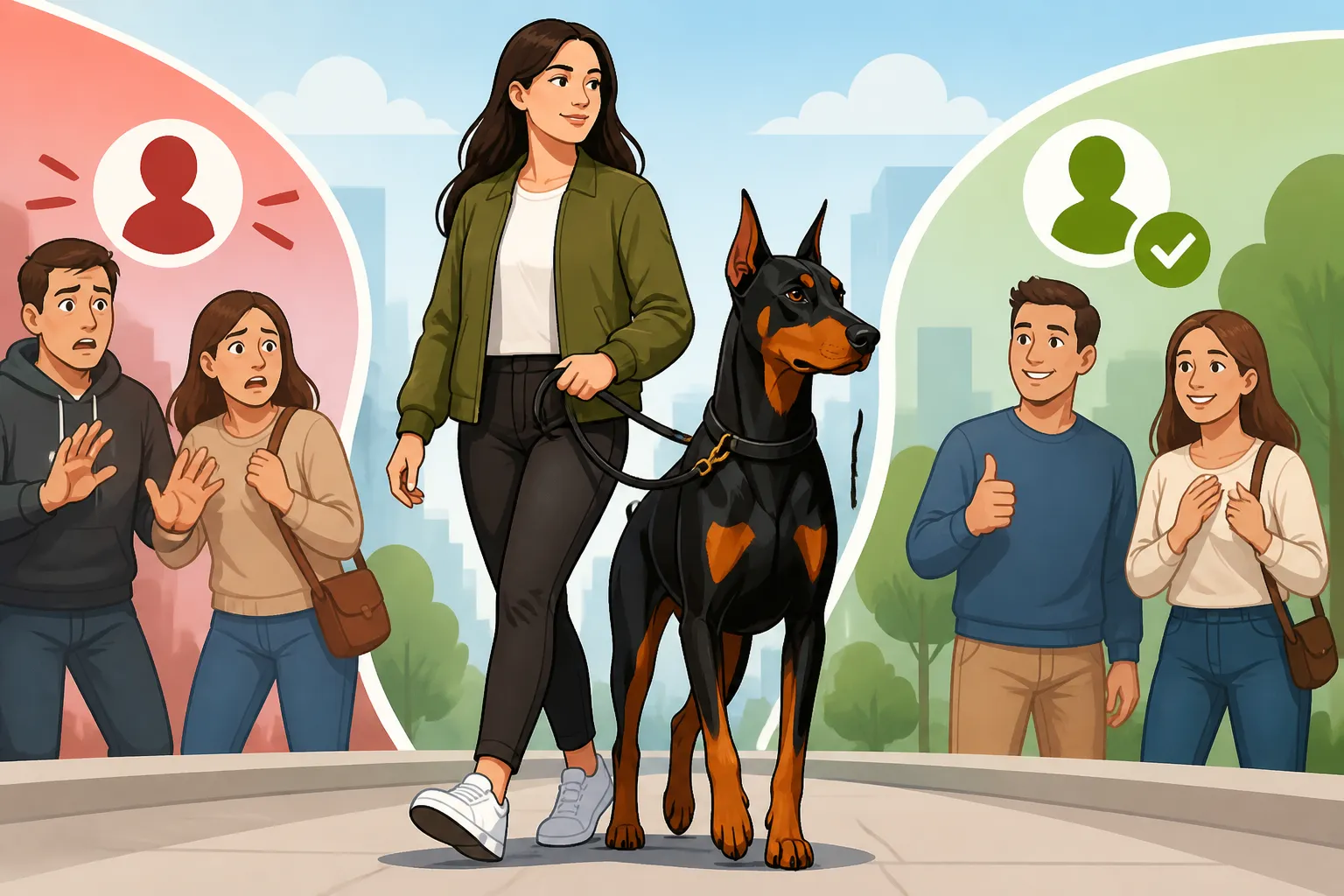
Handling a Doberman in Public Without Alarming People
Bringing a Doberman out in public can sometimes feel like walking a celebrity – everyone notices, but not always for the right reasons. Many Doberman owners experience that familiar tension when passersby shrink away, clutch their children closer, or pull their own dogs onto the nearest patch of grass, all based on a misconception of this loyal, intelligent breed. This guide is here to help you navigate those tricky public interactions, understand the public's perspective, and equip you with the tools and training strategies to ensure your Doberman, and you, can enjoy public spaces with confidence and calm, dispelling those unfair alarms.
Understanding Public Perception of Dobermans
Let's be honest, Dobermans have a reputation, and it's not always the fluffy, tail-wagging kind. While you know your Doberman as a goofy, loving shadow, the general public often sees something entirely different. This disparity in perception is the first hurdle we need to understand and address when venturing out.
The Doberman's Imposing Presence and Reputation
From their sharp, angular features to their powerful, athletic build, Dobermans possess a presence that commands attention. Historically, they were bred for protection, to be fearless companions to their creator, Karl Friedrich Louis Dobermann, who needed a dog to guard him on his rounds as a tax collector. This origin story, combined with their striking appearance, has cemented an image of the Doberman as a formidable guard dog. Over the decades, media — from movies to news reports — has often amplified this perception, casting Dobermans in roles that lean into their protective instincts, sometimes inaccurately portraying them as inherently aggressive or dangerous.
For us Doberman owners, this can be incredibly frustrating. We know the soft, sensitive souls beneath that sleek, powerful exterior. We've seen them cuddle with kids, gently nose a sleeping cat, or lean against us for comfort. Yet, when we step outside, we're met with wary glances, people crossing the street, or even outright fearful comments. It's a heavy burden, having to constantly prove that your beloved companion isn't a threat, simply because of their breed. This societal narrative is deeply ingrained, and acknowledging it is the first step toward effectively managing public interactions.
It means that even if your Doberman is perfectly behaved, quiet, and friendly, some people will still react with apprehension. This isn't a reflection of your dog's character or your training, but rather a reflection of pervasive stereotypes. Our goal isn't to change everyone's mind overnight, but to consistently present a Doberman who is calm, well-controlled, and a credit to the breed, thereby chipping away at those misconceptions one positive interaction at a time. This inherent public skepticism makes early and consistent training even more vital for our Dobermans.
Natural Doberman Instincts in Public
Beyond their appearance, certain natural Doberman instincts can be misinterpreted in a public setting. Dobermans are highly intelligent, observant, and naturally alert. They are wired to pay attention to their surroundings, noting new people, sounds, and movements. This vigilance, which makes them excellent guardians, can sometimes be misconstrued as intense staring or suspicion. Your Doberman might simply be taking in the scene, observing the strange new dog walking by or the child on a scooter, but to an uninitiated passerby, that focused gaze might seem threatening.
Furthermore, Dobermans are renowned for their unwavering loyalty and protectiveness towards their family. This "Velcro dog" trait means they often stick close, leaning against you, or positioning themselves between you and a perceived stranger. While this is a sign of their devotion, it can be misinterpreted as guarding behavior. If a stranger approaches quickly or gestures energetically, your Doberman might subtly shift, creating a barrier, or offer a low growl – a natural communication that they are aware and ready to respond if needed. These behaviors are instinctual, not aggressive, but they require a knowledgeable owner to interpret and manage them appropriately in public.
It's crucial to understand that a Doberman's "work" in public isn't to be an aggressive defender, but rather to be a calm, aware companion. Their job is to simply exist comfortably and confidently by your side, trusting you to handle the environment. When these instincts manifest, as they inevitably will, your calm leadership and control become paramount. This allows your Doberman to relax, knowing you're in charge, and projects an image of a well-adjusted dog rather than one on high alert. Knowing these inherent traits helps us anticipate situations and train accordingly, transforming potential misunderstandings into opportunities for positive experiences.
Laying the Foundation: Early Socialization and Training
You can't expect a Doberman to be a perfectly behaved public ambassador without a solid foundation. This means investing significant time and effort in early socialization and consistent obedience training. This isn't just about teaching commands; it's about building a confident, resilient dog who can handle the world.
The Critical Window for Doberman Puppy Socialization
The period between 8 and 16 weeks of age is absolutely vital for a Doberman puppy's development. This is when they are most open to new experiences, and positive exposure during this time can shape their entire outlook on the world. Skipping or inadequately addressing socialization during this window often leads to a Doberman who is fearful, reactive, or overly wary of novelty later in life, making public outings a nightmare for everyone involved. Think of it as building a robust emotional immune system for your puppy.
During these critical weeks, your goal is to introduce your Doberman puppy to a wide variety of sights, sounds, smells, people, and environments in a controlled, positive, and non-overwhelming way. This means short, pleasant trips to quiet parks where they can see people from a distance, gentle introductions to a few calm, vaccinated adult dogs, and meeting a diverse range of friendly humans – men, women, children, people in hats, people with canes, etc. Always pair these experiences with high-value treats and praise, ensuring your puppy associates novelty with good things. Never force an interaction or push your puppy beyond their comfort zone; positive exposure means they are observing, processing, and feeling safe. If you want to learn more about setting your puppy up for success, check out The Sixteen Weeks That Set a Doberman Up.
The key here is quality over quantity. A few positive, well-managed experiences are far more beneficial than overwhelming your puppy with too much too soon, which can actually have the opposite effect and create fear. Enroll in a well-run puppy class that focuses on positive reinforcement and safe socialization. A good trainer will guide you in creating these crucial early experiences. Remember, a Doberman puppy that is exposed to the world gradually and positively during this time will grow into an adult who is much more resilient and less likely to react with fear or suspicion when faced with unfamiliar situations in public.
Basic Obedience as a Public Imperative
Reliable basic obedience isn't just a convenience; it's an absolute necessity for any Doberman regularly out in public. Commands like "sit," "stay," "come," "down," and "leave it" form the bedrock of a well-mannered public dog. Without these foundational skills, managing an 80-pound Doberman in a distracting environment becomes a constant battle, eroding both your confidence and your dog's. Imagine trying to navigate a busy sidewalk when your Doberman suddenly decides to lunge at a squirrel, or attempting to keep them settled at an outdoor café without a rock-solid "down-stay."
These commands need to be practiced relentlessly, first in low-distraction environments and gradually in more challenging settings. Your Doberman must respond to them consistently, even when there are tempting smells, other dogs, or interesting people nearby. This level of reliability builds a crucial communication bridge between you and your dog. When you ask your Doberman to "sit" as a child approaches, and they calmly comply, it not only ensures safety but also visibly demonstrates your control to the public, helping to assuage their fears. It’s a powerful statement that your dog is listening to you.
Consider exploring structured online programs or local trainers who specialize in positive reinforcement obedience. Programs like BAXTER & Bella offer comprehensive resources that can guide you through teaching these essential skills from puppyhood through adulthood. The more reliably your Doberman responds to your cues, the more freedom you can confidently give them in public, and the more relaxed you will both be. This investment in basic obedience pays dividends in public acceptance and your overall enjoyment of your Doberman.
Building a Confident, Not Sharp, Doberman
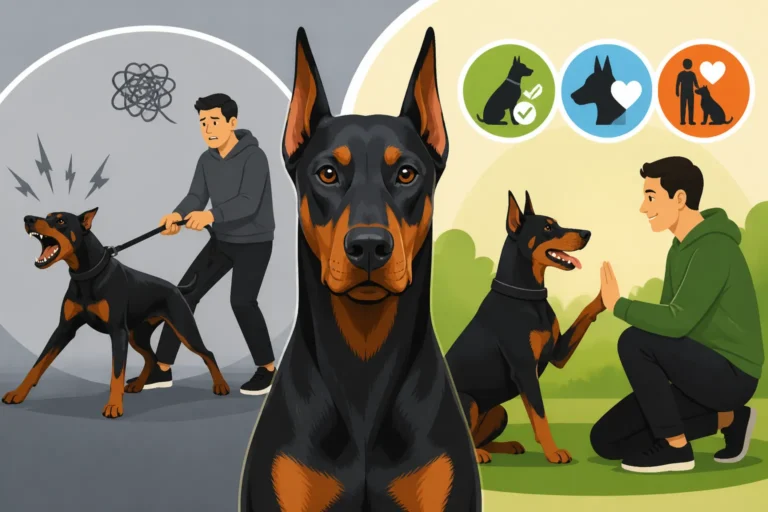
There's a fine but crucial line between a confident Doberman and one that is "sharp" or reactive, especially when it comes to public interactions. A truly confident Doberman is one who is secure in their environment, trusting of their handler, and able to calmly observe the world without feeling the need to react to every stimulus. A sharp Doberman, on the other hand, might be quick to bark, lunge, or display anxious behaviors when confronted with the unfamiliar, which is exactly what alarms people. The goal is to nurture that inner calm and resilience, not to foster an aggressive or overly defensive mindset.
To build a confident Doberman, focus on rewarding calm, neutral behavior. When your Doberman sees a new person or dog and doesn't react, that's your cue to praise them quietly and offer a high-value treat. Encourage them to offer you eye contact and check in, rather than fixating on distractions. Avoid constantly hovering or micromanaging their every move, as this can inadvertently communicate your anxiety, which your Doberman will pick up on. Instead, let them experience the world, with you as their calm, steady anchor. You can read more about fostering this mindset in Building a Doberman Puppy That Is Confident, Not Sharp.
It's also about building a relationship founded on trust and clear communication. Your Doberman needs to understand that you are the decision-maker and protector, so they don't feel the burden of needing to guard or react. This doesn't mean being harsh or intimidating; quite the opposite. It means consistent, fair expectations, positive reinforcement, and clear boundaries. A Doberman that trusts you implicitly will defer to your judgment in new situations, allowing you to calmly navigate public spaces without unnecessary alarm bells going off in their head, or the public's.
Essential Gear for Public Outings
The right equipment can make a world of difference in your ability to control your Doberman in public and, importantly, in how others perceive you and your dog. It’s not just about functionality; it’s about projecting competence and safety.
Choosing the Right Leash and Collar/Harness
When you’re walking an 80-pound Doberman, a flimsy leash or ill-fitting collar is not just inconvenient, it’s a safety hazard. A standard 4-foot or 6-foot leash made of durable nylon or leather is often ideal. Avoid retractable leashes at all costs in public settings; they offer minimal control, teach a dog to pull, and can be dangerous, allowing your Doberman to venture too far into potential trouble or surprise a passerby. On platforms like Amazon, you can find a wide array of high-quality, durable leashes suitable for a Doberman’s strength.
For collars, a sturdy flat buckle collar is standard for ID tags, but for control, you might consider alternatives. A martingale collar can be effective for Dobermans, as their necks are often similar in circumference to their heads, making it easy for them to slip out of a flat collar. The martingale tightens gently and evenly, preventing escape without choking. Head halters, which fit over the muzzle and behind the ears, offer excellent control by redirecting the dog's head, making it difficult for them to pull or lunge. This can be especially useful for Dobermans who are strong pullers or easily distracted. However, they require careful introduction to ensure your dog is comfortable.
Harnesses also come in various styles. A front-clip harness, where the leash attaches to a ring on the dog's chest, can be very effective at reducing pulling by turning the dog's body back towards you when they try to forge ahead. Back-clip harnesses, while comfortable, offer less control over pulling for a strong Doberman. The key is to choose equipment that fits well, is comfortable for your Doberman, and provides you with the necessary control for their size and strength. A poorly fitting harness can chafe, and an ineffective collar can lead to frustration for both of you. For a deeper dive into restraint options, consider reading Harnesses That Hold a Strong Doberman.
Here's a quick comparison of common leash and collar/harness types:
| Equipment Type | Pros | Cons | Best For | Public Perception |
|---|---|---|---|---|
| Flat Buckle Collar | Simple, holds ID, comfortable for relaxed walks | Easy to slip out of, little control for strong pullers | Well-trained dogs, ID holder, light walks | Neutral, standard |
| Martingale Collar | Prevents slipping out, humane tightening | Less control than head halter for determined pullers | Dogs prone to backing out of collars, moderate control for pulling | Neutral to positive (looks like a regular collar) |
| Head Halter | Excellent control, redirects head, stops pulling | Requires acclimation, some dogs dislike it, can be seen as a muzzle | Strong pullers, reactive dogs, precise control needed | Can be perceived as a muzzle, might draw curiosity |
| Front-Clip Harness | Reduces pulling, takes pressure off neck | Can tangle legs if not fitted correctly, less precise control than head halter | Dogs prone to neck strain, moderate pullers, good for general walks | Positive, often seen as gentler |
| Back-Clip Harness | Comfortable, good for small dogs | Little to no control over pulling for a Doberman | Very well-trained Dobermans, light exercise where pulling isn't an issue | Positive, very common |
| Standard 4/6 ft Leash | Good control, communication, durable | Can feel restrictive if dog pulls, requires active handling | All Dobermans, especially in public | Competent, controlled |
| Retractable Leash | Avoid in public | No control, encourages pulling, safety hazard | Not recommended for Dobermans in public | Negative, seen as irresponsible or dangerous |
Tools for Safety and Peace of Mind
Beyond the basic leash and collar, there are other tools that can contribute to your Doberman's safety and your peace of mind in public, which in turn influences public perception. A well-fitted muzzle, though often met with unfortunate stigma, can be an invaluable tool. It’s not necessarily an admission that your Doberman is aggressive, but rather a responsible measure for certain situations: vet visits, groomer appointments, mandatory public transport, or when you’re working on reactivity training where unexpected situations might arise. Normalizing muzzle use through positive training – making it a comfortable, rewarding experience for your Doberman – can prevent stress for everyone involved should it ever be truly needed. You can find comfortable, basket-style muzzles suitable for a Doberman's muzzle length on Amazon.
Identification tags are non-negotiable. Ensure your Doberman wears a tag with your current phone number clearly visible. While they should ideally never be off-leash or out of your control in public, accidents happen, and a lost Doberman can be an alarming sight for strangers. Microchipping is another layer of permanent identification, crucial for reunification if they somehow get lost without their collar. Keep your microchip registration details updated, always.
Finally, always carry treats and water. High-value treats are essential for positive reinforcement, especially when training in distracting environments. Rewarding your Doberman for calm behavior, good focus, or ignoring a trigger can drastically improve their public manners. A portable water bowl and a bottle of water are also crucial, particularly on longer outings or warm days. A hydrated, comfortable Doberman is generally a happier and better-behaved Doberman. These small additions to your public outing kit demonstrate preparedness and responsible ownership, subtly communicating that your Doberman is well-cared for and under control.
Mastering Leash Manners and Control
A Doberman with impeccable leash manners is your best advertisement in public. Nothing instills public confidence more than seeing a large, powerful dog walking calmly by its owner's side, even amidst distractions. Conversely, a Doberman dragging its owner down the street immediately raises alarms.
Teaching a Loose-Leash Walk
Achieving a true loose-leash walk with a Doberman requires patience and consistency. The goal is for the leash to remain slack, forming a gentle U-shape, whether you're moving or standing still. One of the most effective techniques is the "stop-and-go" method: the moment your Doberman pulls ahead and tightens the leash, you immediately stop walking. Don't say anything, just become a tree. Only resume walking when the leash slackens, even if it's just for a second. Your Doberman will quickly learn that pulling gets them nowhere, and a loose leash means forward momentum.
Another powerful technique is changing direction frequently. If your Doberman starts to pull, unexpectedly turn 90 or 180 degrees and walk in a different direction. This keeps them paying attention to you and prevents them from fixating on whatever is ahead. Always reward your Doberman generously with treats and praise when they are walking nicely by your side, especially when they offer eye contact. Start practicing in a quiet, low-distraction environment, like your backyard or a deserted street, before gradually introducing more challenging public spaces. This builds a strong foundation.
Consistency from every family member who walks the dog is paramount. If one person allows pulling, it undermines the training efforts of everyone else. Remember, your Doberman learns by association; pulling means nothing good happens, but a loose leash means rewards and forward progress. With dedication, you can transform a pulling Doberman into a pleasure to walk, even in busy areas. For more detailed strategies on this, you might find Stopping a Doberman From Pulling You Over very helpful.
The "Heel" Command and Its Importance
While a loose-leash walk is great for general outings, the "heel" command is a more precise and critical tool for specific public situations. "Heel" means your Doberman walks precisely by your side, typically with their shoulder aligned with your leg, maintaining focus on you regardless of external distractions. This isn't just about looking good; it's about absolute control when you need it most – think navigating a crowded crosswalk, walking past another dog known to be reactive, or moving through a narrow doorway.
Teaching a reliable heel involves continuous positive reinforcement. Start by luring your Doberman into position with a high-value treat held near your leg. As they move into the correct spot, mark the behavior (e.g., with a clicker or a verbal "yes!") and reward. Gradually fade the lure, asking for the heel position before revealing the treat. Practice short durations and distances initially, building up as your Doberman understands the expectation. The key is to make "heel" a highly rewarding position to be in, so your Doberman actively chooses to stay there.
When to use "heel" versus a loose-leash walk is a strategic decision. Reserve "heel" for those moments when precision and absolute attention are non-negotiable. This high-level command communicates to your Doberman that this is a serious moment, and their full focus is required. It also sends a clear message to the public that your Doberman is expertly trained and under tight control, which can go a long way in alleviating any anxieties they might have.
Managing Distractions and Impulse Control
Public spaces are a minefield of distractions for a Doberman – squirrels, children, other dogs, interesting smells, dropped food. Teaching impulse control and how to manage these distractions is key to preventing reactive or alarming behaviors. Commands like "watch me" or "look at me" are invaluable; they teach your Doberman to redirect their attention from a distraction back to you on cue. Start practicing this in quiet settings, rewarding sustained eye contact, then gradually introduce minor distractions.
The "leave it" command is another essential tool for impulse control. This teaches your Doberman to disengage from something tempting or potentially dangerous on the ground or within their reach. Whether it's a discarded chicken bone, a playful puppy wanting to engage, or a dropped toy, "leave it" provides a clear boundary. Practice this by placing a low-value treat on the floor, covering it with your hand, and saying "leave it." Reward your Doberman when they look away from the treat and at you. Slowly increase the value of the treat and the difficulty of the scenario.
Building up your Doberman's ability to handle distractions is a gradual process. Don't expect perfection overnight. Begin training in low-distraction environments and progressively move to more stimulating areas. If your Doberman struggles, it's a sign you've pushed too far, too fast; scale back to a level where they can succeed. The goal is to equip your Doberman with the mental tools to make good choices and to rely on your guidance, rather than giving in to every impulse. This kind of self-control is impressive to observers and makes your Doberman a calm presence in any public setting. Dealing with distractions is especially important for dogs prone to reactivity, as explored in A Doberman That Lunges at Passing Dogs.
Navigating Common Public Scenarios
Once your Doberman has a solid foundation of obedience and leash manners, it's time to apply those skills to the specific challenges of public encounters. These situations often dictate how the public perceives your Doberman.
Encounters with Strangers and Children
Let's face it, one of the biggest sources of public alarm is the interaction (or perceived interaction) between a Doberman and strangers, especially children. Your primary goal should be to maintain control and ensure everyone's safety, which often means setting clear boundaries. Not every person you encounter needs to greet or pet your Doberman, and it's perfectly acceptable to decline. You are your Doberman's advocate. Teach your Doberman a "pass by" or "ignore" cue, reinforcing them for walking calmly past people without jumping, barking, or soliciting attention.
When a greeting is appropriate and desired by both parties (and only then), ensure your Doberman is in a calm "sit" or "down" position. They should not be jumping or mouthing. Keep greetings brief and positive. Instruct the stranger to approach calmly, offer a hand for sniffing if appropriate, and pet gently on the chest or shoulders, avoiding the top of the head which can be intimidating. If a child approaches, supervise closely. Many children are naturally drawn to dogs but may not understand how to interact safely. Teach your Doberman to tolerate gentle (or even awkward) handling from children during socialization, always with supervision. For insights on this specific topic, refer to Whether a Doberman Is Safe Around Children.
It's helpful to have polite, ready responses for people who approach without asking or express fear. A simple "He's in training, please give us space," or "We're just practicing our calm manners today" can effectively manage the situation without being rude. Remember, you're not trying to convince every stranger to love Dobermans; you're just demonstrating responsible ownership and a well-behaved dog. Consistent, calm management of these interactions builds positive associations for both your Doberman and the public.
Handling Other Dogs and Animals
Encounters with other dogs on leash can be a flashpoint, especially for breeds with a strong presence like the Doberman. The general rule of thumb for public spaces is to avoid direct on-leash greetings unless you know both dogs are calm, friendly, and their owners consent. Leash greetings can often lead to over-arousal, frustration, or even reactivity, as dogs are restricted in their natural communication. Instead, aim for a calm "pass by."
When you see another dog approaching, assess the situation. If your Doberman tends to get excited or reactive, proactively create distance or perform a U-turn if necessary. Use your "watch me" or "heel" command to keep your Doberman focused on you as the other dog passes. Reward heavily for calm disengagement. If the other dog or owner seems overwhelmed or nervous, be respectful and give them ample space. You can step off the path, stand behind a bush, or simply wait for them to pass. This demonstrates thoughtfulness and responsibility. For further reading on managing interactions, consider A Doberman That Reacts to Every Dog It Sees.
Beyond dogs, Dobermans might encounter other animals like cats, squirrels, or even livestock, depending on your location. Their prey drive can be strong, so a rock-solid "leave it" command is essential. Practice this intensively in varied environments. It's about teaching your Doberman that you are in charge of what they focus on and that chasing isn't an option. Successful management of these varied animal encounters showcases your Doberman's training and your ability to maintain control, which goes a long way in shaping public opinion.
Crowded Places and Busy Environments
Navigating crowded places like farmers' markets, outdoor festivals, or bustling city sidewalks requires specific training and a confident handler. The sheer volume of sensory input – smells, sounds, moving bodies – can be overwhelming for any dog, let alone a Doberman who is naturally alert. Start small, by taking your Doberman to quieter versions of these environments during off-peak hours. Gradually increase exposure as they build confidence and demonstrate calm behavior.
In these busy settings, your Doberman needs to understand that their job is to stay close and ignore the chaos around them. Practice your "heel" and "place" commands. Asking your Doberman to "down-stay" under a table at a dog-friendly patio, or to "heel" through a busy pedestrian area, demonstrates incredible control and creates a positive impression. Always ensure your Doberman has enough space and isn't being constantly bumped or stepped on, as this can lead to stress and potentially reactive behavior.
Remember to be your Doberman's advocate. If they seem overwhelmed or stressed – showing signs like lip licking, yawning, excessive sniffing, or trying to hide behind you – it's time to remove them from the situation. A stressed dog is more likely to react negatively. Your calm demeanor is also paramount; if you're tense and anxious, your Doberman will pick up on it. By managing these environments skillfully, you show the public that Dobermans can be well-adjusted, integrated members of society, capable of handling busy urban life.
Communicating Confidence to Your Doberman (and the Public)
Your energy, attitude, and actions are powerful tools in shaping both your Doberman's behavior and the public's perception. Dobermans are incredibly perceptive and will mirror their owner's emotional state.
Your Demeanor Sets the Tone
Dobermans are often called "Velcro dogs" for a reason – they are intimately connected to their people. This deep bond means they are highly attuned to your emotions, body language, and subtle cues. If you walk into a public space feeling anxious, scanning for potential threats, or tightening up on the leash, your Doberman will immediately pick up on that tension. They might interpret your anxiety as a signal that there's something to be worried about, leading them to become more vigilant, reactive, or even fearful themselves. This can quickly escalate into a cycle where your Doberman's reaction validates your initial anxiety, and so on.
Conversely, if you approach public outings with a calm, confident, and relaxed demeanor, your Doberman will feel that energy too. They will understand that you are in control, that you are handling the environment, and that they don't need to be on high alert. This allows them to relax and trust your leadership. Practice walking with loose shoulders, a natural gait, and speaking to your Doberman in a low, reassuring tone if needed. A confident handler doesn't need to yell or constantly correct; their presence alone communicates competence.
Remember that your Doberman is always observing you. If you are consistently calm and confident, especially when faced with novel or slightly stressful situations, your Doberman learns to look to you for guidance and reassurance. This builds an invaluable sense of security in your dog, making them more resilient and less prone to overreacting in public. Understanding these subtle cues in your dog is critical, and sometimes they communicate discomfort in ways we might miss. If you're keen to understand these subtle signals better, have a look at Spotting the Moment a Doberman Is Uncomfortable.
Advocacy and Educating the Public
As a Doberman owner, you are often your dog's primary advocate, and sometimes, this means politely educating the public or managing unwanted interactions. It's an unfortunate reality that you may frequently encounter people who want to share their (often negative) opinion about Dobermans or, conversely, those who rush up to pet your dog without asking. Having a few polite, neutral phrases ready can help you navigate these situations smoothly without becoming defensive or confrontational.
For unsolicited advice or fearful comments, a simple, firm but kind response like, "My dog is well-trained and we're just enjoying our walk," or "He's very focused on his training right now, but thank you," can work wonders. If someone is approaching without permission, especially with children, you can say, "Please give us a little space, we're working on manners," or "He's not a petting dog right now, thank you." The key is to be assertive without being aggressive yourself. Your calm handling of people reflects positively on your Doberman.
Remember, your goal isn't necessarily to change every person's mind about Dobermans, but to represent the breed positively. Every calm, well-controlled outing chips away at negative stereotypes. By demonstrating responsible ownership and a well-behaved dog, you contribute to a broader, more accurate understanding of the Doberman. Your consistent, patient advocacy makes a difference, one public interaction at a time.
The Doberman's Visual Cues and Misinterpretations
Understanding your Doberman's body language is crucial, but it's equally important to recognize how their unique physical characteristics might be misinterpreted by the general public. Their sleek, athletic build and often serious expression can appear intimidating even when they are perfectly relaxed. Beyond that, the practice of ear cropping, while traditional for the breed, can complicate how others read your Doberman's mood.
An uncropped Doberman's ears naturally communicate a range of emotions – relaxed ears mean a calm dog, ears slightly back might indicate submission or uncertainty, and ears pricked forward usually signal alertness or interest. However, with cropped ears, this nuanced communication is largely lost. When a Doberman with cropped ears is simply alert and interested, those ears stand tall and erect, which can be perceived by the uninitiated as aggressive or highly intense, even if the rest of their body language is neutral. This makes it harder for the public to gauge friendliness or potential threats. If you want to know more about this, What Cropped Ears Hide About a Doberman's Mood offers a deeper look.
As an owner, you become the interpreter. You must learn to read your Doberman's more subtle cues: tail wags (loose, sweeping wags vs. stiff, high wags), eye contact (soft vs. hard stare), mouth expression (relaxed vs. tense lips), and overall body posture (loose and flowing vs. stiff and frozen). Being aware of how your dog's body language might be misunderstood allows you to proactively manage situations. For example, if your Doberman is intensely focused on something, even if it's benign, you might verbally reassure them or gently redirect their attention to prevent others from misinterpreting their gaze as a threat. By being hyper-aware of your Doberman's communication, you can prevent misunderstandings and foster safer, more relaxed public encounters.
Troubleshooting and Advanced Strategies
Even with the best foundation, Dobermans are living beings, and challenges will arise. Knowing how to troubleshoot common issues and pursue advanced training will further solidify your Doberman's role as a welcome public presence.
Addressing Specific Reactivity Issues
Reactivity—whether it's barking, lunging, or growling at specific triggers like other dogs, bikes, or certain types of people—can make public outings incredibly stressful. Identifying your Doberman's specific triggers is the first step. Is it only male dogs? Only children on scooters? Once identified, you can begin a targeted program of counter-conditioning and desensitization. Counter-conditioning involves changing your Doberman's emotional response to a trigger from negative to positive. For example, every time your Doberman sees their trigger (at a distance where they are still calm), immediately feed them a high-value treat. The goal is for them to associate the trigger with good things.
Desensitization means gradually exposing your Doberman to their trigger at a distance or intensity level where they remain calm, slowly decreasing that distance or increasing intensity over many sessions. If your Doberman reacts, you've gone too far; back up to a point where they can succeed. This is a slow, methodical process that requires immense patience. It's often best undertaken with the guidance of a professional trainer who has experience with Dobermans and reactivity. They can help you implement these techniques safely and effectively, providing invaluable coaching and support. For information on finding a qualified professional, see Trainer Rates for a Reactive Doberman.
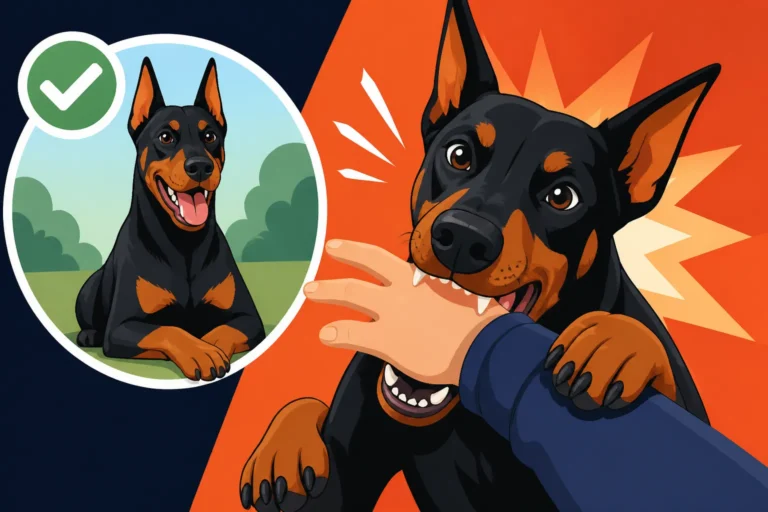
Remember, reactivity is often rooted in fear or over-arousal, not malicious aggression. Punishing a reactive Doberman can suppress their outward displays but worsen their underlying emotional state, making them potentially more dangerous. Focus on positive reinforcement, building confidence, and teaching them alternative, calmer behaviors. Consistency and a well-structured plan are your best tools in managing and reducing reactivity, ultimately making public outings more enjoyable for both you and your Doberman.
Advanced Public Access Training
For Doberman owners who wish to take their public outings to the next level, or for those considering therapy or service dog work, advanced public access training is the answer. This goes beyond basic obedience and focuses on maintaining calm, reliable behavior in highly stimulating and often restrictive environments. Think of it as refining your Doberman's ability to be a "non-presence" in public—there, but not demanding attention or causing disruption.
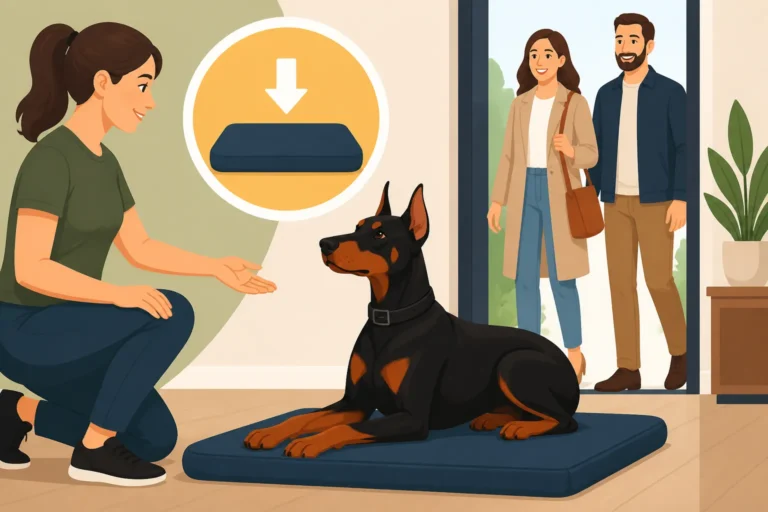
This level of training involves preparing for specific real-world scenarios that are more challenging. This might include long-duration "down-stays" in busy waiting rooms, calmly navigating crowded elevators or stairwells, ignoring food dropped on the floor at a restaurant, or walking through a bustling shopping center. Commands like "go to mat" or "settle" become critical, allowing your Doberman to relax in a designated spot amidst chaos. The training emphasizes impulse control under extreme distraction and the ability to maintain a neutral, relaxed demeanor for extended periods.
It requires an unwavering commitment to consistency and ongoing practice in increasingly complex environments. This isn't just about teaching new tricks; it's about conditioning a deep level of environmental neutrality and handler focus. The pay-off is immense: a Doberman who can confidently and calmly accompany you almost anywhere, projecting an image of quiet competence that not only reflects well on the breed but also enriches your shared life exponentially. For those looking for professional guidance, resources like BAXTER & Bella can help structure this advanced training.
Continuous Learning and Adapting
The journey with a Doberman is a lifelong one, and that includes continuous learning and adapting your training strategies. No two Dobermans are exactly alike, and what works perfectly for one might not be the best approach for another. Your Doberman's needs and behaviors will also change over time, influenced by age, health, and life experiences. What might have been a non-issue at two years old could become a challenge at six, or vice-versa. Therefore, staying open to new ideas, different training methods, and professional advice is paramount.
Remain humble and observant. Watch your Doberman carefully in different environments. Are there subtle signs of stress you're missing? Are they offering you cues that you're not fully interpreting? Continuously evaluate what's working and what isn't, and be prepared to adjust your approach. This might mean seeking out a different trainer for a fresh perspective, exploring new training classes, or simply dedicating more time to specific exercises. The internet, with its wealth of information (and misinformation!), can be a starting point, but always prioritize advice from certified, experienced professionals, ideally those familiar with the Doberman breed. If you are struggling to find someone who understands your Doberman's unique temperament, consider Finding a Trainer Who Has Worked With Dobermans.
Finally, celebrate every small victory. The Doberman who used to lunge at every passing dog and now calmly walks by three out of five is making incredible progress. The Doberman who settles quietly under a table at a busy cafe for ten minutes is a triumph. These achievements, no matter how minor they seem, are testament to your dedication and your Doberman's potential. Continuous learning, adapting, and celebrating progress makes the journey of handling a Doberman in public not just manageable, but truly rewarding. And don't forget, even strong Dobermans need careful guidance on the leash, as discussed in Leash Manners for an Eighty-Pound Doberman.
Disclaimer
This article is for general informational purposes only and does not constitute professional advice. Laws, prices and regulations vary by location and change over time. Consult a qualified professional for guidance on your specific situation.